Working Group · Germany
Giant Schnauzer: History & sources
Other sizes: Miniature Schnauzer · Standard Schnauzer
History & sources
Heritage & appearance
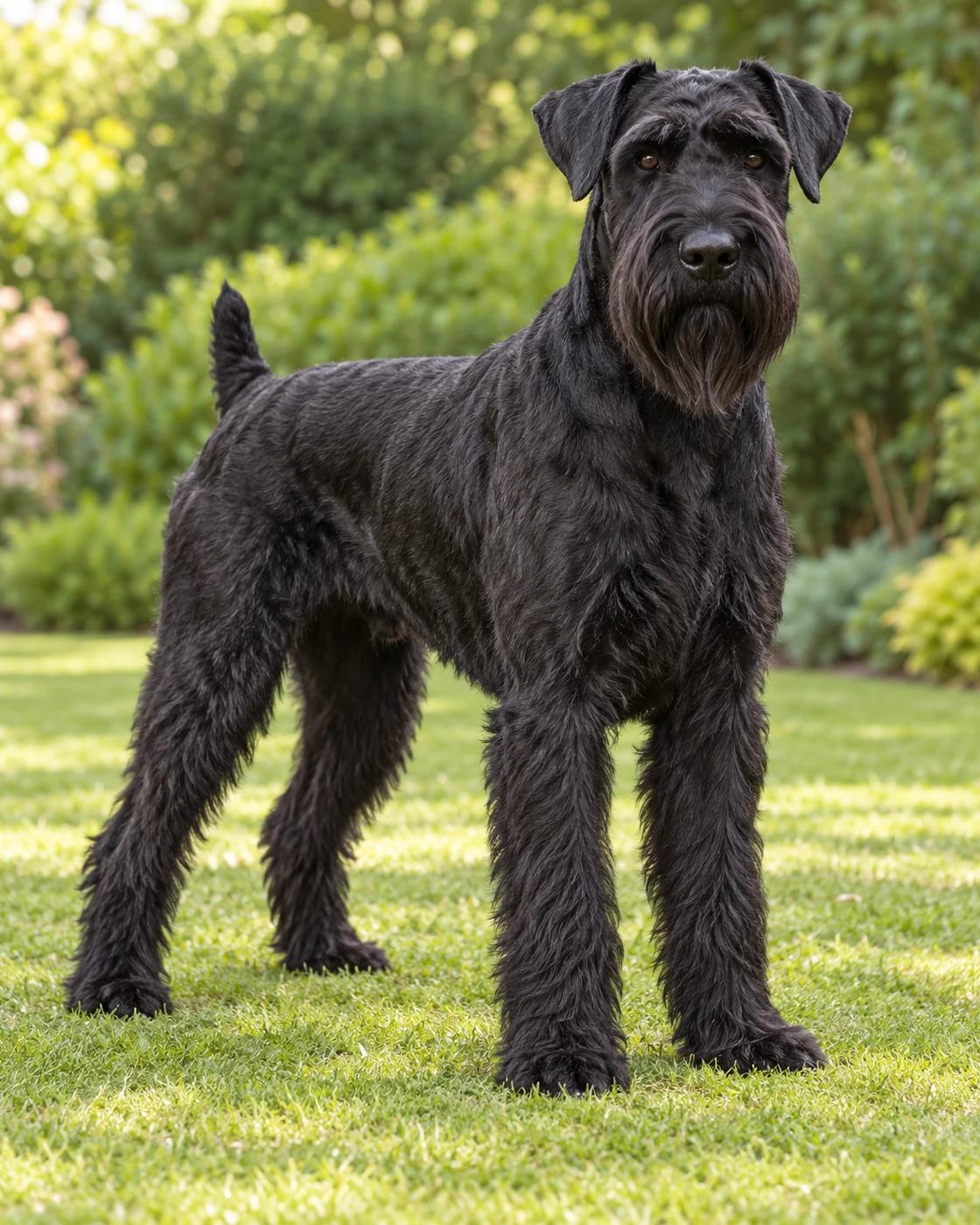
Meet the Giant Schnauzer
Giant Schnauzer has an origin listed as Germany and is listed in the Working Group. Use the adult-size ranges and behavior tendencies below to understand the practical commitment, then get to know the individual dog and its family history.
Ranges describe the reference population, not a prediction for a puppy. Some sources distinguish male and female sizes. Lifespan ranges are estimates, not guarantees.
- Origin
- Germany
- Classification
- Working Group
- Recognition / recording year
- 1930
- Coat length
- Medium
Heritage & classification
The listed origin, Germany, gives you a starting point for researching this breed’s development. The reference records 1930 as its recognition or recording year. Recognition or foundation recording is different from the date a breed first developed. Explore the breed reference and parent club for detailed historical accounts and the current standard.
More about this breed’s history
Monty’s third trip to the Westminster final
In 2025, Hearthmore’s Wintergreen Mountain, known as Monty, won Westminster’s Working Group for the third year running. On February 11 at Madison Square Garden, judge Paula Nykiel awarded him Best in Show. Monty was the first Giant Schnauzer to win Westminster’s top prize. (American Kennel Club: Giant Schnauzer Monty wins 2025 Best in Show at Westminster; Westminster Kennel Club: 2025 Best in Show announcement)
Full breed details
View all Giant Schnauzer articles →
View sources and checked dates →References & editorial notes
Adult-weight sources
Female: 55–80 lb; Male: 75–95 lb
direct: AKC explicitly publishes female 55-80 lb and male 75-95 lb; German origin standard instead shares 35-47 kg; use the published sex split, Giant size only.
Rescues & sheltersPrint or citeBreed articles
Other profile sections and family fact sheet
Life with a Giant Schnauzer
Many like to stay close.
Explore home life →A typical day needs more than a couple of hours of activity.
Explore daily care →Sources differ on daily versus weekly brushing and coat clipping versus stripping.
Explore daily care →Print or cite this breed
Giant Schnauzer family fact sheet
Breed-level references are a starting point. Ask about the individual animal’s routine and care needs.
- Female
- 55–80 lb
- Male
- 75–95 lb
- Adult height
- 25.5–27.5 in (male), 23.5–25.5 in (female)
- Reference lifespan
- 10–13 years
- Coat
- Double, Wiry
- Adult size
- Female: 55–80 lb; Male: 75–95 lb Adult reference weights; individual animals vary.
Company
Many like to stay close.
Activity & learning
A typical day needs more than a couple of hours of activity.
Coat care
Sources differ on daily versus weekly brushing and coat clipping versus stripping.
Everyday responsibilities
Plan food, supplies, routine care and veterinary visits. Agree who handles the everyday jobs and who covers absences.
Adult help
An adult should remain responsible for care, supervise children’s interactions and arrange help when needed.
My Breed Atlas. Giant Schnauzer breed profile. https://mybreedatlas.com/breeds/giant-schnauzer
Read this profile’s sources →Adult ranges and source qualifications
- Female
- 55–80 lb
- Male
- 75–95 lb
- Adult height
- 25.5–27.5 in (male), 23.5–25.5 in (female)
- Reference lifespan
- 10–13 years
- Coat
- Double, Wiry
Reference ranges describe the breed, not a prediction for an individual.
Daily care
Activity & learning
A typical day needs more than a couple of hours of activity.
More about everyday care
The activity rating is toward the higher end of the reference scale. Consider whether your everyday schedule can support activity, learning, and safe outlets for energy.
Mental engagement is an important part of the ownership plan. Training, scent games, or suitable dog sports can provide purposeful challenges. Physical exertion alone may not fill that need.
Coat care
Sources differ on daily versus weekly brushing and coat clipping versus stripping.
More about everyday care
Frequent coat care deserves a place in your schedule and budget. Discuss brushing, clipping or other coat-specific techniques with an experienced breed groomer.
The shedding rating is at the lower end of the scale. This does not guarantee that a dog will be suitable for someone with allergies.
Coat colors & markings
Standard colors recorded in the reference: Black, Pepper & Salt.
Color alone does not establish breed identity, health, or quality. Ask about the dog’s background and care needs.
Training & communication
Expect learning to depend on motivation and consistent practice. Work on small skills in easy environments before adding distractions.
Vocal tendency is in the middle of the scale. Plan for normal communication and teach an alternative behavior when barking becomes disruptive.
Food, routine & costs
The everyday ownership plan
Food & routine
Ask your veterinarian about food appropriate to the dog’s life stage, body condition, and health history. Ask the breeder what the dog currently eats and how to approach any transition. Keep feeding and care records rather than relying on a generic breed portion chart.
Time & budget
Allow for regular care, training, equipment, grooming, veterinary visits, and unexpected costs. Make a plan for workdays, travel, and changes in your schedule. The adult size and coat-care profile above can help you identify practical demands.
Bringing a dog home
Prepare a safe sleeping area and a predictable routine. Arrange veterinary care, agree on household rules, and introduce new situations gradually. Get written information about the dog’s routine, registration where applicable, and ongoing breeder support.
Home life
Company
Many like to stay close.
More about everyday care
The reference points to a strong interest in family interaction. Make room for shared activities and company in the daily routine.
New people may require patient introductions. Avoid forcing contact and reward comfortable, relaxed behavior.
Family life, other dogs & housing
Compatibility with children depends on the individual dog, experience, and the household routine. A middle rating is a research starting point, not an assurance.
Other-dog compatibility is individual. Discuss past experience, space, and introductions with the breeder or caregiver.
Always supervise interactions with children and provide a quiet retreat. Apartment suitability involves noise, outdoor access, stairs, time alone, and building rules as well as size. No rating measures the compatibility of a particular pair of dogs or a dog and another species.
Time alone and workdays
Personality & care details
Personality & care profile
These 1–5 reference ratings offer a comparison of breed tendencies. A higher number means more of the named tendency; it is not a quality score or an endorsement.
What everyday life tends to involve
These notes describe a tendency for the breed. Every animal is an individual.
- Activity
- A typical day needs more than a couple of hours of activity.
- Training
- The day needs a long outing: a real walk, training, or a job. Obedience work matters, and they are generally willing students.
- Coat care
- Sources differ on daily versus weekly brushing and coat clipping versus stripping.
- Loose hair
- Loose hair tends to stay light.
- Voice
- Some barking through the day is typical.
- Company
- Many like to stay close.
- Adult size
- Female: 55–80 lb; Male: 75–95 lb
Adult reference weights; individual animals vary.
YOUR EVERYDAY LIFE
How could this breed fit your life?
See household examples or compare this breed with answers you chose to save. The examples show combinations where this breed appeared among the first five results. Other combinations can work too.
Saved matching preferences stay in this browser, never on your account. They expire after 30 days and are removed the next time this feature reads them. Health answers, children’s ages and free-text notes are not saved. This section does not reproduce those personal care notes.
Giant Schnauzer health
Health observations and family records
Clinical research describes progressive retinal atrophy in a Giant Schnauzer family. It supports occurrence of retinal disease, not a whole-breed rate or a prediction for every dog. The candidate gene discussed in that study is not a guarantee that one DNA report covers every cause of vision loss.
Hesitation in dim surroundings
General veterinary descriptions of retinal degeneration include reluctance to enter dark areas or hesitation at familiar stairs. Report a repeated change in your Giant Schnauzer’s navigation to the veterinary team. Do not create a dark obstacle course to test vision; an eye examination can distinguish problems that look similar to a family.
An eye examination and a gene report differ
The Giant Schnauzer study combines clinical eye findings with a candidate genetic explanation for one form of retinal disease. Ask which condition any report covers. A genetic result does not measure today’s vision, and a clear result for one variant does not explain every future eye change.
When a puppy falls behind in growth
Researchers documented an inherited difficulty absorbing vitamin B12 in one Giant Schnauzer family. Affected puppies began eating poorly and falling behind in growth between six and twelve weeks of age. If your puppy repeatedly leaves meals and gains little weight, call your vet and bring dated weights and a record of what the puppy actually ate. Ask whether a blood count and B12 measurement would help explain the poor growth. If the disorder is confirmed, ask how the team will follow appetite, growth and blood results. In the study, the puppies’ clinical signs improved while their blood B12 was still low.
Family history and screening
Keep the existing hip, elbow, eye and thyroid examination records with dates and identities. Ask about diagnosed retinal disease in relatives and request the actual eye findings or genetic report where available. Keep Giant Schnauzer evidence distinct from Miniature or Standard Schnauzer records.
Questions for your veterinarian
- Which form of retinal disease does this report address?
- Does a new navigation change need an eye examination despite an earlier genetic result?
Choosing a puppy? Ask to see both parents’ results, with the animal’s name and the date on each report. If you’re adopting an adult, ask which records come with that individual.
Screenings listed for Giant Schnauzer
- Hip Evaluation
- Elbow Evaluation
- Ophthalmologist Evaluation
- Thyroid Evaluation
Breeders supply these documents. My Breed Atlas does not independently verify them. Check the animal’s identity, the date and the actual result.
Breeders & rescues
Explore Giant Schnauzer breeders →
Questions for a breeder
- What are the parents like in everyday life?
- How are puppies raised and introduced to new experiences?
- Which screening records can I review?
- What does the contract cover, including return arrangements?
- What support is available after the dog comes home?
Before you meet a dog
- What does the coat-care routine involve?
- How does this dog handle time apart?