Giant schnauzer training for everyday situations
Build useful Giant Schnauzer skills for doors, equipment, changes of direction, calm observation, and quiet household time.
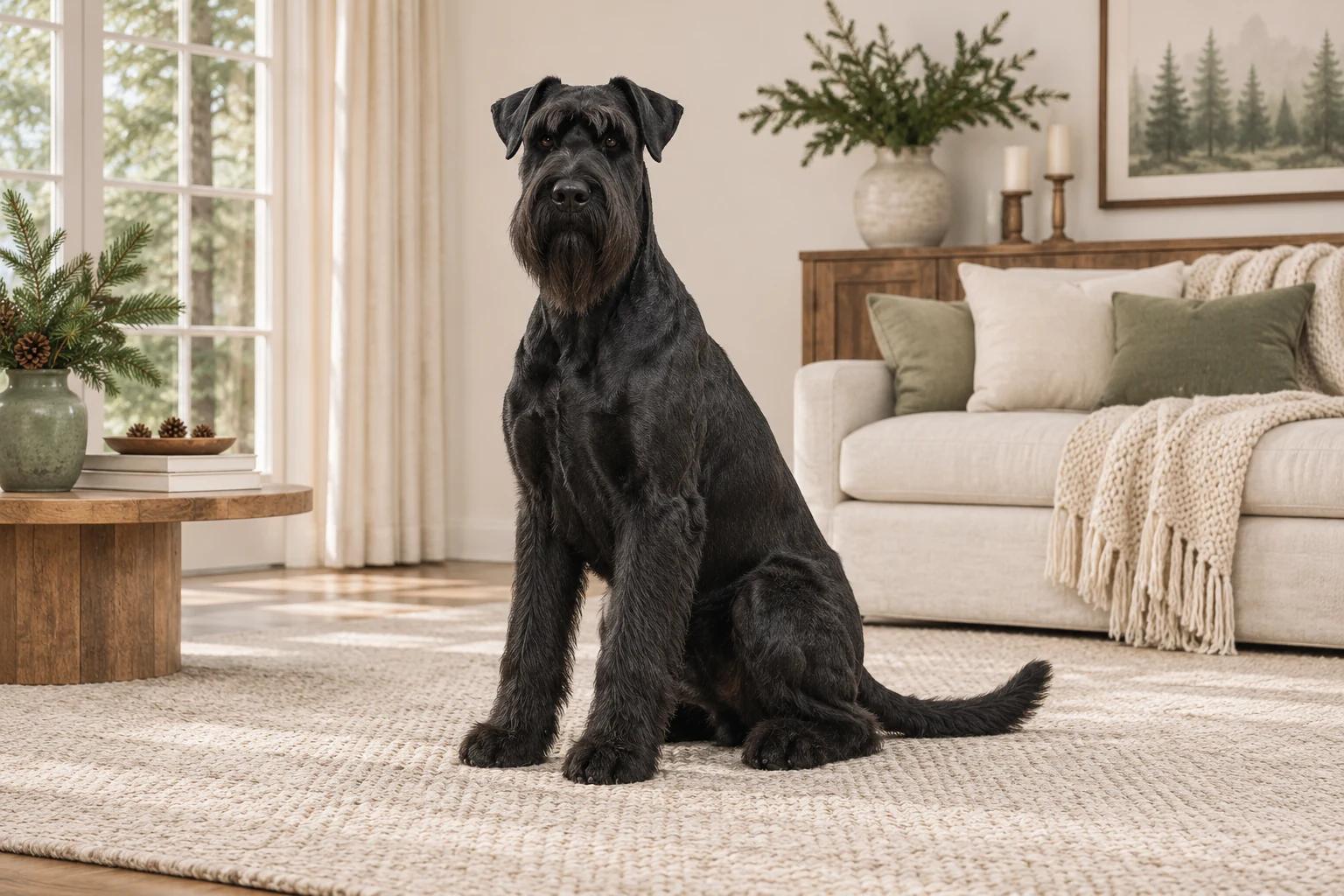
Giant schnauzer training should make ordinary life more manageable: moving through a doorway, turning away from a distraction, waiting while equipment is fitted, and settling when nothing interesting is happening. These are substantial achievements with a powerful dog. A collection of impressive tricks is not a substitute for them.
The AKC introduction emphasizes the breed's intelligence and strength. Treat that as a reason to plan your teaching clearly, not as a promise that a Giant will understand every request on the first attempt.
Giant schnauzer training: choose useful outcomes
Write down three situations that would make your week easier. Be specific. “Better manners” is difficult to practice; “stand on the hallway mat while I pick up the leash” describes something observable. A household with frequent deliveries may prioritize a separate waiting place. Someone using a narrow building entrance may prioritize an easy turn and pause.
Choose outcomes that suit the actual dog and home. The Giant Schnauzer profile provides breed context, while your observations identify the starting point. A newly arrived adult who already walks comfortably on leash needs a different first lesson from a puppy who has never worn outdoor equipment.
Keep a short record of where a skill works. A cue learned in the kitchen has not automatically been learned beside the front gate. Recording the setting helps prevent an unfair jump in expectations.
Agree on what the cue means
Household consistency is not about speaking sternly. It is about making the same request lead to the same recognizable outcome. If one person uses “down” for lying on the floor and another uses it for getting off furniture, choose separate words and write them on the training plan.
Pick a clear reward signal and practice delivering the reward where you want the dog to be. For a hallway station, that might mean rewarding on the mat rather than calling the dog off it to collect food. Your arrangement should make the requested position easy to understand.
End practice while you can still recognize useful progress. Ten confused repetitions do not become clearer because they happen in succession. If the dog repeatedly offers something else, simplify the situation and reconsider what your hands, body, and reward placement are communicating.
Make equipment time a lesson of its own
A Giant Schnauzer's outdoor outing begins before the door opens. If picking up the leash launches a frantic circuit of the hallway, start your practice at that earlier moment. Put the equipment within reach, choose a roomy position, and reward a brief pause before attempting the next step.
Separate standing near equipment, allowing it to be fitted, waiting at the door, and stepping outside. You can work on one piece without completing the entire outing every time. Keep those rehearsals short enough that they remain distinct from a frustrated attempt to get out of the house on time.
Plan around other people using the space. A delivery, visitor, or rushing housemate can interrupt a lesson. A closed internal door or suitable barrier can create a calmer practice area without requiring the dog to manage every distraction at once.
Teach a change of direction before you need it
For Giant Schnauzer obedience, an uncomplicated turn can be more useful than a long stationary stay. Choose an open, quiet area and introduce a consistent turning cue as you move together. Reward the dog for following the change rather than pulling the leash to force the maneuver.
Initially, practice where there is no urgent reason to turn. Later, use the same familiar pattern to move away from a busy entrance or give another walker room. Increasing distance is often a better immediate decision than standing close to a difficult situation and repeating an ignored cue.
Think about the route itself. If your normal pavement offers no escape space, select a quieter practice location. Good planning is part of training; the dog does not need to rehearse every difficult encounter simply because it lies on the shortest route.
Socialization is not a greeting quota
VCA's overview notes that some Giants are cautious with unfamiliar people. Giant schnauzer socialization should therefore include comfortable observation, not an obligation to accept hands from every stranger.
Arrange ordinary experiences with room to leave. A person standing at a distance, a bicycle passing across a wide space, or a visitor ignoring the dog can offer a more manageable introduction than a crowded event. Watch what your dog actually does before deciding to move closer.
Give visitors clear instructions in advance. They need to know where to stand, whether interaction is planned, and how you will end the visit. Do not ask a visitor to test whether the dog is “protective.” If you are seeing lunging, snapping, or persistent distress, seek qualified behavior support rather than staging further experiments.
For puppies, discuss appropriate outings and health precautions with your veterinarian. Training opportunities should fit the puppy's circumstances rather than an internet checklist.
Include the uneventful parts of the day
An intelligent working dog still needs a routine for times when people are occupied. Build a resting place into ordinary household activity. You might begin with a brief pause while you sit nearby, then gradually practice during a quiet task such as reading.
Do not judge settling solely by whether the dog is motionless. Consider whether the environment makes rest realistic. Constant window traffic, repeatedly offered games, or people calling the dog between rooms can undermine the quiet interval you intended to practice.
Our Schnauzer handling comparison explores the wider ownership commitment. Use the breed quiz if you are still sorting your preferences, then ask prospective trainers how they would teach your specific everyday goals.
FAQ
How to train a Giant Schnauzer without confusing the dog?
Use clear cues, consistent outcomes, and manageable practice settings. Break an everyday task into smaller parts and reward the part you want. Add distractions only when the easier version is understandable to the dog.
Does intelligence make Giant Schnauzer training easy?
Intelligence does not remove the need for careful teaching. A dog can learn unintended patterns as well as intended ones. Concentrate on clear instructions and useful habits rather than expecting breed reputation to do the work.
Should my Giant Schnauzer greet everyone?
No. Calm observation and moving past people are useful social skills. Arrange introductions around the individual dog's comfort, and let unfamiliar people know when you do not want them to approach or touch the dog.
When should I contact a trainer?
Seek help early when handling feels difficult or progress has stalled. Ask about reward-based methods and experience with large working dogs. For fear, aggression, or sudden behavior changes, involve your veterinarian and an appropriately qualified behavior professional.
Sources behind this article
Article source checked: November 15, 2026. Source checked 2026-11-15
Keep reading

Affenpinscher Training: Build Useful Everyday Habits
Read article →