Giant schnauzer grooming: beard, coat, and home care
Organize Giant Schnauzer beard care, brushing, grooming appointments, and a manageable home coat routine.
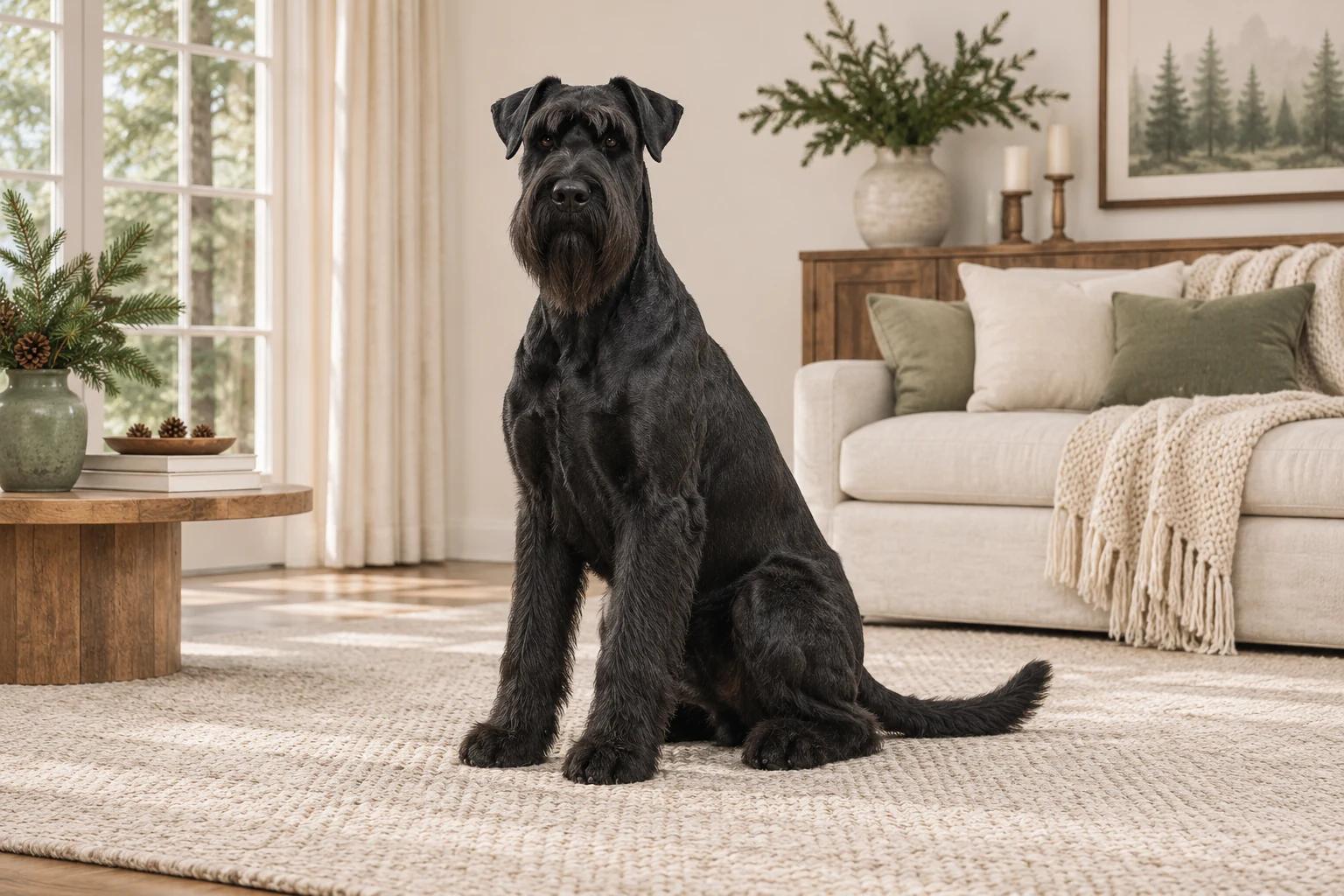
Giant schnauzer grooming is a practical commitment, not just a way to maintain the familiar bearded silhouette. The body coat, leg hair, and facial furnishings create different jobs. A useful home routine separates those jobs so that a quick wipe after breakfast does not get confused with a complete coat session or a professional trim.
Start with the Giant Schnauzer profile for the wider care picture. This guide focuses on organizing grooming, communicating with a groomer, and noticing where your own dog needs more attention.
Giant schnauzer grooming starts with a coat map
The UKC breed standard describes a hard, dense outer coat over undercoat, with distinctive eyebrows and beard. It also distinguishes the less-coarse leg hair. Those details explain why one hurried pass down the back is an incomplete approach.
Make a simple map of your dog's grooming work: body, legs, beard, feet, and equipment-contact areas. Beside each area, write what you actually encounter. Perhaps the beard collects breakfast while the lower legs collect garden debris. Perhaps the coat beneath a harness needs more deliberate checking than the open back. This is a practical record, not a diagnosis or an invitation to brush harder.
Use the map when asking for a demonstration. “Can you show me how you check this leg without pulling?” is more useful than asking which brush is best in the abstract. Have the groomer watch you repeat the movement. A tool that works in skilled hands may be awkward at your dog's particular length or with your own grip.
Give the beard its own routine
VCA's breed overview identifies facial-fur cleaning as a regular care task. Keep that task convenient: a clean cloth and towel near the usual feeding area are more useful than supplies buried behind bath products.
After meals, look for visible residue rather than assuming a tidy bowl means a tidy face. Deal gently with what you can see, keeping water and products away from the eyes. Ask your groomer to demonstrate how to handle the beard without holding the muzzle tightly. If the dog withdraws, pause rather than turning face care into a wrestling match.
Decide who handles the task after each meal. In a shared household, the person who feeds can also check the face. That small division of responsibility closes a common gap: everyone believes someone else has done the inconvenient finishing job.
Keep appearance goals realistic. A beard maintained for ordinary life can look different from a freshly prepared photograph. Choose manageability over chasing an exact image with scissors near a moving face.
Brushing is a skill, not a shopping list
Giant schnauzer coat care benefits from a repeatable setup. Choose a stable, nonslip surface with enough room for the dog to change position. Put tools within reach before starting. Avoid balancing a large dog on household furniture because the lighting happens to be better there.
Ask the groomer which brush and comb suit the current coat and where each belongs in the routine. Then work in sections small enough that you know what you have checked. Looking finished and being free of concealed tangles are different outcomes. A comb that catches is information to slow down, not a reason to drag it through.
Stop if you find a tight mat, sore-looking area, or a reaction that suggests discomfort. A groomer can assess coat problems; a veterinarian should assess skin changes or pain. Do not cut close to skin through a lump of hair you cannot see beneath.
Keep sessions manageable. One cooperative leg check is more useful than an ambitious full-body session that ends with the dog avoiding the room. You can record unfinished areas and return to them without pretending every session must produce a salon result.
Choose the finish with the professional
Clipping and hand-stripping are choices to discuss with someone experienced in Schnauzer coats. Explain whether your priority is an everyday companion trim, a particular silhouette, or preparation for showing. Ask what home care each option requires between appointments before choosing from photographs.
Bring a realistic account of your schedule. If you can maintain a shorter beard but struggle with long leg furnishings, say so. The useful question is not “Which style is correct for every Giant?” but “Which plan can we maintain on this dog, with this coat, using the time available?”
Request a written handover after the first appointment. It can list tools demonstrated, areas needing attention, and when to contact the groomer about the next visit. There is no need to turn a suggested appointment interval into an unchanging rule. Coat length, technique, and home maintenance all belong in that conversation.
Keep shedding separate from maintenance
Giant schnauzer shedding is only one part of the workload. A relatively modest amount of hair on the sofa does not mean the beard and furnishings need little attention. Judge the routine by the condition of the coat and the ease of checking it, not just by what appears in the vacuum.
For household planning, place washable covers where the dog rests and keep grooming supplies together. After muddy outings, inspect the lower coat before dirt spreads through the home. This makes cleanup predictable without turning every walk into a full bath.
If you are still evaluating the practical demands of the breed, our Giant and Standard Schnauzer handling article considers the broader commitment. The breed quiz can help organize your preferences, but a grooming demonstration with an actual adult dog offers a different kind of useful evidence.
FAQ
How to groom a Giant Schnauzer at home?
Start with a groomer-demonstrated brushing and combing technique, regular beard checks, and a stable working area. Keep professional trimming separate from routine home maintenance. Ask for help with tight tangles instead of cutting blindly or pulling through them.
Does a Giant Schnauzer need professional grooming?
Professional help is useful for choosing and maintaining the coat finish and for learning techniques. Explain your preferred appearance and available maintenance time. Ask what you should do at home and which jobs the groomer should handle.
How often should I clean the beard?
Check the beard around meals and when it becomes visibly dirty. The practical aim is to address residue promptly using a gentle method demonstrated for your dog, rather than waiting for the next full grooming appointment.
What if my dog suddenly resists brushing?
Pause and check what changed: the tool, location, coat condition, or the area being touched. Do not assume resistance is a training problem. A veterinarian should assess possible pain or skin changes, and a groomer can help identify coat-management difficulties.
Sources behind this article
Article source checked: November 15, 2026. Source checked 2026-11-15
Keep reading

Affenpinscher Grooming: A Practical Coat-Care Routine
Read article →