Cat breed
Turkish Van: Daily care
Daily care
Play & enrichment
Energetic climbers and problem-solvers; provide sturdy perches and vigorous interactive play.
More about everyday care
Provide places to retreat, separated resources, chances to play and predictable interaction. These are feline needs, not breed compatibility scores.
Coat, grooming & daily care
Comb weekly and adjust for seasonal coat changes; monitor areas prone to tangles.
Training & communication
Reward a behavior the cat chooses with something it values. Build tasks in small steps, including approaching a carrier or a grooming tool. Stop when the cat is frightened, unwell or in pain; ask your veterinarian about cooperative care.
Food, routine & costs
The everyday ownership plan
Planning for this breed
Never force swimming or leave open water hazards because of the breed’s nickname. Provide large secure equipment and choice over handling.
Meals and body condition
Discuss portions and body condition with your veterinarian instead of using the registry weight range as a feeding target. Smaller meals and appropriate food puzzles can support natural feeding behavior. Give each cat a separate feeding station.
Time and costs
Before committing, budget for food, litter, equipment and continuing veterinary care. Agree who handles play, cleaning, grooming and care during absences. Obtain local estimates for the individual’s care instead of relying on an invented breed cost.
Individual variation
Temperament statements are registry tendencies, not guarantees or quiz scores. Evaluate the individual cat’s history, behavior, health and introductions.
Environment
Provide a secure retreat, separate food/water/toileting/resting/scratching resources, opportunities to play and express hunting behavior, predictable positive interaction and respect for scent. In multi-cat homes, provide genuine choices and enough resources for each cat.
Nutrition
Choose a complete, balanced life-stage diet and fresh water. Adjust portions using veterinary assessment of body condition, not a breed weight chart. Do not infer a need for raw or grain-free feeding from appearance or ancestry.
Ownership budget
Plan for daily care, veterinary visits, emergency costs and lifelong housing arrangements. Ask about documented health history and socialization rather than treating registry membership as a health guarantee.
More practical reading
Rescues & sheltersPrint or citeBreed articles
Other profile sections and family fact sheet
Life with a Turkish Van
Often attached to people yet not fond of restraint; respect preference for standing beside rather than being carried.
Explore home life →Energetic climbers and problem-solvers; provide sturdy perches and vigorous interactive play.
Explore daily care →Comb weekly and adjust for seasonal coat changes; monitor areas prone to tangles.
Explore daily care →Print or cite this breed
Turkish Van family fact sheet
Breed-level references are a starting point. Ask about the individual animal’s routine and care needs.
- Build
- Large, muscular, slow-maturing
- Female
- 7–12 lb
- Male
- 10–20 lb
- Reference lifespan
- 13–17+ years
- Adult size
- Adult weight often falls around 7 to 20 pounds.
Company
Often attached to people yet not fond of restraint; respect preference for standing beside rather than being carried.
Play & enrichment
Energetic climbers and problem-solvers; provide sturdy perches and vigorous interactive play.
Coat care
Comb weekly and adjust for seasonal coat changes; monitor areas prone to tangles.
Everyday responsibilities
Plan food, supplies, routine care and veterinary visits. Agree who handles the everyday jobs and who covers absences.
Adult help
An adult should remain responsible for care, supervise children’s interactions and arrange help when needed.
My Breed Atlas. Turkish Van breed profile. https://mybreedatlas.com/cats/breeds/turkish-van
Read this profile’s sources →Adult ranges and source qualifications
- Build
- Large, muscular, slow-maturing
- Female
- 7–12 lb
- Male
- 10–20 lb
- Reference lifespan
- 13–17+ years
Reference ranges describe the breed, not a prediction for an individual.
Home life
Temperament & companionship
Often attached to people yet not fond of restraint; respect preference for standing beside rather than being carried.
Home life & introductions
Prepare a quiet transition room with food, water, litter, hiding places and scratching options. Introduce resident cats gradually and proceed when both are comfortable. Breed reputation cannot establish compatibility with children, dogs or another cat.
Offer a quiet retreat and let the cat control its distance. Supervise children and introduce resident animals gradually; individual history matters more than a breed reputation.
Personality & care details
Personality & care profile
Breed tendencies vary by individual. Higher means more of the named tendency, not better.
What everyday life tends to involve
These notes describe a tendency for the breed. Every animal is an individual.
- Play
- Several play sessions through the day fit this cat.
- Coat care
- Once a week or less is usually enough brushing.
- Loose hair
- A little loose hair shows up here and there.
- Company
- Many like to stay close.
- Adult size
- Adult weight often falls around 7 to 20 pounds.
- Time alone
- Long stretches alone are a poor fit. They want company nearby.
YOUR EVERYDAY LIFE
How could this breed fit your life?
See household examples or compare this breed with answers you chose to save. The examples show combinations where this breed appeared among the first five results. Other combinations can work too.
Saved matching preferences stay in this browser, never on your account. They expire after 30 days and are removed the next time this feature reads them. Health answers, children’s ages and free-text notes are not saved. This section does not reproduce those personal care notes.
Turkish Van health
Skin and growth in kittens
An inherited skin and growth disorder was investigated in one Turkish Van family. Affected kittens had severe skin changes, diarrhea and poor growth. The report does not give a breed-wide rate.
Several changes occurring together
Call promptly if a kitten starts developing crusted or sore skin along with loose stools or poor weight gain. Tell the clinic when each change started and bring any recent weights. Similar signs can have other causes. Call promptly if a kitten develops spreading sore or crusted skin along with loose stools or poor weight gain. Get same-day advice if it eats markedly less, vomits repeatedly or has bloody diarrhea. A kitten that collapses, is barely responsive or struggles to breathe needs emergency care. Do not wait for a genetic result. Share weight and feeding records, when the skin and stool each changed, and any diagnosis in a littermate. Ask what common causes still need checking, whether a family genetic report is relevant and what the vet wants monitored before the next check. If your veterinarian finds a skin or digestive condition, follow that kitten’s feeding, skin-care and recheck plan. Track the kitten’s intake, stools and weight as the clinic advises; call back if it loses ground. Keep any records for littermates separate, and do not try zinc or over-the-counter diarrhea products on your own.
Family history and screening
Ask whether any close relatives had this pattern at a young age. If the family has a genetic report, ask which variant it covered and have your vet explain how much it tells you about this kitten.
Questions for your veterinarian
- Would this family history make a targeted test worth discussing?
Choosing a kitten? Ask to see both parents’ results, with the animal’s name and the date on each report. If you’re adopting an adult, ask which records come with that individual.
Health sources
- Cornell veterinary guidance
- Cornell veterinary guidance
- primary family and genetic study, Kiener et al. 2021
- commercial laboratory test availability
- Cornell University Hospital for Animals · Emergencies
Screening evidence and limits
Confirm individual blood type before transfusion or breeding rather than guessing from breed. A single-family study linked severe kitten skin disease, diarrhea and poor growth to a candidate SLC39A4 zinc-transport variant; discuss any such family history with a veterinarian. This is not a population risk estimate or a reason to supplement zinc without diagnosis.
Preventive care
Arrange an individual veterinary prevention plan, including vaccination and parasite assessment. Prefer indoor living with enrichment or secure, supervised outdoor access over roaming. Request existing veterinary and screening records before bringing a cat home.
Screening limits
No evidence found is not evidence of no risk. A DNA result addresses its tested variant and cannot certify general health. Ask a veterinarian which examinations or tests fit the individual’s ancestry, family history and findings.
History & sources
Heritage & appearance
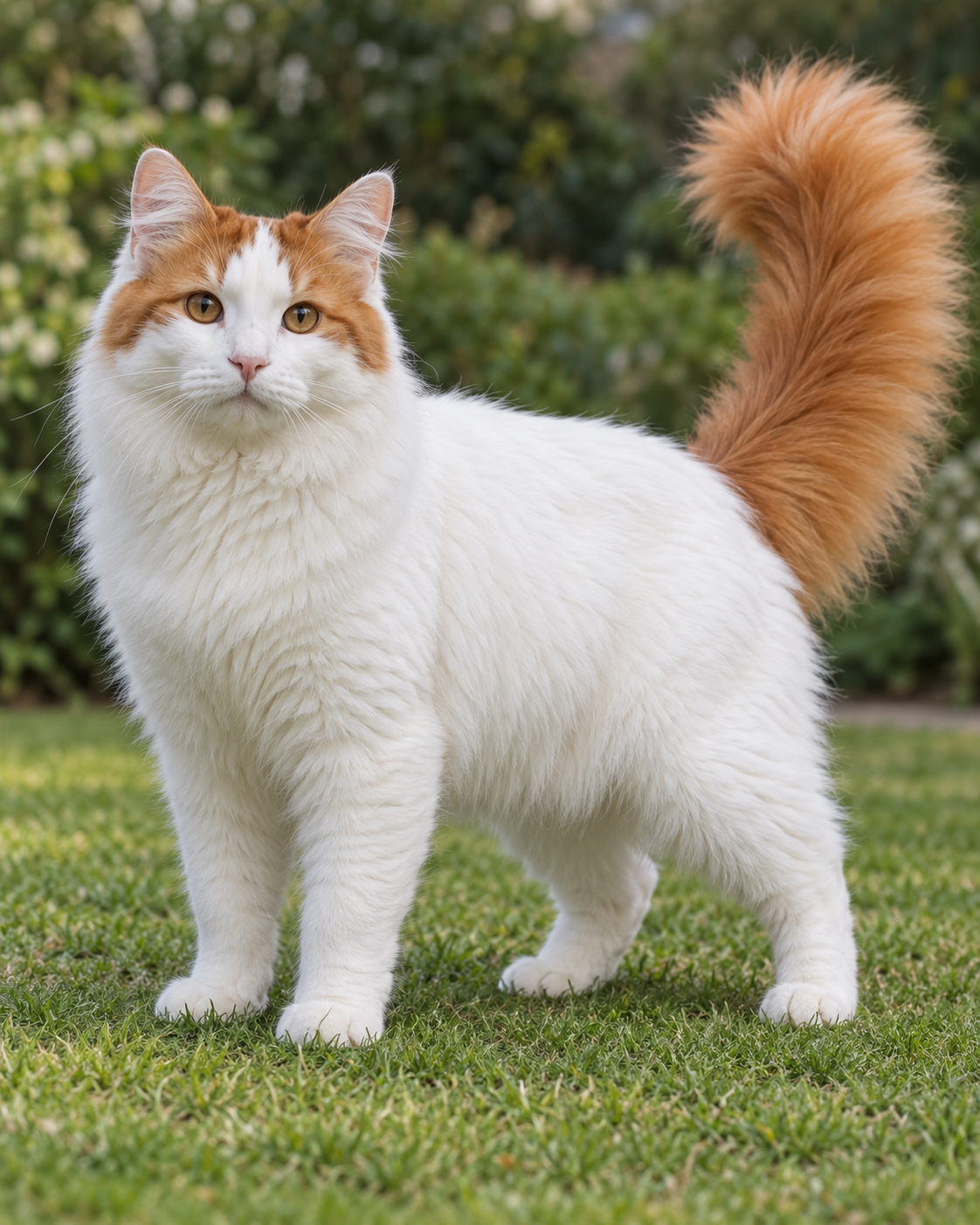
Meet the Turkish Van
Adult ranges are reference examples, not targets or predictions for an individual cat.
Heritage & appearance
The modern British program began with cats brought from Turkey in 1955; ancient-origin stories are less securely documented.
Full breed details
- Adult weight
- Male: 9–20 lb; female: 7–12 lb
- Reference lifespan
- TICA reports 13–17+ years.
View all Turkish Van articles →
View sources and checked dates →References & editorial notes
Adult-weight sources
Female: 7–12 lb; Male: 10–20 lb
direct: TICA and GCCF explicitly give fully mature female 7-12 lb and male 10-20 lb; mature at 3-5 years; registered Turkish Van reference, not means from local all-white Van populations. Turkish-language search completed; cited weight text is English.
- CFA 2026–2027 Breed Standards
- Recognised breeds
- Using Positive Reinforcement to Train and Support Your Cat
- Making the Commitment to Adopt a Cat
- How to Feed a Cat
- Introducing a New Cat Into Your Home
- Meeting the Physical and Emotional Needs of Indoor Cats
- Cornell: Feeding Your Cat
- Cornell: What To Expect
- FelineVMA 2025: Meeting the Physical and Emotional Needs of Indoor Cats
- Cornell: Hypertrophic Cardiomyopathy
- UC Davis VGL: Sphynx and Devon Rex Congenital Myasthenic Syndrome
- UC Davis VGL: Erythrocyte Pyruvate Kinase Deficiency
- TICA: Turkish Van
- CFA: Turkish Van
- CFA: Turkish Van Article
- TICA Standing Rules, Version C 3 June 2026
- Arikan et al. (2003): Blood type A and B frequencies in Turkish Van and Angora cats in Turkey
- Kiener et al. (2021): A Missense Variant in SLC39A4 in a Litter of Turkish Van Cats with Acrodermatitis Enteropathica
- CFA 2026–2027 Breed Standards Checked 2026-10-20.
- Recognised breeds Checked 2026-10-20.
- Using Positive Reinforcement to Train and Support Your Cat Checked 2026-10-20.
- Making the Commitment to Adopt a Cat Checked 2026-10-20.
- How to Feed a Cat Checked 2026-10-20.
- Introducing a New Cat Into Your Home Checked 2026-10-20.
- Meeting the Physical and Emotional Needs of Indoor Cats Checked 2026-10-20.
- Cornell: Feeding Your Cat Checked 2026-10-20.
- Cornell: What To Expect Checked 2026-10-20.
- FelineVMA 2025: Meeting the Physical and Emotional Needs of Indoor Cats Checked 2026-10-20.
- Cornell: Hypertrophic Cardiomyopathy Checked 2026-10-20.
- UC Davis VGL: Sphynx and Devon Rex Congenital Myasthenic Syndrome Checked 2026-10-20.
- UC Davis VGL: Erythrocyte Pyruvate Kinase Deficiency Checked 2026-10-20.
- TICA: Turkish Van Checked 2026-10-20.
- CFA: Turkish Van Checked 2026-10-20.
- CFA: Turkish Van Article Checked 2026-10-20.
- TICA Standing Rules, Version C 3 June 2026 Checked 2026-10-20.
- Arikan et al. (2003): Blood type A and B frequencies in Turkish Van and Angora cats in Turkey Checked 2026-10-20.
- Kiener et al. (2021): A Missense Variant in SLC39A4 in a Litter of Turkish Van Cats with Acrodermatitis Enteropathica Checked 2026-10-20.
Breeders & rescues
Explore Turkish Van breeders →
Questions to bring
- What veterinary records and family health history are available?
- How does this individual cat’s coat and activity fit the care described here?
- Which screening findings and individual needs should I discuss with my veterinarian?