Turkish Van Cat Temperament: Close Company Without a Carrying Promise
Explore Turkish Van cat temperament through chosen closeness, activity and ordinary support without assuming affection means enjoyment of carrying.
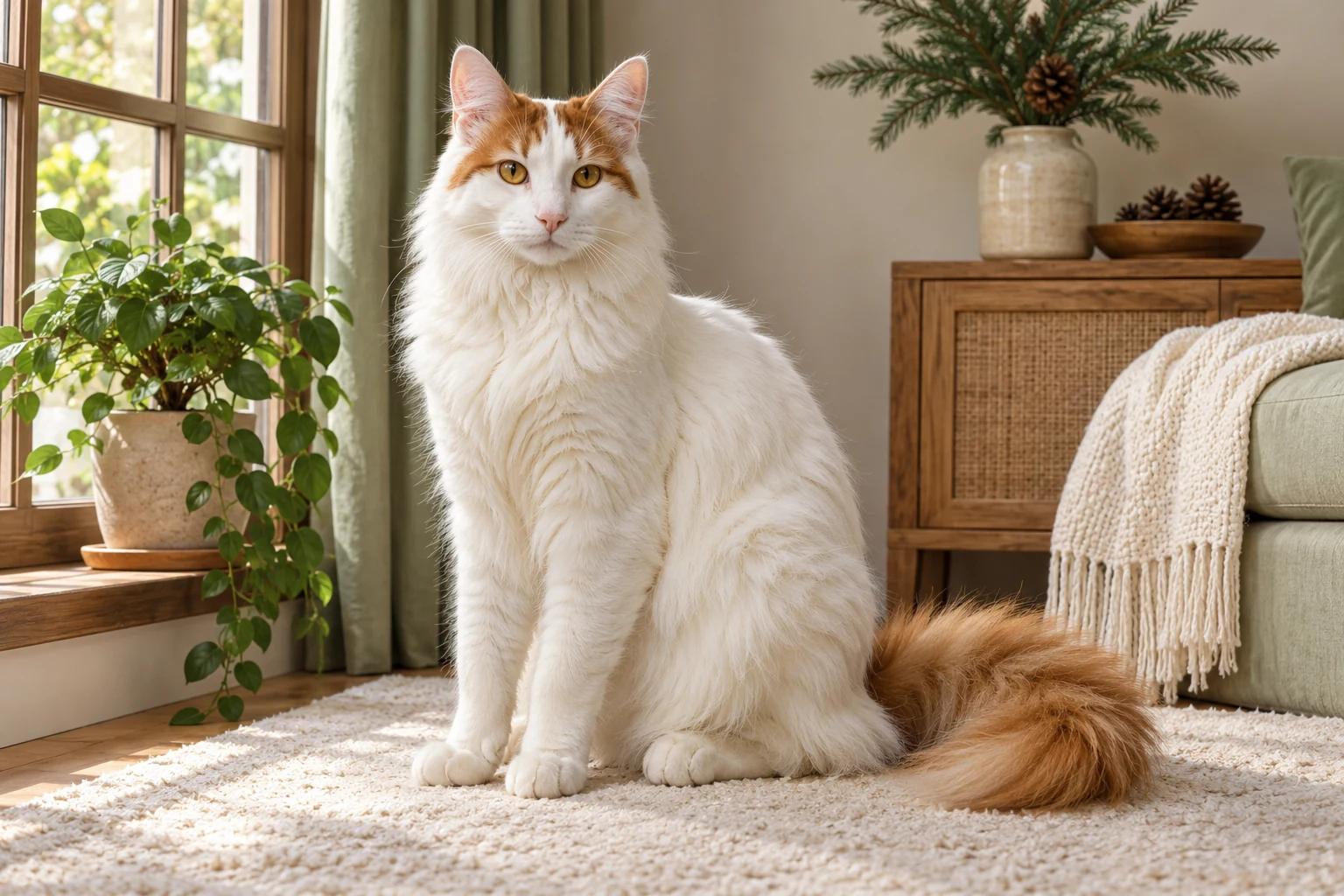
Turkish van cat temperament is often described through attachment, curiosity and energetic play. CFA also makes a useful distinction: a cat can want physical closeness without enjoying being held or carried. That difference matters when a household imagines companionship primarily as picking an animal up or keeping it on a lap.
This guide explores turkish van cat personality through chosen contact, activity and ordinary responsibilities. It leaves water-related safety to the existing article and does not require an individual to perform a playful or affectionate reputation during a visit.
Turkish van cat temperament: ask how the animal chooses closeness
The Turkish Van profile retains attachment alongside a preference for standing beside rather than being carried. Ask what the particular cat does when a familiar person rests. Nearby settling, approaching for touch and choosing a lap are different observations.
CFA's account gives a reason to discuss accepted contact explicitly. It does not mean every Van rejects all lifting or that a cat choosing a lap will accept being placed there. Learn the individual history and necessary care arrangements separately.
During a meeting, allow approach and departure without requesting a carrying demonstration. A quiet interaction can still be useful. The animal does not need to tolerate an unfamiliar hold to prove affection.
Make the ending of contact easy to respect
Ask the caregiver how the cat signals a pause and what people should do next. Keep the route away clear rather than surrounding a resting place. If the animal leaves, do not repeatedly return it for another person's turn.
Adults should guide children before they approach. A child can observe, prepare familiar play equipment or enjoy nearby company without being responsible for restraint. Explain that the tail and coat are part of the animal, not features to pull or examine.
Visitors also need practical instructions. Interest in a substantial, attractive cat does not create permission for touch. An encounter without handling can be thoughtful when the individual prefers to watch.
Give curiosity a useful environment
The profile describes energetic climbing and problem solving. Ask which structures and games the cat already uses, and how ordinary activity is maintained when people are busy. A brief lively demonstration does not describe a whole working week.
Follow installation and load instructions for furniture. A substantial build and athletic reputation do not certify a shelf or establish that every jump is comfortable. Provide manageable ways to leave and keep essential resources accessible.
FelineVMA's indoor-cat guidance combines play with retreat, resources and positive interaction. Review how those choices work around other animals and household traffic. A tall structure is not enough if another pet can block every approach.
Let games be invitations rather than tests
CFA describes interest in fetch and investigation, but no individual is required to retrieve an object on demand. Ask which familiar game the cat returns to and how it chooses to finish. A puzzle result cannot establish intelligence or overall suitability.
Offer something understandable in an appropriate space. Do not keep extending pursuit to produce exhaustion or a dramatic video. An active companion still needs rest without a succession of people restarting entertainment.
Seek veterinary advice about a new loss of interest or changed movement. Do not provoke another attempt to decide whether the cat can still manage its reputation. Ordinary observations can support a useful conversation without a home performance test.
Listen to the individual communication
CFA includes vocal interaction in its description. Ask what calling is like during familiar life rather than selecting the strongest adjective from a breed summary. One quiet encounter cannot guarantee future silence, and one excited episode does not represent every setting.
Keep context attached when discussing a concern. The animal called after a familiar route changed is a clearer observation than it became demanding. Seek veterinary advice about a sudden or concerning difference instead of explaining it entirely through personality.
Where several people share care, make observations available to the responsible adult. Different parts of a change can otherwise be dismissed independently. The purpose is appropriate attention, not a diagnosis assembled from assumptions about motives.
Include coat care in the contact discussion
Turkish van cat characteristics include a seasonal coat that needs maintenance. Ask how combing is already managed and which handling is familiar. Enjoying company on the sofa does not establish comfort with every tool or position.
If a care response changes or an area seems uncomfortable, contact the relevant professional. Do not call it stubbornness or continue simply because the breed is described as affectionate. The individual concern deserves assessment.
This temperament guide provides no mat-removal method, bathing routine or medication advice. It keeps practical care visible while leaving the technique and clinical questions with appropriate professional support.
Prepare relationships and the everyday schedule
Ask about actual experience with children, visitors and other pets, including how encounters were managed. A strong attachment to one familiar person cannot guarantee compatibility with every resident animal. Obtain guidance and prepare separation, resources and retreat before introductions.
Discuss absences and backup care honestly. Another pet is not an automatic answer to a companionship question, and a routine that only works on an unusually free day may not be maintainable. Ask which responsibility a new caregiver is most likely to underestimate.
Use the cat quiz to organize broader preferences, then bring them back to the individual history. The existing Van water-safety article addresses a separate environmental concern; it is not an activity every cat should demonstrate.
A workable relationship allows closeness, movement, rest and withdrawal without turning affection into a carrying obligation. The useful expectation is an individual whose needs you understand, with dependable care continuing after the first striking impression.
Frequently asked questions
Does attachment guarantee enjoyment of being carried?
No. CFA and the current profile distinguish closeness from restraint. Learn the individual's preferences and appropriate necessary care separately.
Must every Turkish Van demonstrate fetch?
No. A familiar game can be enjoyable without becoming a breed test. Ask about actual preferences and allow participation to end.
Does an active reputation settle a changed movement concern?
No. Seek veterinary advice about a new or concerning change instead of making the cat repeat an activity to prove ability.
Is compatibility with another pet guaranteed?
No. Assess the actual individuals and prepare introductions with suitable guidance, resources, separation and retreat.
Sources behind this article
Article source checked: November 20, 2026. Source checked 2026-11-20
Keep reading

American Bobtail cat temperament
Read article →