Turkish Van vs Khao Manee: White Coats With Different Contexts
Compare Turkish Van vs Khao Manee coat, marking and history descriptions, then consider individual care, activity and accepted contact.
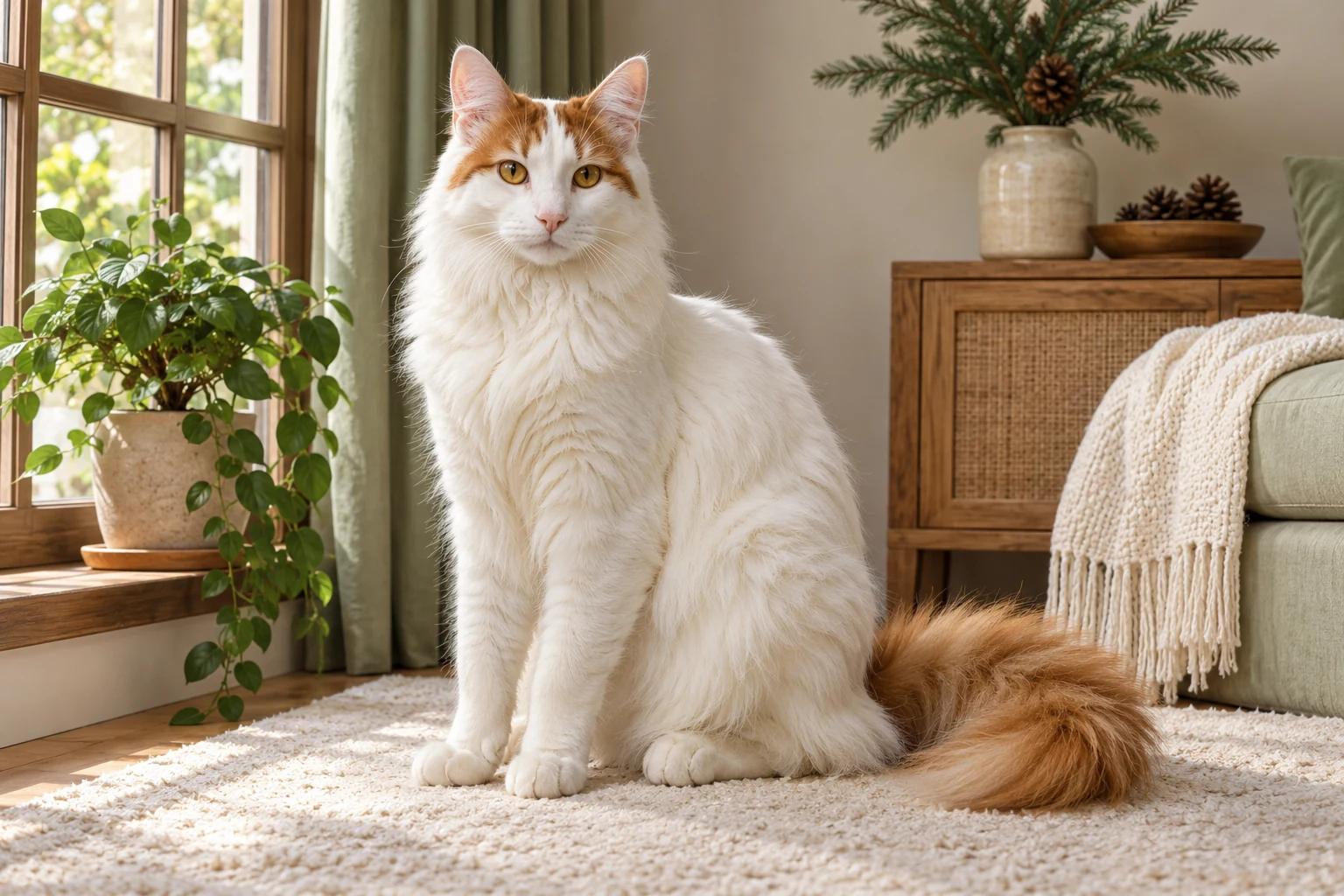
Turkish van vs khao manee comparisons can begin with pale coats and striking eyes, but the breed descriptions are distinct. CFA describes the Turkish Van's longer coat and characteristic color concentrated around the head and tail. The Khao Manee has a short white coat and its own Thai background. Similar eye colors or an attractive white silhouette do not make the identities interchangeable.
If you are considering a turkish van or khao manee, compare the documented features and the actual care routines. Appearance can start your interest without establishing health, accepted handling or compatibility with your household.
Turkish Van vs Khao Manee: compare more than white fur
The Turkish Van profile retains the muscular, substantial build and seasonal coat context. The Khao Manee profile describes a shorthaired white cat. CFA allows more than one eye-color description in each breed, so one striking eye combination is not a complete identity record.
Ask about the individual's documentation rather than authenticating it by a photograph. A Van-type pattern can occur beyond Turkish Vans, while a white shorthaired appearance alone does not establish Khao Manee ancestry.
The difference between turkish van and khao manee is useful when it leads to appropriate questions. It should not become a visual contest or a reason to assign a medical conclusion from coat or eyes without relevant assessment.
Keep history specific rather than legendary
CFA places the modern British Van program after cats were brought from Turkey in 1955. Its Khao Manee account describes Thai origins and a first United States import in 1999. Those are different modern histories, not proof of every story attached to a breed name.
Ask which records concern this animal and which describe the breed generally. Royal-origin traditions or ancient images cannot establish the individual's current care. Preserve an unknown background rather than filling it with an appealing historical explanation.
An actual veterinary record answers a different question from registration. Review relevant health information with the appropriate professional instead of treating documented breed identity as complete health clearance.
Make coat maintenance a concrete comparison
The Van profile starts with weekly combing adjusted for seasonal changes. CFA describes a lighter warm-weather coat and a heavier winter coat that may need more attention. Ask how the actual routine changes rather than assuming one calendar entry covers the year.
The Khao Manee profile describes regular rubber-brush care for loose white hair. A shorter coat changes the maintenance discussion, but it is not a promise of no shedding or no hands-on work. Learn which tool and handling the individual accepts.
Ask each caregiver for a suitable demonstration and where help is available. A source describing easy care cannot guarantee that no tangle or skin concern will occur. This comparison gives no bathing prescription or product recommendation for either animal.
Learn the individual's preferred closeness
The Van profile specifically separates attachment from enjoyment of carrying. The Khao Manee account describes social interest, but that cannot guarantee acceptance of lifting either. Nearby rest, petting and being held are different experiences.
Ask what the animal seeks during a familiar evening and how it chooses to finish. Let approach and departure remain meaningful during a meeting. An interested cat should not be passed between visitors to demonstrate a friendly reputation.
Adults should guide children and protect undisturbed resting places. A meeting without touch can still be informative when the animal prefers to observe. Neither coat color nor a sociable description removes individual choice.
Plan activity without ranking the breeds
The profiles include exploration and interactive opportunities. Ask which games each individual already understands and returns to. A fetching reputation should not become a test every candidate must pass during a short visit.
FelineVMA's indoor-cat guidance joins play with retreat and resources. Review routes and access around the home rather than concentrating only on toys. An animal needs choices when another pet or person is nearby.
Follow installation and load instructions for raised furniture. A substantial Van and an athletic-looking Khao Manee both need actual equipment assessed. A breed label cannot certify a structure or establish that a particular jump is comfortable.
Introductions and absences need their own plan
For a khao manee vs turkish van decision, ask about history with other animals and unfamiliar people. Learn the circumstances rather than accepting a broad claim that every individual gets along with everyone.
Prepare suitable separation, resources and retreat with guidance for the actual residents. One calm encounter does not establish that all management can be removed. Another pet also should not be introduced as an automatic solution to an unexamined companionship need.
Discuss the real schedule, including absences and backup care. A social reputation cannot tell you whether an arrangement will work through an ordinary busy week. Keep practical responsibilities beside the enjoyable contact you hope for.
Bring the comparison back to the animal
Record comparable information for each candidate: accepted contact, a familiar activity, the coat task you would maintain and an unanswered question. Ask which responsibility is most likely to surprise a new caregiver.
The existing Turkish Van water-safety article addresses a separate hazard. A water-related reputation is not a reason to stage a swimming demonstration or assume that environmental questions are settled by breed identity.
Use the cat quiz to organize broader preferences before adoption. Then decide from the individual records and care you can support. The useful choice concerns a real companion, not a promise that pale fur, uncommon eyes or an appealing origin story predicts the relationship.
Frequently asked questions
Do white coats make the breed names interchangeable?
No. CFA describes distinct coat lengths, markings and histories. Ask about the individual records rather than identifying from white fur alone.
Does one eye-color combination establish identity or health?
No. Eye appearance is only part of a breed description and does not replace appropriate individual records or professional assessment.
Does short hair mean the Khao Manee has no coat-care needs?
No. Learn the established routine and suitable tool. Neither short hair nor white coloring promises an absence of shedding or skin concerns.
Does attachment mean a Turkish Van enjoys carrying?
Not automatically. The current profile explicitly separates the ideas. Learn the individual's preferences and respect its choice to leave.
Sources behind this article
Article source checked: November 20, 2026. Source checked 2026-11-20
Keep reading

Abyssinian vs Somali: Coat, Size and Everyday Company
Read article →