Cat breed · Russia
Siberian
A substantial cat with a dense coat that changes seasonally.
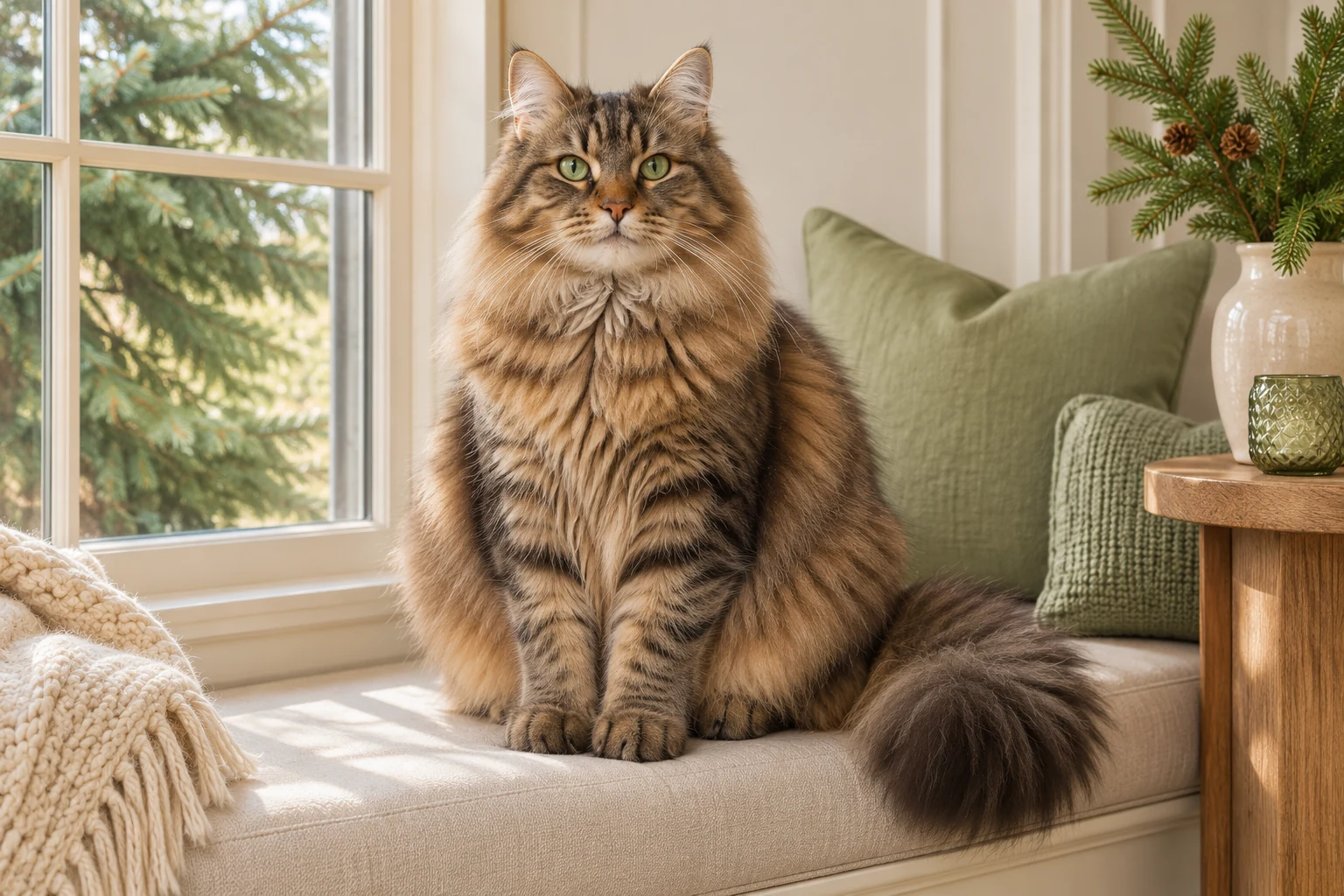
- Adult weight
- Female: 11–15 lb; Male: 15–19 lbSome published weights are estimates. Check the source notes; individual animals vary.
- Build
- Medium to large with a substantial layered coat
- Reference lifespan
- 11–18 years or more
Life with a Siberian
- Company
- Discuss how this individual combines play, company and quiet time.
- Play & enrichment
- Offer varied play, exploration and social contact, watching which games this cat returns to.
- Coat care
- Check the underside and tail for tangles, adjusting the routine as the dense coat changes through the seasons.
A little loose hair shows up here and there.
Health to keep in mind
Health topics include “Keep the examination date with the finding”. Read the owner observations, questions for your veterinarian and advice on when to seek help. Read the full Health guide.
Rescues & sheltersPrint or citeBreed articles
Read the complete profile and family fact sheet
Life with a Siberian
Discuss how this individual combines play, company and quiet time.
Explore home life →Offer varied play, exploration and social contact, watching which games this cat returns to.
Explore daily care →Check the underside and tail for tangles, adjusting the routine as the dense coat changes through the seasons.
Explore daily care →Print or cite this breed
Siberian family fact sheet
Breed-level references are a starting point. Ask about the individual animal’s routine and care needs.
- Build
- Medium to large with a substantial layered coat
- Female
- 11–15 lb
- Male
- 15–19 lb
- Reference lifespan
- 11–18 years or more
- Adult size
- Adult weight often falls around 8 to 17 pounds.
Company
Discuss how this individual combines play, company and quiet time. A sociable description is not evidence that every cat will accept unfamiliar pets or a busy household. Ask the caregiver to explain the environment and interactions in which this cat is comfortable.
Play & enrichment
Offer varied play, exploration and social contact, watching which games this cat returns to. Keep daily activity opportunities available alongside places to rest.
Coat care
Check the underside and tail for tangles, adjusting the routine as the dense coat changes through the seasons. Coat-care needs do not predict allergy symptoms.
Everyday responsibilities
Plan food, supplies, routine care and veterinary visits. Agree who handles the everyday jobs and who covers absences.
Adult help
An adult should remain responsible for care, supervise children’s interactions and arrange help when needed.
My Breed Atlas. Siberian breed profile. https://mybreedatlas.com/cats/breeds/siberian
Read this profile’s sources →Adult ranges and source qualifications
- Build
- Medium to large with a substantial layered coat
- Female
- 11–15 lb
- Male
- 15–19 lb
- Reference lifespan
- 11–18 years or more
Reference ranges describe the breed, not a prediction for an individual.
Daily care
Play & enrichment
Offer varied play, exploration and social contact, watching which games this cat returns to. Keep daily activity opportunities available alongside places to rest.
More about everyday care
Provide places to retreat, separated resources, chances to play and predictable interaction. These are feline needs, not breed compatibility scores.
Coat, grooming & daily care
Check the underside and tail for tangles, adjusting the routine as the dense coat changes through the seasons. Coat-care needs do not predict allergy symptoms.
Training & communication
Reward a behavior the cat chooses with something it values. Build tasks in small steps, including approaching a carrier or a grooming tool. Stop when the cat is frightened, unwell or in pain; ask your veterinarian about cooperative care.
Food, routine & costs
The everyday ownership plan
Planning for this breed
Allow room in the schedule for seasonal changes in coat maintenance. Ask to see the cat’s underside and tail care routine as well as its preferred play and resting places.
Meals and body condition
Discuss portions and body condition with your veterinarian instead of using the registry weight range as a feeding target. Smaller meals and appropriate food puzzles can support natural feeding behavior. Give each cat a separate feeding station.
Time and costs
Before committing, budget for food, litter, equipment and continuing veterinary care. Agree who handles play, cleaning, grooming and care during absences. Obtain local estimates for the individual’s care instead of relying on an invented breed cost.
Home life
Temperament & companionship
Discuss how this individual combines play, company and quiet time. A sociable description is not evidence that every cat will accept unfamiliar pets or a busy household. Ask the caregiver to explain the environment and interactions in which this cat is comfortable.
Home life & introductions
Prepare a quiet transition room with food, water, litter, hiding places and scratching options. Introduce resident cats gradually and proceed when both are comfortable. Breed reputation cannot establish compatibility with children, dogs or another cat.
Offer a quiet retreat and let the cat control its distance. Supervise children and introduce resident animals gradually; individual history matters more than a breed reputation.
Personality & care details
Personality & care profile
Breed tendencies vary by individual. Higher means more of the named tendency, not better.
What everyday life tends to involve
These notes describe a tendency for the breed. Every animal is an individual.
- Play
- Several play sessions through the day fit this cat.
- Coat care
- Once a week or less is usually enough brushing.
- Loose hair
- A little loose hair shows up here and there.
- Company
- Many like to share the room without constant contact.
- Adult size
- Adult weight often falls around 8 to 17 pounds.
YOUR EVERYDAY LIFE
How could this breed fit your life?
See household examples or compare this breed with answers you chose to save. The examples show combinations where this breed appeared among the first five results. Other combinations can work too.
Saved matching preferences stay in this browser, never on your account. They expire after 30 days and are removed the next time this feature reads them. Health answers, children’s ages and free-text notes are not saved. This section does not reproduce those personal care notes.
Siberian health
Health observations and family records
Clinical studies have documented HCM in selected Siberians. A small candidate-gene study did not identify a qualifying causal change in the regions it examined; that result is not a comprehensive exclusion of genetic contributions or evidence that another breed’s heart test can clear a Siberian.
Keep the examination date with the finding
Early heart changes may not be obvious in daily behavior. If a relative had confirmed heart disease, bring the actual ultrasound findings and the age at examination. Ask what a previous normal result can and cannot tell the veterinarian now. Early disease may not show in day-to-day behavior. If your cat is breathing comfortably now but you've noticed a repeated change in usual sleeping breathing or a drop in activity, call your vet promptly. Go to an emergency vet now if your cat breathes unusually fast at rest, struggles to breathe, breathes with their mouth open, collapses, or suddenly drags or can't use one or both back legs. Don't wait to count breaths. An old result or a missing DNA report must not delay care. Bring dated ultrasounds and the age at testing. If a close relative was affected, ask for the diagnosis rather than only a report of a murmur. Ask what the current exam can answer, whether ultrasound or blood pressure assessment would help and when follow-up makes sense. Ask for a clinic-specific plan for sleeping breathing if the vet wants it, changes to watch for and your next recheck. Ask how to handle a missed dose or a new sign. Keep the medication and emergency plan where all caregivers can reach it, and do not make changes based on a single reading.
Family history and screening
Keep family heart ultrasound reports separate from any PKLR result. The published PK deficiency survey recommends Siberian testing after variant detection, but that is different from a current anemia diagnosis or a symptomatic breed rate.
Questions for your veterinarian
- Which heart findings in this family are confirmed?
- What does the offered genetic report address, and does it assess the concern we are discussing?
Choosing a kitten? Ask to see both parents’ results, with the animal’s name and the date on each report. If you’re adopting an adult, ask which records come with that individual.
Health sources
- Primary HCM phenotype and candidate-gene study
- Cornell clinical guidance
- Primary PKLR genotype study
- ACVIM feline cardiomyopathy
- Penn Vet · Treating cardiomyopathy and acute embolism
- Cornell University Hospital for Animals · Emergencies
Screening evidence and limits
UC Davis includes Siberian among populations appropriate for PK-deficiency testing, an inherited cause of intermittent anemia with variable signs. A carrier and an affected result mean different things. Cornell also includes Siberian among breeds with greater HCM occurrence. Discuss the actual genetic report, family cardiac history and examination needs with a veterinarian; these sources do not provide an individual disease probability.
History & sources
Heritage & appearance
Meet the Siberian
Adult ranges are reference examples, not targets or predictions for an individual cat.
Heritage & appearance
The Siberian developed in Russia, where its dense coat suited the climate. Neva Masquerade has its own pointed-breed profile.
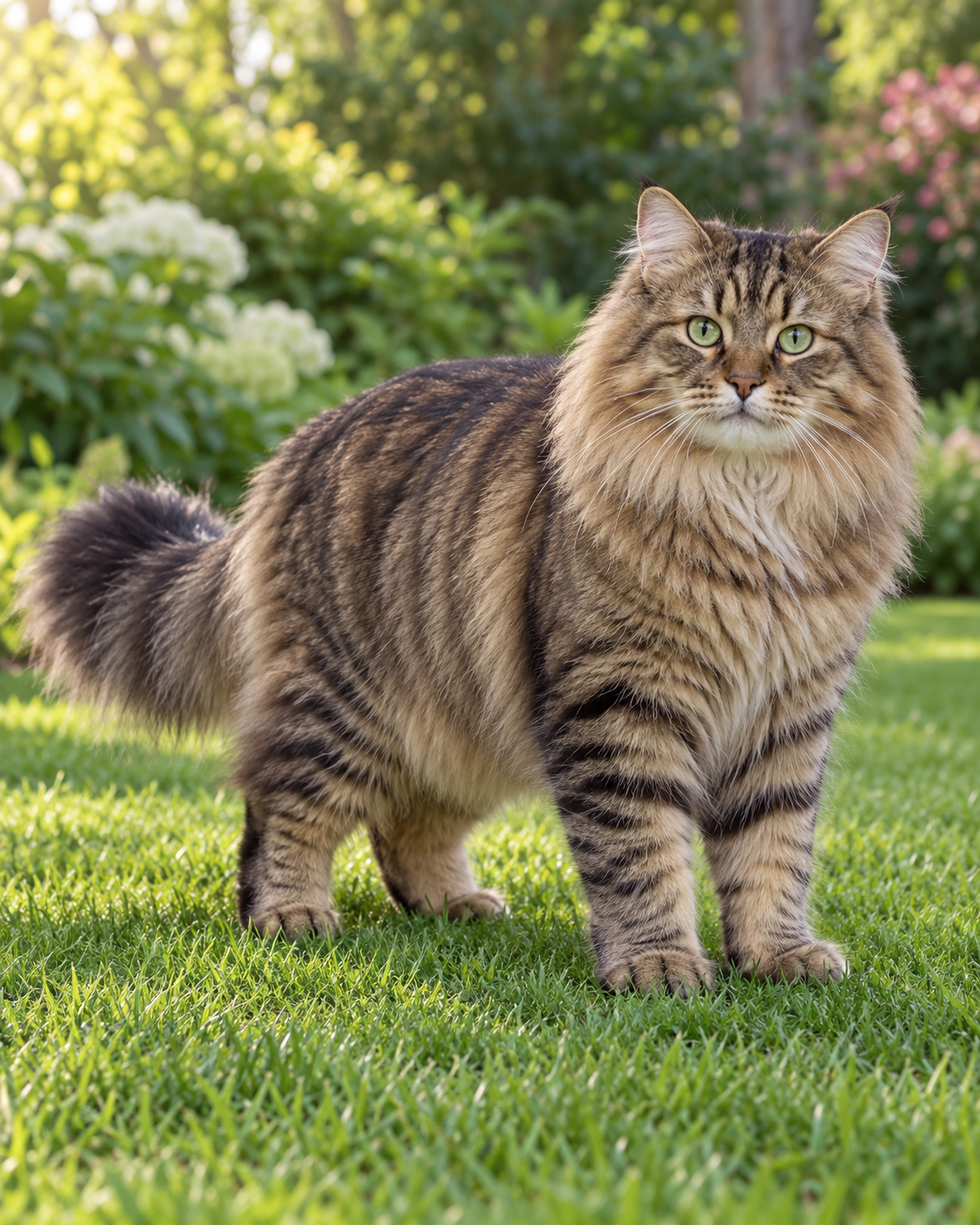
Full breed details
A substantial cat with a dense coat that changes seasonally. A curious, sociable companion that often communicates quietly.
References & editorial notes
Adult-weight sources
Female: 11–15 lb; Male: 15–19 lb
educated: published female 11-15/male 15-19 lb provides a middle ground between CFA female 8-12/male 12-18 lb at https://cfa.org/breed/siberian/ and GCCF female 13-17/male 17-26 lb at https://www.gccfcats.org/getting-a-cat/choosing/cat-breeds/siberian/. Russian-language search completed; cited weight text is English.
- Erythrocyte Pyruvate Kinase Deficiency
- Siberian
- Hypertrophic Cardiomyopathy
- CFA 2026–2027 Breed Standards
- Recognised breeds
- Standing Rules Version C, 3 June 2026, section 701.4.1
- Using Positive Reinforcement to Train and Support Your Cat
- Making the Commitment to Adopt a Cat
- How to Feed a Cat
- Introducing a New Cat Into Your Home
- Meeting the Physical and Emotional Needs of Indoor Cats
- Siberian breed introduction
- Erythrocyte Pyruvate Kinase Deficiency Checked 2026-10-20.
- Siberian Checked 2026-10-20.
- Hypertrophic Cardiomyopathy Checked 2026-10-20.
- CFA 2026–2027 Breed Standards Checked 2026-10-20.
- Recognised breeds Checked 2026-10-20.
- Standing Rules Version C, 3 June 2026, section 701.4.1 Checked 2026-10-20.
- Using Positive Reinforcement to Train and Support Your Cat Checked 2026-10-20.
- Making the Commitment to Adopt a Cat Checked 2026-10-20.
- How to Feed a Cat Checked 2026-10-20.
- Introducing a New Cat Into Your Home Checked 2026-10-20.
- Meeting the Physical and Emotional Needs of Indoor Cats Checked 2026-10-20.
- Siberian breed introduction Checked 2026-10-20.
Breeders & rescues
Questions to bring
- Can the PK-deficiency result and family heart-health records be explained for this individual?
- How does this particular coat change through the year?
- Which inherited-condition results are documented for the family?