Siberian Cat Temperament: Curious Company Beyond the Winter Coat
Explore Siberian cat temperament through curiosity, company and quiet time, with practical questions about the individual and daily care.
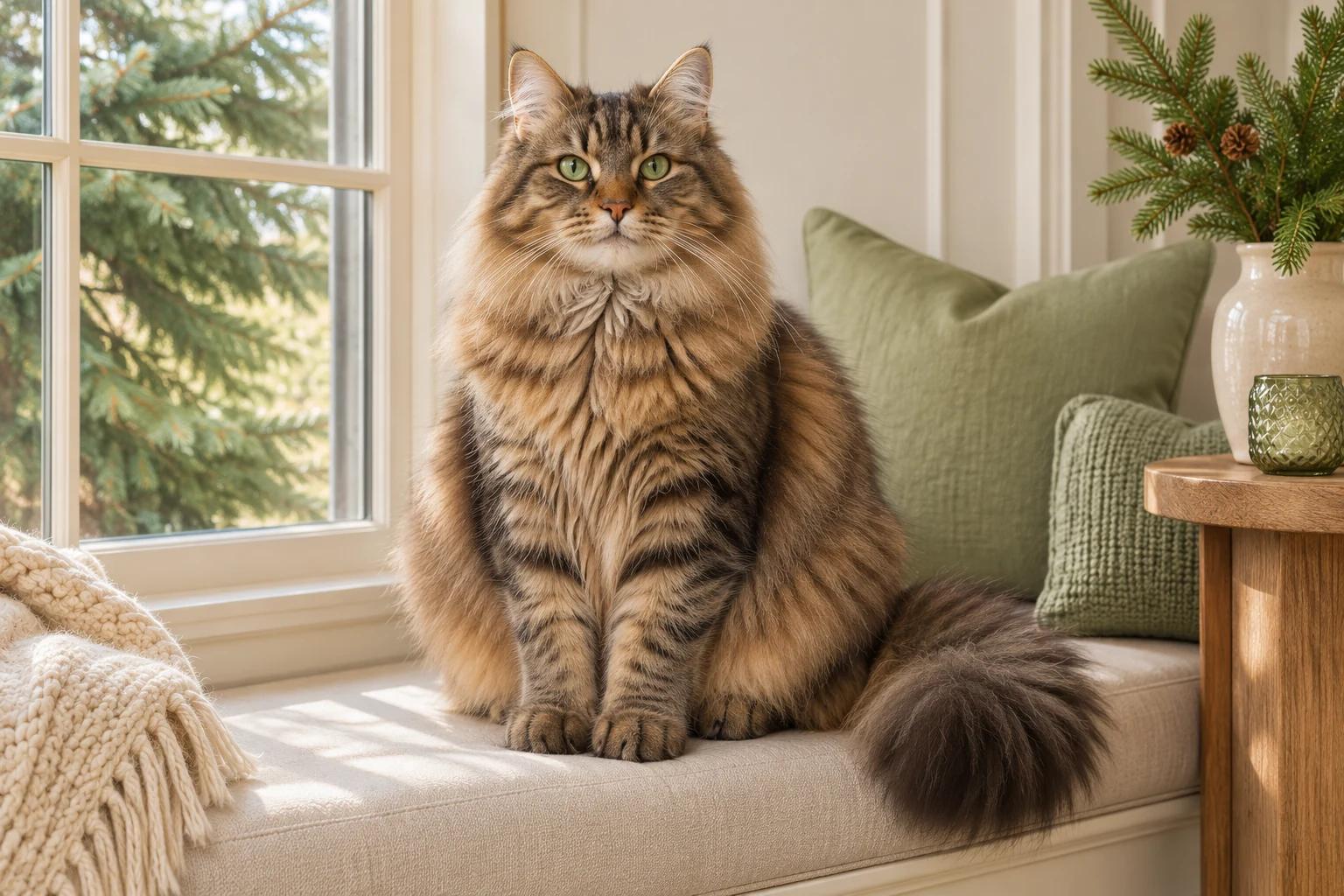
Siberian cat temperament is described by CFA and TICA through curiosity, play and an interest in familiar people. A substantial cat with a dense coat can look particularly settled in a photograph, but that moment does not describe an entire day. The useful question is how the individual combines investigation, company and quiet time when nobody is arranging a picture.
This guide explores siberian cat personality through ordinary household situations. It focuses on the relationship and responsibilities behind the appearance, without promising that every Siberian will be cuddly, quiet or comfortable with a busy home.
Siberian cat temperament: ask about involvement, not devotion scores
The Siberian profile asks caregivers to explain where this animal is comfortable and how it combines play and company. Start with an ordinary example: what happens while someone unpacks a bag, works at a desk or settles in the evening?
CFA describes investigative interest; TICA also presents play and proximity to familiar people. Those accounts give you a reason to ask about the cat's participation. They do not tell you whether your candidate prefers watching from a distance, touching a person or following between rooms.
Ask what the caregiver wishes a new household would understand. An answer about a preferred routine or a task needing time is more useful than a flattering claim that the cat loves everyone. It helps you picture the relationship beyond the first greeting.
Curiosity needs a room prepared for it
A cat interested in cabinets and bags may encounter things people did not intend to share. Before arrival, review what is stored, which doors must remain secure and where personal belongings will be put away. Do not rely solely on a verbal prohibition to protect a hazard.
Offer appropriate places to investigate and keep essential resources separate from household conflict. FelineVMA's indoor-cat guidance includes exploration, scratching, safe places and positive interaction. Preparation should give the animal usable options rather than simply closing every interesting route.
Ask which arrangements are already familiar. You can preserve a known resting place or game while the cat learns the new setting. A move need not become an immediate test of adaptability through several rooms, visitors and unfamiliar devices at once.
Quiet communication still deserves attention
CFA's account describes comparatively quiet communication and strong purring among its tendencies. That is not a guarantee about the sounds an individual will make or an explanation for every change. Ask what the caregiver hears during normal contact and what is unusual for this cat.
A purr or nearby presence should not be used as a complete assessment of comfort. Look at the context and seek veterinary advice about concerns. Likewise, a new calling pattern should not be dismissed simply because a registry description mentions a particular kind of sound.
When several people help, agree how observations will be shared. Concrete descriptions of timing and circumstances are clearer than calling the cat demanding or unusually placid. The record should support appropriate attention without becoming a home diagnosis.
Let company include distance
A sociable Siberian may want to share the room without accepting a lift. Treat approaching, resting, petting and carrying as different experiences. Ask about familiar contact and pause to notice whether the individual chooses to continue.
If it withdraws, protect that ending. Do not bring the cat back to finish someone else's turn. Affection is easier to understand when leaving is possible; prolonged tolerance under pressure is not the same thing as an invitation.
Adults should guide children and tell visitors which places remain undisturbed. A large coat is not permission to touch from every direction. Somebody can enjoy meeting the animal through quiet observation while the cat retains control of distance.
Make play an invitation you can sustain
The current profile supports varied games and opportunities to explore. Learn which activities the animal returns to and when it is usually interested. A short visit with one unfamiliar toy cannot establish how playful it is through a familiar week.
Offer an understandable opportunity in a suitable space. Follow equipment instructions and protect routes away. Do not set a jump target or a puzzle score to prove intelligence, and do not make essential food depend on completing a task.
If a familiar activity becomes newly difficult or is abandoned unexpectedly, contact the veterinary team about concerns. A calmer description cannot establish the reason. Do not increase the demand to decide whether the animal is simply being lazy.
Keep coat care part of the honest relationship
Siberian cat characteristics include a dense coat that changes seasonally. The profile asks about underside and tail care rather than promising that a regular cuddle reveals every tangle. Ask what handling is familiar and who helps when a task becomes difficult.
Acceptance of touch at one moment does not establish acceptance of a comb elsewhere. A new response to handling deserves appropriate advice rather than a revised personality label. Necessary care should follow the individual plan, with suitable professional help when needed.
This temperament guide does not supply a mat-removal procedure or borrow a universal grooming schedule from a registry summary. Its purpose is to keep the ongoing work visible when a soft, impressive coat makes ownership sound simpler than it is.
Discuss the household as it really operates
Explain ordinary absences and busy periods when discussing adoption. Ask how care is currently shared and what support the animal will have when routines change. Another pet is not an automatic answer to company needs or an assurance of compatibility.
Prepare introductions gradually with suitable guidance, separation and resources. Learn the history of actual encounters without treating one successful relationship as a promise about all future ones. Each resident needs usable retreat and access to essentials.
Use the cat quiz to organize expectations before making a commitment. The existing Siberian allergy article addresses a separate household decision and should not be replaced by assumptions about temperament or coat. An honest plan includes the less convenient responsibilities as well as the company you hope to enjoy.
Frequently asked questions
Are all Siberians eager to be held?
No individual handling preference is guaranteed. Nearby company and lifting are different experiences; ask about the actual cat and respect its response.
Does quiet communication mean no attention is needed?
No. A quiet reputation cannot establish comfort or remove daily responsibilities. Seek veterinary advice about a new or concerning change.
Should curiosity be managed through verbal rules alone?
Do not rely on a cue to protect hazards. Prepare the room, secure unsuitable materials and provide appropriate opportunities to investigate.
Does a sociable description guarantee acceptance of another pet?
No. Ask about relevant history and plan the actual introduction with suitable guidance, resources and retreat for every animal.
Sources behind this article
Article source checked: November 20, 2026. Source checked 2026-11-20
Keep reading

American Bobtail cat temperament
Read article →