Siberian vs Norwegian Forest Cat: Compare the Coat and the Companion
Compare Siberian vs Norwegian Forest Cat appearance, seasonal coat care and companionship, then ask about the actual animal and its daily routine.
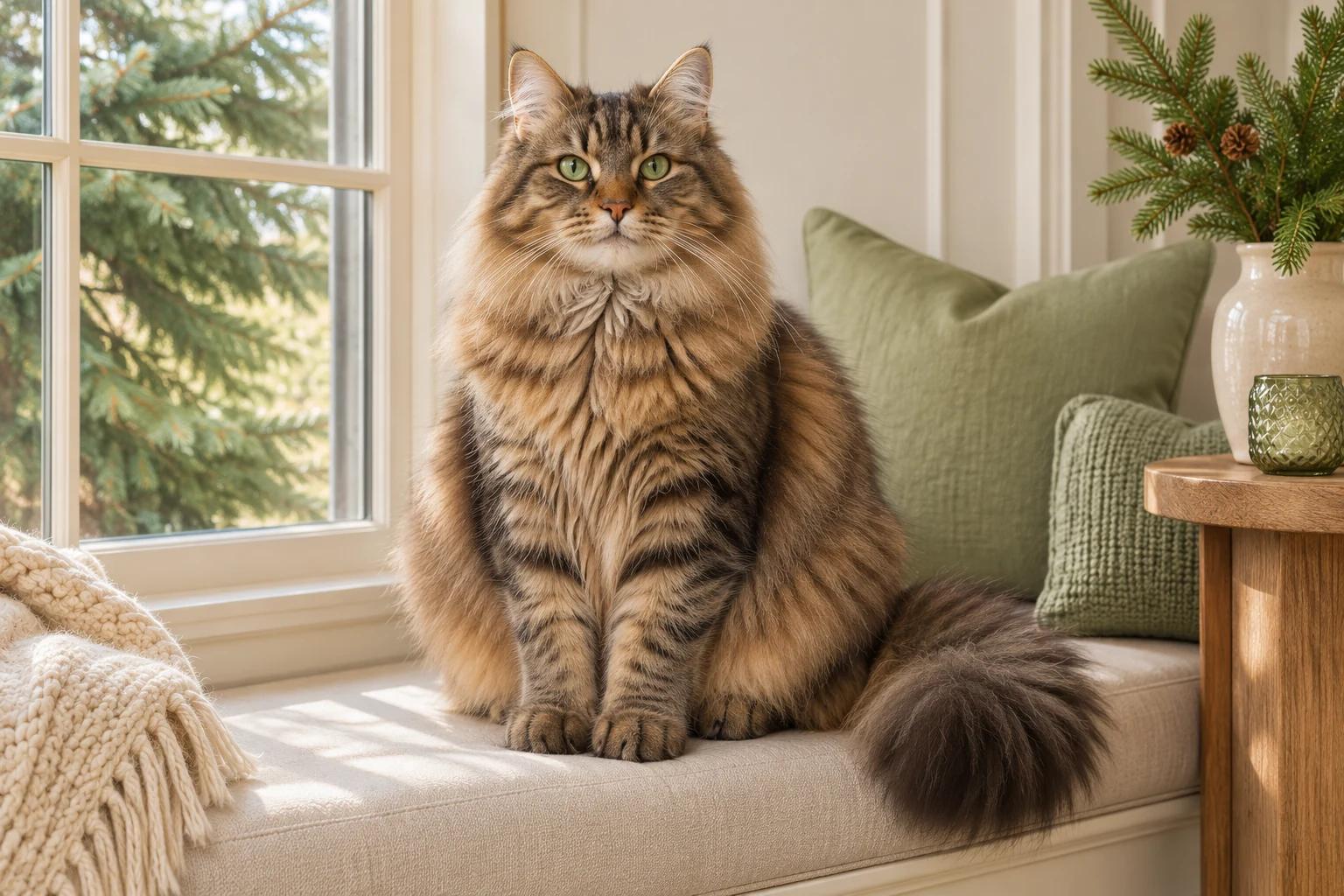
Siberian vs norwegian forest cat comparisons often begin with two impressive longhaired silhouettes. Both breeds have substantial bodies and coats that change with the seasons, but their registry descriptions are distinct. The Siberian has a rounded overall impression and a layered triple coat; the Norwegian Forest Cat has a triangular head, a straight profile and a double coat with longer guard hairs. Neither appearance tells you which individual will enjoy your household.
If you are considering a siberian or norwegian forest cat, turn those visual differences into questions about coat care, daily activity and accepted contact. The useful comparison continues after the photograph.
Siberian vs Norwegian Forest Cat: what the descriptions establish
CFA describes the Siberian's broad modified-wedge head, rounded muzzle and muscular build. Its Norwegian Forest Cat description emphasizes an equilateral-triangle head and straight nose profile. These are breed-description distinctions, not instructions for identifying an undocumented cat by eye.
Read the Siberian profile and Norwegian Forest Cat profile alongside the individual records. Both can look especially full-coated in a winter photograph. Ask when the image was taken before assuming that one animal always carries more coat or has a larger body.
A difference between siberian and norwegian forest cat can be meaningful without becoming a ranking. A particular head shape or coat texture does not make one companion more affectionate, healthier or easier for your family.
Make seasonal coat work a concrete question
CFA's accounts describe seasonal changes in both breeds. The Siberian's coat can become less dense in summer, while the Norwegian's winter undercoat also changes. The practical question is how this individual is maintained during that transition, not which photograph appears tidier.
Ask the caregiver to explain the routine at its busiest point in the year. For a Siberian, the current site specifically asks about the underside and tail. For the Norwegian, ask how regular combing changes when more winter coat is being shed. Learn the demonstrated routine rather than assigning both animals a universal weekly appointment.
Find out who provides help when tangles exceed ordinary care. Do not borrow a mat-removal method from an informal comparison or use scissors on a difficult knot. The coat's condition and the animal's response should guide when suitable professional help is needed.
Compare companionship through the same situation
CFA's Siberian account describes curiosity and interest in household activity. Its Norwegian account describes companionship with an independent streak and emphasizes that lap contact is the cat's choice. Those are useful questions to explore, not reliable predictions for every individual.
Ask each caregiver what the cat does during a quiet working morning. Does it settle nearby, investigate the room, request a game or choose a separate place? Ask what happens when someone pauses contact. Comparing the same circumstances gives you more information than contrasting two flattering adjectives.
During a meeting, let the animal choose its approach. Following someone is not automatically permission for lifting, and resting nearby does not promise lap-sitting. Neither candidate needs to tolerate a handling demonstration to establish affection.
Give climbing a practical review
The Norwegian profile highlights climbing and stable tall furniture; the Siberian profile includes exploration and varied play. Those descriptions support environmental preparation without establishing which individual should jump farther or climb higher.
Review the actual routes through your home. Is the resting surface stable, is there a manageable way down, and can another animal block access? Follow installation and load instructions rather than treating a breed's athletic reputation as an equipment certificate.
Ask what furniture the cat already uses before replacing it with something taller. A familiar, well-supported resting option may be more useful than a dramatic structure chosen to match the breed's appearance. Essentials should remain accessible without completing a challenge.
Keep size questions attached to the individual
This comparison does not combine different published weight accounts into a larger-versus-smaller verdict. The current profiles retain their own reference information, while an actual cat's dated measurement answers a different question. A kitten's adult outcome cannot be promised from a breed maximum.
For transport, check the animal's familiar carrier, usable interior room, entrance and secure handling. A product's load rating matters, but it does not establish comfortable fit by itself. Consider who will carry the combined load and how necessary travel is managed.
Ask your veterinarian about body condition rather than changing portions to make the cat resemble a preferred example. Neither a full coat nor a sturdy silhouette can supply an individual feeding assessment.
Plan introductions for the residents you have
FelineVMA's indoor-cat guidance connects positive interaction with retreat and suitable resources. Apply that to either choice. A social description cannot guarantee compatibility with a particular dog, resident cat or child.
Ask about relevant experience and obtain guidance for the actual introduction. Prepare separation and independent access to essentials. Do not let an enthusiastic resident decide the pace while the newcomer is expected to prove its adaptability.
Adults should explain resting-place boundaries to children and visitors. A meeting without touching can still be successful preparation. The individual should be able to withdraw without being followed because someone expected a gentle longhaired companion.
Choose from the work you can maintain
For a norwegian forest cat vs siberian decision, write down the care you have actually learned: seasonal coat tasks, a familiar activity, contact preferences and backup arrangements. Any unanswered question belongs on that list rather than being filled by a breed reputation.
The cat quiz can organize wider household preferences. The existing Siberian allergy-decision article addresses a separate medical consideration; coat comparisons cannot establish allergy suitability. Keep that question with the appropriate clinician instead of selecting from appearance.
An informed shortlist concerns real routines and responsibilities. The most appealing winter portrait may begin your interest, but understanding the particular animal should guide the commitment.
Frequently asked questions
What visible distinction do the sources describe?
CFA contrasts the Siberian's rounded impression with the Norwegian Forest Cat's triangular head and straight profile. These descriptions do not authenticate an undocumented animal from a picture.
Do both coats change seasonally?
The reviewed accounts describe seasonal changes in both. Ask how the actual routine changes and what professional help is available rather than assuming identical schedules.
Is one guaranteed to be a lap cat?
No. Broad companionship descriptions cannot promise an individual's contact preference. Let the cat choose whether to approach, remain or leave.
Can coat type settle an allergy decision?
No. A coat comparison does not establish medical suitability. Use the separate linked article and seek appropriate individual clinical advice.
Sources behind this article
- CFA: Siberian ↗
- CFA: Norwegian Forest Cat ↗
- FelineVMA: Indoor cats position statement ↗
- VCA: Grooming and coat care ↗
Article source checked: November 20, 2026. Source checked 2026-11-20
Keep reading

Abyssinian vs Somali: Coat, Size and Everyday Company
Read article →