Cat breed · Traditionally associated with northern Russia; origin uncertain
Russian Blue: History & sources
History & sources
Heritage & appearance
Meet the Russian Blue
Adult ranges are reference examples, not targets or predictions for an individual cat.
Heritage & appearance
The often-repeated Archangel Isles connection as a belief rather than a fully established history. The modern profile covers the blue, shorthaired breed.
More about this breed’s history
From a shared blue class to a class of its own
Britain’s Governing Council of the Cat Fancy records an Archangel Cat at London’s Crystal Palace in 1875. Under the old judging system a Russian could compete against any other blue cat. A separate class in 1912 gave exhibitors a way to compare their cats on their own terms. (Governing Council of the Cat Fancy: Russian: history)
Full breed details
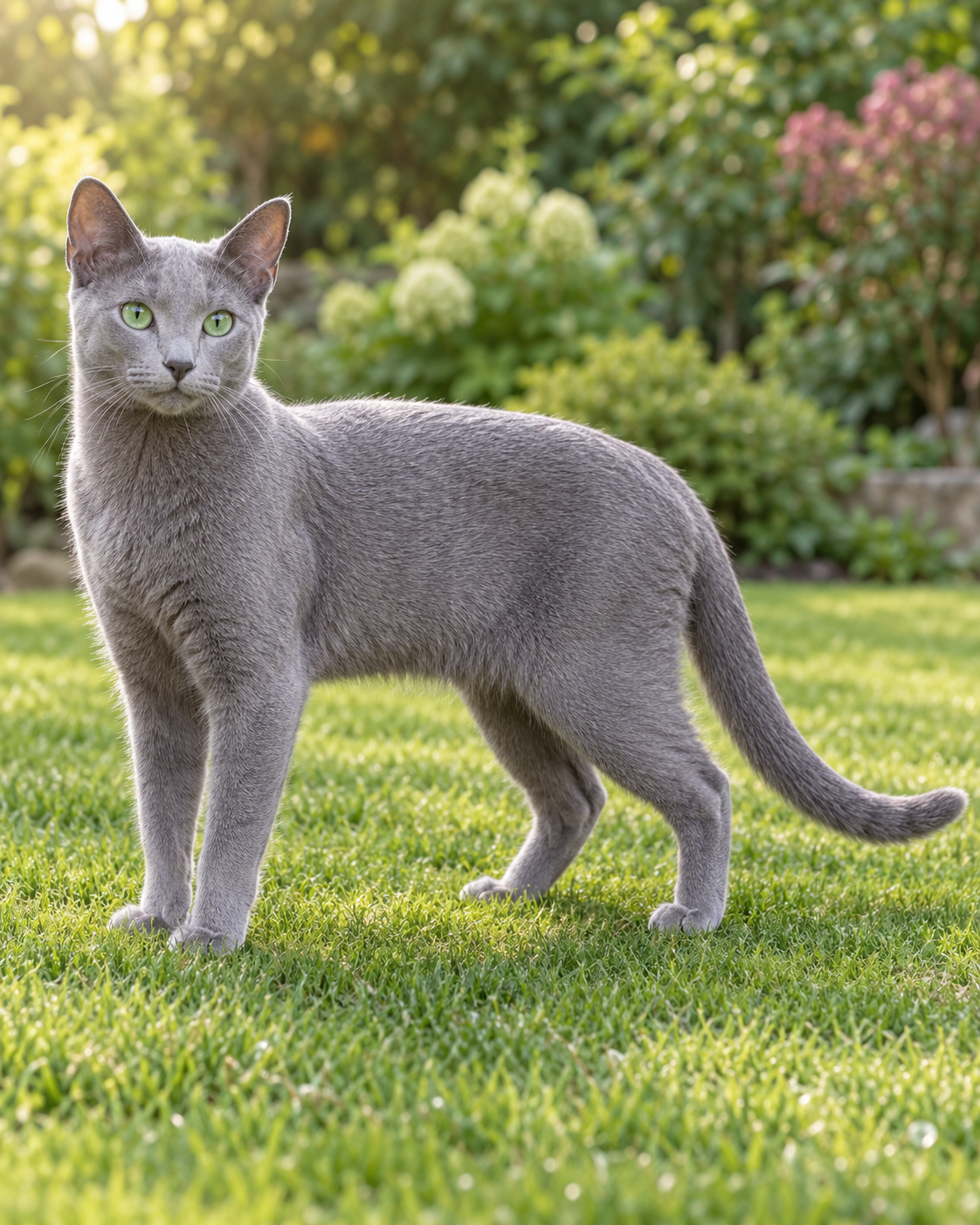
A shorthaired cat with a dense silver-tipped blue coat and green eyes. A playful companion that can be reserved with unfamiliar people.
- Adult build
- Medium-sized; dense short blue coat
- Adult weight
- Hill’s adult reference: Female: 7–10 lb; Male: 10–12 lb | CFA adult reference: Female: 5–8 lb; Male: rarely above 10 lb. CFA says males rarely exceed 10 pounds; this is neither a hard maximum nor a complete male interval.
View all Russian Blue articles →
View sources and checked dates →References & editorial notes
Adult-weight sources
Hill’s adult reference: Female: 7–10 lb; Male: 10–12 lb | CFA adult reference: Female: 5–8 lb; Male: rarely above 10 lb. CFA says males rarely exceed 10 pounds; this is neither a hard maximum nor a complete male interval.
direct: Hill’s adult reference; published-sex-reference.
- Russian Blue
- Hereditary cataracts in Russian Blue cats (Nygren et al., 2018)
- CFA 2026–2027 Breed Standards
- Recognised breeds
- Standing Rules Version C, 3 June 2026, section 701.4.1
- Using Positive Reinforcement to Train and Support Your Cat
- Making the Commitment to Adopt a Cat
- How to Feed a Cat
- Introducing a New Cat Into Your Home
- Meeting the Physical and Emotional Needs of Indoor Cats
- Russian Blue breed introduction
- Hill’s adult reference — adult-weight reference
- Russian Blue Checked 2026-10-20.
- Hereditary cataracts in Russian Blue cats (Nygren et al., 2018) Checked 2026-10-20.
- CFA 2026–2027 Breed Standards Checked 2026-10-20.
- Recognised breeds Checked 2026-10-20.
- Standing Rules Version C, 3 June 2026, section 701.4.1 Checked 2026-10-20.
- Using Positive Reinforcement to Train and Support Your Cat Checked 2026-10-20.
- Making the Commitment to Adopt a Cat Checked 2026-10-20.
- How to Feed a Cat Checked 2026-10-20.
- Introducing a New Cat Into Your Home Checked 2026-10-20.
- Meeting the Physical and Emotional Needs of Indoor Cats Checked 2026-10-20.
- Russian Blue breed introduction Checked 2026-10-20.
- Hill’s adult reference — adult-weight reference Checked 2026-11-18.
References
Rescues & sheltersPrint or citeBreed articles
Other profile sections and family fact sheet
Life with a Russian Blue
Give a reserved individual time to choose contact with new people.
Explore home life →Introduce favorite games with familiar people before adding new experiences.
Explore daily care →Occasional combing for the dense short coat.
Explore daily care →Print or cite this breed
Russian Blue family fact sheet
Breed-level references are a starting point. Ask about the individual animal’s routine and care needs.
- Build
- Medium-sized
- Female
- 7–10 lb (Hill’s adult reference)
- Male
- 10–12 lb (Hill’s adult reference)
- Reference lifespan
- 10–20 years
- Adult size
- Female: 7–10 lb (Hill’s adult reference); Male: 10–12 lb (Hill’s adult reference) Typical adult references vary between sources and individuals. See the full source accounts.
Company
Give a reserved individual time to choose contact with new people. Ask how it behaves with familiar caregivers as well as visitors. A quieter presentation should not obscure its play interests, and a breed description cannot predict its response to every household.
Play & enrichment
Introduce favorite games with familiar people before adding new experiences. Let a reserved cat investigate at its own pace, with a retreat available.
Coat care
Occasional combing for the dense short coat. Ask about this cat’s shedding and tolerance of grooming tools. This profile does not promise low shedding or suitability for a person with cat allergy.
Everyday responsibilities
Plan food, supplies, routine care and veterinary visits. Agree who handles the everyday jobs and who covers absences.
Adult help
An adult should remain responsible for care, supervise children’s interactions and arrange help when needed.
My Breed Atlas. Russian Blue breed profile. https://mybreedatlas.com/cats/breeds/russian-blue
Read this profile’s sources →Adult ranges and source qualifications
- Build
- Medium-sized
- Female
- 7–10 lb (Hill’s adult reference)
- Male
- 10–12 lb (Hill’s adult reference)
- Reference lifespan
- 10–20 years
Reference ranges describe the breed, not a prediction for an individual.
Daily care
Play & enrichment
Introduce favorite games with familiar people before adding new experiences. Let a reserved cat investigate at its own pace, with a retreat available.
More about everyday care
Provide places to retreat, separated resources, chances to play and predictable interaction. These are feline needs, not breed compatibility scores.
Coat, grooming & daily care
Occasional combing for the dense short coat. Ask about this cat’s shedding and tolerance of grooming tools. This profile does not promise low shedding or suitability for a person with cat allergy.
Training & communication
Reward a behavior the cat chooses with something it values. Build tasks in small steps, including approaching a carrier or a grooming tool. Stop when the cat is frightened, unwell or in pain; ask your veterinarian about cooperative care.
Food, routine & costs
The everyday ownership plan
Planning for this breed
Prepare a calm arrival and time to become familiar with visitors. Include play and companionship once the cat is comfortable rather than equating reserve with lack of social needs.
Meals and body condition
Discuss portions and body condition with your veterinarian instead of using the registry weight range as a feeding target. Smaller meals and appropriate food puzzles can support natural feeding behavior. Give each cat a separate feeding station.
Time and costs
Before committing, budget for food, litter, equipment and continuing veterinary care. Agree who handles play, cleaning, grooming and care during absences. Obtain local estimates for the individual’s care instead of relying on an invented breed cost.
Home life
Temperament & companionship
Give a reserved individual time to choose contact with new people. Ask how it behaves with familiar caregivers as well as visitors. A quieter presentation should not obscure its play interests, and a breed description cannot predict its response to every household.
Home life & introductions
Prepare a quiet transition room with food, water, litter, hiding places and scratching options. Introduce resident cats gradually and proceed when both are comfortable. Breed reputation cannot establish compatibility with children, dogs or another cat.
Offer a quiet retreat and let the cat control its distance. Supervise children and introduce resident animals gradually; individual history matters more than a breed reputation.
Personality & care details
Personality & care profile
Breed tendencies vary by individual. Higher means more of the named tendency, not better.
What everyday life tends to involve
These notes describe a tendency for the breed. Every animal is an individual.
- Play
- Several play sessions through the day fit this cat.
- Coat care
- Once a week or less is usually enough brushing.
- Loose hair
- A little loose hair shows up here and there.
- Company
- Many like to stay close or keep some time to themselves.
- Adult size
- Female: 7–10 lb (Hill’s adult reference); Male: 10–12 lb (Hill’s adult reference)
Typical adult references vary between sources and individuals. See the full source accounts.
- Time alone
- Can be content at home without people and then engage when someone returns is something to plan for.
YOUR EVERYDAY LIFE
How could this breed fit your life?
See household examples or compare this breed with answers you chose to save. The examples show combinations where this breed appeared among the first five results. Other combinations can work too.
Saved matching preferences stay in this browser, never on your account. They expire after 30 days and are removed the next time this feature reads them. Health answers, children’s ages and free-text notes are not saved. This section does not reproduce those personal care notes.
Russian Blue health
Eye health
Cataracts, or cloudy areas inside the eye’s lens, have been documented in Russian Blues, including young cats. Some cats in a Swedish study still saw normally; others with larger cataracts had trouble seeing. The study does not tell us how often this happens in all Russian Blues.
Small changes in a familiar room
Call the vet about a new cloudy look to an eye, squinting or bumping into furniture the cat normally avoids. A cat can have subtle lens changes without obvious trouble at home.
Changes in drinking, litter or weight
Diabetes means blood sugar stays too high because the body does not make or use insulin well enough. A large Swedish insurance study recorded new diabetes claims at a higher rate in Russian Blues than in other pedigree cats. The result is specific to that study, not a prediction for every Russian Blue or proof of an inherited cause. You may have to refill the water bowl more often, see larger urine clumps, or notice weight loss even when your cat is still eating well. Call your vet if these changes recur or persist. They can happen with other conditions, too. For a cat already diagnosed with diabetes, call your clinic or emergency vet right away if your cat stops eating, or if vomiting occurs along with weakness or marked illness. If your cat collapses or has a seizure, seek emergency care now. Don't wait to see whether the problem passes or assume the cause is diabetes. Bring a list of current medicines, the timing of changes, and any recent weights. Ask: “How will we tell whether blood sugar is staying high or only went up at the clinic? What should I do if my cat won't eat, vomits or misses a scheduled treatment? What would make you want a recheck sooner?” Stress can raise blood sugar temporarily, so a vet uses the clinical picture and appropriate testing to confirm persistent changes. Your vet can help you fit feeding, medication and rechecks into a routine your household can follow. Keep a simple record of whether your cat ate, how drinking and litter-box use compare with normal, and which treatments were given. Share the same record with everyone who helps care for your cat. Ask the clinic to describe what good control looks like for your cat and give you a written plan for sick days or missed treatment. Don't change or stop medication on your own if your cat seems better.
Family history and screening
Ask whether both parents had an eye exam by a veterinary ophthalmologist, how old they were, and whether close relatives developed cataracts. A general DNA panel does not replace that exam.
Questions for your veterinarian
- Would a specialist eye exam help clarify this cat’s findings or family history?
Choosing a kitten? Ask to see both parents’ results, with the animal’s name and the date on each report. If you’re adopting an adult, ask which records come with that individual.
Health sources
- Cornell veterinary guidance
- primary clinical and pedigree research, Nygren et al., 2018
- Cornell veterinary guidance
- Swedish cohort, Table 1 and Breed section
- Cornell signs and complications
- AAHA newly diagnosed cats and client education
- Merck emergency triage
- AAHA diagnosis
- AAHA client education
- AAHA tracking clinical signs at home
Screening evidence and limits
A 2018 veterinary study of 66 Russian Blue cats examined in Sweden found cataracts in 22, including some young cats. Pedigree findings supported inheritance, but the precise mode remained uncertain. Some cataracts impaired vision while others did not. This selected sample is not a worldwide prevalence estimate. The authors recommended veterinary ophthalmic examination before breeding; ask about family eye history and examination records rather than accepting a claim of freedom from inherited disease.
Breeders & rescues
Explore Russian Blue breeders →
Questions to bring
- Have breeding cats had veterinary ophthalmic examinations, and is there a family history of cataracts?
- How does this cat respond to visitors and household noise?
- What veterinary and family health records can be reviewed?