Russian Blue Cat Activity Level: Make Play Easy to Choose
Explore Russian Blue cat activity level with familiar games, suitable spaces and voluntary participation, without a universal exercise quota.
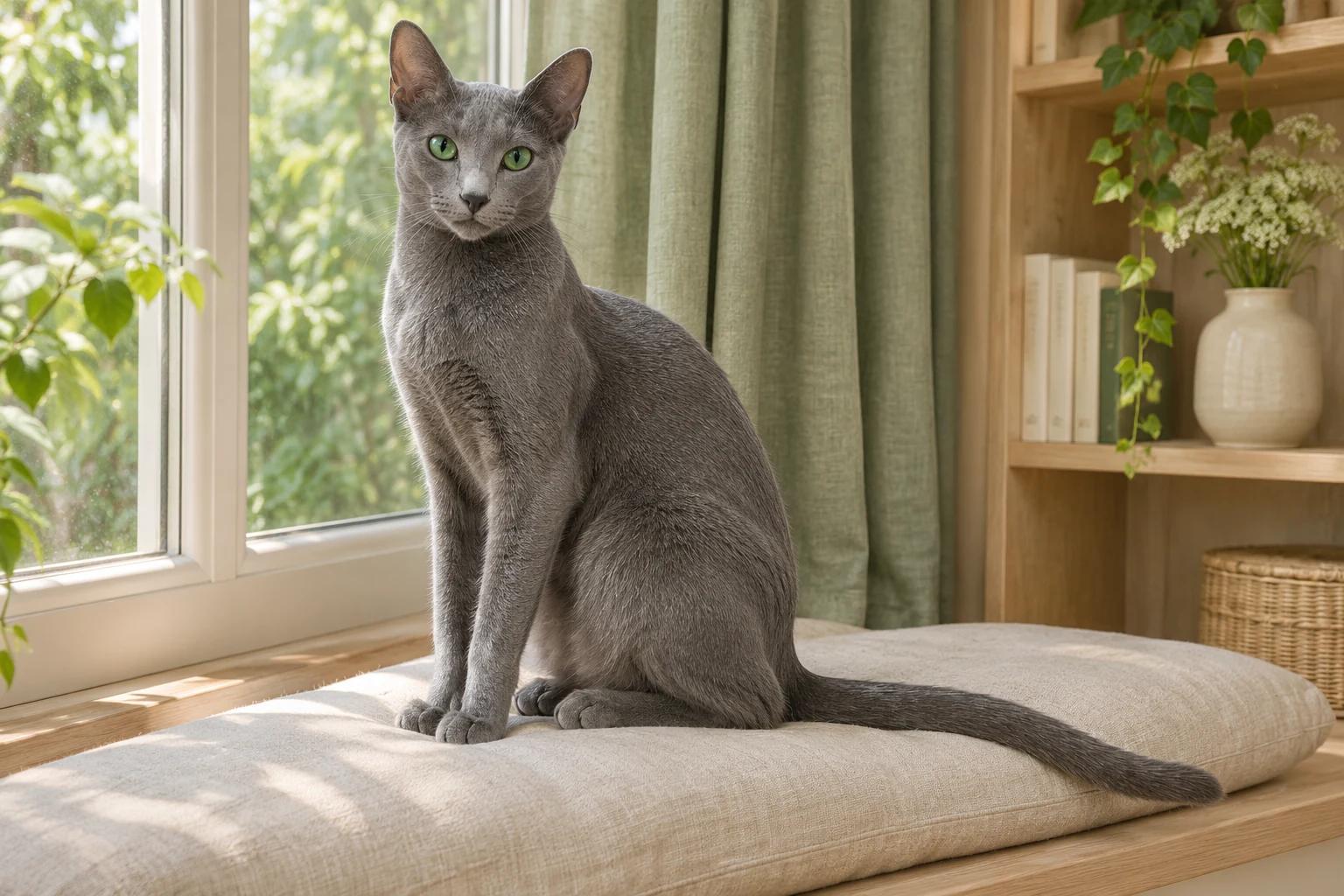
Russian blue cat activity level can be obscured by a reserved first meeting. A cat that watches an unfamiliar person from a distance may still enjoy games with someone it knows. The current profile explicitly asks owners not to let a quieter presentation hide play interests. Start by learning which activities feel familiar and comfortable rather than assuming that silence means a preference for inactivity.
This guide explores russian blue cat indoor play without imposing a daily exercise quota. It focuses on setting, choice and observation, while leaving assessment of changed mobility or interest to your veterinarian.
Russian blue cat activity level: begin with familiar play
CFA describes a curious breed interested in interactive games and puzzles. That supports offering opportunities, not expecting every cat to solve a particular toy or demonstrate the same energy. Ask the caregiver which objects the individual chooses and where it normally plays.
Read the Russian Blue profile alongside that history. Its advice to start with familiar people and games is especially useful in a new home. You can learn more from an easy invitation the cat recognizes than from presenting several unfamiliar devices at once.
A reserved animal should have time to observe. Do not move its hiding place or block a retreat to make the activity happen. Participation can begin when the cat is comfortable enough to approach, not when a visitor decides the waiting has lasted long enough.
Choose a setting that supports concentration
Look at the room before the toy. Is another animal likely to interrupt? Is the surface suitable for movement? Does the cat have somewhere to leave the activity without being followed? Small practical changes can make an invitation clearer without increasing its intensity.
FelineVMA's indoor-cat guidance includes play alongside safe places and suitable resources. Apply that to the route through the room as well as the activity area itself. A game beside a resource another animal controls may not offer the choice you intended.
Keep hazards and fragile objects secure. Curiosity about an object does not establish that it is appropriate for play. Prepare the environment so that a missed invitation is unremarkable rather than a test of how reliably the animal avoids danger.
Offer movement without a chase requirement
A suitable toy can be presented in a way that allows looking, approaching and following before any faster movement. Watch what the cat actually does. Do not shake the object against its face or repeatedly move it beyond reach to obtain a dramatic reaction.
Try one change at a time if the invitation is unsuccessful. A different place or time may answer a question more clearly than replacing every object. Keep damaged items and detachable small parts out of reach, and store interactive equipment appropriately afterward.
When thinking about how to exercise a russian blue cat, avoid turning movement into a contest. The goal is a comfortable opportunity, not a fixed distance or a comparison with another owner's video. Let the individual stop rather than carrying it back to restart the game.
Make puzzle activities understandable
CFA mentions puzzles as one possible outlet for curiosity. A food-based device, if appropriate, needs to fit the cat's diet and ability to use it. Ask your veterinary team about rewards or restrictions rather than withholding a normal meal to make the task compelling.
Start with an accessible task and observe whether the animal understands how to obtain the outcome. Difficulty is not automatically enrichment. A cat abandoning a device may be responding to the setup, and repeated frustration is not evidence of a useful challenge.
You do not need to buy a complex product to prove that you are meeting an intelligent breed's needs. Choose safe, manageable activities and learn from use. The practical value lies in what the individual can enjoy and what your household can maintain.
Keep rest and play in the same plan
An interesting home includes undisturbed rest. Do not place a favorite bed where everyone must pass close by to reach the toys, or treat a retreat as a place from which the cat can be retrieved whenever a person wants company.
If several people share care, explain which games are familiar and when the animal has chosen to finish. Otherwise, one caregiver may start another invitation immediately after someone else has ended a session. The cat should not be responsible for making every household member feel included.
Adults should supervise children's participation. Children can help prepare and tidy equipment while learning to observe the animal. They should not be tasked with keeping the cat moving or interpreting a concerning change without adult help.
A new loss of interest needs attention
If the cat stops using a familiar game or route, describe the change and contact your veterinarian about concerns. Do not decide that it is simply becoming more typical of a quiet breed. Activity can change for reasons this guide cannot identify.
Note the setting, timing and any other differences without trying to reproduce discomfort. A factual account is more useful than calling the animal lazy or stubborn. Follow professional advice about what to observe next and how urgently help is needed.
This article gives no exercise treatment, weight-loss program or numerical endurance test. If body condition is a concern, discuss activity and feeding together with the veterinary team instead of trying to correct a scale number through harder play.
Keep continuity when the household changes
The existing Russian Blue temporary-care guide discusses decisions about a stay with another caregiver. For play continuity, explain familiar equipment and accepted invitations without requiring a new person to obtain identical behavior immediately.
A safe setting and dependable care matter even if the cat does not play for the sitter's camera. Avoid making photographs or a completed game the evidence that it has settled. Ask for concrete observations and an appropriate response to concerns.
The cat quiz can organize your preferences about activity before adoption. Follow that with an honest discussion of the actual animal. A workable plan makes enjoyable movement available while preserving the cat's ability to choose rest and seek help when something changes.
Frequently asked questions
Does reserve mean a Russian Blue dislikes play?
Not necessarily. The current profile distinguishes unfamiliar encounters from activity with familiar people. Ask about the individual and offer suitable opportunities without forcing participation.
How much exercise time is required?
No universal duration is prescribed here. Consider the actual cat's preferences and seek veterinary advice about individual limitations or concerns.
Is a difficult food puzzle always beneficial?
No. The task needs to be understandable and appropriate to the diet and individual. Difficulty alone does not establish useful enrichment.
What if a favorite game suddenly stops being used?
Discuss the change with your veterinarian rather than assuming the animal has become lazy. Describe the context and any other changes without diagnosing the cause yourself.
Sources behind this article
Article source checked: November 20, 2026. Source checked 2026-11-20
Keep reading

American Curl exercise
Read article →