Russian Blue vs Chartreux: Look Beyond the Blue Coat
Compare Russian Blue vs Chartreux appearance, play, company and coat care, then assess the individual animal and its documented routine.
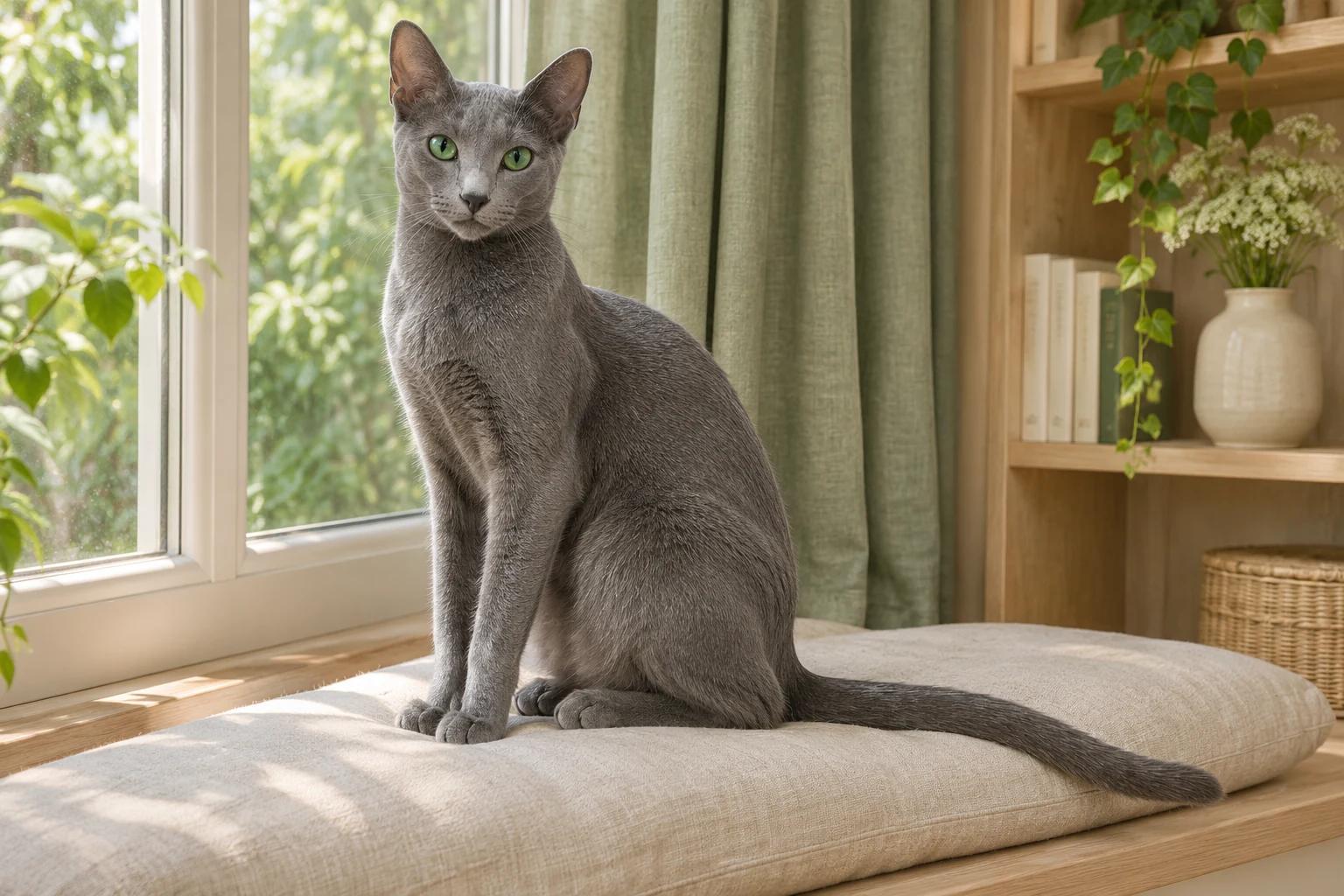
Russian blue vs chartreux is an understandable comparison when two dense blue-gray coats first catch your eye. The breeds are distinct, however, and their head shapes, eyes and body descriptions differ. Their quiet reputations can also conceal the individual variation that matters when sharing a home. A similar color does not establish the same care needs or personality.
If you are choosing a russian blue or chartreux, use appearance to begin the conversation rather than end it. Ask how the actual cat plays, meets people, accepts grooming and chooses rest. Those details give a breed comparison practical value.
Russian Blue vs Chartreux: identify the visible distinctions
CFA describes the Russian Blue's silver-tipped blue coat, green eyes and graceful outline. Its Chartreux account describes a sturdier body, a broader rounded head and eyes ranging from gold to copper. The current Russian Blue profile and Chartreux profile retain those different descriptions.
These features are not a method for certifying pedigree from a photograph. Ask about the documentation behind an identification, especially when a blue-coated cat's background is uncertain. The same general color can occur without establishing either breed.
A difference between russian blue and chartreux can be visually striking while still telling you little about a particular animal's preferred contact. Keep identity, appearance and behavior as separate questions so that confidence about one does not become an assumption about the others.
Quiet descriptions still need context
The site's Russian Blue account allows for reserve with unfamiliar people and interest in play with familiar ones. The Chartreux account describes a generally quiet, attentive companion. Neither description guarantees silence or tells you how either cat will respond to your visitors.
Ask both caregivers for examples from an ordinary day. How does the cat enter a shared room, invite contact or respond when a person is busy? What does it do when someone unfamiliar arrives? Comparable questions are more useful than deciding which breed sounds friendlier in two different advertisements.
During a meeting, let the animal choose its distance. A reserved cat need not be coaxed out for a photograph, and an approaching cat need not be lifted. Watch what happens after the first contact as well as the greeting itself.
Compare play preferences without ranking intelligence
CFA describes curiosity and interest in games in both breed accounts. That supports offering suitable activities, not a league table of cleverness. A cat may prefer a familiar toy, a simple exploration opportunity or an easy food activity appropriate to its care plan.
Ask which invitations the individual returns to and which it ignores. A demonstration of one task cannot establish an entire activity requirement. Include the setting, timing and opportunity to stop when you discuss a familiar game.
FelineVMA's indoor-cat guidance connects activity with appropriate resources and retreat. Plan that wider environment for either choice. A quiet cat should not be left with no interesting options, and a playful cat should not have to remain available whenever a person wants entertainment.
Two short coats are not a no-care guarantee
The Russian Blue profile describes occasional combing of a dense short coat. The Chartreux profile also calls for regular attention to its dense coat. Ask to see the individual routine, including which tool is used and how the animal responds.
Neither description promises that a home will be free of loose hair. Do not select one cat on an unsupported assurance about shedding or suitability for an allergic person. This comparison makes no allergy claim and gives no substitute for appropriate personal medical advice.
If coat condition or handling tolerance changes, seek veterinary guidance. Increasing pressure or adding a new product is not a way to establish why something is different. The practical comparison is whether you can maintain the actual cat's accepted care and obtain help when necessary.
Body type should guide questions about fit
The Chartreux's sturdy description and the Russian Blue's more graceful outline do not tell you which carrier or resting surface fits either animal. Ask for current measurements where available and observe comfortable posture and movement.
The Russian Blue profile retains differently scoped published weight accounts rather than blending them. This article therefore does not use competing figures to rank the two breeds. A general weight reference should not become a feeding target or a promise about an individual kitten.
For equipment, check usable interior space, access, stability and manufacturer instructions. Consider shared use if other animals may occupy the same structure. A cat's quiet appearance is irrelevant to whether a support is correctly installed or a carrier opens suitably for routine care.
Introductions and absences need individual planning
Do not infer automatic compatibility from either breed's calm or affectionate reputation. Ask about past experience with other animals, protect access to resources and obtain guidance on gradual introductions. Adults should supervise children and explain the animal's resting and contact preferences.
Periods apart also deserve a practical conversation. Ask what the cat has actually experienced and what help your household can provide. The existing Russian Blue short-stay guide addresses a separate temporary-care decision; it should not be read as proof that a breed always settles easily with a substitute caregiver.
Keep routine care information clear, but do not require forced contact as evidence that an arrangement is working. A familiar retreat and dependable care matter even when the cat is not posing beside the person responsible.
Choose with a short, factual comparison
Use the cat quiz to clarify your preferences, then write a brief description of each candidate using observed behavior and caregiver history. Include one game, one contact preference and one care task. If a column contains only coat color and attractive adjectives, more information is needed.
Review veterinary records and unresolved questions with the appropriate professionals. Neither appearance nor registration establishes general health. An honest care history, including inconvenient details, is more useful than a promise that a particular breed is perfect for everyone.
The chartreux vs russian blue decision is ultimately about an individual whose needs you can meet. The breed descriptions help you organize questions; the actual relationship supplies the information that color alone cannot provide.
Frequently asked questions
Are Russian Blues and Chartreux the same breed?
No. They have separate breed identities and different eye, head and body descriptions. A blue-gray coat alone does not establish either identity.
Is one guaranteed to be quieter?
No individual noise level is established here. Both have quiet reputations, but actual vocal patterns and responses to visitors need their own assessment.
Does a short coat mean no grooming?
No. Both profiles describe care for dense coats. Ask about suitable tools, accepted handling and the individual's shedding rather than assuming no work is needed.
Can photographs decide which cat fits my home?
They cannot explain the full routine. Meet the animal and ask about company, play, care and rest before making the decision.
Sources behind this article
Article source checked: November 20, 2026. Source checked 2026-11-20
Keep reading

Abyssinian vs Somali: Coat, Size and Everyday Company
Read article →