Cat breed
Havana Brown: Health
Havana Brown health
Eyes and vision
A variant linked to inherited retinal disease was found in sampled Havana Browns. That finding alone does not show a widespread problem or tell you how well an individual cat can see.
A familiar jump starts going wrong
If your cat repeatedly misjudges a familiar landing or begins bumping into objects, note the lighting and when it started. Call the vet promptly about new changes rather than waiting for a DNA test.
Family history and screening
Ask whether a veterinary exam confirmed retinal disease in any close relatives. If a report is offered, ask whether it covers rdAc, the specific change recorded in the survey. Normal eye color does not establish normal vision.
Questions for your veterinarian
- Would an eye exam help clarify what I’m seeing at home, regardless of the DNA results?
Choosing a kitten? Ask to see both parents’ results, with the animal’s name and the date on each report. If you’re adopting an adult, ask which records come with that individual.
Health sources
- Cornell clinical guidance
- Registry standard
- Anderson et al. · PLOS Genetics 2022 · Table 2 and scoped findings
Screening evidence and limits
A 2022 genetic survey detected an rdAc-PRA-associated variant in sampled Havana Browns. This does not establish clinical disease prevalence or a universal screening panel. Review family records and appropriate testing with a veterinarian.
Preventive care
Arrange an individual veterinary prevention plan, including vaccination and parasite assessment. Prefer indoor living with enrichment or secure, supervised outdoor access over roaming. Request existing veterinary and screening records before bringing a cat home.
Screening limits
No evidence found is not evidence of no risk. A DNA result addresses its tested variant and cannot certify general health. Ask a veterinarian which examinations or tests fit the individual’s ancestry, family history and findings.
Rescues & sheltersPrint or citeBreed articles
Other profile sections and family fact sheet
Life with a Havana Brown
People-oriented and affectionate; plan substantial interaction rather than prolonged isolation.
Explore home life →Curious, playful cats and suggests interactive puzzles and training.
Explore daily care →Short, silky coat; gentle soft-brush grooming.
Explore daily care →Print or cite this breed
Havana Brown family fact sheet
Breed-level references are a starting point. Ask about the individual animal’s routine and care needs.
- Build
- Medium
- Female
- 6–8 lb
- Male
- 8–10 lb
- Reference lifespan
- 8–13+ years
- Adult size
- Adult weight often falls around 6 to 10 pounds.
Company
People-oriented and affectionate; plan substantial interaction rather than prolonged isolation.
Play & enrichment
Curious, playful cats and suggests interactive puzzles and training.
Coat care
Short, silky coat; gentle soft-brush grooming. Routine bathing is generally unnecessary for companions.
Everyday responsibilities
Plan food, supplies, routine care and veterinary visits. Agree who handles the everyday jobs and who covers absences.
Adult help
An adult should remain responsible for care, supervise children’s interactions and arrange help when needed.
My Breed Atlas. Havana Brown breed profile. https://mybreedatlas.com/cats/breeds/havana-brown
Read this profile’s sources →Adult ranges and source qualifications
- Build
- Medium
- Female
- 6–8 lb
- Male
- 8–10 lb
- Reference lifespan
- 8–13+ years
Reference ranges describe the breed, not a prediction for an individual.
Daily care
Play & enrichment
Curious, playful cats and suggests interactive puzzles and training.
More about everyday care
Provide places to retreat, separated resources, chances to play and predictable interaction. These are feline needs, not breed compatibility scores.
Coat, grooming & daily care
Short, silky coat; gentle soft-brush grooming. Routine bathing is generally unnecessary for companions.
Training & communication
Reward a behavior the cat chooses with something it values. Build tasks in small steps, including approaching a carrier or a grooming tool. Stop when the cat is frightened, unwell or in pain; ask your veterinarian about cooperative care.
Food, routine & costs
The everyday ownership plan
Planning for this breed
Check registry and pedigree instead of equating every brown Oriental-type cat with this family.
Meals and body condition
Discuss portions and body condition with your veterinarian instead of using the registry weight range as a feeding target. Smaller meals and appropriate food puzzles can support natural feeding behavior. Give each cat a separate feeding station.
Time and costs
Before committing, budget for food, litter, equipment and continuing veterinary care. Agree who handles play, cleaning, grooming and care during absences. Obtain local estimates for the individual’s care instead of relying on an invented breed cost.
Individual variation
Temperament statements are registry tendencies, not guarantees or quiz scores. Evaluate the individual cat’s history, behavior, health and introductions.
Environment
Provide a secure retreat, separate food/water/toileting/resting/scratching resources, opportunities to play and express hunting behavior, predictable positive interaction and respect for scent. In multi-cat homes, provide genuine choices and enough resources for each cat.
Nutrition
Choose a complete, balanced life-stage diet and fresh water. Adjust portions using veterinary assessment of body condition, not a breed weight chart. Do not infer a need for raw or grain-free feeding from appearance or ancestry.
Ownership budget
Plan for daily care, veterinary visits, emergency costs and lifelong housing arrangements. Ask about documented health history and socialization rather than treating registry membership as a health guarantee.
Home life
Temperament & companionship
People-oriented and affectionate; plan substantial interaction rather than prolonged isolation.
Home life & introductions
Prepare a quiet transition room with food, water, litter, hiding places and scratching options. Introduce resident cats gradually and proceed when both are comfortable. Breed reputation cannot establish compatibility with children, dogs or another cat.
Offer a quiet retreat and let the cat control its distance. Supervise children and introduce resident animals gradually; individual history matters more than a breed reputation.
Personality & care details
Personality & care profile
Breed tendencies vary by individual. Higher means more of the named tendency, not better.
What everyday life tends to involve
These notes describe a tendency for the breed. Every animal is an individual.
- Play
- Short play sessions can be enough on a busy day.
- Coat care
- Loose hair tends to stay light. Brushing a few times a week fits this coat.
- Loose hair
- Loose hair tends to stay very light.
- Company
- Many like to stay close.
- Adult size
- Adult weight often falls around 6 to 10 pounds.
YOUR EVERYDAY LIFE
How could this breed fit your life?
See household examples or compare this breed with answers you chose to save. The examples show combinations where this breed appeared among the first five results. Other combinations can work too.
Saved matching preferences stay in this browser, never on your account. They expire after 30 days and are removed the next time this feature reads them. Health answers, children’s ages and free-text notes are not saved. This section does not reproduce those personal care notes.
History & sources
Heritage & appearance
Meet the Havana Brown
Adult ranges are reference examples, not targets or predictions for an individual cat.
Heritage & appearance
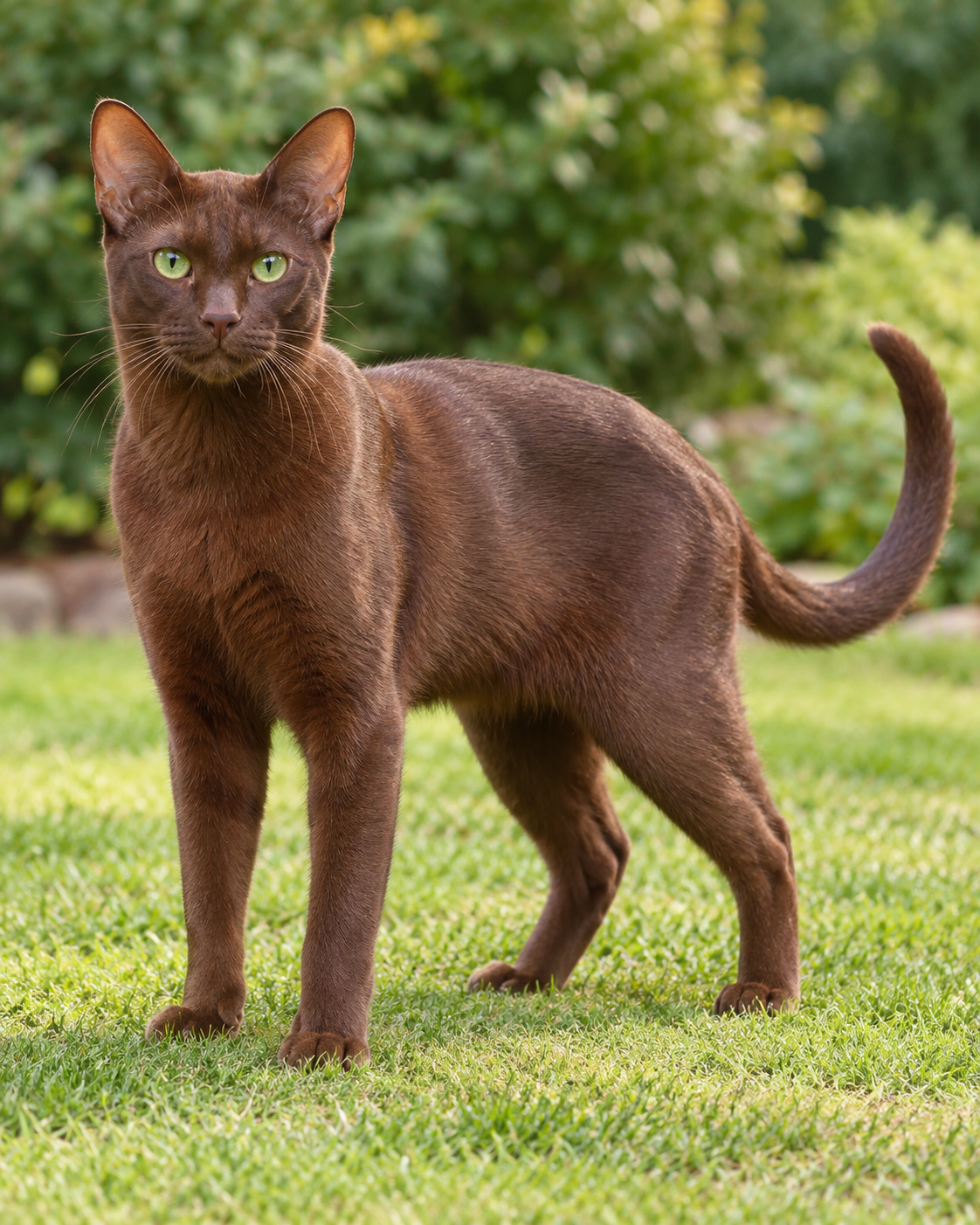
Postwar English breeding used Siamese and black domestic shorthairs; US breeders preserved a distinctive type. CFA championship began in 1964.
More about this breed’s history
Two English kittens and an American family
CFA’s breed history distinguishes two English brown kittens. Elmtower Bronze Idol, the first registered in England, came from an accidental mating between a black shorthair and a seal-point Siamese. A planned mating using a chocolate-point Siamese and a black shorthair later produced Praha Gypka. In California, Elsie Quinn brought in the English female Roofspringer Mahogany Quinn. She was bred to another import, Laurentide Brown Pilgrim of Norwood. Their kitten Quinn’s Brown Satin of Sidlo gives the American story a documented link to that English breeding program. (Cat Fanciers’ Association: Havana Brown historical article)
Full breed details
A shorthaired brown companion with an expressive face and an interest in interaction. Registry definitions differ, so check the individual pedigree when ancestry matters.
- Adult weight
- Male: 8–10 lb; female: 6–8 lb
View all Havana Brown articles →
View sources and checked dates →References & editorial notes
Adult-weight sources
Female: 6–8 lb; Male: 8–10 lb
direct: TICA Havana profile explicitly gives female 6-8 lb and male 8-10 lb and identifies the US Havana Brown as distinct from the British brown Oriental.
- CFA 2026–2027 Breed Standards
- Using Positive Reinforcement to Train and Support Your Cat
- Making the Commitment to Adopt a Cat
- How to Feed a Cat
- Introducing a New Cat Into Your Home
- Meeting the Physical and Emotional Needs of Indoor Cats
- TICA: Havana
- CFA: Havana Brown
- TICA Standing Rules, Version C, 3 June 2026
- Cornell: Feeding Your Cat
- Cornell: What To Expect
- FelineVMA 2025: Meeting the Physical and Emotional Needs of Indoor Cats
- Cornell: Hypertrophic Cardiomyopathy
- UC Davis VGL: Sphynx and Devon Rex Congenital Myasthenic Syndrome
- UC Davis VGL: Erythrocyte Pyruvate Kinase Deficiency
- Anderson et al. (2022): Genetic epidemiology of blood type, disease and trait variants, and genome-wide genetic diversity in over 11,000 domestic cats
- CFA 2026–2027 Breed Standards Checked 2026-10-20.
- Using Positive Reinforcement to Train and Support Your Cat Checked 2026-10-20.
- Making the Commitment to Adopt a Cat Checked 2026-10-20.
- How to Feed a Cat Checked 2026-10-20.
- Introducing a New Cat Into Your Home Checked 2026-10-20.
- Meeting the Physical and Emotional Needs of Indoor Cats Checked 2026-10-20.
- TICA: Havana Checked 2026-10-20.
- CFA: Havana Brown Checked 2026-10-20.
- TICA Standing Rules, Version C, 3 June 2026 Checked 2026-10-20.
- Cornell: Feeding Your Cat Checked 2026-10-20.
- Cornell: What To Expect Checked 2026-10-20.
- FelineVMA 2025: Meeting the Physical and Emotional Needs of Indoor Cats Checked 2026-10-20.
- Cornell: Hypertrophic Cardiomyopathy Checked 2026-10-20.
- UC Davis VGL: Sphynx and Devon Rex Congenital Myasthenic Syndrome Checked 2026-10-20.
- UC Davis VGL: Erythrocyte Pyruvate Kinase Deficiency Checked 2026-10-20.
- Anderson et al. (2022): Genetic epidemiology of blood type, disease and trait variants, and genome-wide genetic diversity in over 11,000 domestic cats Checked 2026-10-20.
Breeders & rescues
Explore Havana Brown breeders →
Questions to bring
- What veterinary records and family health history are available?
- How does this individual cat’s coat and activity fit the care described here?
- Which screening findings and individual needs should I discuss with my veterinarian?