Havana Brown vs Oriental Shorthair: a useful comparison
Compare Havana Brown vs Oriental Shorthair through breed identity, overlapping adult weights, physical proportions and everyday interaction.
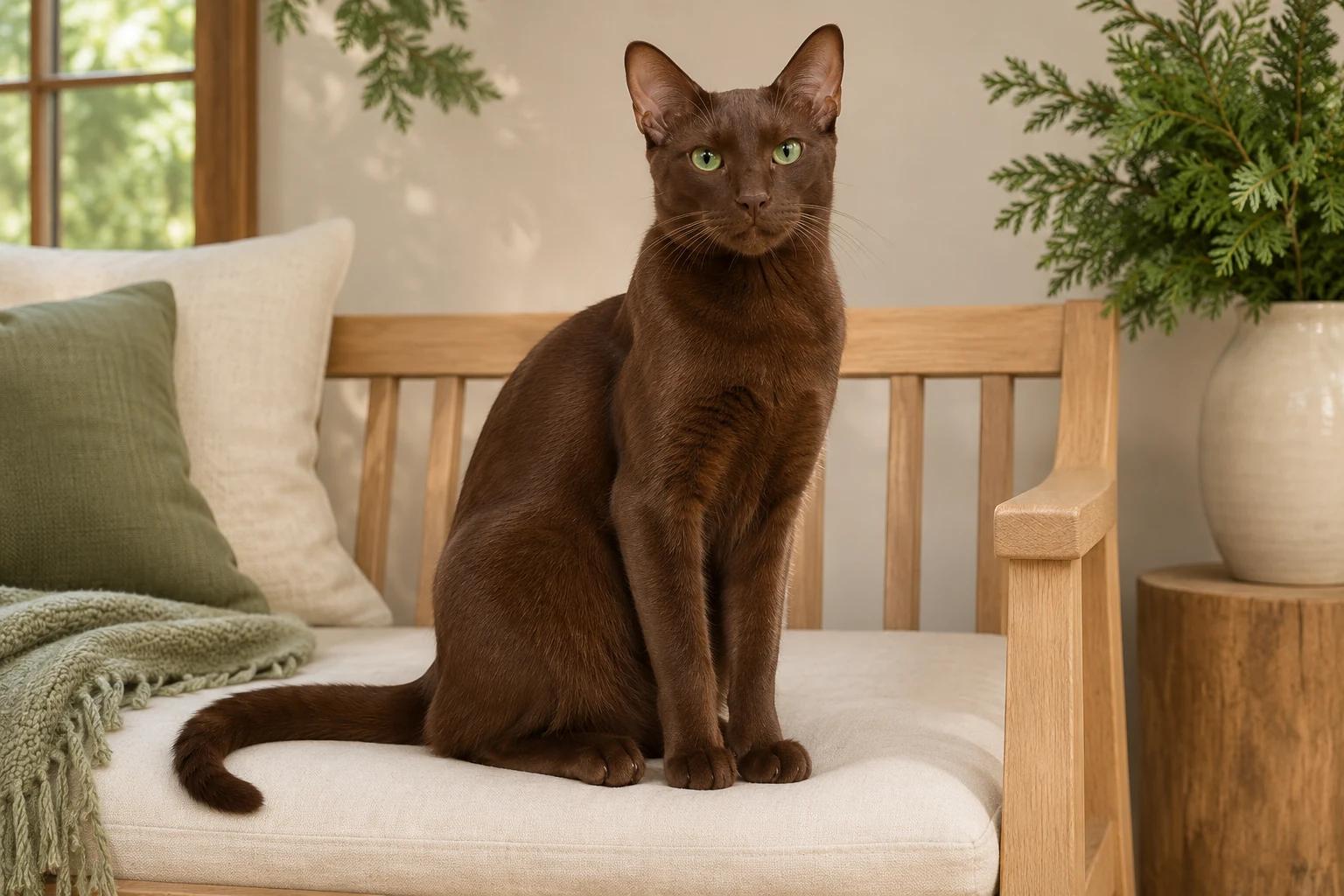
Havana Brown vs Oriental Shorthair begins with adult weight ranges that overlap substantially. The current Havana Brown profile and Oriental Shorthair profile provide the sex-qualified figures. Comparing those figures carefully prevents a common mistake: treating the upper endpoint of one breed's range as the expected weight of every individual.
The two profiles are starting points for a decision about an actual companion. An available adult has its own size and history; a kitten has not yet reached its adult measurements. Neither should be reduced to the most impressive number in a description.
Havana Brown vs Oriental Shorthair: the names are not interchangeable
TICA's Havana account explains the naming issue. In Britain, Havana is used for a brown Oriental Shorthair; the North American Havana is a distinct breed with a different head and body type. TICA also recognizes a lilac Havana alongside the brown colour. The word Havana in an international listing therefore needs its registry context, not an assumption based solely on spelling.
The North American type has a medium, muscular body and a distinctive muzzle break behind full whisker pads. Its profile has a pronounced stop, and its ears tilt forward. These features describe a particular arrangement, not simply a darker version of another cat.
For someone asking about the difference between Havana Brown and Oriental Shorthair, identify the breed before comparing individual features. A brown Oriental and a North American Havana should not be evaluated as if the names guaranteed the same appearance.
Weight ranges overlap more than the names suggest
The current Havana Brown reference lists females at 6–8 pounds and males at 8–10 pounds. The Oriental Shorthair reference lists females at 5–8 pounds and males at 8–12 pounds. These are adult ranges with sex qualifiers, not predictions for every kitten or targets for an individual cat.
For females, the entire Havana Brown interval sits within the Oriental Shorthair interval. For males, both begin at eight pounds, while the Oriental reference extends higher. An eight-pound female could fit either breed's stated range; a nine-pound male could also fit either. Weight alone therefore does not identify which breed you are seeing.
Nor does the Oriental's higher male upper endpoint mean every Oriental male outweighs every Havana male. A ten-pound Havana and an eight-pound Oriental both fit their respective male ranges. Comparing the endpoints tells you about the descriptions, not the order in which two real cats will appear on a scale.
When choosing an adult, its own current measurement is more useful than borrowing a hypothetical number from the middle of either range. When choosing a kitten, retain the word adult alongside these figures. Do not mistake the kitten's current measurement for its finished size, or make feeding decisions merely to reach one of the listed values. Individual weight questions belong with a veterinarian.
Follow the Oriental's long lines
The CFA Oriental description gives the Oriental Shorthair a long, tubular body with fine bones and firm muscles. Its head forms a tapering wedge, with a straight profile, almond-shaped eyes and large ears continuing the wedge's outline. The tail is long and narrows toward a fine point.
These are relationships between features. The line of the face continues toward the ears rather than being interrupted by a pronounced whisker break. The body, neck and tail contribute to an extended overall outline. “Slender” describes that outline, not an absence of muscle.
For a prospective owner, look at a whole-body view as well as a close portrait. An ear photograph cannot show the trunk, while a curled sleeping pose tells you little about the line of the back or legs. In an Oriental Shorthair vs Havana Brown comparison, the physical difference is more informative when you can see how the features fit together rather than treating one conspicuous ear as the whole breed.
Expect the Oriental to take part, not just watch
The GCCF Oriental account emphasizes lively play, curiosity and conversation. It describes cats that may retrieve toys, explore boxes and investigate high shelves. That is a reason to think about interactive ownership rather than selecting an Oriental as a decorative presence.
A box can offer a place to investigate, and a returning toy can become a shared game, if that individual chooses it. Neither example means every cat will fetch on cue. The useful question is whether you enjoy participating when the cat invites interaction, not whether it can reproduce a breed-description performance.
The same account describes many Orientals as talkative. For someone who enjoys feline commentary, that can be part of the appeal. It is not a precise noise forecast, and this comparison does not rank an individual Oriental against an individual Havana by volume. Meet the actual cat and listen to its ordinary interaction rather than expecting a numbered breed score to predict a household soundtrack.
Use the cat breed quiz to consider the wider fit. Our Havana Brown sitter article covers arranging care during an absence, a separate task from choosing between these breeds.
Frequently asked questions
Is a Havana Brown just a brown Oriental Shorthair?
A North American Havana Brown is distinct from an Oriental Shorthair. British use of Havana can instead refer to a brown Oriental, so registry context matters.
Which breed has the smaller adult female range?
Havana Brown females are listed at 6–8 pounds; Oriental Shorthair females at 5–8 pounds. Those overlapping ranges cannot rank every pair of individual cats.
Should I choose a Havana Brown or Oriental Shorthair by weight?
Havana Brown and Oriental Shorthair adult ranges overlap. Use the individual cat's actual size alongside the rest of your ownership decision, not weight alone.
Sources behind this article
Article source checked: November 16, 2026. Source checked 2026-11-16
Keep reading

Abyssinian vs Somali: Coat, Size and Everyday Company
Read article →