Cat breed · Britain
British Shorthair: Daily care
Daily care
Play & enrichment
The calm and quiet description is compatible with occasional playful bursts. Invite games rather than expecting aerial activity or treating a quieter cat as incapable of learning.
More about everyday care
Provide places to retreat, separated resources, chances to play and predictable interaction. These are feline needs, not breed compatibility scores.
Coat, grooming & daily care
Weekly brushing or combing is a starting point in the description. Ask how shedding changes the individual routine and whether the cat accepts the tools used. Short hair does not remove the need for coat maintenance.
Training & communication
Reward a behavior the cat chooses with something it values. Build tasks in small steps, including approaching a carrier or a grooming tool. Stop when the cat is frightened, unwell or in pain; ask your veterinarian about cooperative care.
Food, routine & costs
The everyday ownership plan
Planning for this breed
Plan companionship beside you without assuming the cat welcomes being carried. A manageable short coat still needs regular brushing and a routine the cat accepts.
Meals and body condition
Discuss portions and body condition with your veterinarian instead of using the registry weight range as a feeding target. Smaller meals and appropriate food puzzles can support natural feeding behavior. Give each cat a separate feeding station.
Time and costs
Before committing, budget for food, litter, equipment and continuing veterinary care. Agree who handles play, cleaning, grooming and care during absences. Obtain local estimates for the individual’s care instead of relying on an invented breed cost.
More practical reading
Rescues & sheltersPrint or citeBreed articles
Other profile sections and family fact sheet
Life with a British Shorthair
Ask whether this individual prefers company beside you or contact on its own terms.
Explore home life →The calm and quiet description is compatible with occasional playful bursts.
Explore daily care →Weekly brushing or combing is a starting point in the description.
Explore daily care →Print or cite this breed
British Shorthair family fact sheet
Breed-level references are a starting point. Ask about the individual animal’s routine and care needs.
- Build
- Medium to large
- Female
- 8–11 lb
- Male
- 10–16 lb
- Reference lifespan
- 12–20 years
- Adult size
- Adult weight often falls around 8 to 17 pounds.
Company
Ask whether this individual prefers company beside you or contact on its own terms. A rounded appearance does not tell you whether it enjoys lifting or restraint. Observe ordinary interaction and choose a routine that suits the cat you meet rather than assuming a particular handling tolerance.
Play & enrichment
The calm and quiet description is compatible with occasional playful bursts. Invite games rather than expecting aerial activity or treating a quieter cat as incapable of learning.
Coat care
Weekly brushing or combing is a starting point in the description. Ask how shedding changes the individual routine and whether the cat accepts the tools used. Short hair does not remove the need for coat maintenance.
Everyday responsibilities
Plan food, supplies, routine care and veterinary visits. Agree who handles the everyday jobs and who covers absences.
Adult help
An adult should remain responsible for care, supervise children’s interactions and arrange help when needed.
My Breed Atlas. British Shorthair breed profile. https://mybreedatlas.com/cats/breeds/british-shorthair
Read this profile’s sources →Adult ranges and source qualifications
- Build
- Medium to large
- Female
- 8–11 lb
- Male
- 10–16 lb
- Reference lifespan
- 12–20 years
Reference ranges describe the breed, not a prediction for an individual.
Home life
Temperament & companionship
Ask whether this individual prefers company beside you or contact on its own terms. A rounded appearance does not tell you whether it enjoys lifting or restraint. Observe ordinary interaction and choose a routine that suits the cat you meet rather than assuming a particular handling tolerance.
Home life & introductions
Prepare a quiet transition room with food, water, litter, hiding places and scratching options. Introduce resident cats gradually and proceed when both are comfortable. Breed reputation cannot establish compatibility with children, dogs or another cat.
Offer a quiet retreat and let the cat control its distance. Supervise children and introduce resident animals gradually; individual history matters more than a breed reputation.
Personality & care details
Personality & care profile
Breed tendencies vary by individual. Higher means more of the named tendency, not better.
What everyday life tends to involve
These notes describe a tendency for the breed. Every animal is an individual.
- Play
- Play tends to be short. This cat is often quiet, with four feet on the floor.
- Coat care
- Brushing a few times a week fits this coat.
- Loose hair
- Some loose hair comes with this coat.
- Company
- This cat keeps an eye on the room and waits to be invited up, rather than living in a lap.
- Adult size
- Adult weight often falls around 8 to 17 pounds.
YOUR EVERYDAY LIFE
How could this breed fit your life?
See household examples or compare this breed with answers you chose to save. The examples show combinations where this breed appeared among the first five results. Other combinations can work too.
Saved matching preferences stay in this browser, never on your account. They expire after 30 days and are removed the next time this feature reads them. Health answers, children’s ages and free-text notes are not saved. This section does not reproduce those personal care notes.
British Shorthair health
Health observations and family records
A Danish ultrasound-screening study documented HCM in British Shorthairs. Separately, genetic testing has detected the conventional PKD1 kidney variant in submitted British Shorthair samples. These are two different records, and neither study supplies a worldwide rate for this breed.
A heart examination has a date
A cat may seem well despite heart muscle changes. When a relative has a confirmed diagnosis, bring the actual ultrasound findings and the cat’s age at that examination. Ask your veterinarian what those records mean for your own cat. Early HCM may have no visible signs. Tell your vet about a new change in energy or a steady rise in your cat’s comfortable, sleeping breathing rate. Ask your vet how to measure it and what changes should trigger a call. Open-mouth or labored breathing, collapse, or sudden painful hind-leg weakness or paralysis are emergencies. Do not wait to count breaths during an emergency. Bring dated heart reports and anything known about affected relatives. Ask whether a heart ultrasound would help, whether blood pressure or another condition could explain a thickened wall, and whether or when to repeat a normal exam. How the heart looks and works now matters more than a reassuring label from years ago. Ask what stage your cat is in, whether home breathing checks would help, who to call after hours and how follow-up may change. Keep the written plan where everyone can find it. Do not start or adjust heart medication based on an at-home reading without veterinary direction.
Keep kidney observations with the kidney record
More drinking, greater urine volume or unexplained weight loss deserves an examination rather than an assumption about PKD. A PKD1 result checks a particular inherited variant; current kidney function and other possible causes are separate questions.
Family history and screening
Keep dated heart imaging and any PKD1 report separately. Confirm whether a relative’s diagnosis involved heart thickening, kidney cysts or something else; “health tested” does not identify which of these was examined.
Questions for your veterinarian
- Do the family heart findings warrant discussing imaging for this cat?
- What information would you need about a change in drinking or litter-box output?
Choosing a kitten? Ask to see both parents’ results, with the animal’s name and the date on each report. If you’re adopting an adult, ask which records come with that individual.
Health sources
- Primary Danish breed cohort
- Primary Japanese insurance and testing cohort
- UC Davis assay
- Cornell clinical guidance
- Cornell clinical guidance
- Danish British Shorthair echo sample
- ACVIM feline cardiomyopathy
- Cornell University Hospital for Animals · Emergencies
Screening evidence and limits
UC Davis lists British Shorthair among populations appropriate for the known PKD1 test. That list is not a prevalence estimate and does not establish equal risk in every line. Cornell also includes British Shorthair among breeds with greater HCM occurrence. Discuss family kidney and cardiac history and relevant examination records with a veterinarian; a DNA panel cannot certify overall health.
History & sources
Heritage & appearance
Meet the British Shorthair
Adult ranges are reference examples, not targets or predictions for an individual cat.
Heritage & appearance
The modern breed developed in Britain. Post-war rebuilding that included Persian and domestic-cat crosses; today’s shorthaired identity remains separate from British Longhair.
More about this breed’s history
Snowmaiden and the American standard
In America, Lydia Conroy Messier and Kimberly Huemmer took a proposed British Shorthair standard to the Cat Fanciers’ Association board in February 1980. Championship status followed that May. Snowmaiden of Denimar, a white female imported from Scotland, was the association’s first British Shorthair champion. She had also been the model for the proposed standard. (CFA: British Shorthair Article 2002)
Full breed details
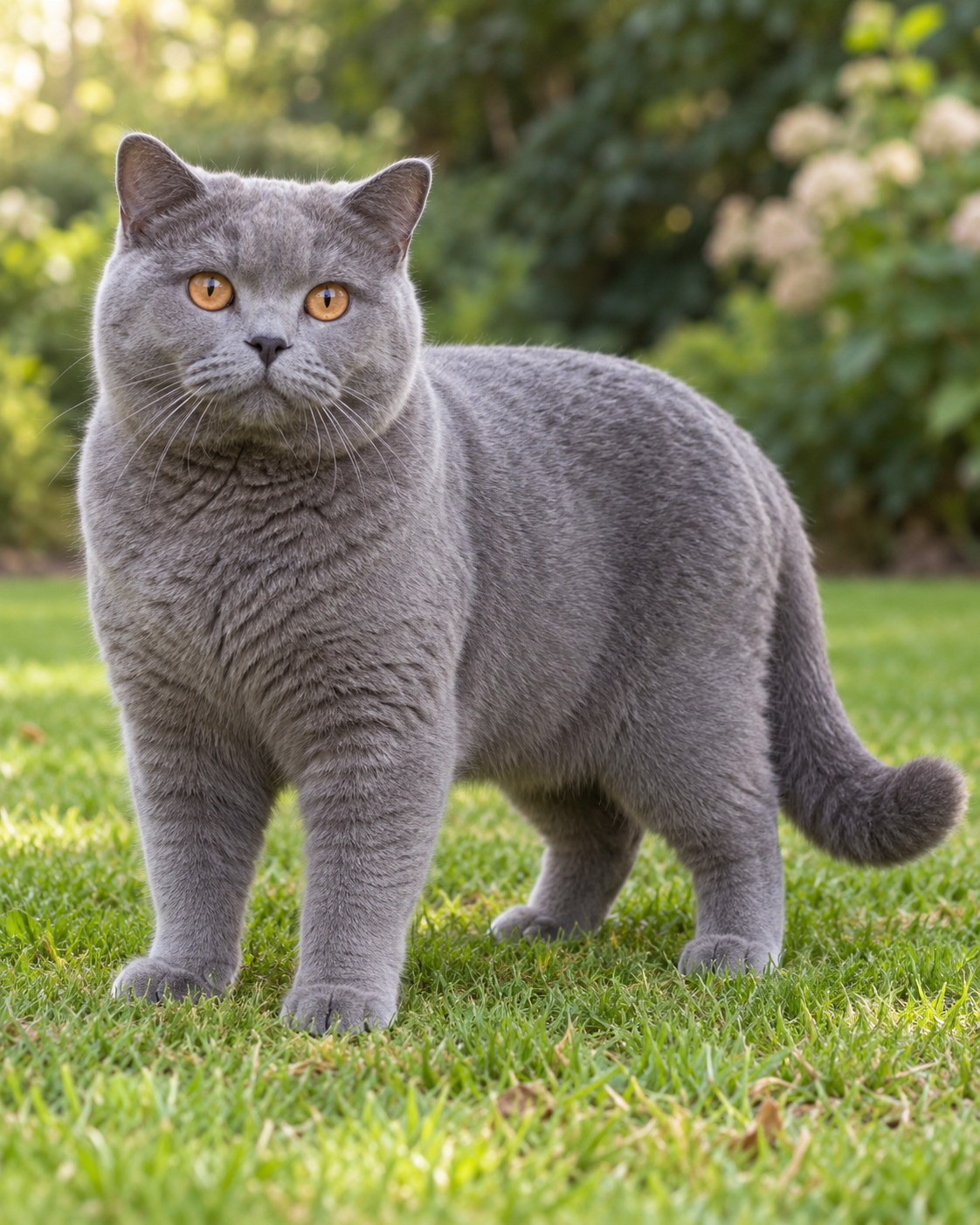
A sturdy shorthaired cat with a dense coat, rounded face and broad chest. These notes concern the shorthair phenotype only.
- Adult build
- Medium to large; dense, plush short coat
- Adult weight
- Females: 8–11 lb; males: 10–16 lb.
View all British Shorthair articles →
View sources and checked dates →References & editorial notes
Adult-weight sources
Female: 8–11 lb; Male: 10–16 lb
educated: TICA female 8-11/male 10-16 lb lies centrally within GCCF female 7-12/male 9-17 lb at https://www.gccfcats.org/getting-a-cat/choosing/cat-breeds/british/; choose the published central TICA intervals rather than heavier club/food-company estimates.
- Polycystic Kidney Disease (PKD1)
- British Shorthair
- Hypertrophic Cardiomyopathy
- CFA 2026–2027 Breed Standards
- Recognised breeds
- Standing Rules Version C, 3 June 2026, section 701.4.1
- Using Positive Reinforcement to Train and Support Your Cat
- Making the Commitment to Adopt a Cat
- How to Feed a Cat
- Introducing a New Cat Into Your Home
- Meeting the Physical and Emotional Needs of Indoor Cats
- British Shorthair breed introduction
- Polycystic Kidney Disease (PKD1) Checked 2026-10-20.
- British Shorthair Checked 2026-10-20.
- Hypertrophic Cardiomyopathy Checked 2026-10-20.
- CFA 2026–2027 Breed Standards Checked 2026-10-20.
- Recognised breeds Checked 2026-10-20.
- Standing Rules Version C, 3 June 2026, section 701.4.1 Checked 2026-10-20.
- Using Positive Reinforcement to Train and Support Your Cat Checked 2026-10-20.
- Making the Commitment to Adopt a Cat Checked 2026-10-20.
- How to Feed a Cat Checked 2026-10-20.
- Introducing a New Cat Into Your Home Checked 2026-10-20.
- Meeting the Physical and Emotional Needs of Indoor Cats Checked 2026-10-20.
- British Shorthair breed introduction Checked 2026-10-20.
Breeders & rescues
Explore British Shorthair breeders →
Questions to bring
- What kidney and cardiac screening is relevant to this particular family, and can the reports be reviewed?
- What happens when this cat is picked up or groomed?
- What family health records and applicable test results are available?