British Shorthair cat temperament
Explore British Shorthair cat temperament through learning, individual handling preferences, sleeping patterns and scent-based communication.
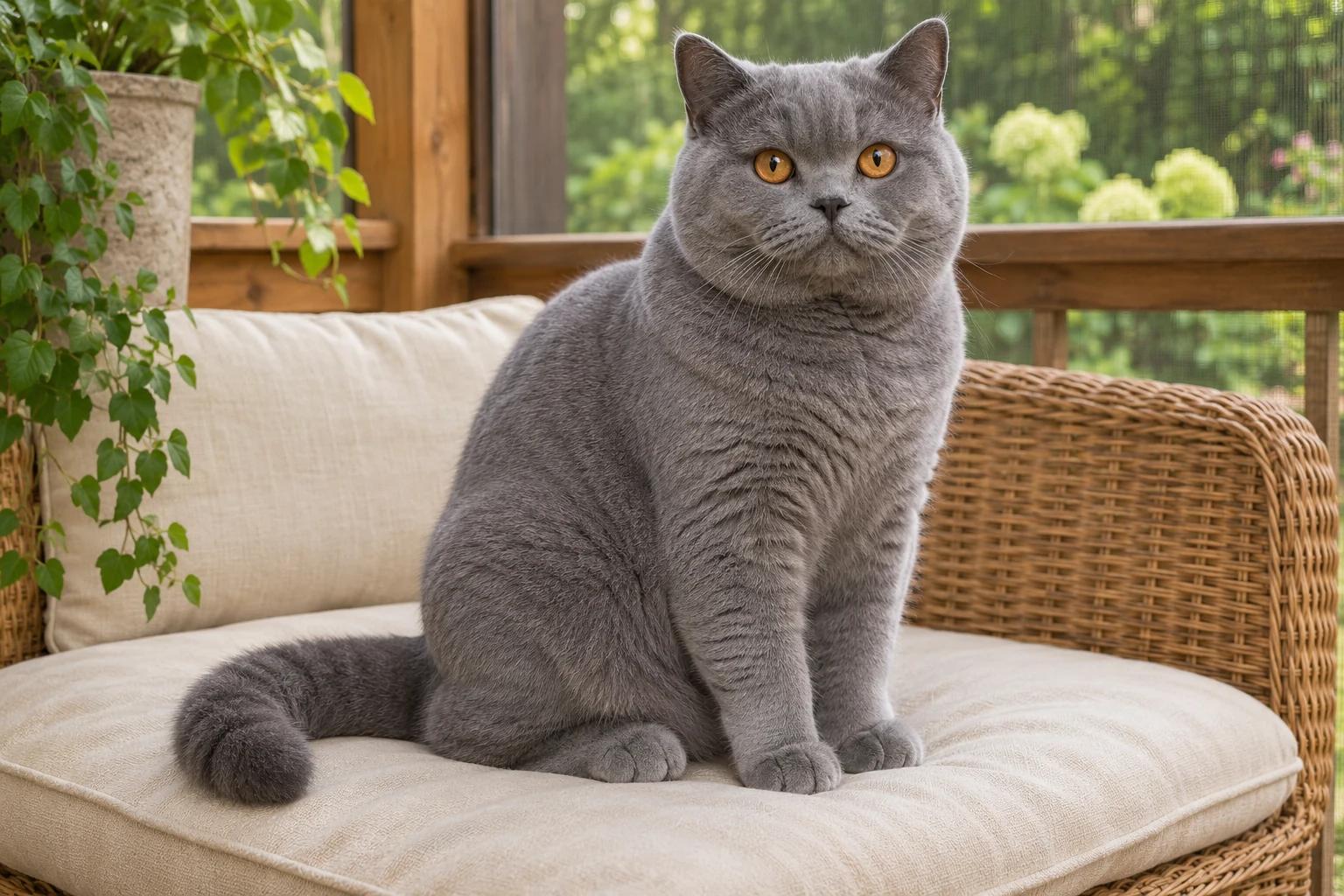
British Shorthair cat temperament becomes more understandable when you distinguish a breed description from a particular animal's experiences. The British Shorthair profile introduces the breed, but it cannot name the people this cat knows, the signals it has learned or the situations it has encountered. Those details belong to the individual, even when two companions share a breed and look similar in photographs.
British Shorthair cat temperament includes room for learning
The British Shorthair Cat Club notes that members of the breed can learn small tricks. It also acknowledges that some individual cats do not enjoy showing, despite the breed's presence in the show world. These are useful reminders that a reputation and an individual response are different things.
British Shorthair cat personality varies.
Ask about a task the cat already knows rather than requesting a new trick. A familiar cue is a more meaningful starting point than a demand to demonstrate supposed breed intelligence. A show performance reflects preparation, not a standard every household British must match.
Necessary lifting should support the whole cat
FelineVMA's affection guidance recommends using both hands when lifting a cat that is comfortable with being picked up, supporting the hindquarters and keeping the animal close to your body. It advises against a tight grip or lifting by the scruff.
For a British Shorthair, think of handling as a physical interaction with an individual, not a reward you are entitled to claim because the animal looks inviting. Support should not leave the rear of the body dangling. Nor should “secure” be interpreted as squeezing harder to make a reluctant animal remain in place.
If you are unsure how to handle your cat for a necessary task, ask your veterinary team to demonstrate an appropriate method. A safe demonstration is more useful than copying a photograph of someone holding a different animal. The important distinction is between supporting a cat that accepts the interaction and forcing one to remain there. The appearance of confidence in a human handler does not prove that the method suits the animal being held.
A daytime nap is not the whole daily pattern
Ohio State's explanation of feline sleep describes repeated sleep-and-wake periods across the day and night rather than a human-style daily schedule. It connects that pattern with the cat's hunting background and notes that playful daily activities can help reduce nighttime activity.
This matters when interpreting British Shorthair cat behavior from a brief visit. If you arrive during a nap, you have seen a resting period, not measured everything the animal does over a full day. A photograph of a sleeping cat is even less informative about its complete routine.
Ask what happens at other times: when the cat ordinarily wakes, when it takes an interest in an activity and how its day unfolds in the current home. That is not a promise that your household will reproduce the same pattern immediately. It simply gives the resting scene context. Avoid treating one quiet afternoon as proof that the cat will always be inactive at the hours you find most convenient, or that ordinary opportunities for activity are unnecessary.
A cheek rub carries information you cannot smell
VCA's account of head bunting explains that cats have scent-producing glands around the cheeks, forehead and chin. Rubbing transfers chemical signals that other cats can detect even though people cannot. The behavior may be directed toward a person or an object such as furniture.
For an owner, this makes a cheek rub more interesting than a simple human-style gesture. If a British Shorthair rubs a chair after rubbing you, it does not follow that the earlier contact was meaningless. Scent is part of the animal's way of interacting with familiar surroundings, not a system that has to mirror human social manners.
Describe what the cat does without turning it into a competition for affection. A person who receives fewer head rubs is not automatically a failed companion, and a single rub cannot answer every question about the relationship. Pay attention to the action in its setting rather than inventing an exact emotional score from it. The visible movement is only the part of the communication that you can readily observe.
Three descriptions that should not be confused
British Shorthair cat characteristics can refer to appearance, experience or behavior. Those categories answer different questions. The current adult reference of 8–11 pounds for females and 10–16 pounds for males is a physical description. A statement that the cat has lived with one person for several years describes experience. An account of what happened in today's encounter describes a specific event.
Keep the categories separate when evaluating a prospective companion. An eleven-pound adult may be familiar with your home or may never have entered it. The weight cannot tell you which. A previous caregiver may know the cat extremely well, while you are starting a new relationship; neither perspective needs to erase the other. The useful comparison is between clearly described situations, not between a number on a scale and a broad personality adjective.
The British Shorthair measured-meals guide covers household feeding organization. The cat quiz helps clarify wider ownership preferences without assigning a complete personality to an animal you have not met.
FAQ
Does adult weight establish temperament?
British Shorthair adult weight is a physical measurement, not a temperament assessment. Two adults can fall within the same weight range without having identical temperaments.
Is an earlier caregiver's account irrelevant once the cat moves?
An earlier caregiver’s account of a British Shorthair remains relevant as experience in that home. Keep the setting clear when comparing it with what happens in yours.
Can two cats of the same breed have different learning histories?
British Shorthairs can have different learning histories, with different experiences of people, situations and signals.
Sources behind this article
Article source checked: November 16, 2026. Source checked 2026-11-16
Keep reading

American Bobtail cat temperament
Read article →