British Shorthair cat toys
Choose British Shorthair cat toys for rolling, kicking and exploration, with practical play ideas and careful attention to the individual.
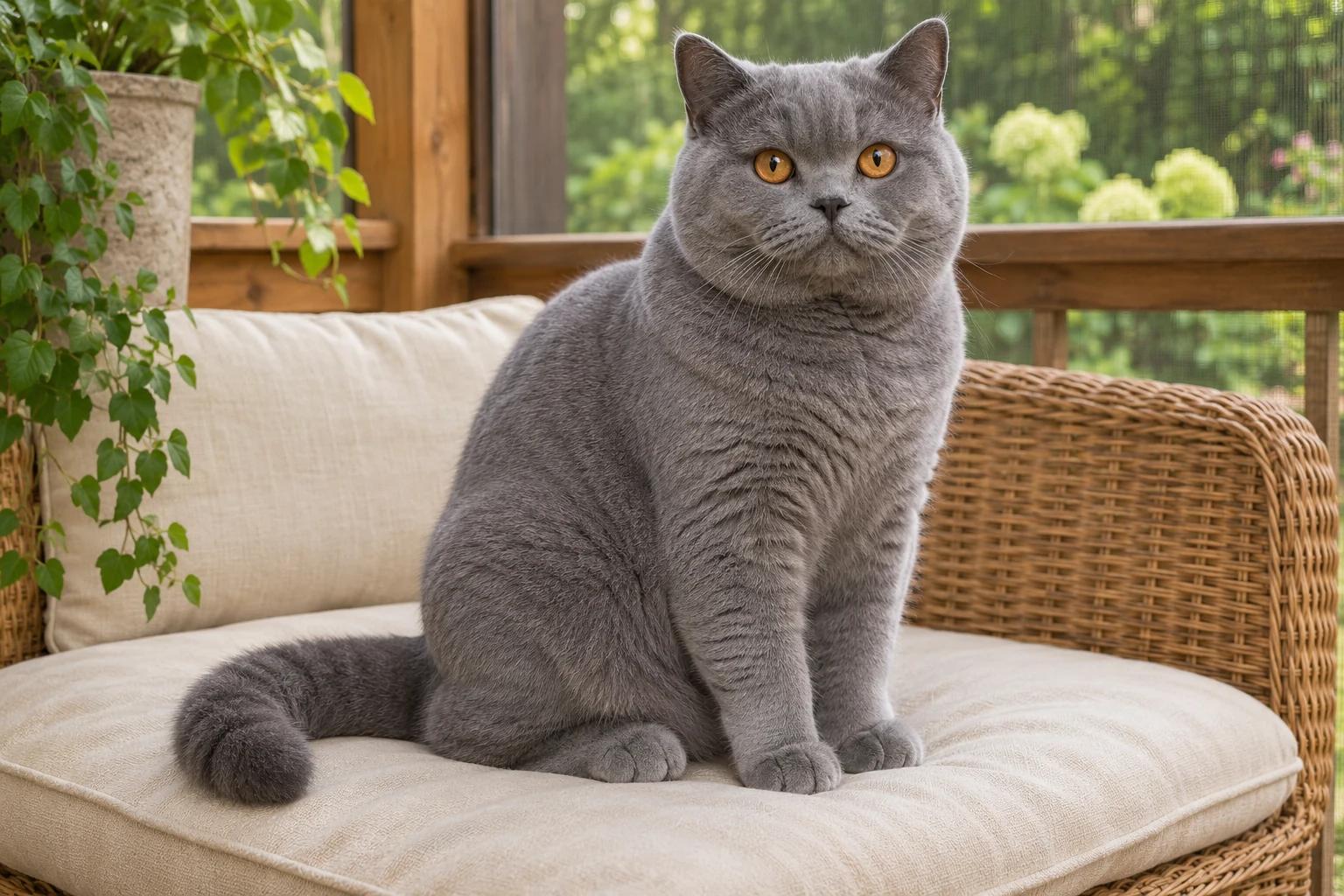
British Shorthair cat toys should offer something the individual actually wants to do, not merely match a breed name printed on the packaging. The current British Shorthair profile introduces the breed and its everyday care. Begin with a clear activity: rolling and chasing, holding and kicking, or exploring a simple hiding place. These are different opportunities, so one ignored object does not answer every question about the cat's interest in play.
British Shorthair cat toys that move along the floor
Ohio State's Indoor Pet Initiative describes balls and moving mouse toys that cats can chase and swat. It also explains how a dangling toy can be moved slowly away from the cat to invite pursuit. The movement matters: an object placed motionless beside the cat is a different invitation from one traveling across its field of view.
For British Shorthair cat indoor play, try a reachable movement along the floor rather than assuming every game must involve a high leap. Roll the object past the cat, or move a supervised wand away in a short path. Give the animal an opportunity to notice and approach it instead of repeatedly pushing the object toward its face.
Notice whether the cat swats or pursues the moving object.
Offer something to grip and kick
International Cat Care's kitten guide describes kicking toys that a cat can hold with the front paws while working the hind legs against them. A suitable stuffed toy offers a different activity from chasing a small rolling object. The guide also notes that gentle sounds can be interesting, while loud sounds may alarm a cat.
For a young British Shorthair, keep the activity directed toward the toy rather than your hands or feet. A purpose-made kicking object can be held and attacked without turning a person's arm into the target. The useful distinction is what the animal can do with it, not whether the product resembles a particular prey species perfectly.
Wand toys require supervision, and those with strings or elastic should be put away afterward. Treat a wand and a kicking toy as different tools rather than leaving the same dangling assembly available for every type of play. When considering how to exercise a British Shorthair cat, include holding and kicking among the possibilities instead of measuring participation only in distance traveled.
Let simple objects create an exploration game
The PAWS toy guide, credited to the Dumb Friends League and Humane Society of the United States, suggests paper bags with their handles removed and cardboard rolls as play opportunities. It also describes hiding toys so the cat can discover them, rather than always presenting them directly.
A handle-free paper bag can make a different invitation from an exposed ball. The cat can inspect an opening, go around the object or investigate a toy placed partly out of sight. Keep the setup straightforward enough that you can see what is attracting its attention.
For British Shorthair cat activity level, this kind of exploration provides another useful observation besides running speed. A cat investigating a newly arranged object is doing something different from sleeping beside it. There is no need to buy a complicated electronic device before learning whether simple discovery interests your companion. Avoid plastic bags, and do not assume that every household item is an appropriate substitute for a toy. Choose the object deliberately rather than offering whatever happens to be on the floor.
Check the toy and the surrounding space
Cornell's safe-toy guidance advises avoiding detachable small pieces and strand-like parts that could be swallowed, as well as chewable electrical cords. It also emphasizes the play environment: heavy objects should not be able to fall onto the cat, and a distracted animal should not be drawn toward an unsafe drop.
This means evaluating more than the toy's main body. An otherwise substantial object may still have an insecure decorative attachment. A stable floor game can become a different proposition if it is moved onto the edge of furniture. Inspect the complete setup before encouraging vigorous interaction.
For a British Shorthair, a product's breed-themed label does not remove these checks. Neither does a higher price establish that every part is suitable for this individual. If you are uncertain about a toy, ask your veterinarian. The goal is not to make the collection elaborate; it is to provide usable opportunities without overlooking the construction or the place in which the cat will pursue them.
Adult weight is context, not a play score
The current adult references are 8–11 pounds for females and 10–16 pounds for males. Those numbers describe physical scale. They cannot tell you which object an individual recognizes from earlier play, whether a particular game is familiar, or what a previous owner meant by calling the cat “playful.”
A ten-pound female and a ten-pound male both fit the respective references. The identical measurement does not establish identical experience. Equally, a heavier adult is not automatically a more accomplished player. Keep the measurement in its proper role rather than turning it into a score for enthusiasm or a reason to expect the same response from two different cats.
Feeding organization is covered separately in the British Shorthair measured-meals guide. The cat quiz helps you consider wider ownership preferences beyond the choice of individual toys.
FAQ
Does “for British Shorthairs” identify what this cat will enjoy?
A “for British Shorthairs” toy label cannot identify an individual’s preferences, earlier experiences or familiar toys.
Can adult weight tell me whether a game is familiar?
A British Shorthair’s adult weight describes physical scale, not familiarity with a game. Ask about the actual cat's previous experience.
Does a photograph of a toy show a complete play session?
A British Shorthair toy photograph shows an object at one moment, not a complete play session or ongoing interaction.
Sources behind this article
Article source checked: November 16, 2026. Source checked 2026-11-16
Keep reading

American Curl exercise
Read article →