Foundation Stock Service · Netherlands
Saarloos Wolfhond: Health
Saarloos Wolfhond health
Health observations and family records
A primary study documents pituitary dwarfism in two client-owned Saarloos wolfdogs, alongside separately identified Czechoslovakian cases. This exact occurrence is not proof that every unusually small Saarloos puppy has the same condition.
Bring the growth history, not just a size comparison
Ask your veterinarian to consider the individual’s growth and examination alongside any named family report. The study concerns dogs with a clinical diagnosis and an associated genetic finding. Neither a photograph beside littermates nor a broad “DNA checked” description supplies that assessment. If your veterinarian finds a pituitary hormone problem, ask what changes in growth, coat, energy or thirst you should record and which hormone checks come next. Keep a dated weight record instead of comparing your puppy with a littermate. Ask what improvement is realistic and keep rechecks even if the coat looks better. Do not use growth supplements or change medicines on your own.
Family history and screening
Ask for any individual clinical and genetic reports by their exact names. The current profile does not show a fixed US screening list; that absence should not be interpreted as an assurance that family health questions are unnecessary.
Questions for your veterinarian
- Was the relative’s growth condition clinically confirmed?
- Which exact finding does the family genetic report describe?
Choosing a puppy? Ask to see both parents’ results, with the animal’s name and the date on each report. If you’re adopting an adult, ask which records come with that individual.
Our main breed reference does not list a screening panel. Ask which problems have appeared in close relatives and how old they were when signs first appeared.
Breeders supply these documents. My Breed Atlas does not independently verify them. Check the animal’s identity, the date and the actual result.
Rescues & sheltersPrint or citeBreed articles
Other profile sections and family fact sheet
Life with a Saarloos Wolfhond
Many like to share the room without constant contact.
Explore home life →A brisk outing fits better than a short stroll.
Explore daily care →Brush once or twice weekly; avoid excessive bathing.
Explore daily care →Print or cite this breed
Saarloos Wolfhond family fact sheet
Breed-level references are a starting point. Ask about the individual animal’s routine and care needs.
- Female
- 66–77 lb
- Male
- 79–90 lb
- Adult height
- 25–30 Inches male; 23–28 in female
- Reference lifespan
- 12–15 years
- Adult size
- Female: 66–77 lb; Male: 79–90 lb Some published weights are estimates. Check the source notes; individual animals vary.
Company
Many like to share the room without constant contact.
Activity & learning
A brisk outing fits better than a short stroll.
Coat care
Brush once or twice weekly; avoid excessive bathing.
Everyday responsibilities
Plan food, supplies, routine care and veterinary visits. Agree who handles the everyday jobs and who covers absences.
Adult help
An adult should remain responsible for care, supervise children’s interactions and arrange help when needed.
My Breed Atlas. Saarloos Wolfhond breed profile. https://mybreedatlas.com/breeds/saarloos-wolfhond
Read this profile’s sources →Adult ranges and source qualifications
- Female
- 66–77 lb
- Male
- 79–90 lb
- Adult height
- 25–30 Inches male; 23–28 in female
- Reference lifespan
- 12–15 years
Reference ranges describe the breed, not a prediction for an individual.
Daily care
Activity & learning
A brisk outing fits better than a short stroll.
More about everyday care
The activity rating sits in the middle of the reference scale. Aim for a consistent mix of outings, play, and opportunities to settle.
Simple daily games, sniffing opportunities, and short learning sessions can add variety.
Coat care
Brush once or twice weekly; avoid excessive bathing.
More about everyday care
The grooming-frequency rating is relatively low. Keep a consistent coat-care routine and check nails, ears, skin, and teeth rather than treating low maintenance as no maintenance.
Some shedding is part of the ownership plan. Regular coat care and household cleaning can help you manage it.
Coat colors & markings
Standard colors recorded in the reference: Agouti & White, Black, Blue, Chocolate, Fawn, Gray, Red, Sable, White.
Standard markings: Irish Marked, Piebald, Ticked, White Markings.
Color alone does not establish breed identity, health, or quality. Ask about the dog’s background and care needs.
Training & communication
The reference suggests a more independent approach to learning. Keep sessions brief, use rewards the dog values, and make the task clear. Patience matters more than repeating commands.
Vocal tendency is at the lower end of the scale, but individual dogs still bark. Learn what triggers vocalization rather than assuming silence.
Food, routine & costs
The everyday ownership plan
Food & routine
Ask your veterinarian about food appropriate to the dog’s life stage, body condition, and health history. Ask the breeder what the dog currently eats and how to approach any transition. Keep feeding and care records rather than relying on a generic breed portion chart.
Time & budget
Allow for regular care, training, equipment, grooming, veterinary visits, and unexpected costs. Make a plan for workdays, travel, and changes in your schedule. The adult size and coat-care profile above can help you identify practical demands.
Bringing a dog home
Prepare a safe sleeping area and a predictable routine. Arrange veterinary care, agree on household rules, and introduce new situations gradually. Get written information about the dog’s routine, registration where applicable, and ongoing breeder support.
Home life
Company
Many like to share the room without constant contact.
More about everyday care
A reliable rating is not available in the reference. Discuss the individual dog’s needs with its breeder.
A reliable rating is not available in the reference. Discuss the individual dog’s needs with its breeder.
Family life, other dogs & housing
Compatibility with children depends on the individual dog, experience, and the household routine. A middle rating is a research starting point, not an assurance.
A reliable rating is not available in the reference. Discuss the individual dog’s needs with its breeder.
Always supervise interactions with children and provide a quiet retreat. Apartment suitability involves noise, outdoor access, stairs, time alone, and building rules as well as size. No rating measures the compatibility of a particular pair of dogs or a dog and another species.
Time alone and workdays
Personality & care details
Personality & care profile
These 1–5 reference ratings offer a comparison of breed tendencies. A higher number means more of the named tendency; it is not a quality score or an endorsement.
What everyday life tends to involve
These notes describe a tendency for the breed. Every animal is an individual.
- Activity
- A brisk outing fits better than a short stroll.
- Training
- Loose hair tends to stay light.
- Coat care
- Brush once or twice weekly; avoid excessive bathing.
- Loose hair
- Brushing a few times a week fits this coat.
- Voice
- Long stretches alone are a poor fit. They want company nearby. Everyday noise tends to stay low.
- Company
- Many like to share the room without constant contact.
- Adult size
- Female: 66–77 lb; Male: 79–90 lb
Some published weights are estimates. Check the source notes; individual animals vary.
YOUR EVERYDAY LIFE
How could this breed fit your life?
See household examples or compare this breed with answers you chose to save. The examples show combinations where this breed appeared among the first five results. Other combinations can work too.
Saved matching preferences stay in this browser, never on your account. They expire after 30 days and are removed the next time this feature reads them. Health answers, children’s ages and free-text notes are not saved. This section does not reproduce those personal care notes.
History & sources
Heritage & appearance
Meet the Saarloos Wolfhond
Saarloos Wolfhond has an origin listed as Netherlands and is listed in the Foundation Stock Service. Use the adult-size ranges and behavior tendencies below to understand the practical commitment, then get to know the individual dog and its family history.
Ranges describe the reference population, not a prediction for a puppy. Some sources distinguish male and female sizes. Lifespan ranges are estimates, not guarantees.
- Origin
- Netherlands
- Classification
- Foundation Stock Service
- Coat length
- Short
Heritage & classification
The listed origin, Netherlands, gives you a starting point for researching this breed’s development. Recognition or foundation recording is different from the date a breed first developed. Explore the breed reference and parent club for detailed historical accounts and the current standard.
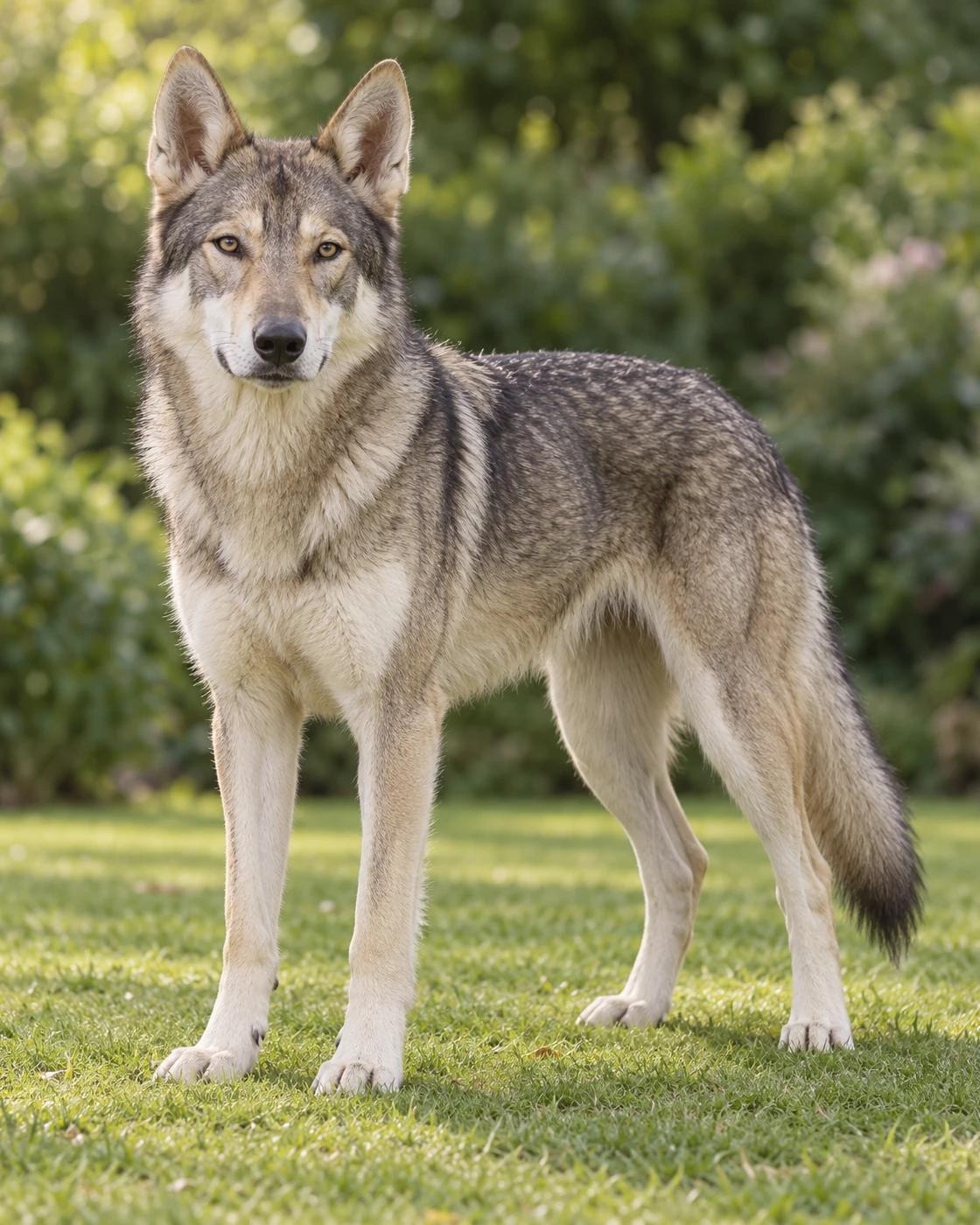
More about this breed’s history
A later Dutch breeding project.
In May 2012, the Dutch Saarlooswolfhond association AVLS adopted a plan to widen the breed’s genetic diversity by introducing dogs from outside its breeding population. The association dates the start of the crosses to 2014, when it used a White Swiss Shepherd. On October 30, 2025, it published a revised plan for 2026–2033, drawing on a decade of experience. These records concern the association’s program and its aims. They do not establish a health outcome for its descendants. (Algemene Vereniging voor Liefhebbers van Saarlooswolfhonden: Plan van Aanpak; Algemene Vereniging voor Liefhebbers van Saarlooswolfhonden: Plan van Aanpak 2.0, 23 April 2020)
Full breed details
View all Saarloos Wolfhond articles →
View sources and checked dates →References & editorial notes
Adult-weight sources
Female: 66–77 lb; Male: 79–90 lb
educated: native Dutch and English female/male searches; origin standard supplies height only; veterinary profile under the English synonym Saarloos Wolfdog explicitly gives female 66-77 lb and male 79-90 lb, used for the missing full intervals.
Researched care tendencies & uncertainty
Checked 2026-10-13. Qualified estimates are editorial interpretations of the linked descriptions. They are separate from source-issued reference ratings. Parent-breed scores have not been averaged.
Existing source ratings are preserved. Missing numerical traits stay explicitly unknown; no source score was inferred from a breed-standard adjective.
- American Kennel Club ↗ — Current page checked; missing comparative fields were not available in retrieved content.
Breeders & rescues
Explore Saarloos Wolfhond breeders →
Questions for a breeder
- What are the parents like in everyday life?
- How are puppies raised and introduced to new experiences?
- Which screening records can I review?
- What does the contract cover, including return arrangements?
- What support is available after the dog comes home?
Before you meet a dog
- What does the coat-care routine involve?
- How does this dog handle time apart?