Miscellaneous Class · Spain
Pyrenean Mastiff: History & sources
History & sources
Heritage & appearance
Meet the Pyrenean Mastiff
Pyrenean Mastiff has an origin listed as Spain and is listed in the Miscellaneous Class. Use the adult-size ranges and behavior tendencies below to understand the practical commitment, then get to know the individual dog and its family history.
Ranges describe the reference population, not a prediction for a puppy. Some sources distinguish male and female sizes. Lifespan ranges are estimates, not guarantees.
- Origin
- Spain
- Classification
- Miscellaneous Class
- Coat length
- Medium
Heritage & classification
The listed origin, Spain, gives you a starting point for researching this breed’s development. Recognition or foundation recording is different from the date a breed first developed. Explore the breed reference and parent club for detailed historical accounts and the current standard.
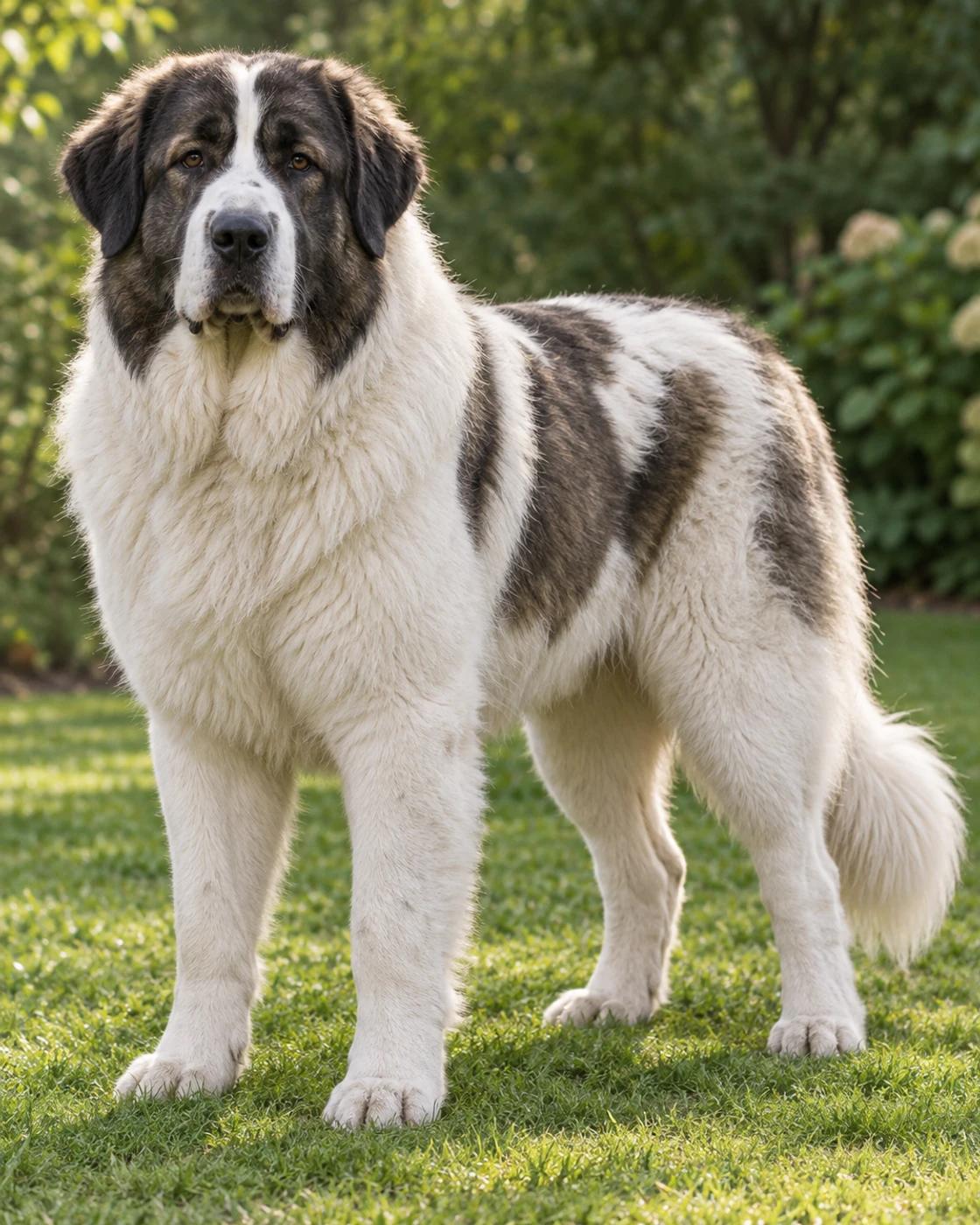
More about this breed’s history
How the Spanish founders chose dogs
In 1977, Rafael Malo Alcrudo, Daniel Llorens Guerrero and Jaime Graus Morales signed the founding papers of Spain’s Pyrenean Mastiff club. Malo recalled that the dogs they found varied from one district to another and that almost all lacked pedigree papers. The founders consulted older fanciers and studied photographs from the first third of the twentieth century to decide which traits best represented the prewar Aragonese dogs. In 1979, Malo and Llorens presented their work at the veterinary faculty of Madrid’s Complutense University. (Club del Mastín del Pirineo de España: Historia: Rafael Malo Alcrudo’s firsthand account)
Full breed details
View all Pyrenean Mastiff articles →
View sources and checked dates →References & editorial notes
Adult-weight sources
PMAA president’s reported webinar averages: Female: 110–140 lb; Male: 130–180 lb. High Plains Journal reports Karina Whittington’s averages, with outliers in both sexes; not a breed-standard limit. | Dogzone adult reference: Female: 70–86 kg; Male: 80–100 kg. This different published account remains separately named; no endpoint blend is inferred.
direct: PMAA president’s reported webinar averages; reported-club-expert-average-reference. High Plains Journal reports Karina Whittington’s averages, with outliers in both sexes; not a breed-standard limit.
Rescues & sheltersPrint or citeBreed articles
Other profile sections and family fact sheet
Life with a Pyrenean Mastiff
Many like to share the room without constant contact.
Explore home life →About an hour of active time fits the described day.
Explore daily care →Brush once or twice a week ordinarily.
Explore daily care →Print or cite this breed
Pyrenean Mastiff family fact sheet
Breed-level references are a starting point. Ask about the individual animal’s routine and care needs.
- Female
- 110–140 lb (PMAA president’s reported webinar averages)
- Male
- 130–180 lb (PMAA president’s reported webinar averages)
- Adult height
- Males 30–31 in, Females 28–30 in
- Reference lifespan
- 10–12 years
- Coat
- Double
- Adult size
- Female: 110–140 lb (PMAA president’s reported webinar averages); Male: 130–180 lb (PMAA president’s reported webinar averages) Typical adult references vary between sources and individuals. See the full source accounts.
Company
Many like to share the room without constant contact.
Activity & learning
About an hour of active time fits the described day.
Coat care
Brush once or twice a week ordinarily. During heavy spring or fall shedding, try three or four sessions a week or every other day, up to daily as needed.
Everyday responsibilities
Plan food, supplies, routine care and veterinary visits. Agree who handles the everyday jobs and who covers absences.
Adult help
An adult should remain responsible for care, supervise children’s interactions and arrange help when needed.
My Breed Atlas. Pyrenean Mastiff breed profile. https://mybreedatlas.com/breeds/pyrenean-mastiff
Read this profile’s sources →Adult ranges and source qualifications
- Female
- 110–140 lb (PMAA president’s reported webinar averages)
- Male
- 130–180 lb (PMAA president’s reported webinar averages)
- Adult height
- Males 30–31 in, Females 28–30 in
- Reference lifespan
- 10–12 years
- Coat
- Double
Reference ranges describe the breed, not a prediction for an individual.
Daily care
Activity & learning
About an hour of active time fits the described day.
More about everyday care
The activity rating is at the lower end of the reference scale. Build a regular routine around walks, sniffing, play, and rest; a lower rating does not mean no exercise.
Simple daily games, sniffing opportunities, and short learning sessions can add variety.
Coat care
Brush once or twice a week ordinarily. During heavy spring or fall shedding, try three or four sessions a week or every other day, up to daily as needed.
More about everyday care
The reference places shedding toward the higher end of the scale. Consider coat care and household cleaning before choosing this breed.
Coat colors & markings
Standard colors recorded in the reference: White & Black, White & Golden, White & Brown, Agouti & White, White & Sable, White & Gold, Tri-Colored, White.
Standard markings: Patched, Brindle Markings, Black Tips, Badger Markings, Brindle Black Mask.
Color alone does not establish breed identity, health, or quality. Ask about the dog’s background and care needs.
Training & communication
The reference suggests a more independent approach to learning. Keep sessions brief, use rewards the dog values, and make the task clear. Patience matters more than repeating commands.
Vocal tendency is relatively high. Consider neighbors and housing rules, and plan thoughtful management of triggers alongside training.
Food, routine & costs
The everyday ownership plan
Food & routine
Ask your veterinarian about food appropriate to the dog’s life stage, body condition, and health history. Ask the breeder what the dog currently eats and how to approach any transition. Keep feeding and care records rather than relying on a generic breed portion chart.
Time & budget
Allow for regular care, training, equipment, grooming, veterinary visits, and unexpected costs. Make a plan for workdays, travel, and changes in your schedule. The adult size and coat-care profile above can help you identify practical demands.
Bringing a dog home
Prepare a safe sleeping area and a predictable routine. Arrange veterinary care, agree on household rules, and introduce new situations gradually. Get written information about the dog’s routine, registration where applicable, and ongoing breeder support.
Home life
Company
Many like to share the room without constant contact.
More about everyday care
The reference points to a strong interest in family interaction. Make room for shared activities and company in the daily routine.
Introductions can vary with the individual and situation. Give the dog time and space to become comfortable.
Family life, other dogs & housing
The reference rates interaction with young children relatively highly. This still does not establish that a particular dog is safe with children.
A relatively social rating can be encouraging for a multi-dog household, but introductions and individual compatibility still matter.
Always supervise interactions with children and provide a quiet retreat. Apartment suitability involves noise, outdoor access, stairs, time alone, and building rules as well as size. No rating measures the compatibility of a particular pair of dogs or a dog and another species.
Time alone and workdays
Personality & care details
Personality & care profile
These 1–5 reference ratings offer a comparison of breed tendencies. A higher number means more of the named tendency; it is not a quality score or an endorsement.
What everyday life tends to involve
These notes describe a tendency for the breed. Every animal is an individual.
- Activity
- About an hour of active time fits the described day.
- Training
- Loose hair tends to stay light.
- Coat care
- AKC recommends brushing feathering once a week to prevent mats and remove loose hair. PetMD describes broader ordinary grooming every 2 weeks as sufficient, while requiring extra brushing during seasonal coat loss without giving its interval. The breed association says whole-coat cutting or shaving is unnecessary apart from medical reasons, mats or foot cleanup. It separately describes optional hot-climate pet trimming and untrimmed show coats; local foot care remains.
Confirm the increased brushing schedule during seasonal coat loss; maintain weekly feathering checks.
- Loose hair
- Expect a lot of loose hair, including heavy shedding seasons.
- Voice
- Some barking through the day is typical.
- Company
- Many like to share the room without constant contact.
- Adult size
- Female: 110–140 lb (PMAA president’s reported webinar averages); Male: 130–180 lb (PMAA president’s reported webinar averages)
Typical adult references vary between sources and individuals. See the full source accounts.
YOUR EVERYDAY LIFE
How could this breed fit your life?
See household examples or compare this breed with answers you chose to save. The examples show combinations where this breed appeared among the first five results. Other combinations can work too.
Saved matching preferences stay in this browser, never on your account. They expire after 30 days and are removed the next time this feature reads them. Health answers, children’s ages and free-text notes are not saved. This section does not reproduce those personal care notes.
Pyrenean Mastiff health
Health observations and family records
The Pyrenean Mastiff Association of America recommends separate hip, elbow, heart and degenerative myelopathy assessments within its health program. A program number is not a single result covering all of these systems.
An available test is different from a recommendation to use it. Ask which records are relevant to this individual; neither a test listing nor a screening recommendation tells you how often illness occurs.
A repeated movement change needs an assessment
Tell your veterinarian about new difficulty rising or recurring front-leg favouring during normal activity. General joint guidance explains why these observations matter, but a parental report cannot diagnose this dog or explain every cause of a limp.
Family history and screening
Ask for graded joint reports, the date and kind of heart examination and the exact DNA document. Keep clinical family findings separate from the recommendation to screen; a DM test listing is not evidence of diagnosed spinal disease in this dog.
Questions for your veterinarian
- Which individual findings accompany each program topic?
- What kind of heart examination does the report record?
Choosing a puppy? Ask to see both parents’ results, with the animal’s name and the date on each report. If you’re adopting an adult, ask which records come with that individual.
Screenings listed for Pyrenean Mastiff
- Hip Evaluation
- Elbow Evaluation
- Cardiac Exam
- Degenerative Myelopathy DNA Test
Breeders supply these documents. My Breed Atlas does not independently verify them. Check the animal’s identity, the date and the actual result.
Breeders & rescues
Explore Pyrenean Mastiff breeders →
Questions for a breeder
- What are the parents like in everyday life?
- How are puppies raised and introduced to new experiences?
- Which screening records can I review?
- What does the contract cover, including return arrangements?
- What support is available after the dog comes home?
Before you meet a dog
- What does the coat-care routine involve?
- How does this dog handle time apart?