Pyrenean Mastiff training: practical household skills
Plan Pyrenean Mastiff training around clear cues, calm arrivals, lead skills and gradual practice, with realistic goals for a giant companion.
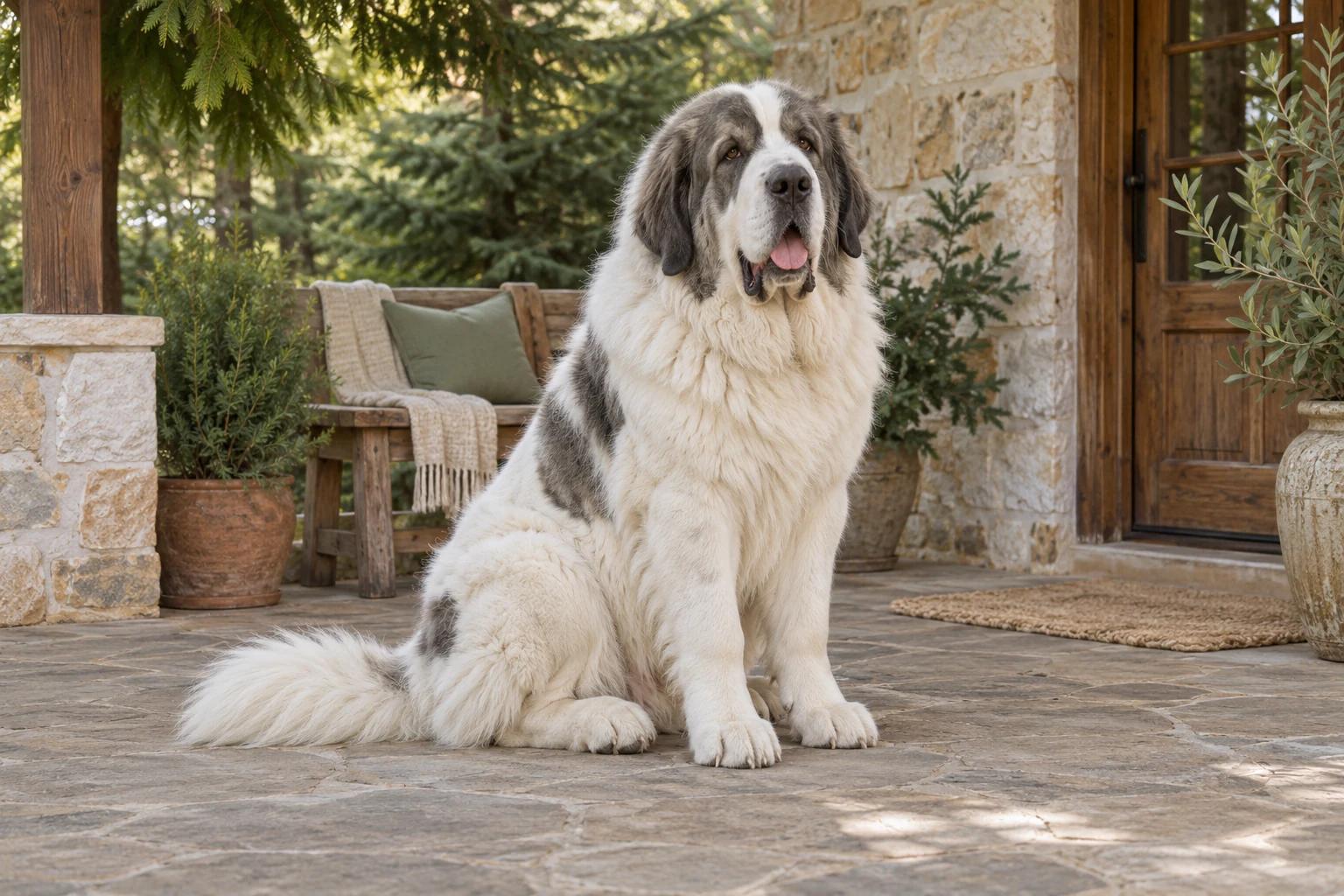
Pyrenean Mastiff training should make ordinary life easier for both dog and handler. Start with the moments you will repeat every day: putting on walking equipment, moving through a doorway, coming away from a window and settling while someone carries groceries inside. These are more useful first goals than a long list of impressive tricks, particularly when the dog will occupy so much of the available space.
Pyrenean Mastiff training begins with a shared plan
The Pyrenean Mastiff Association of America describes the breed as an independent learner that benefits from motivation and enjoyable practice. Begin by agreeing what each household cue means. “Wait” cannot mean pause at the gate for one person and remain on a bed indefinitely for another. Write down a small vocabulary everyone can actually remember.
The ASPCA training position supports humane, reward-based methods that minimize stress. Choose professional help that follows that approach. You do not need to overpower a large dog to teach everyday cooperation.
List three immediate priorities rather than ten simultaneous projects. For a newly arrived companion, these might be responding to its name, approaching the walking equipment and going to a resting place. The exact list should reflect the dog you have, including skills already learned. Ask its previous caregiver which words and routines are familiar before replacing everything on the first day.
Make the room part of the lesson
If you are wondering how to train a Pyrenean Mastiff, first check whether the setup allows the response you want. A bed squeezed behind a chair may be hard to reach. A slippery turn in a cramped hallway is not a helpful place to practise moving together. Clear the route and use an area where dog and handler can both change position comfortably.
Put equipment where you can reach it without leaving the dog waiting at an open exit. Keep the training area separate from household traffic when possible. Ask other people not to call the dog away during practice. These small arrangements reduce the number of competing instructions and let you concentrate on the skill itself.
Choose an observable result. “Behave at the door” is too broad. “Stand beside me while I pick up the lead” is something you can notice and reward. When that part is familiar, work on the next part rather than suddenly combining every stage with a visitor ringing the bell.
Build an arrival routine before inviting an audience
Start without a real visitor. Decide where you want the dog to go while the entrance is in use, and practise that movement with the door closed. The destination should have enough room for the dog and should not block the path people need to take.
Once the simple version is comfortable, introduce one small change, such as a household member walking through the hallway. Keep the task recognizable. If the dog cannot manage the change, return to an easier version rather than adding a louder cue or more people.
For actual arrivals, use an appropriate barrier or separate room when needed instead of relying on a newly taught skill. Check that the arrangement suits the individual dog's size and behaviour. A visitor does not need to become a training assistant, and an open front door is not the place to discover whether a lesson has transferred.
Practise lead skills where you can think
Pyrenean Mastiff obedience on a quiet path and cooperation on a crowded pavement are different challenges. Start where you have room to notice the dog and change direction without stepping into traffic. Agree with your trainer how the walking equipment should fit and how to use it comfortably.
Give yourself a simple observation task: notice when the dog is near you and the lead is loose. Build practice around those manageable moments instead of waiting until you are being pulled toward something interesting. Use a route with an easy exit so you can leave before a busy situation becomes the whole lesson.
Do not make distance the only measure of progress. A short outing with several clear, comfortable exchanges may tell you more than a long walk spent managing continuous difficulty. Record where practice was possible and where the surroundings were too demanding, then use that information to plan the next outing.
Socialization is not a greeting quota
Plan Pyrenean Mastiff socialization around experiences the dog can handle, not a checklist of people who must touch it. An ordinary environment might include distant traffic, a person using an umbrella or the sound of a bin moving. Observe from a suitable distance and leave space to step away.
For a puppy, ask your veterinarian how to arrange outings appropriate to its health and vaccination situation. Ask the breeder what experiences have already been introduced, including what the puppy found easy or difficult. Continue from that information rather than assuming all puppies begin with the same background.
For an older dog, start with the present ability instead of a deadline supposedly missed in puppyhood. You can still organize better routines and seek individualized professional guidance. Avoid forcing contact, surrounding the dog with strangers or treating stillness as proof that it is comfortable.
Use a notebook instead of a battle of wills
After a session, record the place, requested action and result in a few words. “Joined me from the bed in the quiet kitchen” is a clearer record than “good today.” Add the next small change you intend to try, such as another household member standing nearby.
If progress stalls, examine the task before blaming temperament. Was the cue familiar? Was the environment different? Had you combined too many steps? Unexpected changes in behaviour, reluctance to move or discomfort during handling belong in a conversation with your veterinarian, not a more demanding training session.
For resource guarding, threatening behaviour or significant distress, stop improvised exercises and get qualified help. Do not take food or belongings to test compliance. Everyday training advice is not a substitute for an individual safety assessment.
See the Pyrenean Mastiff profile for broader ownership considerations and the height and proportion article for a separate look at physical scale. The dog quiz can help you identify whether the teaching commitment fits your expectations before choosing a companion.
FAQ
What should I teach a Pyrenean Mastiff first?
Prioritize skills that support your actual routine, such as responding to a familiar cue, approaching walking equipment and moving to a resting place. Start from what the dog already knows and keep the household's instructions consistent.
How long should a training session last?
Use brief practice that ends while the dog can still participate comfortably, rather than chasing a fixed duration. The quality of a few clear attempts matters more than completing an arbitrary number of minutes or repetitions.
Does socialization mean meeting every visitor?
No. A dog can experience a visitor's presence without direct interaction. Arrange distance, an exit and a separate resting option. Ask a qualified professional for help if introductions are difficult rather than forcing greetings.
When should I get professional help?
Seek help early if handling is difficult, safety is uncertain or the dog shows substantial distress. Contact your veterinarian about unexpected behaviour changes or possible discomfort. Describe specific incidents so the professional can assess the actual situation.
Sources behind this article
- Pyrenean Mastiff Association of America: Training ↗
- ASPCA: Position Statement on Training Aids and Methods ↗
Article source checked: November 15, 2026. Source checked 2026-11-15
Keep reading

Affenpinscher Training: Build Useful Everyday Habits
Read article →