Pyrenean Mastiff vs St Bernard: everyday differences
Compare Pyrenean Mastiff vs St Bernard through visitors, training, cleanup and daily logistics before choosing a giant companion.
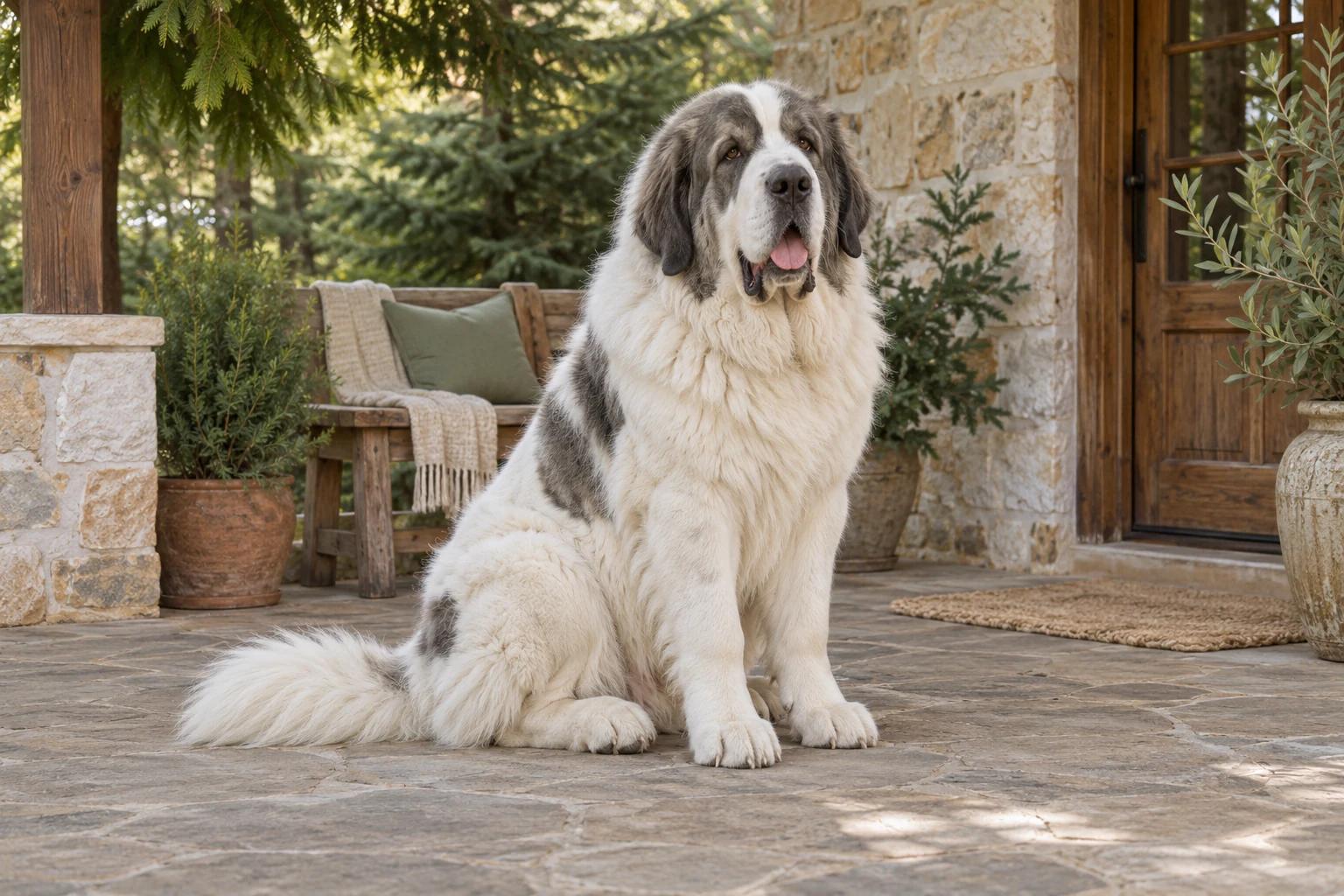
Pyrenean Mastiff vs St Bernard is less about choosing the bigger dog than choosing the household routine you can actually maintain. Both demand substantial space in everyday arrangements, from the car to the doorway. The useful distinction is what you want that routine to feel like: how visitors arrive, how you practise manners, and how much coat and cleanup you are prepared to manage.
Pyrenean Mastiff vs St Bernard: start with their backgrounds
The Pyrenean Mastiff Association of America standard places the Pyrenean Mastiff in the livestock and property-guardian tradition of Aragon, Spain. It describes strength, intelligence and a composed presence. VCA's Saint Bernard profile recounts the Saint's hospice and mountain-rescue background and describes a loyal companion that can be reserved with unfamiliar people. Those histories are context, not jobs a puppy arrives qualified to perform.
For a modern household, turn history into questions. How does the prospective dog respond when a familiar person brings someone new through the gate? Where does it rest while a delivery arrives? Can the current caregiver move it comfortably between rooms? Ask to see ordinary routines, with permission and without provoking a reaction. A calm photograph tells you much less than an unhurried visit.
Compare the front door before the garden
A large garden does not solve a narrow entrance. Sketch the route from your outside gate to the room where guests sit. Include the dog, an adult handler, shopping bags and someone opening the door. If everybody meets in one pinch point, decide where the dog will wait before anyone comes in.
When weighing St Bernard vs Pyrenean Mastiff, discuss barking with people who live with the particular dogs. The My Breed Atlas profiles describe a more vocal tendency for the Pyrenean Mastiff than the Saint Bernard. Treat that as a reason to ask better questions, not a promise about the volume of either individual. A shared wall, busy pavement or communal landing makes the answer especially relevant.
Ask the caregiver what happens after the first alert. Does the dog return to another activity, remain at the window, or need help moving away? Write down the context as well as the answer. “Barks at vans viewed through the front window” is useful information; “protective” is too vague to plan around.
Teaching should fit the person holding the lead
The PMAA training guidance emphasizes motivating an independent learner and making practice enjoyable. That supports a practical question for a prospective Pyrenean Mastiff owner: do you enjoy patiently teaching everyday cooperation, rather than expecting instant responses? For the Saint Bernard, ask the same question through demonstrations rather than assuming a different name means effortless obedience.
For either dog, request a normal lead-walking demonstration from its caregiver. Look at where the walk starts, how equipment is fitted, and how much space the handler leaves around other pedestrians. Discuss a route you can realistically use at home. Your crowded school-run pavement may bear little resemblance to the breeder's quiet lane.
Decide who will do the daily teaching and who can provide backup care. If only one household member is confident managing the dog, travel and illness become much harder to cover. A prospective walker or sitter should meet the dog and understand the routine before becoming your emergency plan.
Make cleanup a visible part of the comparison
VCA describes both smooth and long Saint Bernard coats and specifically flags drool. A shorter coat therefore should not be your shortcut to a spotless house. The Pyrenean Mastiff breed profile also makes substantial shedding and drooling part of the ownership picture. Spend time in lived-in homes if possible, rather than judging either breed from freshly groomed photographs.
Put towels, washable covers and grooming space on the household plan. Where will a damp dog stand after an outing? Can the washing machine accommodate the bedding you intend to buy? Is there a practical place to dry covers without leaving the dog's usual resting area unavailable all day?
These questions can change a decision more than coat colour. Someone who enjoys brushing but dislikes wiping walls may have a different tolerance from someone who does not mind towels but cannot sustain coat care. Neither preference selects a breed automatically; it tells you what to investigate during visits.
Choose a weekday, not an imagined lifestyle
To decide between a Pyrenean Mastiff or St Bernard, write a sample weekday with actual names beside each task. Include the morning outing, daytime company, evening walk, grooming and a short practice session. Then write the same day with rain, a late meeting and your usual helper unavailable.
Do not solve that second day by removing the dog's needs. Instead, identify a backup you would genuinely use. Check whether local carers accept giant dogs, whether your transport arrangement works, and whether the budget accommodates appropriate equipment and professional help. Obtain real quotations rather than assuming all dog-care services charge the same.
For a clearer difference between Pyrenean Mastiff and St Bernard in your shortlist, ask both caregivers the identical five questions: how visitors are managed, what happens on walks, what coat care looks like, how time apart is handled, and what support continues after placement. Comparable answers beat competing breed slogans.
Put individual evidence ahead of the winner's label
Use the Pyrenean Mastiff profile and Saint Bernard profile as starting references. Our Pyrenean Mastiff height discussion helps explain why impressive dimensions should not dominate the choice. The dog quiz can help identify practical priorities to take into your conversations.
The stronger match is the dog whose demonstrated habits and support arrangements fit your actual home. If neither fits, waiting is a useful decision, not a failed comparison.
FAQ
Is a Pyrenean Mastiff the same as a Saint Bernard?
No. They are distinct breeds with different backgrounds. The Pyrenean Mastiff comes from a Spanish guardian tradition, while the Saint Bernard is associated with Alpine hospice and rescue work. Neither history predicts everything about an individual companion.
Which breed is easier for visitors?
Assess the individual dog's visitor routine rather than assigning an automatic winner. Ask its caregiver to explain where the dog waits, how introductions happen and what help it needs. Your doorway layout and consistency matter too.
Does a smooth-coated Saint Bernard mean little cleanup?
No. Smooth-coated Saints still shed, and coat length does not remove drool from the household plan. Arrange washable bedding and towels, and ask the caregiver to show the actual grooming and cleanup routine.
What should I compare before committing?
Compare ordinary walking, visitor management, care arrangements, transport and ongoing support. Meet the dogs where possible and record specific examples. A dramatic size claim or an appealing portrait cannot replace that information.
Sources behind this article
- Pyrenean Mastiff Association of America: Breed Standard ↗
- VCA Animal Hospitals: Saint Bernard ↗
- Pyrenean Mastiff Association of America: Training ↗
Article source checked: November 15, 2026. Source checked 2026-11-15
Keep reading

Affenpinscher vs Brussels Griffon: Everyday Differences
Read article →