Pyrenean Mastiff temperament: life with a guardian
Understand Pyrenean Mastiff temperament through visitors, independence, household routines and questions to ask before bringing one home.
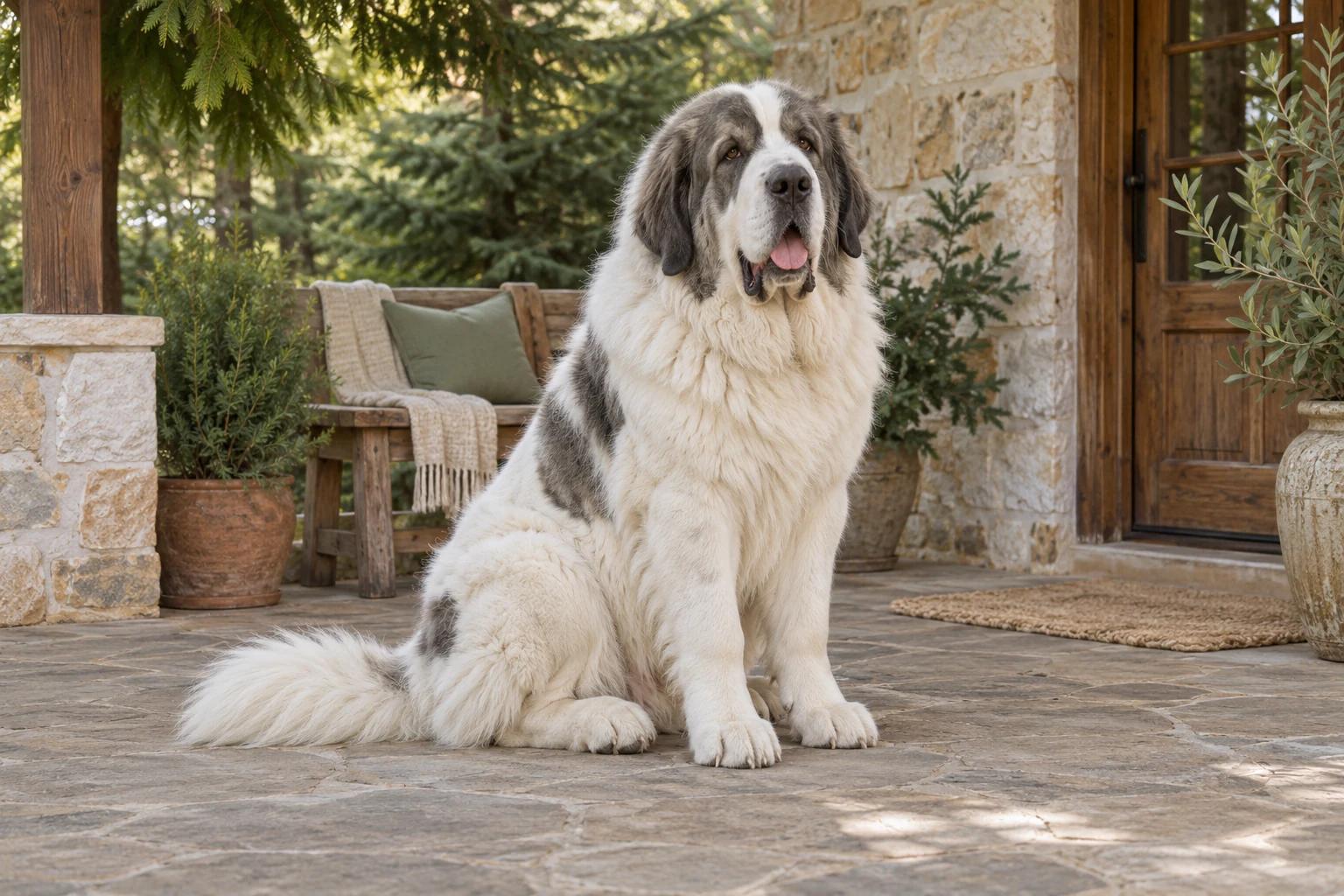
Pyrenean Mastiff temperament makes most sense when you picture a full day with the dog, not a single adjective beneath its photograph. A composed companion can still notice activity outside, need help with unfamiliar visitors and prefer a clear reason to cooperate. The ownership question is whether you can organize daily life around that combination without expecting either a decorative giant or an automatic security system.
Pyrenean Mastiff temperament beyond “gentle giant”
The Pyrenean Mastiff Association of America standard describes an intelligent, even-tempered dog from a livestock and property-guarding background. That gives a useful outline, but it does not establish how a particular dog will behave at your front door. Meet the individual and ask for examples from everyday life rather than interpreting a breed description as a finished temperament assessment.
“Gentle giant” can hide the work involved in living together. A dog does not need to be deliberately difficult to occupy the entire kitchen doorway or greet someone inconveniently. Decide what comfortable behaviour would look like in your rooms. A clear resting place and an agreed arrival routine are more useful goals than hoping the dog will naturally make every household decision correctly.
Independence changes the conversation
The PMAA training page describes independent thinking and the importance of motivation. In practice, approach cooperation as something you teach and maintain, not as proof that the dog respects you. Ask what the dog understands, what the surroundings are asking of it, and whether you have made the requested action clear.
For example, calling from the hallway while simultaneously opening a noisy door is a different situation from calling across an empty living room. If you want a dog to leave its resting place and join you, practise that simple exchange before relying on it during a busy arrival. The household should share the same words and expectations instead of each person inventing a new version.
Keep notes that describe events rather than labels. “Stayed by the gate while the bins were collected” points to a setting you can manage. “Stubborn all morning” does not. This is particularly useful when sharing care with a partner, walker or trainer who was not there to see what happened.
Visitors need an arrangement, not an audition
The Pyrenean Mastiff personality you enjoy with familiar people may not tell you everything about unfamiliar company. Before guests arrive, choose where the dog will be, who will supervise and whether an introduction is appropriate at all. Visitors do not need to greet the dog to have a successful visit.
Give guests instructions before they enter rather than attempting a discussion over an excited arrival. Ask them to leave the dog space and let the handler organize the meeting. If someone is uneasy around large dogs, provide a separate comfortable arrangement instead of persuading them to participate.
Do not test guardian behaviour by asking a friend to act threateningly. Such a performance tells you little about comfortable household life and creates an unnecessary problem. If you already have concerns about aggression, fear or handling, involve a qualified professional and your veterinarian rather than staging your own assessment.
Notice how watchfulness meets your address
Among the Pyrenean Mastiff characteristics worth discussing is alertness to the surrounding environment. Your address determines how often that environment interrupts the day. A front room facing a delivery route, a garden beside a shared path and a quiet interior courtyard are very different settings.
Draw the places where the dog can watch outside activity. Then consider whether every view needs to remain available all day. You may prefer a resting area away from the busiest window, with ordinary household company nearby. That is a practical layout decision, not an attempt to change the breed into something else.
Ask the breeder or current caregiver which sounds and events matter to this dog. A useful answer includes what happens next and how the caregiver responds. Bring up neighbours and working hours honestly. Barking that seems unremarkable at an isolated property may be a substantial issue in a close residential setting.
Company does not require constant attention
Plan for shared life without making yourself available for entertainment every moment. Where will the dog settle while you cook or work? Who will handle care when your schedule changes? Can the dog rest without people continually walking over its bedding?
A workable plan gives the dog a place in the household and gives everyone predictable transitions. Your workday might include an outing, breakfast, a quiet period nearby, then care from an agreed helper. These are planning examples, not a prescribed timetable; build the actual arrangement around the dog's age, experience and needs.
If time apart is a concern, describe the exact situation to the caregiver before placement. “I work from home” can mean frequent calls with no opportunity to interrupt, not unlimited availability. Ask what the dog has experienced and what ongoing support is available. Avoid making a first full workday the experiment that discovers a mismatch.
Learn what the dog does after the interesting moment
When observing Pyrenean Mastiff behavior, pay attention to the transitions. It is useful to see a greeting, but also useful to see what happens when the greeting ends. Can the caregiver continue a conversation? What does the dog do when someone moves to another room? How is the next activity introduced?
Request ordinary examples without demanding a perfect performance. A caregiver who can explain what is easy, what is still being taught and where support is needed gives you actionable information. Ask whether you can meet again or discuss notes after the visit rather than deciding under pressure.
Review the Pyrenean Mastiff breed profile for the wider care picture. The existing article about height and proportion covers the physical angle separately. Use the dog quiz to identify your household priorities, then bring those priorities into the conversation about this particular dog.
FAQ
What is the typical Pyrenean Mastiff personality?
Breed descriptions emphasize composure, intelligence and a guardian background. A useful assessment also considers the individual dog's visitor habits, responses to everyday activity and experience of household routines. Ask for examples rather than relying on descriptive labels alone.
Does independence mean a Pyrenean Mastiff cannot learn?
No. Independence is a reason to make lessons clear and worthwhile, not to abandon teaching. Discuss what the dog already knows and how its caregiver practises cooperation. Consistent household expectations make that information easier to use.
Should I encourage protective behaviour?
Do not provoke or rehearse threatening encounters. For a companion home, prioritize manageable arrivals, comfortable separation from guests when needed and clear everyday routines. Seek qualified help for existing safety concerns rather than testing the dog yourself.
What should I ask during a first meeting?
Ask how the dog handles arrivals, walks, quiet time and changes of caregiver. Request specific examples and practical demonstrations where appropriate. Leave time to discuss difficult situations too, not only the moments that present the dog at its best.
Sources behind this article
- Pyrenean Mastiff Association of America: Breed Standard ↗
- Pyrenean Mastiff Association of America: Training ↗
Article source checked: November 15, 2026. Source checked 2026-11-15
Keep reading

Airedale Terrier Temperament: What Everyday Life Can Feel Like
Read article →