Designer cross
Pomchi: History & sources
History & sources
Heritage & appearance
Meet the Pomchi
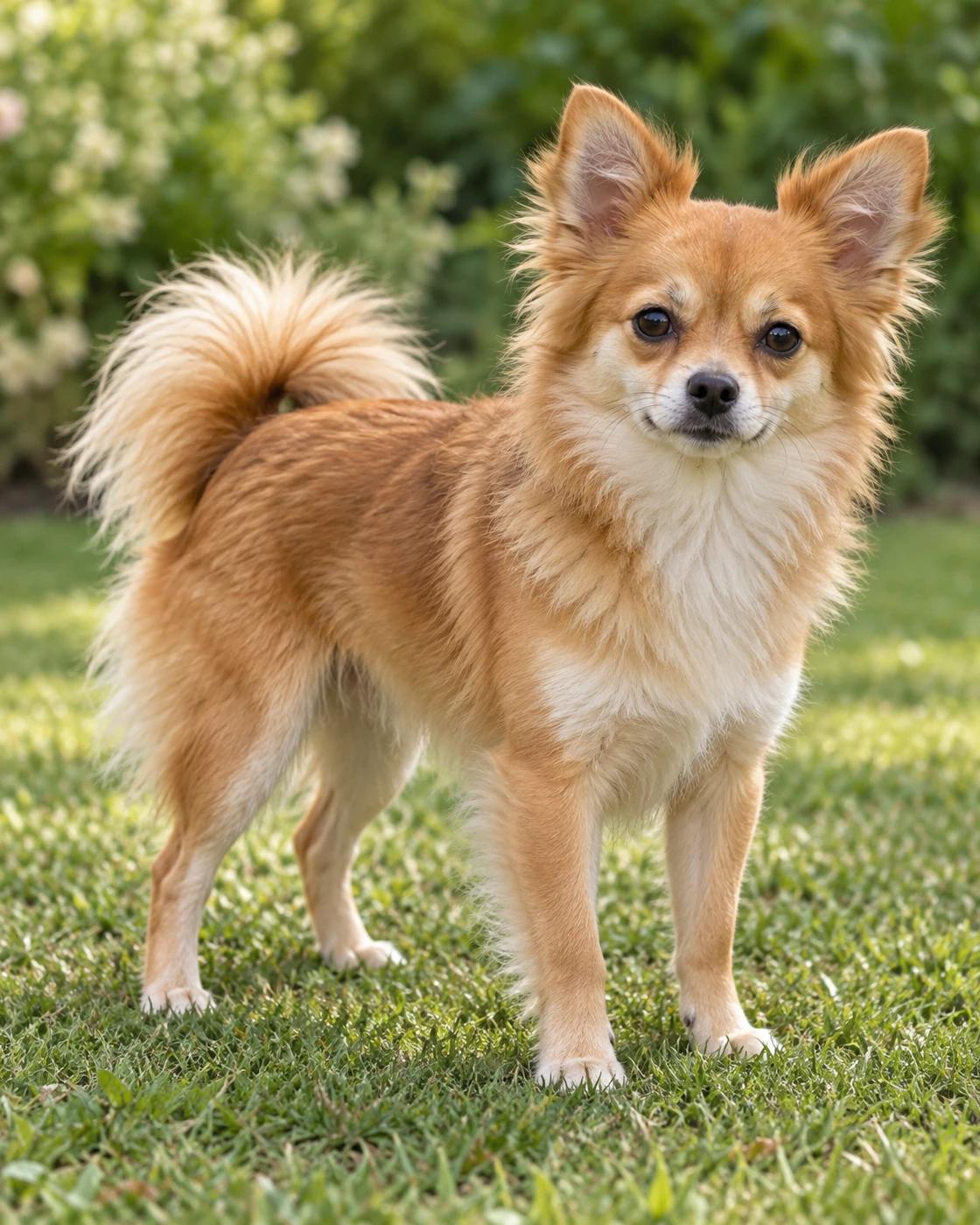
Pomchi combines Pomeranian and Chihuahua ancestry. This is a designer cross, not an AKC purebred popularity rank. PetMD: Pomchi reference. Use the adult-size ranges and behavior tendencies below to understand the practical commitment, then get to know the individual dog and its family history.
Ranges describe the reference population, not a prediction for a puppy. Some sources distinguish male and female sizes. Lifespan ranges are estimates, not guarantees.
- Classification
- Designer cross
- Coat length
- VariableQualified estimate
Heritage & classification
Parent breeds: Pomeranian × Chihuahua. First crosses, backcrosses, and later generations can have different ancestry proportions. Ask for the actual lineage rather than inferring it from appearance or a generation label.
More about this breed’s history
A name in the classifieds
On August 30, 2006, a Houston Greensheet advertisement offered a black-and-tan puppy for sale under the name “Pomchi.” The seller gave the puppy’s weight and price but left its parents unnamed. On March 1, 2017, Oregon’s Cottage Grove Sentinel used the spelling “PomChi” in a story about Luna, a small black dog taken in by a family. This time the writer spelled out the pairing for readers: Pomeranian and Chihuahua. (The Greensheet / University of North Texas: Houston Greensheet, August 30, 2006; Cottage Grove Sentinel / University of Oregon: Cottage Grove Sentinel, March 1, 2017)
Full breed details
- Height reference
- Reported
- Original crossbreed weight reference
- Reported
- Coat reference
- Reported
References & editorial notes
Adult-weight sources
Embark sex-labelled adult reference: Female: 5–8 lb; Male: 5–8 lb. These are the published Pomchi female and male intervals; no endpoint is borrowed from a parent breed. | Dogzone usual adult upper reference: Adult: rarely above 3 kg. The source says usually no more than 3 kg; this is not a complete interval or an individual guarantee. | PetMD Pomchi FAQ upper reference: Adult: up to 7 lb. This is the Pomchi FAQ statement. The page’s separate 3–7-pound Pomeranian parent discussion is not imported as a Pomchi interval.
direct: Embark sex-labelled adult reference; published-sex-reference. These are the published Pomchi female and male intervals; no endpoint is borrowed from a parent breed.
Rescues & sheltersPrint or citeBreed articles
Other profile sections and family fact sheet
Life with a Pomchi
Many like to stay close.
Explore home life →About an hour of active time fits the described day.
Explore daily care →Brush the individual coat, provide dental care, and supervise handling around children.
Explore daily care →Print or cite this breed
Pomchi family fact sheet
Breed-level references are a starting point. Ask about the individual animal’s routine and care needs.
- Female
- 5–8 lb (Embark sex–labelled adult reference)
- Male
- 5–8 lb (Embark sex–labelled adult reference)
- Adult height
- Up to 8 in (reported typical size) (Reported)
- Coat
- Variable (Reported)
- Height reference
- Reported
- Original crossbreed weight reference
- Reported
- Coat reference
- Reported
- Adult size
- Female: 5–8 lb (Embark sex-labelled adult reference); Male: 5–8 lb (Embark sex-labelled adult reference) Typical adult references vary between sources and individuals. See the full source accounts.
Company
Many like to stay close.
Activity & learning
About an hour of active time fits the described day.
Coat care
Brush the individual coat, provide dental care, and supervise handling around children.
Everyday responsibilities
Plan food, supplies, routine care and veterinary visits. Agree who handles the everyday jobs and who covers absences.
Adult help
An adult should remain responsible for care, supervise children’s interactions and arrange help when needed.
My Breed Atlas. Pomchi breed profile. https://mybreedatlas.com/breeds/pomchi
Read this profile’s sources →Adult ranges and source qualifications
- Female
- 5–8 lb (Embark sex–labelled adult reference)
- Male
- 5–8 lb (Embark sex–labelled adult reference)
- Adult height
- Up to 8 in (reported typical size) (Reported)
- Coat
- Variable (Reported)
Reference ranges describe the breed, not a prediction for an individual.
Daily care
Activity & learning
About an hour of active time fits the described day.
More about everyday care
Short walks, indoor games and puzzles every day.
Coat care
Brush the individual coat, provide dental care, and supervise handling around children.
More about everyday care
Brush several times weekly; parent-like coat affects maintenance.
Coat colors & markings
Coat color data is not available in this reference.
Color alone does not establish breed identity, health, or quality. Ask about the dog’s background and care needs.
Training & communication
Patient rewards and gradual social exposure.
Food, routine & costs
The everyday ownership plan
Food & routine
Ask your veterinarian about food appropriate to the dog’s life stage, body condition, and health history. Ask the breeder what the dog currently eats and how to approach any transition. Keep feeding and care records rather than relying on a generic breed portion chart.
Time & budget
Allow for regular care, training, equipment, grooming, veterinary visits, and unexpected costs. Make a plan for workdays, travel, and changes in your schedule. The adult size and coat-care profile above can help you identify practical demands.
Bringing a dog home
Prepare a safe sleeping area and a predictable routine. Arrange veterinary care, agree on household rules, and introduce new situations gradually. Get written information about the dog’s routine, registration where applicable, and ongoing breeder support.
Home life
Company
Many like to stay close.
More about everyday care
Affectionate · Spirited · Watchful
Family life, other dogs & housing
Protect tiny dogs around children, large pets and outdoor predators.
Always supervise interactions with children and provide a quiet retreat. Apartment suitability involves noise, outdoor access, stairs, time alone, and building rules as well as size. No rating measures the compatibility of a particular pair of dogs or a dog and another species.
Time alone and workdays
Personality & care details
Personality & care profile
These editorial 1–5 summaries include cross-specific descriptions and parent-informed context. They are not validated breed ratings; individual dogs vary. Higher means more of the named tendency.
What everyday life tends to involve
These notes describe a tendency for the breed. Every animal is an individual.
- Activity
- About an hour of active time fits the described day.
- Training
- Training games, puzzles, or a sport give this breed the mental work it wants.
- Coat care
- Brushing most days is the usual coat plan.
- Loose hair
- Loose hair tends to stay light.
- Voice
- Barking can be a frequent part of the day.
- Company
- Many like to stay close.
- Adult size
- Female: 5–8 lb (Embark sex-labelled adult reference); Male: 5–8 lb (Embark sex-labelled adult reference)
Typical adult references vary between sources and individuals. See the full source accounts.
YOUR EVERYDAY LIFE
How could this breed fit your life?
See household examples or compare this breed with answers you chose to save. The examples show combinations where this breed appeared among the first five results. Other combinations can work too.
Saved matching preferences stay in this browser, never on your account. They expire after 30 days and are removed the next time this feature reads them. Health answers, children’s ages and free-text notes are not saved. This section does not reproduce those personal care notes.
Pomchi health
Health observations and family records
A Pomchi’s current walking or chewing change needs its own assessment. The family questions below do not establish a Pomchi kneecap predisposition or a measured dental-disease rate.
A brief back-leg lift becomes a pattern
Arrange an examination for repeated skipping, noting which side and whether it happens during usual activity. A normal-looking interval does not explain the episode.
Chewing is newly abnormal
Tell the clinic about abnormal chewing or dropping food. Those observations do not identify one diagnosis at home.
Family history and screening
Ask what a veterinarian actually diagnosed if parents or siblings had knee trouble. Keep any dated clinical findings, with the dog’s identity, rather than replacing them with a parent-breed condition list.
Questions for your veterinarian
- What would help describe the intermittent walking change?
- Which confirmed family findings should be brought to the visit?
Choosing a puppy? Ask to see both parents’ results, with the animal’s name and the date on each report. If you’re adopting an adult, ask which records come with that individual.
Other records to discuss. Dental disease; patellar luxation; tracheal collapse; heart defects.
Discuss parent knee/cardiac history, airways and dental care.
Breeders supply these documents. My Breed Atlas does not independently verify them. Check the animal’s identity, the date and the actual result.
Breeders & rescues
Questions for a breeder
- What are the parents like in everyday life?
- How are puppies raised and introduced to new experiences?
- Which screening records can I review?
- What does the contract cover, including return arrangements?
- What support is available after the dog comes home?
Before you meet a dog
- What does the coat-care routine involve?
- How does this dog handle time apart?