Working Group · Canada
Newfoundland: Daily care
Daily care
Activity & learning
About an hour of active time fits the described day.
More about everyday care
The activity rating sits in the middle of the reference scale. Aim for a consistent mix of outings, play, and opportunities to settle.
Offer learning and problem-solving alongside physical activity. Rotate games and introduce challenges gradually.
Coat care
AKC calls for thorough brushing and combing at least once a week. AKC recommends daily brushing and combing during seasonal shedding; the two yearly shedding seasons describe when the routine increases, not a twice-yearly brushing schedule. For spayed or neutered Newfoundlands, AKC separately describes year-round shedding and advises brushing several times a week. That guidance is distinct from the ordinary weekly routine and the seasonal increase. VCA describes ordinary brushing 1–2 times a week, with more work during shedding but no numerical increased interval. Only the ordinary weekly routine is compared in the quiz; seasonal and coat-specific increases need separate consideration.
More about everyday care
Some shedding is part of the ownership plan. Regular coat care and household cleaning can help you manage it.
Coat colors & markings
Standard colors recorded in the reference: Black, Brown, Gray, White & Black.
Color alone does not establish breed identity, health, or quality. Ask about the dog’s background and care needs.
Training & communication
Expect learning to depend on motivation and consistent practice. Work on small skills in easy environments before adding distractions.
Vocal tendency is at the lower end of the scale, but individual dogs still bark. Learn what triggers vocalization rather than assuming silence.
Food, routine & costs
The everyday ownership plan
Food & routine
Ask your veterinarian about food appropriate to the dog’s life stage, body condition, and health history. Ask the breeder what the dog currently eats and how to approach any transition. Keep feeding and care records rather than relying on a generic breed portion chart.
Time & budget
Allow for regular care, training, equipment, grooming, veterinary visits, and unexpected costs. Make a plan for workdays, travel, and changes in your schedule. The adult size and coat-care profile above can help you identify practical demands.
Bringing a dog home
Prepare a safe sleeping area and a predictable routine. Arrange veterinary care, agree on household rules, and introduce new situations gradually. Get written information about the dog’s routine, registration where applicable, and ongoing breeder support.
More practical reading
Rescues & sheltersPrint or citeBreed articles
Other profile sections and family fact sheet
Life with a Newfoundland
Many like to stay close.
Explore home life →About an hour of active time fits the described day.
Explore daily care →AKC calls for thorough brushing and combing at least once a week.
Explore daily care →Print or cite this breed
Newfoundland family fact sheet
Breed-level references are a starting point. Ask about the individual animal’s routine and care needs.
- Female
- 100–120 lb
- Male
- 130–150 lb
- Adult height
- 28 in (average male), 26 in (average female)
- Reference lifespan
- 9–10 years
- Coat
- Double
- Adult size
- Female: 100–120 lb; Male: 130–150 lb Adult reference weights; individual animals vary.
Company
Many like to stay close.
Activity & learning
About an hour of active time fits the described day.
Coat care
AKC calls for thorough brushing and combing at least once a week. AKC recommends daily brushing and combing during seasonal shedding; the two yearly shedding seasons describe when the routine increases, not a twice-yearly brushing schedule. For spayed or neutered Newfoundlands, AKC separately describes year-round shedding and advises brushing several times a week. That guidance is distinct from the ordinary weekly routine and the seasonal increase. VCA describes ordinary brushing 1–2 times a week, with more work during shedding but no numerical increased interval. Only the ordinary weekly routine is compared in the quiz; seasonal and coat-specific increases need separate consideration.
Everyday responsibilities
Plan food, supplies, routine care and veterinary visits. Agree who handles the everyday jobs and who covers absences.
Adult help
An adult should remain responsible for care, supervise children’s interactions and arrange help when needed.
My Breed Atlas. Newfoundland breed profile. https://mybreedatlas.com/breeds/newfoundland
Read this profile’s sources →Adult ranges and source qualifications
- Female
- 100–120 lb
- Male
- 130–150 lb
- Adult height
- 28 in (average male), 26 in (average female)
- Reference lifespan
- 9–10 years
- Coat
- Double
Reference ranges describe the breed, not a prediction for an individual.
Home life
Company
Many like to stay close.
More about everyday care
The reference points to a strong interest in family interaction. Make room for shared activities and company in the daily routine.
A sociable tendency can make introductions easier, but greetings still need manners and supervision.
Family life, other dogs & housing
The reference rates interaction with young children relatively highly. This still does not establish that a particular dog is safe with children.
A relatively social rating can be encouraging for a multi-dog household, but introductions and individual compatibility still matter.
Always supervise interactions with children and provide a quiet retreat. Apartment suitability involves noise, outdoor access, stairs, time alone, and building rules as well as size. No rating measures the compatibility of a particular pair of dogs or a dog and another species.
Time alone and workdays
Personality & care details
Personality & care profile
These 1–5 reference ratings offer a comparison of breed tendencies. A higher number means more of the named tendency; it is not a quality score or an endorsement.
What everyday life tends to involve
These notes describe a tendency for the breed. Every animal is an individual.
- Activity
- About an hour of active time fits the described day.
- Training
- Short practice for everyday manners is usually enough.
- Coat care
- AKC calls for thorough brushing and combing at least once a week. AKC recommends daily brushing and combing during seasonal shedding; the two yearly shedding seasons describe when the routine increases, not a twice-yearly brushing schedule. For spayed or neutered Newfoundlands, AKC separately describes year-round shedding and advises brushing several times a week. That guidance is distinct from the ordinary weekly routine and the seasonal increase. VCA describes ordinary brushing 1–2 times a week, with more work during shedding but no numerical increased interval. Only the ordinary weekly routine is compared in the quiz; seasonal and coat-specific increases need separate consideration.
- Loose hair
- Shedding picks up for a season or two and is lighter the rest of the year.
- Voice
- Barking tends to stay occasional.
- Company
- Many like to stay close.
- Adult size
- Female: 100–120 lb; Male: 130–150 lb
Adult reference weights; individual animals vary.
- Time alone
- Being apart can be hard, because they want their people.
YOUR EVERYDAY LIFE
How could this breed fit your life?
See household examples or compare this breed with answers you chose to save. The examples show combinations where this breed appeared among the first five results. Other combinations can work too.
Saved matching preferences stay in this browser, never on your account. They expire after 30 days and are removed the next time this feature reads them. Health answers, children’s ages and free-text notes are not saved. This section does not reproduce those personal care notes.
Newfoundland health
Health observations and family records
GDV occurred in Newfoundlands in a historical US show-dog study, even though incidence was lower in that group than in some other giant breeds studied. A selected group comparison does not make new emergency signs safe or establish a current worldwide rate.
A lower study figure is not a reason to wait
Repeated empty retching, particularly with sudden inability to settle, drooling or weakness, needs emergency veterinary care. Describe the change from your dog’s usual behaviour and do not wait for a visibly swollen abdomen before seeking help.
Cystine stones and changes in urination
Cystinuria allows extra cystine, an amino acid, to pass into the urine. In some dogs it can form stones. An inherited SLC3A1 form has been documented in Newfoundlands. Not every affected dog is visibly ill, and not every stone in a Newfoundland is cystine. Report repeated small urinations, blood, pain or new accidents promptly. If your dog repeatedly tries to urinate and passes only drops or no urine, go to an emergency vet immediately. Don’t squeeze the belly or wait to collect a sample. A DNA result is not needed before acting. “Could this be a blockage? What will urine testing or imaging show? If a stone is found, how do we learn its type, and would a targeted test add anything?” Ask about a hydration, diet and follow-up plan based on the actual urine and stone findings. Keep water available and watch ordinary urine output. Follow repeat testing/imaging instructions and call when signs return. Don't use human stone medicines or assume a diet fits all stones.
Family history and screening
Keep any confirmed family history of stomach twisting and the dog’s own previous abdominal care records. Ask what was actually diagnosed rather than combining ordinary vomiting with GDV under one family label.
Questions for your veterinarian
- Which parts of this dog’s medical and family history are relevant?
- Where should I seek immediate assessment if repeated dry retching occurs?
Choosing a puppy? Ask to see both parents’ results, with the animal’s name and the date on each report. If you’re adopting an adult, ask which records come with that individual.
Screenings listed for Newfoundland
- Hip Evaluation
- Elbow Evaluation
- Cardiac Exam
- Cystinuria (Newfoundland) - DNA Test
Breeders supply these documents. My Breed Atlas does not independently verify them. Check the animal’s identity, the date and the actual result.
Health sources
- Newfoundland breed health reference
- Glickman et al. prospective US show-dog cohort, Figures 2–6
- Glickman et al. prospective cohort analysis
- Cornell veterinary guidance
- Exact clinical/inheritance study
- exact Newfoundland SLC3A1 discovery
- ACVS stones
- obstruction
- UF Small Animal Hospital · Urinary obstruction
History & sources
Heritage & appearance
Meet the Newfoundland
Newfoundland has an origin listed as Canada and is listed in the Working Group. Use the adult-size ranges and behavior tendencies below to understand the practical commitment, then get to know the individual dog and its family history.
Ranges describe the reference population, not a prediction for a puppy. Some sources distinguish male and female sizes. Lifespan ranges are estimates, not guarantees.
- Origin
- Canada
- Classification
- Working Group
- Recognition / recording year
- 1886
- Coat length
- Medium
Heritage & classification
The listed origin, Canada, gives you a starting point for researching this breed’s development. The reference records 1886 as its recognition or recording year. Recognition or foundation recording is different from the date a breed first developed. Explore the breed reference and parent club for detailed historical accounts and the current standard.
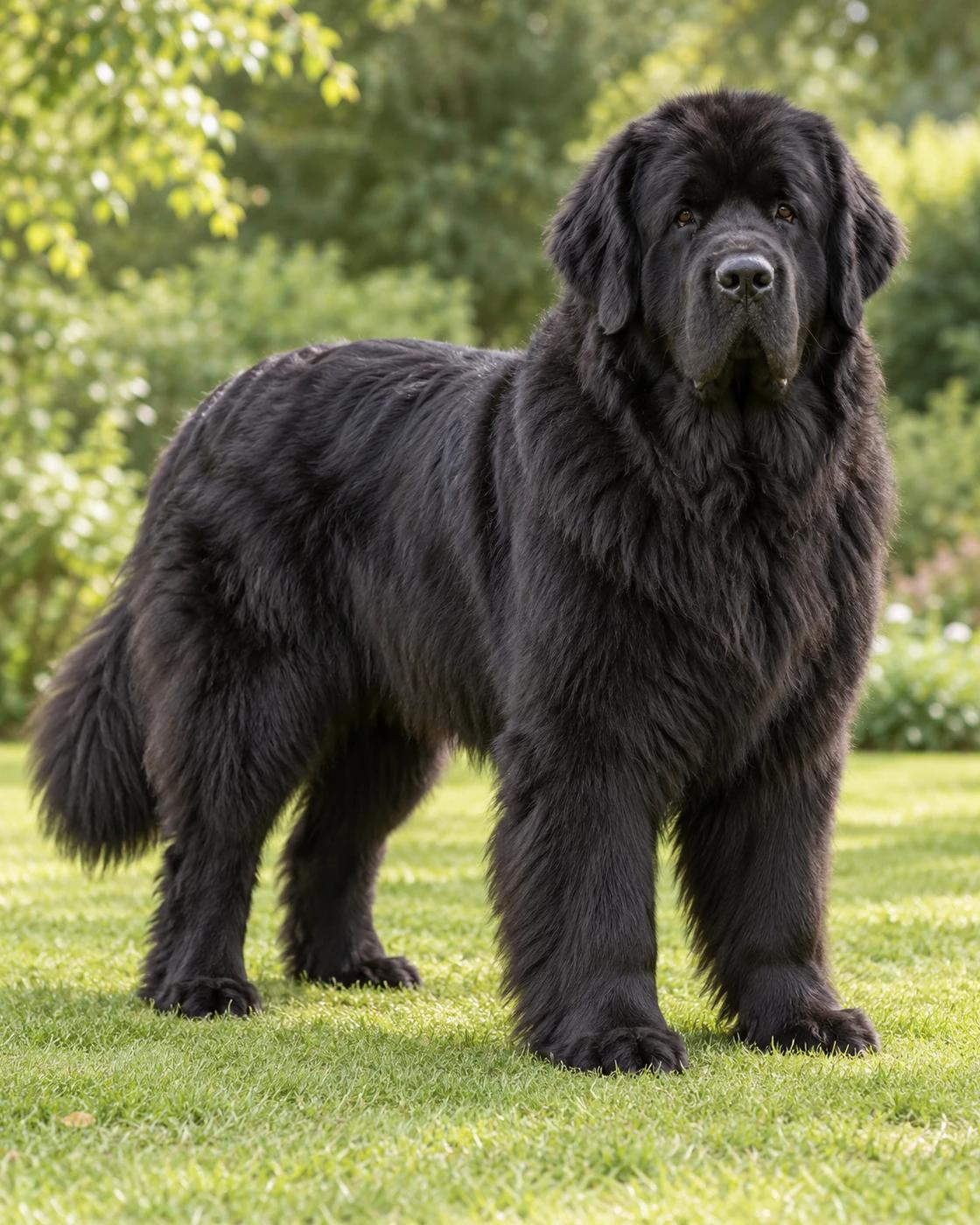
More about this breed’s history
From water trials to draft tests
In North America, breeders found ways to keep both sides of the Newfoundland’s working life visible. The North American Newfoundland Club staged a water trial in 1929. A different organization, the Newfoundland Club of America founded in 1930, held its first official water test in 1973. In 1985 it added an official draft test for work in harness, carrying the breed’s history on shore into organized events alongside water rescue. (American Kennel Club Archives: Newfoundland Club of America collection, AKD 3.15)
Full breed details
View all Newfoundland articles →
View sources and checked dates →References & editorial notes
Adult-weight sources
Female: 100–120 lb; Male: 130–150 lb
direct: AKC publishes this adult female range in pounds.
direct: AKC publishes this adult male range in pounds.
Breeders & rescues
Explore Newfoundland breeders →
Questions for a breeder
- What are the parents like in everyday life?
- How are puppies raised and introduced to new experiences?
- Which screening records can I review?
- What does the contract cover, including return arrangements?
- What support is available after the dog comes home?
Before you meet a dog
- What does the coat-care routine involve?
- How does this dog handle time apart?