Foundation Stock Service · France
Braque Francais Pyrenean: Health
Back to Braque Francais Pyrenean
Braque Francais Pyrenean health
What owners should know
A new change in eye comfort
A dog that is blinking more, holding an eye partly closed or tearing after an outing may have eye irritation or an injury. The breed or variety does not tell you the cause.
Call the clinic about a new eye change. For a suddenly painful or cloudy eye, or abrupt loss of sight, contact a veterinarian or emergency veterinary clinic immediately. Do not try to reach under the eyelid or reuse old drops.
Ask whether the clear surface at the front of the eye has been scratched and whether the eyelid or a foreign object could be irritating it.
Once the vet identifies the cause, ask what improvement should look like and when to recheck. Follow its instructions if eye protection or treatment is prescribed.
Family history and screening
The French Braque Français selection framework includes hip readings. That framework is not a US requirement, and the shared Braque Français name should not obscure the Pyrenean type on an individual report.
An available test is different from a recommendation to use it. Ask which records are relevant to this individual; neither a test listing nor a screening recommendation tells you how often illness occurs.
Check the variety as well as the name
When a breeder provides French paperwork, ask whether it concerns the Pyrenean parents of this litter and request both reports. Do not use another variety’s individual result as a substitute, or infer a clinical diagnosis from a registry grade alone.
Ask which selection framework and version the breeder used. Keep confirmed family diagnoses separate from grading paperwork.
Questions for your veterinarian
- Does each report identify the Pyrenean type and actual parent?
- Which program issued the grade, and what does it establish?
Choosing a puppy? Ask to see both parents’ results, with the animal’s name and the date on each report. If you’re adopting an adult, ask which records come with that individual.
Our main breed reference does not list a screening panel. Ask which problems have appeared in close relatives and how old they were when signs first appeared.
Breeders supply these documents. My Breed Atlas does not independently verify them. Check the animal’s identity, the date and the actual result.
Rescues & sheltersPrint or citeBreed articles
Other profile sections and family fact sheet
Life with a Braque Francais Pyrenean
Many like to share the room without constant contact.
Explore home life →A typical day needs more than a couple of hours of activity.
Explore daily care →AKC recommends weekly grooming and occasional bathing.
Explore daily care →Print or cite this breed
Braque Francais Pyrenean family fact sheet
Breed-level references are a starting point. Ask about the individual animal’s routine and care needs.
- Adult weight
- 40–55 lb
- Adult height
- 18.5–23 in
- Reference lifespan
- 12–15 years
- Coat
- Smooth
- Adult size
- Adult weight: 40–55 lb A shared adult reference is published; separate female and male ranges are not established.
Company
Many like to share the room without constant contact.
Activity & learning
A typical day needs more than a couple of hours of activity.
Coat care
AKC recommends weekly grooming and occasional bathing.
Everyday responsibilities
Plan food, supplies, routine care and veterinary visits. Agree who handles the everyday jobs and who covers absences.
Adult help
An adult should remain responsible for care, supervise children’s interactions and arrange help when needed.
My Breed Atlas. Braque Francais Pyrenean breed profile. https://mybreedatlas.com/breeds/braque-francais-pyrenean
Read this profile’s sources →Adult ranges and source qualifications
- Adult weight
- 40–55 lb
- Adult height
- 18.5–23 in
- Reference lifespan
- 12–15 years
- Coat
- Smooth
Reference ranges describe the breed, not a prediction for an individual.
Daily care
Activity & learning
A typical day needs more than a couple of hours of activity.
More about everyday care
The activity rating is toward the higher end of the reference scale. Consider whether your everyday schedule can support activity, learning, and safe outlets for energy.
Offer learning and problem-solving alongside physical activity. Rotate games and introduce challenges gradually.
Coat care
AKC recommends weekly grooming and occasional bathing.
More about everyday care
The grooming-frequency rating is relatively low. Keep a consistent coat-care routine and check nails, ears, skin, and teeth rather than treating low maintenance as no maintenance.
Some shedding is part of the ownership plan. Regular coat care and household cleaning can help you manage it.
Coat colors & markings
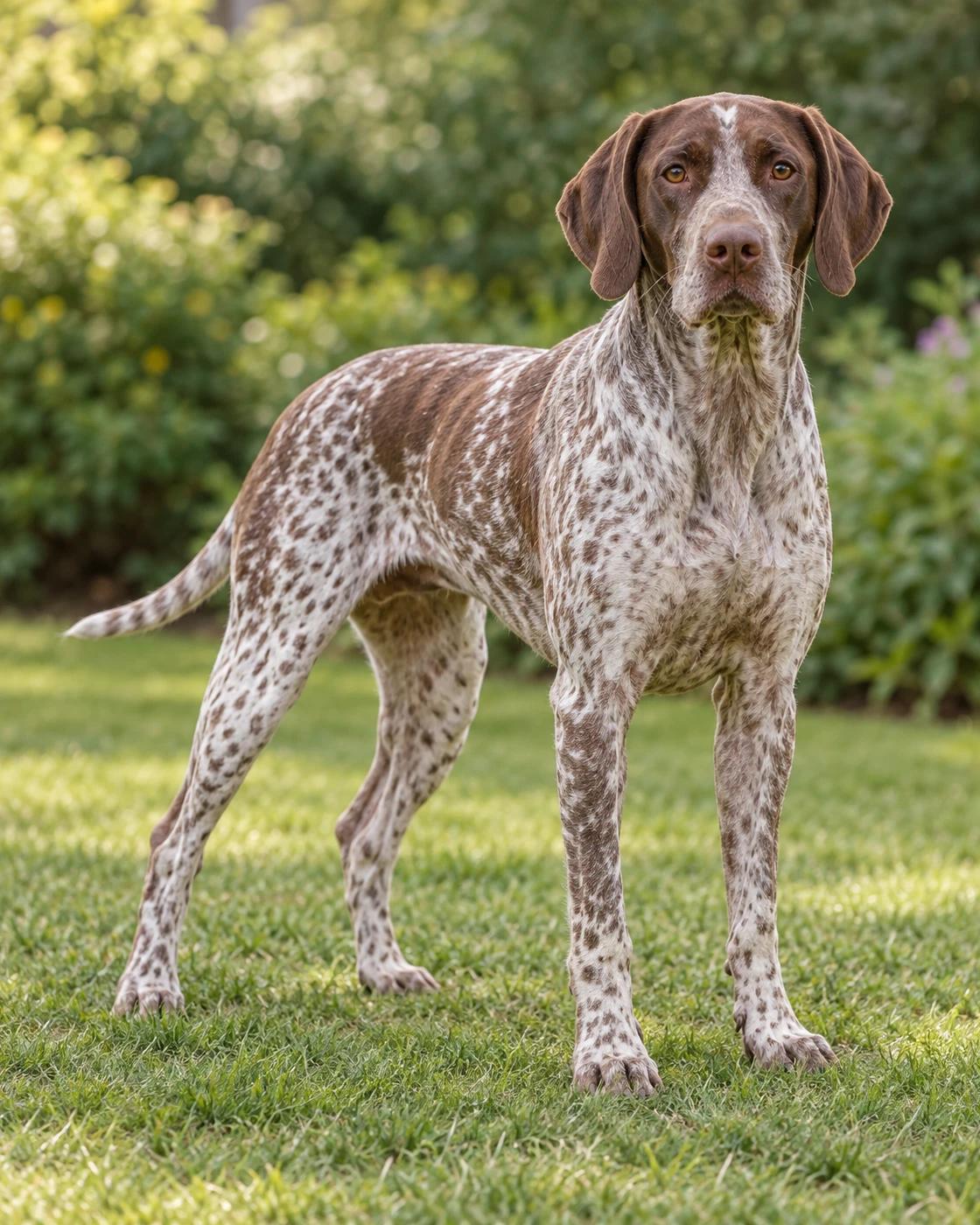
Standard colors recorded in the reference: Chestnut, White & Chestnut.
Standard markings: Ticked, Tan Points, Roan.
Color alone does not establish breed identity, health, or quality. Ask about the dog’s background and care needs.
Training & communication
Expect learning to depend on motivation and consistent practice. Work on small skills in easy environments before adding distractions.
Vocal tendency is in the middle of the scale. Plan for normal communication and teach an alternative behavior when barking becomes disruptive.
Food, routine & costs
The everyday ownership plan
Food & routine
Ask your veterinarian about food appropriate to the dog’s life stage, body condition, and health history. Ask the breeder what the dog currently eats and how to approach any transition. Keep feeding and care records rather than relying on a generic breed portion chart.
Time & budget
Allow for regular care, training, equipment, grooming, veterinary visits, and unexpected costs. Make a plan for workdays, travel, and changes in your schedule. The adult size and coat-care profile above can help you identify practical demands.
Bringing a dog home
Prepare a safe sleeping area and a predictable routine. Arrange veterinary care, agree on household rules, and introduce new situations gradually. Get written information about the dog’s routine, registration where applicable, and ongoing breeder support.
Home life
Company
Many like to share the room without constant contact.
More about everyday care
Expect companionship that can combine social time with independence. Learn the individual dog’s preferences rather than expecting constant affection.
Introductions can vary with the individual and situation. Give the dog time and space to become comfortable.
Family life, other dogs & housing
The reference rates interaction with young children relatively highly. This still does not establish that a particular dog is safe with children.
A relatively social rating can be encouraging for a multi-dog household, but introductions and individual compatibility still matter.
Always supervise interactions with children and provide a quiet retreat. Apartment suitability involves noise, outdoor access, stairs, time alone, and building rules as well as size. No rating measures the compatibility of a particular pair of dogs or a dog and another species.
Time alone and workdays
Personality & care details
Personality & care profile
These 1–5 reference ratings offer a comparison of breed tendencies. A higher number means more of the named tendency; it is not a quality score or an endorsement.
What everyday life tends to involve
These notes describe a tendency for the breed. Every animal is an individual.
- Activity
- A typical day needs more than a couple of hours of activity.
- Training
- Daily training games fit the way this breed likes to learn.
- Coat care
- AKC recommends weekly grooming and occasional bathing.
- Loose hair
- Regular shedding is part of living with this coat.
- Voice
- Some barking through the day is typical.
- Company
- Many like to share the room without constant contact.
- Adult size
- Adult weight: 40–55 lb
A shared adult reference is published; separate female and male ranges are not established.
YOUR EVERYDAY LIFE
How could this breed fit your life?
See household examples or compare this breed with answers you chose to save. The examples show combinations where this breed appeared among the first five results. Other combinations can work too.
Saved matching preferences stay in this browser, never on your account. They expire after 30 days and are removed the next time this feature reads them. Health answers, children’s ages and free-text notes are not saved. This section does not reproduce those personal care notes.
History & sources
Heritage & appearance
Meet the Braque Francais Pyrenean
Braque Francais Pyrenean has an origin listed as France and is listed in the Foundation Stock Service. Use the adult-size ranges and behavior tendencies below to understand the practical commitment, then get to know the individual dog and its family history.
Ranges describe the reference population, not a prediction for a puppy. Some sources distinguish male and female sizes. Lifespan ranges are estimates, not guarantees.
- Origin
- France
- Classification
- Foundation Stock Service
- Coat length
- Short
Heritage & classification
The listed origin, France, gives you a starting point for researching this breed’s development. Recognition or foundation recording is different from the date a breed first developed. Explore the breed reference and parent club for detailed historical accounts and the current standard.
Full breed details
View all Braque Francais Pyrenean articles →
View sources and checked dates →References & editorial notes
Adult-weight sources
Adult weight: 40–55 lb
confirmed-shared: no sex split published; separate female/male searches repeated; retain the cited combined adult interval.
Breeders & rescues
Explore Braque Francais Pyrenean breeders →
Questions for a breeder
- What are the parents like in everyday life?
- How are puppies raised and introduced to new experiences?
- Which screening records can I review?
- What does the contract cover, including return arrangements?
- What support is available after the dog comes home?
Before you meet a dog
- What does the coat-care routine involve?
- How does this dog handle time apart?