Braque Francais Pyrenean size: planning for an adult dog
Understand Braque Francais Pyrenean size, weight and height, then use measurements sensibly when planning space, equipment and care.
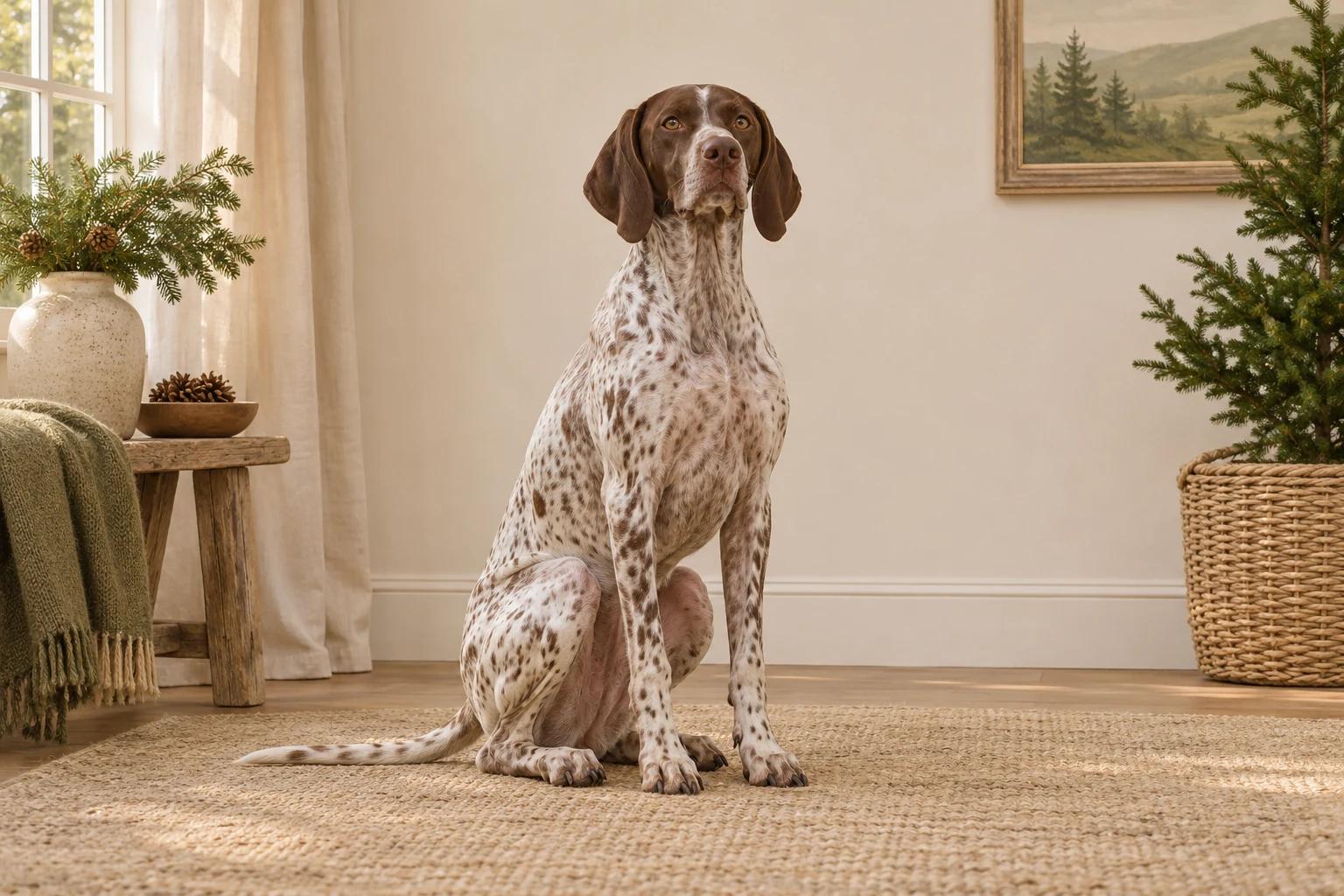
Explore the
Braque Francais Pyrenean
Background, care, and everyday considerations.
View breed profile →Braque Francais Pyrenean size is a practical question, not just a number to compare with another breed. Adult dimensions affect how you arrange resting space, choose equipment and handle an active dog. They do not, by themselves, tell you whether the breed will fit your lifestyle.
The Braque Francais Pyrenean profile lists an adult weight reference of 40–55 pounds. Treat that as a planning range, not a target every dog must reach. Start with the individual animal's measurements and build your decisions around its actual needs.
Braque Francais Pyrenean size without misleading shortcuts
The UKC standard places male height at the withers between 18.5 and 23 inches and female height between 18.5 and 22 inches. It describes a dog with adequate muscle rather than a heavy build. Those proportions are useful context when a photograph makes the breed look either much smaller or much more substantial than expected.
Braque Francais Pyrenean height is measured at the withers, the area over the shoulders, not at the top of the head. A dog looking up at its owner can appear taller than one standing with its head lowered. For an equipment decision, a photograph is no substitute for a tape measure and the manufacturer's fitting instructions.
The FCI standard likewise treats the Pyrenean as a pointing dog with a defined physical type. A breed standard describes an intended adult form. It is not a personalized growth forecast or a household equipment chart.
Weight helps with planning, not with judging condition
Braque Francais Pyrenean weight can be useful when checking an item's stated capacity or preparing to discuss practical handling. It cannot establish whether a particular dog is in appropriate body condition. Two dogs of different frame sizes may need different assessments even when the scale shows the same number.
Ask your veterinarian about growth, feeding and body condition rather than trying to move a puppy toward the middle of an adult range. Avoid using another owner's dog's weight as a goal. An accurate record of your own dog's measurements is more useful than a collection of unverified comparisons.
For prospective owners, ask for the actual adult size of the parents where that information is available. It gives context, not a promise. If an adult dog's dimensions are a firm requirement for your home, meeting an adult is more informative than trying to predict a puppy precisely.
Measure the space the dog will actually use
A floor plan can look generous while leaving little uninterrupted space for a dog to lie down. Walk through the locations where you expect the dog to rest. Check whether someone must step over the bed to reach a cupboard, whether a door opens into it and whether it sits beside constant household traffic.
A short-coated sporting dog still needs room to stretch out and change position. Look at usable space, not simply the room's total area. A quiet corner that remains available is often more useful than a larger area continually rearranged around visitors.
Test the arrangement before buying everything
Mark a proposed bed footprint on the floor with removable tape. Open doors and drawers, pull chairs out and walk the routes people usually take. This simple check can reveal problems before you commit to a bulky purchase.
For an adult dog, compare those plans with its observed resting positions. Some dogs curl up for part of the day and stretch out at other times. A tidy sleeping photograph should not define the only space you provide.
Fit equipment to measurements, not breed labels
A product described as suitable for a “medium dog” may use a different sizing system from another product. Read the specific measurements requested for a harness, coat or bed. Do not assume that a weight recommendation supplies every dimension needed for fit.
When fitting a harness, follow the manufacturer's instructions and check that the dog can move naturally without slipping free. Recheck fit as a puppy grows or an adult's condition changes. If you are uncertain, ask someone experienced to help with the fitting rather than tightening straps by guesswork.
Keep a simple measurement note with the date and the equipment it was taken for. That avoids mixing a chest measurement for one product with a neck measurement for another. It also makes replacing a worn item easier without relying on memory.
Think about handling as well as storage
An adult dog in this weight range is not a small object to pick up whenever a situation becomes inconvenient. Consider who will handle the dog at doors, on leads and during routine care. Size is only one part of that task; training and the surrounding environment matter too.
Arrange veterinary care with accessibility in mind and ask the practice about assistance if needed. Do not build your entire plan around one household member always being available to lift or restrain the dog. Teaching cooperative everyday routines is a more useful long-term priority than assuming strength will solve every problem.
The breed's activity needs remain high even when its dimensions seem manageable. A smaller footprint does not mean a smaller commitment to outings, learning and companionship. Assess those separately before deciding that the breed fits a compact home.
Keep the full breed name beside the numbers
People searching “how big do Braque Francais Pyrenean get” can encounter measurements for different French pointing-dog types. Check the complete name before comparing figures. Our article on Pyrenean and Gascogne Braques explains the distinction; this guide concentrates on applying size information to ownership decisions.
Use the breed quiz to consider activity, company and care alongside dimensions. If size is your first filter, make behavior and practical care your second. That produces a more useful shortlist than choosing the smallest dog in a sporting group and assuming everything else becomes easier.
FAQ
What is the adult weight reference?
The breed profile lists 40–55 pounds. This is a general adult reference, not an individual ideal or a puppy growth target. Your veterinarian can assess your dog's condition and discuss any concerns about weight or development.
Where is a dog's height measured?
Breed height is measured at the withers over the shoulders, not at the head. For equipment, use the measurements that the particular manufacturer requests. Height alone does not tell you the required chest circumference or usable bed space.
Does a smaller size make the breed suitable for any home?
No. Dimensions help you plan physical space and handling, but this remains an active pointing dog. Outdoor access, training, company and the individual dog's behavior need their own assessment. A compact home and an inactive lifestyle are different questions.
Sources behind this article
Article source checked: November 14, 2026. Source checked 2026-11-14
Keep reading
Braque français type pyrénées temperament: daily life
Read article →