Braque Francais vs German Shorthaired Pointer: choosing
Compare the Pyrenean Braque Francais and German Shorthaired Pointer through size, activity, learning and the questions that clarify household fit.
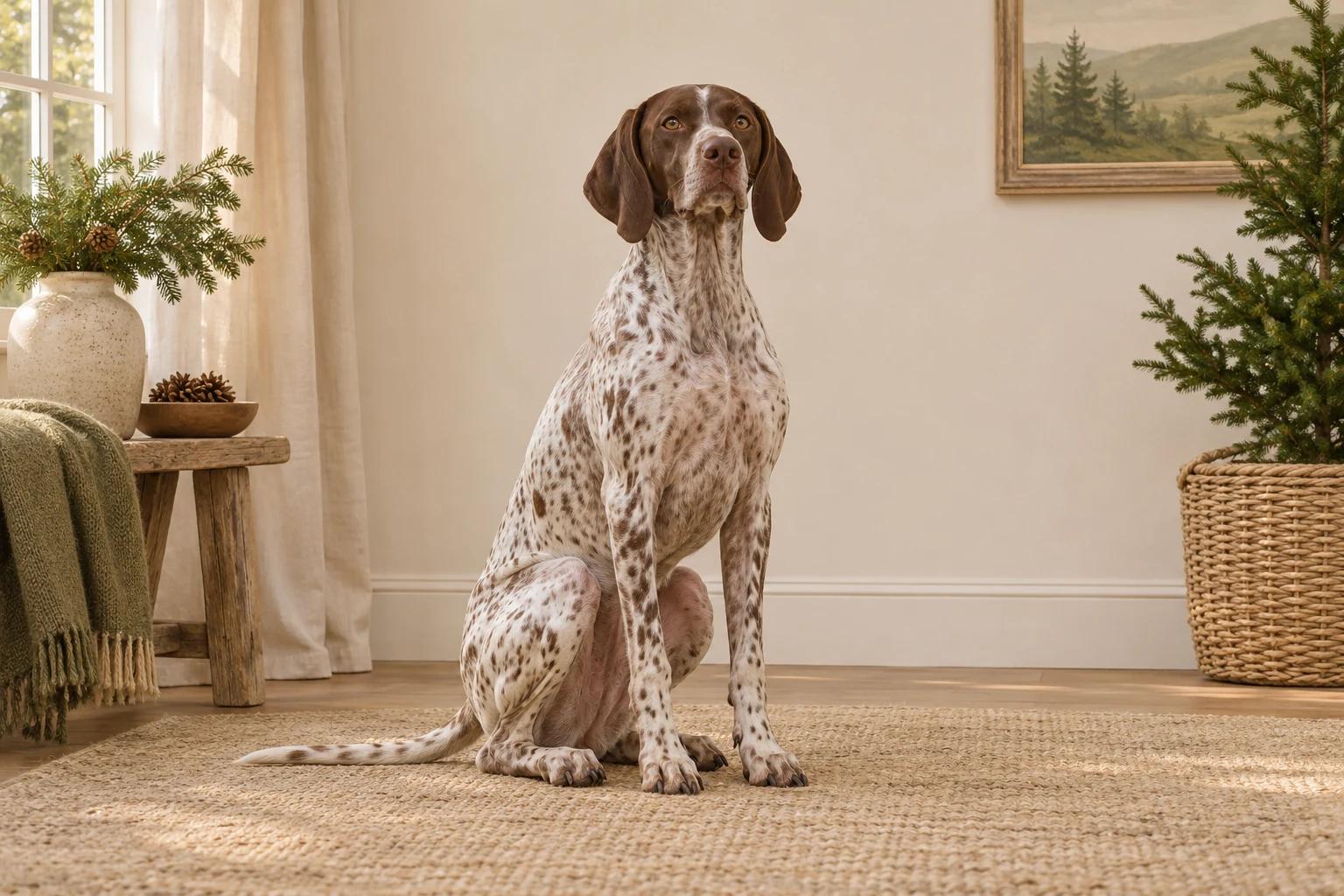
Explore the
Braque Francais Pyrenean
Background, care, and everyday considerations.
View breed profile →Braque Francais vs German Shorthaired Pointer is a comparison between two active pointing dogs, not an obvious choice between a working dog and a quiet pet. Here, Braque Francais means the Pyrenean type. Keeping that distinction clear prevents measurements and descriptions of different French pointing dogs from getting mixed together.
Start with the Braque Francais Pyrenean profile and the German Shorthaired Pointer profile. Then compare the dogs you might actually live with, using your priorities rather than trying to declare one breed the overall winner.
Braque Francais vs German Shorthaired Pointer at a glance
The AKC Braque introduction identifies a French pointing breed. Its GSP introduction describes an energetic, versatile gundog suited to vigorous activity and positive training. Both descriptions point toward owners who want meaningful participation with a dog, not merely an attractive short coat.
Our profiles place both breeds at the high end for activity needs. The GSP profile places greater emphasis on family interaction and training responsiveness. These are reference tendencies, not a prediction that every GSP will be more affectionate or quicker to learn than every Pyrenean Braque.
If your German Shorthaired Pointer vs Braque Francais search is really asking which needs very little effort, pause the comparison. Neither breed should be selected on the assumption that ordinary care and teaching will take care of themselves.
Compare physical size with the overlap in view
The Pyrenean Braque profile lists 40–55 pounds. The GSP profile lists 55–70 pounds for males and 45–60 pounds for females. That makes sex and individual size relevant: comparing a larger male GSP with a lighter Braque creates a different impression from comparing two adults near the overlapping part of those ranges.
The UKC Pyrenean-type standard describes a muscular dog without heaviness. Do not translate a lighter outline into fragility or a promise of easier handling. An active dog that has not learned lead manners can still be difficult to manage.
If handling is a major concern, meet adults and watch ordinary movement through doors and on walks. Ask who normally handles the dog and what skills make that routine work. Actual experience is more useful than judging leverage from a posed photograph.
Decide how much shared learning you want
Both the Braque Francais Pyrenean and German Shorthaired Pointer need opportunities to learn as part of an active routine. Plan suitable training tasks and enrichment around the individual dog rather than ranking the breeds by a single mental-engagement score. Ask the caregiver which activities hold that dog’s interest and how it settles afterward.
Imagine choosing a small project with either dog, such as settling on a mat while dinner is prepared or returning attention to you during an easy outing. Would you enjoy practicing a little and adjusting your approach? Or would repeated teaching feel like a burden? Your answer helps identify the sort of partnership you want.
Ask what success already looks like
For an adult dog, request examples of familiar skills in ordinary settings. Ask how the caregiver taught them, which situations remain difficult and whether the dog can perform them with someone else. That gives you a starting point for the transition into your home.
For a puppy, discuss the breeder's observations over time. A brief visit cannot reliably tell you which puppy will become the easiest adult. Look for an informed matching process rather than a promise based on the boldest or quietest moment in the litter.
Affection and independence are not opposites to rank
The GSP profile suggests a strong interest in family involvement. The Pyrenean profile describes company that may include more independence. Neither description tells you exactly how a dog will divide its time between seeking contact, resting nearby and occupying itself.
If you love close canine company, explain that to the breeder or rescue. If you need a dog that can settle while you work, explain that too. Ask about demonstrated behavior rather than assuming that affectionate means demanding or independent means comfortable alone.
Time apart deserves its own conversation for either breed. Find out how an adult currently manages absences and make suitable care arrangements for a puppy. If distress occurs, consult a veterinarian and appropriate behavior support instead of trying to diagnose it from the breed's reputation.
A short coat is only one part of care
Both profiles describe short, smooth coats with regular shedding. Choosing between them solely on coat appearance misses the larger ownership questions. You will still need to handle routine coat care, cleaning and checks of ears, nails and teeth.
Observe how the individual responds to ordinary handling and ask what routine is familiar. If a dog is worried about an aspect of care, make a plan to teach cooperation and obtain appropriate help. Do not assume that a less elaborate coat automatically makes every care task easy.
There is also no useful reason to choose between these breeds on a blanket promise of silence. Both profiles place vocal tendency in the middle of their scales. Ask about the actual dog's responses to visitors, outdoor activity and changes in routine, especially if neighbors are close.
Household relationships need individual evidence
When deciding between a Braque Francais or German Shorthaired Pointer, explain your existing household accurately. Children, resident dogs, cats and frequent visitors create different questions. Experience with one relationship does not answer all the others.
Supervise interactions with children and make resting areas off limits. For other animals, ask about relevant history and plan introductions with the caregiver or an appropriate professional. Neither breed's friendly description is a guarantee of compatibility.
Our article on the Pyrenean and Gascogne types is useful if names remain confusing, but that is a separate comparison. Use the breed quiz to organize your own needs, then meet suitable individual dogs. Choosing neither is sensible when the shared demands do not fit your life.
FAQ
Which breed is usually lighter?
The Pyrenean Braque has the lower listed adult weight range overall. There is overlap with female GSPs, so individual adults may be closer in size than a general comparison suggests. Look at actual measurements when size affects a practical decision.
Is the Braque a low-energy alternative to a GSP?
No. Both profiles place activity needs at the high end. Differences in appearance or reference temperament should not be used to erase that shared commitment. Choose an active dog because you want the routine, not because you hope it will need little.
Which breed is easier to train?
The GSP profile rates responsiveness more highly, but that is not a guarantee about an individual. Motivation, experience, environment and your teaching all matter. Ask about the particular dog's existing skills and challenges before deciding what support you will need.
Sources behind this article
- AKC: Braque Francais Pyrenean ↗
- UKC: Braque Francais de Petite Taille standard ↗
- AKC: German Shorthaired Pointer ↗
Article source checked: November 14, 2026. Source checked 2026-11-14
Keep reading

Affenpinscher vs Brussels Griffon: Everyday Differences
Read article →