Sphynx Cat Temperament: Close Company With Clear Boundaries
Explore Sphynx cat temperament through curious involvement, chosen contact and hands-on care, with realistic support during household absences.
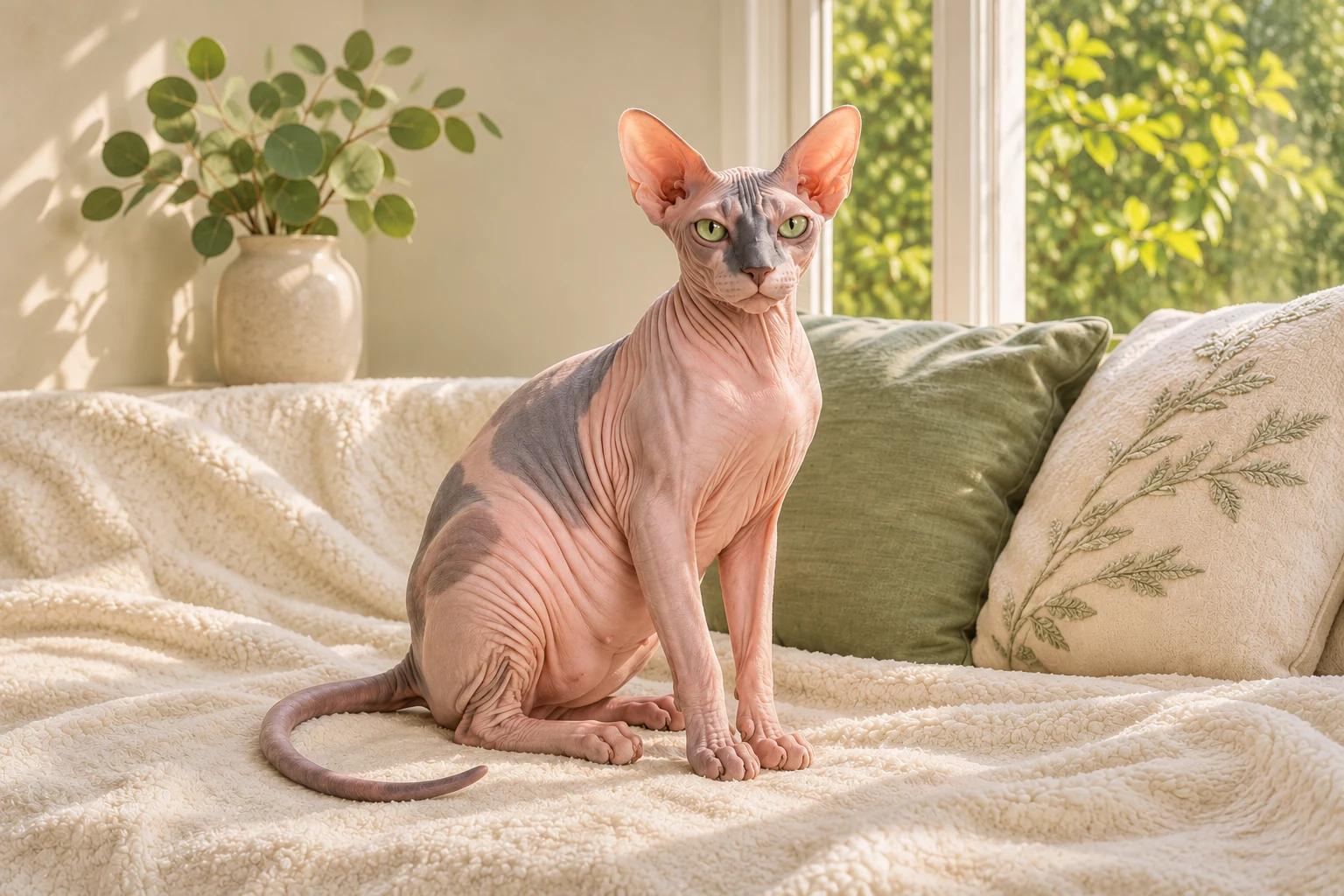
Sphynx cat temperament is described in registry accounts as inquisitive, active and strongly interested in people. That can appeal to someone seeking a companion involved in daily life, but it needs to become a realistic care discussion. A social reputation does not promise that every animal enjoys carrying, meets strangers confidently or remains content through long absences without support.
This guide explores sphynx cat personality through companionship, play and accepted handling. It stays separate from the existing temperature-comfort article and does not treat a nearly hairless appearance as an absence of work or a medical advantage.
Sphynx cat temperament: ask what proximity means
TICA describes interest in familiar people and household activity. The Sphynx profile asks owners to consider frequent interaction alongside hands-on care. Ask the caregiver to describe an ordinary morning rather than rely on a nickname implying constant attachment.
Does the individual watch a task, settle nearby, request touch or bring itself to a familiar game? What happens when the person becomes busy? Those examples help you understand the relationship without assuming that every approach means the cat wants to be picked up.
A first visit is one setting. Ask whether the room, people and behavior are familiar. Allow time for observation and avoid requiring immediate contact to prove that a friendly breed description is true.
Curiosity needs preparation as well as entertainment
The registry account includes investigation and active play. Prepare storage and boundaries before curiosity meets something unsuitable. A learned cue should not be the only thing preventing access to hazardous products, fragile objects or an exterior exit.
FelineVMA's indoor-cat guidance connects activity with resources and retreat. Look at the routes through the home, not only the number of toys. The cat should be able to choose rest and reach essentials without another animal controlling every option.
Ask about familiar equipment and follow installation instructions for raised structures. An agile reputation does not certify a shelf or establish that every movement is comfortable. Observe ordinary use without staging a challenge for a visitor.
Respect the ending of physical contact
A cat may enjoy touch and still want to leave after a brief interval. Pause and let the individual choose whether contact continues. Do not repeatedly return it to somebody's lap because a breed is expected to cuddle.
Visitors may be especially interested in the feel of the skin. That interest does not give them a turn at handling. Adults should explain boundaries before children or guests approach and protect resting places from repeated interruption.
Lifting, petting and necessary skin care are different experiences. Learn them separately with the caregiver and relevant professional. A pleasant moment on the sofa cannot establish acceptance of every future task or unfamiliar person.
Make skin care part of an honest personality discussion
Sphynx cat characteristics include variable residual hair and exposed skin. The current profile asks for an individual skin-care routine rather than an arbitrary bathing interval. Enjoying close company does not mean the animal enjoys every cleaning product or position.
Ask which handling is familiar and what needs help. VCA's general care guidance emphasizes differences in bathing needs; it does not turn one animal's routine into a universal recipe. This article provides no cleaning procedure or treatment advice.
If accepted handling changes, or skin looks irritated, contact the veterinary team. Do not interpret the response solely as a change in temperament or increase washing to obtain a cosmetic result. The actual concern needs appropriate assessment.
Plan for time when people are unavailable
Explain the household's real schedule before adoption. Ask how the cat is currently supported during absences, what routines are familiar and which responsibilities need reliable backup. A busy household and a socially available household are not always the same arrangement.
Do not promise that another pet will supply all companionship or that two social breed labels establish compatibility. Learn the individuals' histories and arrange introductions with suitable guidance, separation and resources.
If the routine creates persistent difficulty, seek veterinary or qualified behavior advice. A generalized personality article cannot diagnose separation-related problems or prescribe a treatment. It can help ensure the question is discussed before expectations harden into promises.
Describe changes without assigning motives
Sphynx cat behavior is easier to discuss when observations stay specific. The cat stopped joining a game, left when a tool appeared or began calling in an unfamiliar context. Those statements are more useful than deciding it is manipulative, needy or suddenly unfriendly.
Seek veterinary advice about a new or concerning change. Do not reproduce an uncomfortable interaction to obtain stronger evidence. Ordinary observations can begin the conversation without an additional test.
Where several people share care, keep current instructions and concerns available. Otherwise each person may see only part of a change and explain it away independently. The aim is timely appropriate help, not a home diagnosis assembled from personality labels.
Choose from the relationship you can maintain
Use the cat quiz to organize what you want from daily companionship. Bring those preferences back to the actual animal's routine, including hands-on care, play, rest and help during absences. Ask what a new caregiver is most likely to underestimate.
The Sphynx room-comfort guide addresses a different environmental responsibility. Meeting that need does not replace social contact, and affection cannot establish that every other care arrangement is appropriate.
An honest plan gives the individual room to participate, withdraw and receive help. It makes the practical work visible alongside the close company that first appealed to you, without requiring the cat to perform a permanently affectionate reputation.
Frequently asked questions
Does a social reputation guarantee a Sphynx enjoys carrying?
No. Nearby company, petting and lifting are different experiences. Learn the individual's preferences and respect the option to leave.
Does affection make skin care automatically easy?
No. A particular care task needs its own appropriate handling plan. Seek advice about a changed response or skin concern rather than relying on temperament.
Will another pet automatically meet companionship needs?
No. Compatibility and support depend on the individuals and arrangements. Ask about history and plan introductions with suitable guidance.
Should a new loss of interest be treated as personality?
Not automatically. Contact the veterinary team about a new or concerning change instead of explaining it entirely through a breed description.
Sources behind this article
Article source checked: November 20, 2026. Source checked 2026-11-20
Keep reading

American Bobtail cat temperament
Read article →