Keeping a Sphynx comfortable through changes in room temperature
Plan warm resting choices, shade and a practical skin-care conversation for a Sphynx without relying on one universal temperature or bathing schedule.
Look beyond the idea of a hairless cat
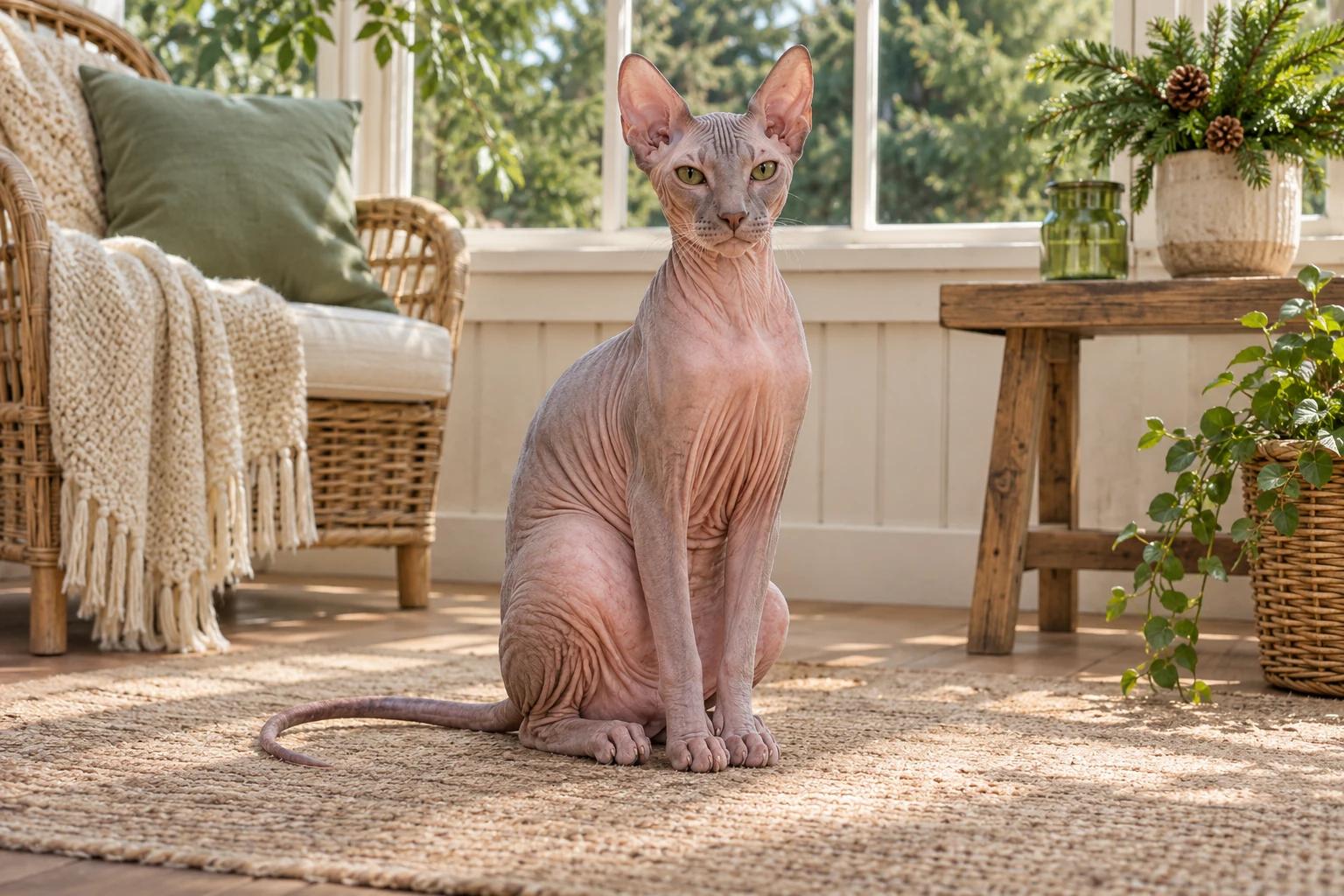
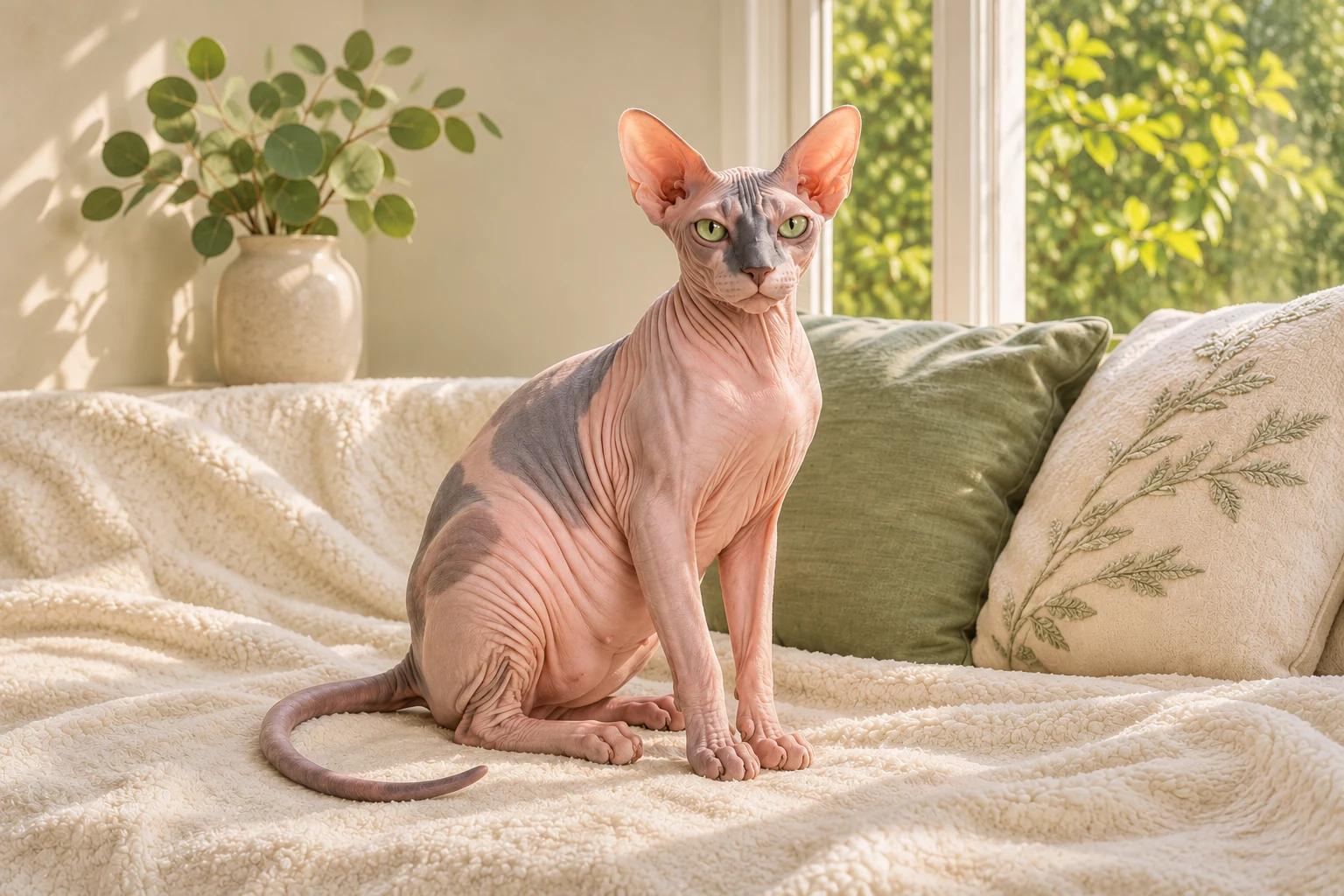
CFA explains that Sphynx cats are not necessarily completely hairless and that the amount of hair can vary. That is useful context for care, but a photograph cannot tell you exactly what this cat needs. Ask the caregiver about its usual resting places, skin routine and any veterinary instructions already in place.
Cats Protection identifies temperature regulation and skin protection as concerns for hairless cats. Treat comfort as something to plan and observe through the day, rather than choosing a single thermostat number and assuming the job is finished. This article does not prescribe a room temperature or replace advice for a cat with a skin condition.
Give the cat a choice of resting places
Map where your home becomes cooler, warmer or sunny as the day changes. Include the places the cat can actually reach when doors are closed and when nobody is home. A comfortable spot at breakfast may be exposed to direct sun later, while a room that seems warm in the afternoon may cool substantially overnight.
Offer appropriate bedding and an easy way to move between comfortable areas. Cats Protection suggests extra blankets or a warmer room in cold conditions, alongside cool areas and protection from sun in hot conditions. The practical point is choice: the cat should not have to remain in one warm place simply because that is where all its resources have been put.
Review direct heat and sun exposure
Before relying on a heater or warming product, discuss safe use with your veterinary team and follow the manufacturer’s instructions for any equipment. Do not improvise a direct heat source against the skin. Consider how the arrangement will work when you are distracted, asleep or away, rather than only while you are sitting beside the cat.
Hairless cats can be vulnerable to sunburn. Arrange shade and avoid making a sunny resting place the only appealing option. Ask your vet about individual sun protection rather than borrowing human products or assuming a window-side habit is automatically suitable. A comfortable-looking photograph is not a safety assessment of the cat’s daily exposure.
Make skin care an individual plan
The lack of a full coat does not make skin care unnecessary. Cats Protection notes that Sphynx cats can experience problems associated with oils and dirt. Ask your vet what to monitor and which cleaning approach is suitable for this individual. Request a demonstration if you are unsure about handling or products.
Avoid adopting a rigid bathing schedule from another owner’s video. Keep existing professional instructions clear, including what to do if the skin changes or the cat becomes uncomfortable with handling. Report irritation or other concerns rather than increasing washing in an attempt to solve an unexplained problem. This article gives no product recipe or treatment recommendation.
Rehearse a seasonal handover
Write two versions of your care note: one for a cold spell and one for warmer weather. List the available resting choices, how doors are managed and whom to contact about concerns. Give a sitter practical observations to report instead of asking only whether the cat seemed warm enough.
Before committing to a Sphynx, check whether everyone in the household can maintain that arrangement. Include the cost and availability of veterinary care for individual skin concerns. The aim is a home that can respond to changing conditions, not a promise that one blanket, one outfit or one thermostat setting will suit every Sphynx throughout the year.
Sources behind this article
Article source checked: October 22, 2026. Source checked 2026-10-22
Keep reading
Does a Cornish Rex need clothing indoors? Questions before dressing a cat
Read article →