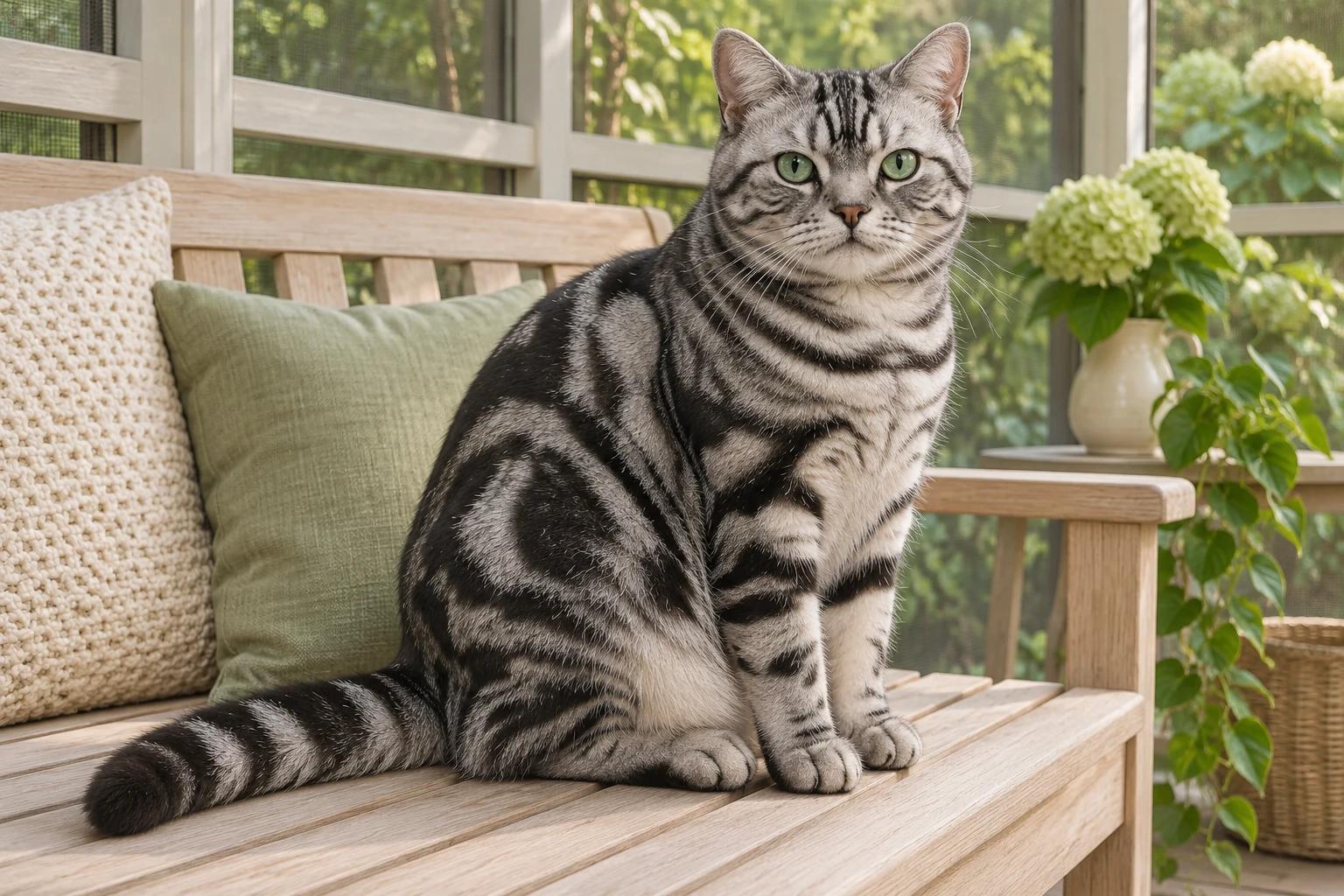
American Curl cat temperament
Understand American Curl cat temperament through social contact, gentle interaction, name learning and normal feline scratching behavior.

American Curl cat temperament is often described in warm, sociable terms. The current American Curl profile combines affection with an interest in activity and learning. Understanding that combination means looking at what the cat actually does: how it approaches people, responds to an invitation and occupies its familiar surroundings, not simply whether it matches a lap-cat stereotype.
American Curl cat temperament: attention can take several forms
VCA's American Curl account describes an affectionate companion that seeks attention without necessarily being clingy. Its examples include seeking attention near the television, head-bumping and other close social exchanges. Some individuals also enjoy retrieving games. These are possibilities within companionship, not a checklist every Curl must complete.
An animal joining you for a quiet evening may be interacting differently from one initiating a game. Neither needs to be converted into the other. Notice what the cat brings to the exchange instead of deciding in advance that affection must mean being carried or remaining on a lap.
VCA's account is particularly useful for broadening expectations beyond appearance. The expressive-looking face does not explain every action, and a breed reputation does not remove individual variation. Learn whether the particular cat seeks a brief greeting, sustained company or an active exchange at that moment. A relationship becomes easier to understand when its ordinary forms of contact matter as much as the occasional photogenic cuddle.
Make stroking an invitation, not an interruption
Battersea's interaction guidance recommends letting the cat initiate contact and keeping it free to move away. It advises against interrupting eating, sleeping or play for attention. A cat can enjoy a person's presence without welcoming touch at every opportunity.
Offer the possibility of contact, then let the cat choose whether to approach. Many cats prefer gentle attention around the cheeks, chin and head rather than the stomach or base of the tail. Use brief contact, pause after a few seconds and see whether the cat asks for more. Continuing because the person wants another stroke is different from continuing because the cat has re-engaged.
For an affectionate Curl, this is a practical way to avoid turning friendliness into an obligation. A pause does not end the relationship; it gives the animal a chance to direct the next moment. If it chooses to leave, let that choice stand. Quiet company can remain enjoyable without repeated attempts to bring the cat back into touching distance.
Teach a name as a useful social signal
Cats Protection's name-training guide begins with a relaxed cat in a quiet place. Say the name, mark a look toward you with a cheerful word, and promptly provide a small reward. The first task is attention, not immediately crossing the room on command.
Once that response is familiar, change the situation gradually, such as increasing your distance or changing your own position. Keep sessions short. If the cat does not respond, make the task easier or reconsider the reward rather than saying the name progressively louder. A confused response is not evidence that the cat is deliberately refusing cooperation.
This gives an American Curl a concrete way to participate in an everyday exchange. It also separates a breed's reputation for learning from the experience of this individual. The sound needs an understandable meaning. Stop for a break if either participant becomes frustrated, and do not treat a successful response in one quiet room as proof that the cat will respond equally well amid every distraction.
Scratching is behavior, not a personality flaw
VCA's scratching guidance explains that scratching has normal marking and stretching functions. Expecting it to disappear entirely is unrealistic. The useful question is how to provide an appealing place for the behavior, rather than whether a friendly breed should be above doing it.
A suitable upright post should allow a full stretch and remain stable in use. Some cats prefer a horizontal surface, and texture matters as well as orientation. Observe the surfaces the individual chooses before deciding that it dislikes every scratching option. A prominent location near a favored resting area can be more useful than hiding the only post where the cat seldom goes.
For a Curl household, separate the behavior from a moral judgment about the animal. An affectionate cat still has ordinary feline needs. Providing a surface that suits its preferences is a more concrete response than calling it naughty or assuming it is trying to offend someone. Seek qualified advice about persistent concerns rather than using physical punishment or improvising a deterrent that could frighten the cat.
Fit the relationship to this particular Curl
The current profile describes an energetic cat that enjoys climbing. Affection does not mean inactivity: the relationship can include shared activity as well as quieter company.
American Curl cat characteristics also include a small-to-medium physical scale. The current adult ranges are 5–8 pounds for females and 7–10 pounds for males. Neither range is a temperament score. A larger male is not automatically bolder, and a smaller female is not automatically more willing to be held. Describe the actual behavior without using size as a shortcut to personality.
The current description calls for gentle handling around the ears. Their unusual shape is not an invitation to bend or manipulate them. Ask the current keeper to demonstrate established care rather than experimenting with this distinctive feature.
American Curl cat behavior should also be considered separately from assumptions about other animals in the home. The current profile treats compatibility as individual and introductions as gradual. A sociable reputation cannot establish that two particular animals will immediately welcome one another. Learn about their actual previous experience without treating it as a guarantee of a future relationship.
Use the cat quiz to consider the companionship you want to offer. The American Curl first-vet-visit records guide addresses the separate practical task of preparing for professional care.
FAQ
Does American Curl cat personality depend on whether the cat is male or female?
The profile's sex-qualified weight ranges describe size, not personality. Learn about the individual's behavior rather than predicting confidence or affection from its sex or position within an adult weight range.
Does a sociable description guarantee an easy introduction to another pet?
No. The current profile treats compatibility as individual. The particular animals and their experience matter, and a breed label cannot replace a carefully managed introduction.
Is the Curl's coat length a reliable guide to its temperament?
No. The breed includes short and long coats. Coat length describes appearance and care, not the individual's preferred relationship with people or its response to a new situation.
Sources behind this article
- VCA American Curl ↗
- Battersea interacting with cats ↗
- Cats Protection name training ↗
- VCA scratching behavior ↗
Article source checked: November 16, 2026. Source checked 2026-11-16
Keep reading

American Bobtail cat temperament
Read article →