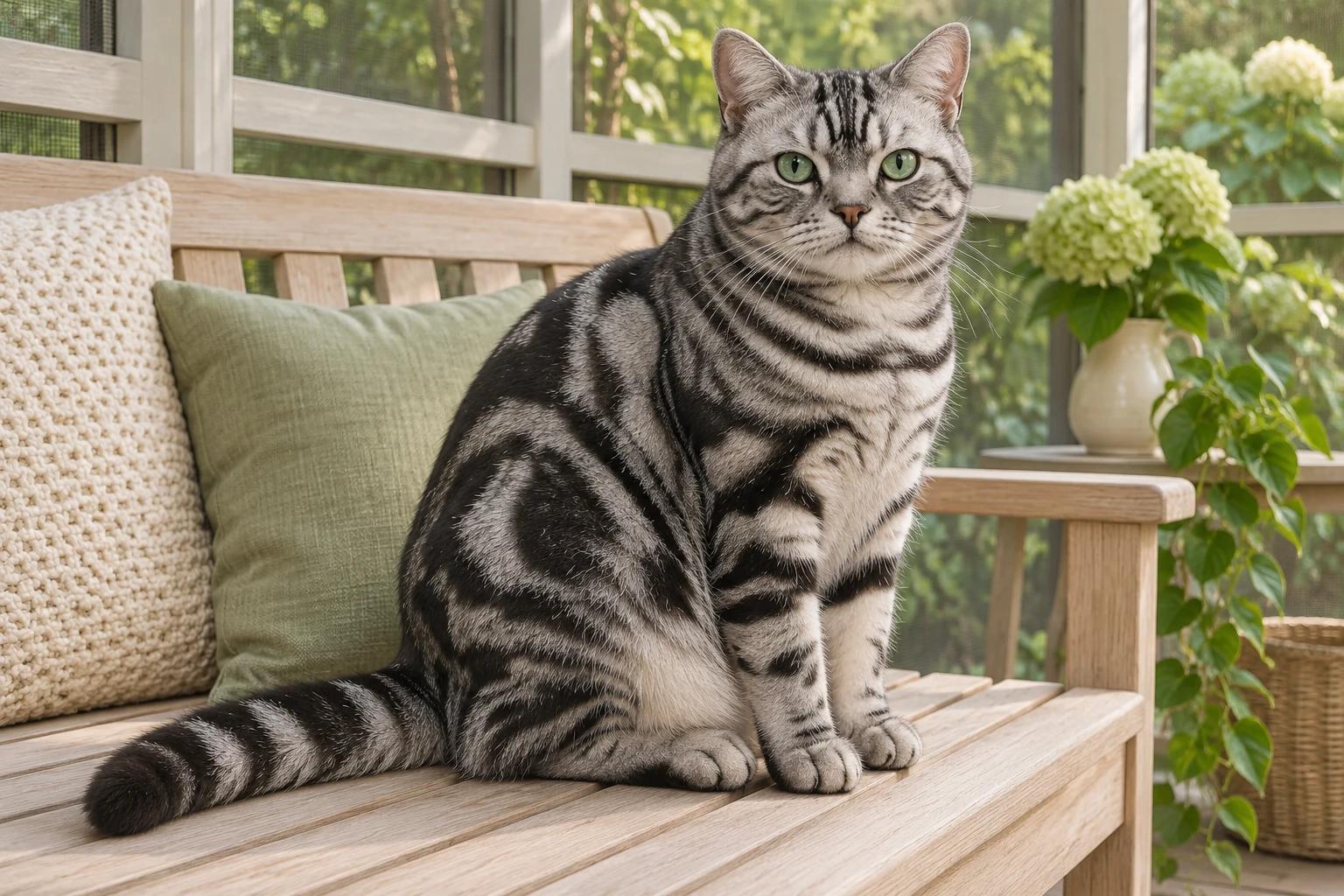
American Bobtail cat temperament
Explore American Bobtail cat temperament through interaction, play preferences, subtle communication and respect for the individual cat’s choices.

American Bobtail cat temperament is often summarized as mellow and interactive, the description used in the current American Bobtail profile. That combination leaves room for shared activity as well as quieter company. Understanding the particular cat means noticing how it seeks contact, what engages it and when it prefers to step away.
American Bobtail cat temperament: an interest in interaction
VCA's American Bobtail account describes a cat that seeks interaction and may greet arrivals. It also mentions retrieving tossed objects and communicating with chirps or trills. These are examples of possible behavior, not promises that every individual will perform the same greeting or game.
An interest in company can be expressed through activity. A cat bringing something toward a person is participating differently from one resting beside them, but both interactions can matter in the relationship. Notice the particular behavior rather than requiring affection to take one familiar form.
The retrieving description is also worth interpreting carefully. Pursuing an object, picking it up and returning it are separate parts of a game. A cat may enjoy one without completing the others. Do not turn a breed anecdote into a performance requirement. Learn what the individual already does and enjoys. The useful lesson from the account is that companionship may include a playful exchange, not that an American Bobtail should behave like a trained dog on demand.
Play offers another way to share time
Battersea's play guidance distinguishes games with a person from independent play. Cats can prefer different toy types and movements. A wand toy allows the person to create prey-like movement while keeping hands away from the cat's active play area.
For an American Bobtail, try short movements followed by pauses rather than constantly waving the toy. Give the cat opportunities to stalk, pursue and catch it. The catch matters: an endlessly escaping object is not the same experience as a successful sequence with a tangible result.
Keep hands and feet out of the role of prey. Put string and fishing-rod toys away after supervised use. A cat that is absorbed in play may not welcome being touched at the same moment, so let the game remain a game rather than repeatedly interrupting it for a cuddle. This is a concrete way to respect individual preferences while still spending time together. Not wanting to be stroked during an active pursuit does not make the interaction unsuccessful.
Read more than the shortened tail
Cats Protection's body-language guidance draws attention to eyes, ears, whiskers and overall posture as well as the tail. A relaxed posture and softly held facial features can help show that a cat is comfortable. Interpretation should take the whole situation into account rather than relying on one isolated signal.
That is particularly useful when looking beyond the American Bobtail's most conspicuous feature. Watch the rest of the body and how the cat moves in relation to you. Does it choose to approach and remain nearby, or is it moving away from the interaction? Respond to the actual cat rather than assuming its appearance communicates a complete mood.
The guidance also advises against staring. When a cat is comfortable, a slow blink and a slight turn of the head can offer a gentler exchange. There is no need to demand a matching response. Learning to notice small signals is more useful than repeatedly testing whether the cat will tolerate closer contact. Seek professional advice if you are unsure how to interpret a concerning interaction.
Let the cat choose the form of contact
The AAFP and ISFM owner guide emphasizes individual preferences in human–cat interaction. Petting, grooming, talking, playing, being picked up and sitting on a lap are different experiences. A cat may welcome some and not others, so people should allow it to initiate and control contact.
For an American Bobtail household, this means a reputation for being mellow should not become an expectation of unlimited handling. A cat choosing to share the room is already making a social choice. You do not need to convert that moment into being held.
The guide also recommends secure retreat spaces and separated essential resources. In a multi-cat home, one animal should not have to pass another to reach everything it needs. Provide genuine choices about resting and access rather than assuming the cats will always want to share. Good companionship includes the opportunity to be apart. These arrangements support the individual relationship without requiring every cat to have the same level or style of social contact throughout the day.
Appearance is not a personality test
American Bobtail cat characteristics include a medium-to-large, substantial build and a naturally shortened tail. The current profile covers both short and long coats. Those visible features help describe the animal, but they cannot establish how it feels about a particular person or another pet.
The current reference lists females at 7–11 pounds and males at 12–16 pounds. A larger adult does not necessarily want more handling, and a smaller individual is not automatically more reserved. Physical scale and social preference answer different questions.
American Bobtail cat behavior is better understood through familiar activities than a single dramatic photograph. The current profile includes moderate activity and learning games, with tasks built through voluntary steps. Find out which games the individual knows and how it participates in ordinary life. A cat that investigates a new toy and one that watches before approaching may be taking different routes into the same activity.
The ownership commitment also includes regular coat care. A mellow description should not distract from that practical need or suggest that the cat needs no daily attention. Choose the complete companion relationship, including care and interaction, rather than only the look of a bobbed tail.
The cat quiz can help organize your preferences. For a separate practical task, read the American Bobtail first-car-journey guide, which approaches travel through preparation rather than a generalized breed reputation.
FAQ
What does the current profile say about American Bobtail cat personality?
It describes a mellow, interactive companion. Use that as a starting point for learning about the individual, not as a promise of identical behavior in every home or situation.
Does the adult weight range tell me whether a cat will be affectionate?
No. The current female and male ranges describe physical scale. They do not determine an individual's preferences for company, contact or everyday activities.
Can the breed label establish compatibility with a resident animal?
No. The current profile explicitly treats compatibility as individual. Previous experience, the particular animals and gradual introductions matter more than an attractive general description of the breed.
Sources behind this article
- VCA American Bobtail behavior ↗
- Battersea playing with cats ↗
- Cats Protection cat body language ↗
- AAFP ISFM environmental needs owner guide ↗
Article source checked: November 16, 2026. Source checked 2026-11-16
Keep reading

American Curl cat temperament
Read article →