Burmilla cat temperament: company, curiosity and communication
Explore Burmilla cat temperament through companionship, climbing, window chatter and subtle responses, with practical ways to understand your cat.
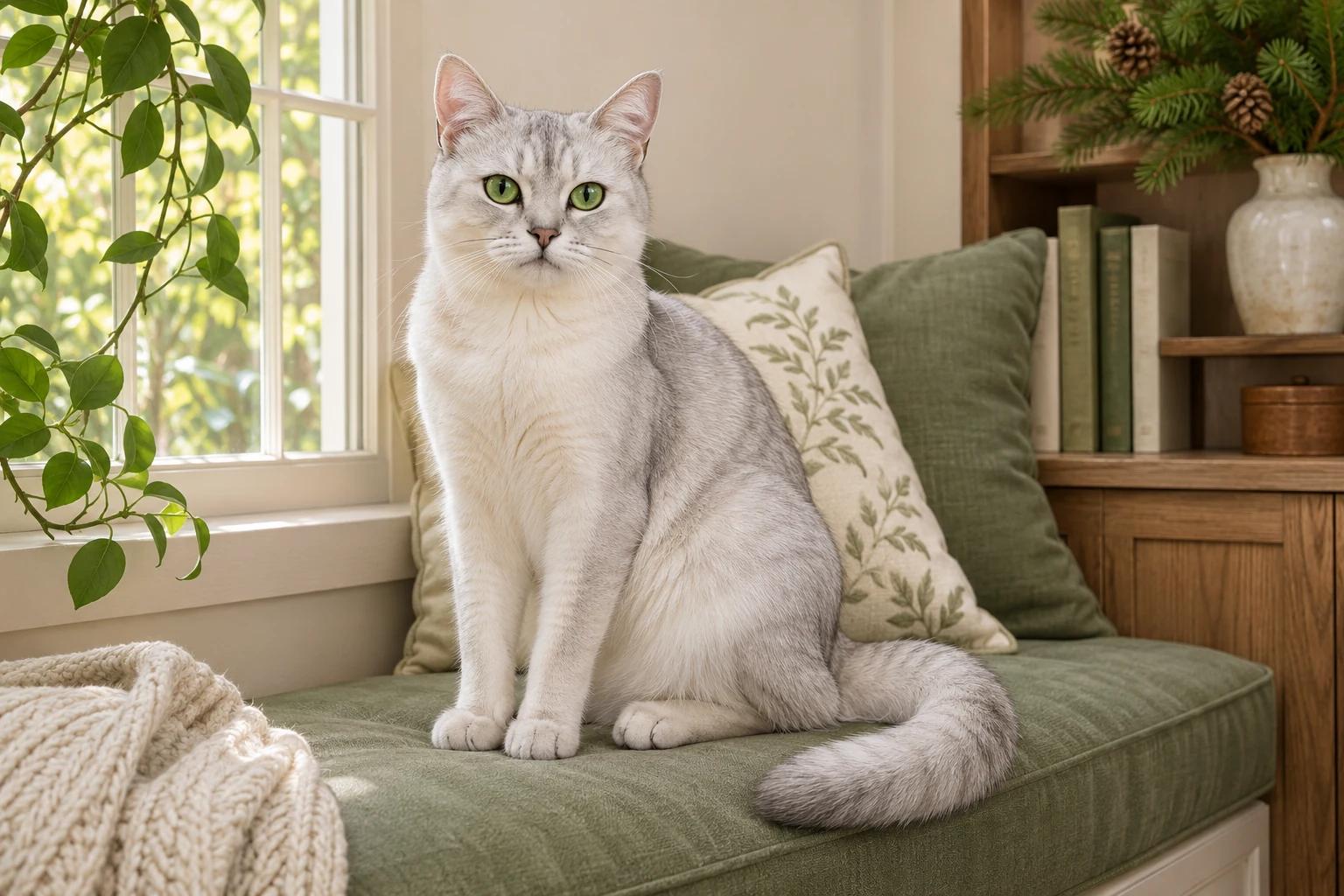
Burmilla cat temperament includes an interest in company, but living with one involves more than deciding whether it is a lap cat. A cat can make its preferences visible through where it goes, what it watches and how it responds to you. Understanding those separate behaviors is more useful than assigning every action to one personality label.
Burmilla cat temperament: separate the questions
When someone calls a Burmilla “easy,” ask what that means. Being picked up, meeting a visitor, entering a carrier and accepting a grooming tool are different experiences, not one shared test. A description of success in one setting does not establish the same response in another.
The Burmilla profile is a starting point for learning about the breed, not a substitute for meeting the animal. Burmilla cat behavior describes what the cat actually does; a temperament label is a broader interpretation. Keep that distinction when deciding which descriptions matter to you.
Company need not mean constant contact
FIFe's breed account describes a companion that likes remaining near its people. Proximity need not require handling. Sitting beside a person and sitting on that person are different choices.
Think about a Burmilla settling at the other end of the sofa while you read. It is sharing your location without necessarily placing itself within reach of a hand. A second cat might choose the next cushion. Neither position, by itself, establishes which animal has the stronger attachment.
For someone attracted to the Burmilla cat personality, the practical distinction is between offering company and insisting on contact. You can remain available without drawing the cat closer. Its chosen distance is part of the encounter, not an obstacle to completing it. Let a familiar adult show how it prefers to share space instead of making lap-sitting the only acceptable expression of companionship.
Build a route, not just a tall object
VCA's vertical-space guide describes connected shelves, window seats and climbing furniture, with secure attachment and suitable weight capacity. Apply that to the Burmilla's climbing opportunities by considering the whole route. A high destination is less useful if the intermediate surfaces do not connect sensibly.
Trace the path upward and downward. A shelf hidden behind a deep cabinet might be reachable from one direction but awkward to leave. A window seat needs a suitable support system; a decorative ledge is not automatically a cat platform. Check the manufacturer's dimensions and loading instructions rather than judging strength from a photograph.
Where more than one cat might use a structure, consider their combined weight, not just the Burmilla's weight alone. VCA also recommends anchoring cat trees to the wall. The aim is a usable, secured arrangement, not the tallest possible purchase. Existing furniture can help form a route only when it is stable and appropriate for that purpose; movable ornaments should not become improvised stepping stones.
Read window chatter without inventing a story
A Burmilla watching birds may produce a rapid clicking or chirping sound while moving its jaw. Cats Protection explains chattering as a behavior often seen while cats watch prey, although not every cat does it. It is different from assuming that every sound is a request directed at you.
The exact explanation remains uncertain. Excitement, frustration and mimicry have been proposed, so a confident translation such as “my cat is definitely angry” goes further than the evidence. Describe the visible scene first: where the cat is looking, what is outside and whether the mouth movement accompanies the sound.
That distinction is useful when discussing Burmilla cat characteristics. A quiet cat in one setting can still make a distinctive sound at a window; a cat that never chatters is not thereby missing part of its breed personality. Do not try to manufacture a stronger reaction to prove a theory. The behavior is interesting enough without turning an uncertain explanation into a character judgment.
A small response may still be a response
A 2019 experimental study by Saito and colleagues found that cats could distinguish their own names from matched spoken words. Responses commonly involved ears or head movements rather than walking toward the speaker. This was research on domestic cats, not a demonstration of a special Burmilla ability.
The useful distinction is between noticing a familiar sound and performing a requested action. If your Burmilla turns an ear when you speak, it would be premature to conclude that nothing happened simply because its feet stayed still. Equally, recognition does not establish that the cat understands a whole sentence or intends to obey a recall cue.
The study used controlled recordings and comparisons; ordinary conversation is not the same experiment. You do not need to reenact it at home. Instead, allow for subtle responses when describing your cat. “Turned its head but stayed seated” is a more accurate description than “ignored me,” and avoids turning an ambiguous moment into a claim about stubbornness.
For a separate care task, see Burmilla brushing and rewards. The cat match quiz can help frame broader ownership preferences without treating temperament as a guarantee.
Frequently asked questions
How should I interpret a Burmilla temperament description?
A Burmilla temperament label is a general description, not a prediction for every encounter. Describe the cat’s observable actions and circumstances rather than treating one label as an explanation of everything it does.
Must a friendly Burmilla sit on my lap?
A friendly Burmilla need not sit on your lap. Seeking company can mean remaining nearby rather than choosing continuous physical contact.
Does chattering prove that my Burmilla is frustrated?
A Burmilla’s chattering does not prove frustration. Several explanations have been proposed, and the behavior does not provide a definite emotional translation.
Does recognizing a name mean coming when called?
A Burmilla recognizing its name need not come when called. Distinguishing a familiar sound and moving toward a person are different responses.
Sources behind this article
- FIFe Burmilla temperament ↗
- VCA: creating vertical space ↗
- Cats Protection: chattering and chirping ↗
- Saito and colleagues: cats distinguish their names ↗
Article source checked: November 16, 2026. Source checked 2026-11-16
Keep reading
Burmilla cat size: adult weight, proportions and growth
Read article →