Cat breed
Burmilla
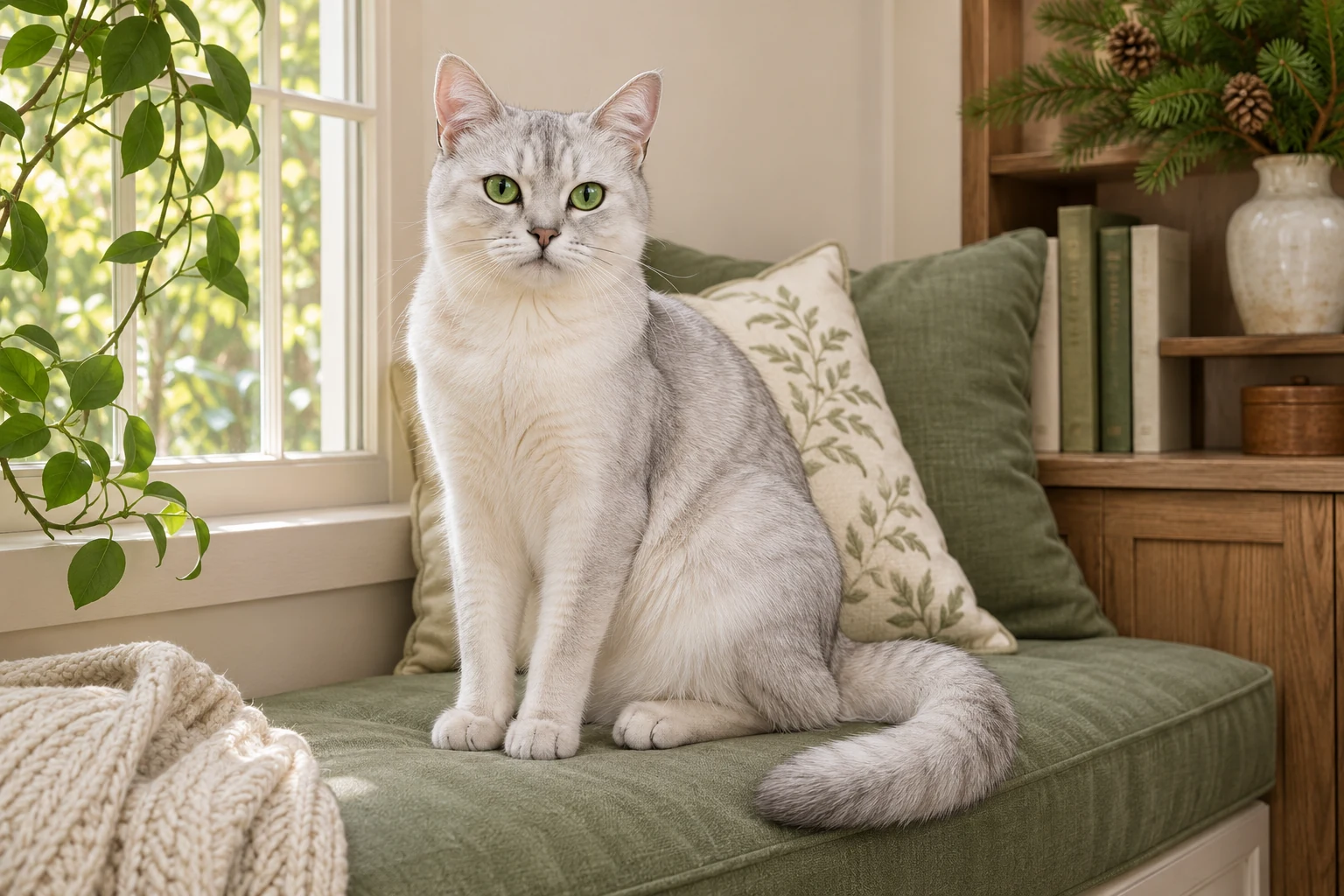
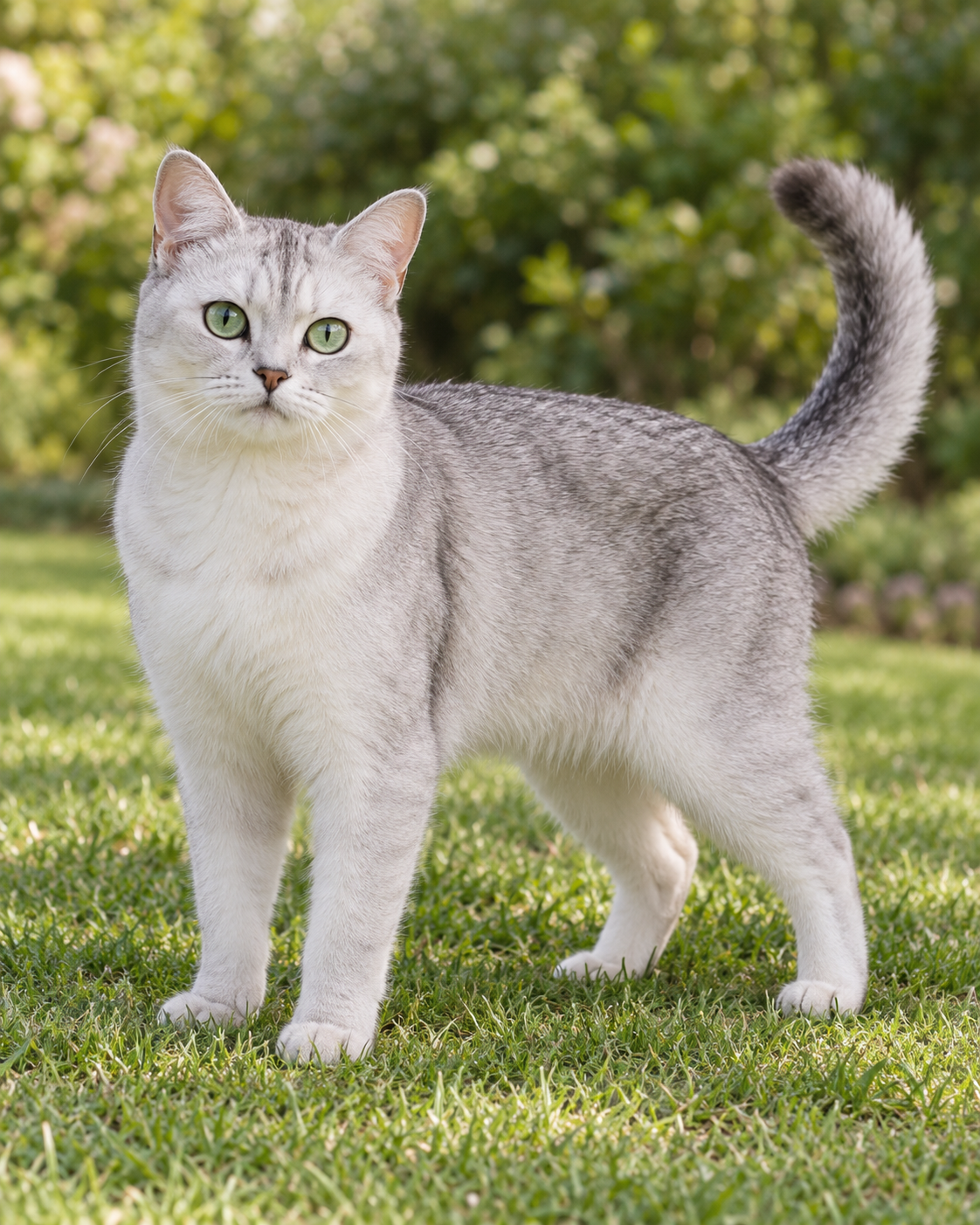
A medium-sized cat with green eyes and a silver-shaded or tipped coat, in shorthaired and semi-longhaired varieties.
- Adult weight
- 9–11 lbA shared adult reference is published; separate female and male ranges are not established.
- Build
- Medium
- Reference lifespan
- 15–18+ years
Life with a Burmilla
- Company
- Registry accounts describe affection and a gentle, sociable manner, often compatible with children and other animals.
- Play & enrichment
- Playful and curious; offer climbing opportunities and interactive or food-puzzle play.
- Coat care
- Short or semi-long coat.
Regular shedding is part of living with this coat.
Health to keep in mind
Health topics include “Keep a current change separate from a genetic result”. Read the owner observations, questions for your veterinarian and advice on when to seek help. Read the full Health guide.
Rescues & sheltersPrint or citeBreed articles
Read the complete profile and family fact sheet
Life with a Burmilla
Registry accounts describe affection and a gentle, sociable manner, often compatible with children and other animals.
Explore home life →Playful and curious; offer climbing opportunities and interactive or food-puzzle play.
Explore daily care →Short or semi-long coat.
Explore daily care →Print or cite this breed
Burmilla family fact sheet
Breed-level references are a starting point. Ask about the individual animal’s routine and care needs.
- Build
- Medium
- Adult weight
- 9–11 lb
- Reference lifespan
- 15–18+ years
- Adult size
- Adult weight often falls around 8 to 12 pounds.
Company
Registry accounts describe affection and a gentle, sociable manner, often compatible with children and other animals. Individual histories and introductions matter.
Play & enrichment
Playful and curious; offer climbing opportunities and interactive or food-puzzle play.
Coat care
Short or semi-long coat. Weekly brushing or combing; adjust to coat condition rather than assuming the longhair never mats.
Everyday responsibilities
Plan food, supplies, routine care and veterinary visits. Agree who handles the everyday jobs and who covers absences.
Adult help
An adult should remain responsible for care, supervise children’s interactions and arrange help when needed.
My Breed Atlas. Burmilla breed profile. https://mybreedatlas.com/cats/breeds/burmilla
Read this profile’s sources →Adult ranges and source qualifications
- Build
- Medium
- Adult weight
- 9–11 lb
- Reference lifespan
- 15–18+ years
Reference ranges describe the breed, not a prediction for an individual.
Daily care
Play & enrichment
Playful and curious; offer climbing opportunities and interactive or food-puzzle play.
More about everyday care
Provide places to retreat, separated resources, chances to play and predictable interaction. These are feline needs, not breed compatibility scores.
Coat, grooming & daily care
Short or semi-long coat. Weekly brushing or combing; adjust to coat condition rather than assuming the longhair never mats.
Training & communication
Reward a behavior the cat chooses with something it values. Build tasks in small steps, including approaching a carrier or a grooming tool. Stop when the cat is frightened, unwell or in pain; ask your veterinarian about cooperative care.
Food, routine & costs
The everyday ownership plan
Planning for this breed
Confirm the actual coat length and grooming tolerance before choosing the cat.
Meals and body condition
Discuss portions and body condition with your veterinarian instead of using the registry weight range as a feeding target. Smaller meals and appropriate food puzzles can support natural feeding behavior. Give each cat a separate feeding station.
Time and costs
Before committing, budget for food, litter, equipment and continuing veterinary care. Agree who handles play, cleaning, grooming and care during absences. Obtain local estimates for the individual’s care instead of relying on an invented breed cost.
Individual variation
Temperament statements are registry tendencies, not guarantees or quiz scores. Evaluate the individual cat’s history, behavior, health and introductions.
Environment
Provide a secure retreat, separate food/water/toileting/resting/scratching resources, opportunities to play and express hunting behavior, predictable positive interaction and respect for scent. In multi-cat homes, provide genuine choices and enough resources for each cat.
Nutrition
Choose a complete, balanced life-stage diet and fresh water. Adjust portions using veterinary assessment of body condition, not a breed weight chart. Do not infer a need for raw or grain-free feeding from appearance or ancestry.
Ownership budget
Plan for daily care, veterinary visits, emergency costs and lifelong housing arrangements. Ask about documented health history and socialization rather than treating registry membership as a health guarantee.
Home life
Temperament & companionship
Registry accounts describe affection and a gentle, sociable manner, often compatible with children and other animals. Individual histories and introductions matter.
Home life & introductions
Prepare a quiet transition room with food, water, litter, hiding places and scratching options. Introduce resident cats gradually and proceed when both are comfortable. Breed reputation cannot establish compatibility with children, dogs or another cat.
Offer a quiet retreat and let the cat control its distance. Supervise children and introduce resident animals gradually; individual history matters more than a breed reputation.
Personality & care details
Personality & care profile
Breed tendencies vary by individual. Higher means more of the named tendency, not better.
What everyday life tends to involve
These notes describe a tendency for the breed. Every animal is an individual.
- Play
- Short play sessions can be enough on a busy day.
- Coat care
- Brushing a few times a week fits this coat.
- Loose hair
- Regular shedding is part of living with this coat.
- Company
- Many like to share the room without constant contact.
- Adult size
- Adult weight often falls around 8 to 12 pounds.
YOUR EVERYDAY LIFE
How could this breed fit your life?
See household examples or compare this breed with answers you chose to save. The examples show combinations where this breed appeared among the first five results. Other combinations can work too.
Saved matching preferences stay in this browser, never on your account. They expire after 30 days and are removed the next time this feature reads them. Health answers, children’s ages and free-text notes are not saved. This section does not reproduce those personal care notes.
Burmilla health
Health observations and family records
Burmilla records may include separate PKD1 and WNK4 results. A submitted-sample study found WNK4 carriers in Burmillas; that is not a count of cats with clinical low-potassium illness or a breed-wide disease rate.
An available test is different from a recommendation to use it. Ask which records are relevant to this individual; neither a test listing nor a screening recommendation tells you how often illness occurs.
Keep a current change separate from a genetic result
Mention changes in drinking, urine amount, appetite or weight to your veterinarian. Those are general feline observations, not a way to diagnose PKD1 disease at home. The kidney DNA result and a WNK4 result address different inherited variants.
Weak spells and low potassium are not the same as a DNA result
A cat that walks weakly or has trouble lifting its head from its chest should be assessed, even if the weakness improves. Tell the clinic how long it lasted and bring the actual WNK4 result if you have one. Ask whether the veterinarian wants to check blood potassium in the context of the spell. If low potassium is diagnosed, ask how repeat blood tests and changes in strength will guide the treatment plan; don’t start or change a supplement on your own. The test is offered for Burmillas, but it does not show how often the disorder occurs in the breed.
Family history and screening
Ask for individually labelled PKD1 and WNK4 reports and confirmed family diagnoses. If a breeder cites a particular registration program, ask which version and documents it requires rather than treating a laboratory listing as a universal mandate.
Questions for your veterinarian
- Is this WNK4 finding a carrier result or a clinical record?
- Which kidney variant and individual does the separate PKD1 document identify?
Choosing a kitten? Ask to see both parents’ results, with the animal’s name and the date on each report. If you’re adopting an adult, ask which records come with that individual.
Health sources
- review with original submitted laboratory sample dataset, Table 1
- UC Davis veterinary genetics lab test documentation
- UC Davis veterinary genetics lab test documentation
- Cornell clinical guidance
- MSD veterinary manual · Feline hypokalemic polymyopathy
Screening evidence and limits
No quantified breed-specific disease risk or universal breed-specific screening panel established from the primary veterinary sources reviewed. Do not describe the breed as disease-free. Review family health records and individual examination findings with a veterinarian. UC Davis VGL lists Burmilla among breeds appropriate for its Burmese hypokalemia and PKD1 DNA tests. Ask a veterinarian whether existing results or further testing are relevant to this cat's family history and care. These listings do not establish how common either condition is in Burmillas. A negative result addresses the tested variant and does not exclude other causes of muscle weakness, kidney disease or poor health.
Preventive care
Arrange an individual veterinary prevention plan, including vaccination and parasite assessment. Prefer indoor living with enrichment or secure, supervised outdoor access over roaming. Request existing veterinary and screening records before bringing a cat home.
Screening limits
No evidence found is not evidence of no risk. A DNA result addresses its tested variant and cannot certify general health. Ask a veterinarian which examinations or tests fit the individual’s ancestry, family history and findings.
History & sources
Heritage & appearance
Meet the Burmilla
Adult ranges are reference examples, not targets or predictions for an individual cat.
Heritage & appearance
Developed from an accidental Chinchilla Persian–Burmese mating whose first litter was born in 1981.
More about this breed’s history
The litter and the two early clubs
The foundation litter’s parents were Sanquist and Fabergé. Therese Clarke took Gemma and founded the Burmilla Cat Club in 1984. The Baroness also formed a Burmilla Association to promote the cats. (GCCF: Asian breed group)
Full breed details
A medium, silver-shaded or tipped companion with green eyes; this display family includes shorthaired and semi-longhaired forms.
- Adult weight
- Overall: 8–12 lb
References & editorial notes
Adult-weight sources
Adult weight: 9–11 lb
confirmed-shared: no sex split published; FIFe publishes combined average adult 4-5 kg, central within TICA 8-12 lb; no full numerical male/female split found; kg converted at 2.20462 and rounded.
- CFA 2026–2027 Breed Standards
- Recognised breeds
- Using Positive Reinforcement to Train and Support Your Cat
- Making the Commitment to Adopt a Cat
- How to Feed a Cat
- Introducing a New Cat Into Your Home
- Meeting the Physical and Emotional Needs of Indoor Cats
- TICA: Burmilla
- TICA Standing Rules Version C, 3 June 2026
- Cornell: Feeding Your Cat
- Cornell: What To Expect
- FelineVMA 2025: Meeting the Physical and Emotional Needs of Indoor Cats
- Cornell: Hypertrophic Cardiomyopathy
- UC Davis VGL: Sphynx and Devon Rex Congenital Myasthenic Syndrome
- UC Davis VGL: Erythrocyte Pyruvate Kinase Deficiency
- Burmese Hypokalemia: test applicability
- Polycystic Kidney Disease (PKD1): test applicability
- CFA 2026–2027 Breed Standards Checked 2026-10-20.
- Recognised breeds Checked 2026-10-20.
- Using Positive Reinforcement to Train and Support Your Cat Checked 2026-10-20.
- Making the Commitment to Adopt a Cat Checked 2026-10-20.
- How to Feed a Cat Checked 2026-10-20.
- Introducing a New Cat Into Your Home Checked 2026-10-20.
- Meeting the Physical and Emotional Needs of Indoor Cats Checked 2026-10-20.
- TICA: Burmilla Checked 2026-10-20.
- TICA Standing Rules Version C, 3 June 2026 Checked 2026-10-20.
- Cornell: Feeding Your Cat Checked 2026-10-20.
- Cornell: What To Expect Checked 2026-10-20.
- FelineVMA 2025: Meeting the Physical and Emotional Needs of Indoor Cats Checked 2026-10-20.
- Cornell: Hypertrophic Cardiomyopathy Checked 2026-10-20.
- UC Davis VGL: Sphynx and Devon Rex Congenital Myasthenic Syndrome Checked 2026-10-20.
- UC Davis VGL: Erythrocyte Pyruvate Kinase Deficiency Checked 2026-10-20.
- Burmese Hypokalemia: test applicability Checked 2026-10-20.
- Polycystic Kidney Disease (PKD1): test applicability Checked 2026-10-20.
Breeders & rescues
Questions to bring
- What veterinary records and family health history are available?
- How does this individual cat’s coat and activity fit the care described here?
- Which screening findings and individual needs should I discuss with my veterinarian?