Cat breed · Thailand
Siamese: History & sources
History & sources
Heritage & appearance
Meet the Siamese
Adult ranges are reference examples, not targets or predictions for an individual cat.
Heritage & appearance
Historical Thai manuscripts describe pointed cats. Modern Siamese and Thai are separate breed identities; similar color points do not make them interchangeable.
More about this breed’s history
A consul’s letter about the cat called Siam
On November 1, 1878, David B. Sickels wrote from the US consulate in Bangkok to Lucy Webb Hayes about a Siamese cat he was sending her. He set out the intended route through Hong Kong and San Francisco to Washington. The archive identifies the cat as Siam. The letter documents a gift to a particular household, not the cat’s arrival date. It gives no pedigree for the cat or its descendants. (US Consulate, Bangkok / facsimile reproduced at Silpakorn University: David B. Sickels to Mrs. R. B. Hayes, November 1, 1878; White House Historical Association / Rutherford B. Hayes Presidential Center: Letter on the Gift of a Pet Cat to First Lady Lucy Hayes)
Full breed details
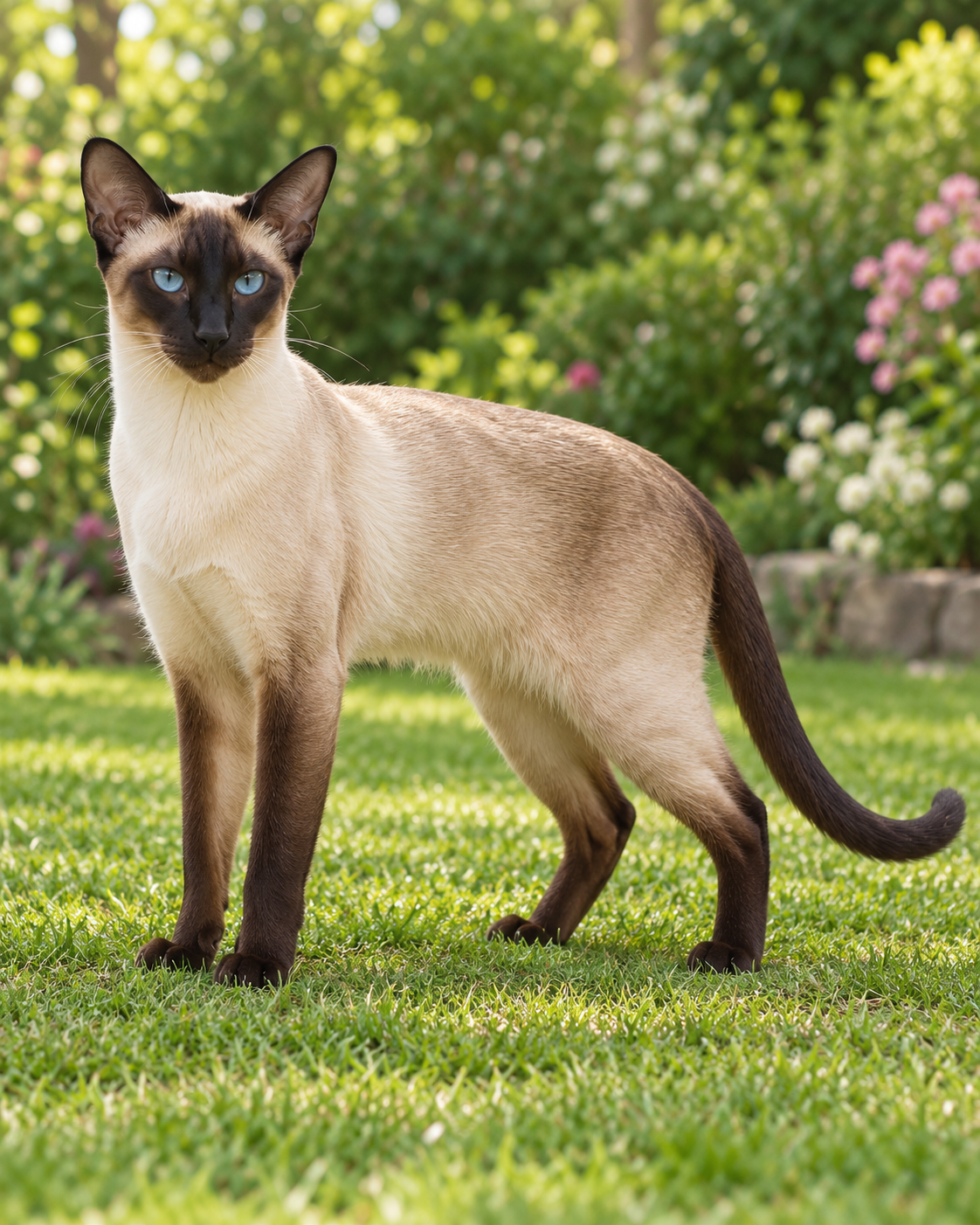
A short-coated, blue-eyed cat with a long angular outline, close involvement with people and conspicuous vocal communication.
- Adult weight
- TICA approximate adult reference: Female: 5–8 lb; Male: 8–12 lb. Approximate reference weights; alternate original registry research remains preserved.
References & editorial notes
Adult-weight sources
TICA approximate adult reference: Female: 5–8 lb; Male: 8–12 lb. Approximate reference weights; alternate original registry research remains preserved.
direct: TICA approximate adult reference; approximate-sex-reference. Approximate reference weights; alternate original registry research remains preserved.
- Progressive Retinal Atrophy (PRA rdAc)
- Siamese
- CFA 2026–2027 Breed Standards
- Recognised breeds
- Standing Rules Version C, 3 June 2026, section 701.4.1
- Using Positive Reinforcement to Train and Support Your Cat
- Making the Commitment to Adopt a Cat
- How to Feed a Cat
- Introducing a New Cat Into Your Home
- Meeting the Physical and Emotional Needs of Indoor Cats
- Siamese breed introduction
- Progressive Retinal Atrophy (PRA rdAc) Checked 2026-10-20.
- Siamese Checked 2026-10-20.
- CFA 2026–2027 Breed Standards Checked 2026-10-20.
- Recognised breeds Checked 2026-10-20.
- Standing Rules Version C, 3 June 2026, section 701.4.1 Checked 2026-10-20.
- Using Positive Reinforcement to Train and Support Your Cat Checked 2026-10-20.
- Making the Commitment to Adopt a Cat Checked 2026-10-20.
- How to Feed a Cat Checked 2026-10-20.
- Introducing a New Cat Into Your Home Checked 2026-10-20.
- Meeting the Physical and Emotional Needs of Indoor Cats Checked 2026-10-20.
- Siamese breed introduction Checked 2026-10-20.
References
Rescues & sheltersPrint or citeBreed articles
Other profile sections and family fact sheet
Life with a Siamese
Frequent conversation and participation can be appealing if your household welcomes them.
Explore home life →Active, insistent companionship.
Explore daily care →Light grooming with damp hands or a rubber brush to remove loose hair.
Explore daily care →Print or cite this breed
Siamese family fact sheet
Breed-level references are a starting point. Ask about the individual animal’s routine and care needs.
- Build
- Medium-sized, slender and shorthaired
- Female
- 5–8 lb (TICA approximate adult reference)
- Male
- 8–12 lb (TICA approximate adult reference)
- Reference lifespan
- 10 years or more
- Adult size
- Female: 5–8 lb (TICA approximate adult reference); Male: 8–12 lb (TICA approximate adult reference) Typical adult references vary between sources and individuals. See the full source accounts.
Company
Frequent conversation and participation can be appealing if your household welcomes them. Ask how this cat behaves during ordinary absences and what interaction it already enjoys. Do not assume that an expressive breed will settle into every schedule or that one cat’s habits represent all Siamese.
Play & enrichment
Active, insistent companionship. Plan interactive play and opportunities to investigate; ask about this cat’s established games rather than relying on a general promise of intelligence.
Coat care
Light grooming with damp hands or a rubber brush to remove loose hair. Ask the caregiver which approach this cat tolerates. Coat simplicity does not make the companionship and play commitments disappear.
Everyday responsibilities
Plan food, supplies, routine care and veterinary visits. Agree who handles the everyday jobs and who covers absences.
Adult help
An adult should remain responsible for care, supervise children’s interactions and arrange help when needed.
My Breed Atlas. Siamese breed profile. https://mybreedatlas.com/cats/breeds/siamese
Read this profile’s sources →Adult ranges and source qualifications
- Build
- Medium-sized, slender and shorthaired
- Female
- 5–8 lb (TICA approximate adult reference)
- Male
- 8–12 lb (TICA approximate adult reference)
- Reference lifespan
- 10 years or more
Reference ranges describe the breed, not a prediction for an individual.
Daily care
Play & enrichment
Active, insistent companionship. Plan interactive play and opportunities to investigate; ask about this cat’s established games rather than relying on a general promise of intelligence.
More about everyday care
Provide places to retreat, separated resources, chances to play and predictable interaction. These are feline needs, not breed compatibility scores.
Coat, grooming & daily care
Light grooming with damp hands or a rubber brush to remove loose hair. Ask the caregiver which approach this cat tolerates. Coat simplicity does not make the companionship and play commitments disappear.
Training & communication
Reward a behavior the cat chooses with something it values. Build tasks in small steps, including approaching a carrier or a grooming tool. Stop when the cat is frightened, unwell or in pain; ask your veterinarian about cooperative care.
Food, routine & costs
The everyday ownership plan
Planning for this breed
Discuss the amount of interaction and vocal communication your household welcomes. Ask a caregiver how the individual manages ordinary absences before choosing it.
Meals and body condition
Discuss portions and body condition with your veterinarian instead of using the registry weight range as a feeding target. Smaller meals and appropriate food puzzles can support natural feeding behavior. Give each cat a separate feeding station.
Time and costs
Before committing, budget for food, litter, equipment and continuing veterinary care. Agree who handles play, cleaning, grooming and care during absences. Obtain local estimates for the individual’s care instead of relying on an invented breed cost.
Home life
Temperament & companionship
Frequent conversation and participation can be appealing if your household welcomes them. Ask how this cat behaves during ordinary absences and what interaction it already enjoys. Do not assume that an expressive breed will settle into every schedule or that one cat’s habits represent all Siamese.
Home life & introductions
Prepare a quiet transition room with food, water, litter, hiding places and scratching options. Introduce resident cats gradually and proceed when both are comfortable. Breed reputation cannot establish compatibility with children, dogs or another cat.
Offer a quiet retreat and let the cat control its distance. Supervise children and introduce resident animals gradually; individual history matters more than a breed reputation.
Personality & care details
Personality & care profile
Breed tendencies vary by individual. Higher means more of the named tendency, not better.
What everyday life tends to involve
These notes describe a tendency for the breed. Every animal is an individual.
- Play
- One short session does not cover the day. This cat wants to be involved several times.
- Coat care
- Hand grooming or a rubber brush is the coat plan. Baths are not the ordinary routine.
- Loose hair
- They do shed. Regular grooming keeps that hair from spreading through the house.
- Company
- This cat wants to be on or beside a person, not merely somewhere in the room.
- Adult size
- Female: 5–8 lb (TICA approximate adult reference); Male: 8–12 lb (TICA approximate adult reference)
Typical adult references vary between sources and individuals. See the full source accounts.
- Time alone
- Long stretches alone are a poor fit. They want company nearby. This cat is very vocal and will loudly ask for company.
YOUR EVERYDAY LIFE
How could this breed fit your life?
See household examples or compare this breed with answers you chose to save. The examples show combinations where this breed appeared among the first five results. Other combinations can work too.
Saved matching preferences stay in this browser, never on your account. They expire after 30 days and are removed the next time this feature reads them. Health answers, children’s ages and free-text notes are not saved. This section does not reproduce those personal care notes.
Siamese health
Health observations and family records
The primary rdAc study confirmed retinal degeneration on eye examinations in some Siamese cats with two copies of the variant. This does not provide an individual timetable for sight changes or explain every eye problem.
Notice a change in a place the cat knows
If your cat starts bumping into familiar furniture or struggling to find the usual bowl, describe the change to your veterinarian. Keep the lighting and the situation in that account, without asking the cat to negotiate a test course or assuming a DNA category is the diagnosis.
Amyloidosis that affects the liver
Amyloidosis happens when abnormal protein deposits build up in tissue and can interfere with how an organ works. A form called AA amyloidosis has been documented in some Siamese families and can affect the liver. A severely affected liver can become fragile and bleed. The reports do not tell you whether this will happen to an individual cat. There may be little to see at first. Later, a cat may eat less, lose weight, seem tired or develop yellow coloring where the whites of the eyes are visible. Call promptly about a new yellow tint or a marked drop in appetite. Collapse, struggling to breathe or sudden severe weakness, especially with unusually pale gums, means emergency care now. Don’t wait to see if all those signs appear or assume the cause is amyloidosis. Bring any confirmed family diagnoses, prior tests and the timing of appetite, weight or energy changes. Ask: “What else could explain this? Which tests would help evaluate the liver and other organs? How would bleeding risk affect any further testing, and would a specialist help?” A story about a relative with liver trouble does not confirm this diagnosis. The plan depends on which organs are affected and how your cat feels. Ask what can be done to support appetite and comfort, what you can track at home and when the vet wants to recheck. A brief note on meals and changes in energy or weight can help. Ask for a written emergency plan and discuss comfort and quality of life as symptoms change. Don’t wait to fill in a record if your cat becomes suddenly very ill.
Family history and screening
Ask for the exact CEP290 rdAc result and any specialist eye findings in adult relatives. A carrier result and a clinically examined retinal condition are different records, even within the same family.
Questions for your veterinarian
- What did an eye examination show separately from the DNA result?
- Which inherited variant does this report assess?
Choosing a kitten? Ask to see both parents’ results, with the animal’s name and the date on each report. If you’re adopting an adult, ask which records come with that individual.
Health sources
- Primary genotype and eye-exam research
- UC Davis laboratory
- Cornell veterinary guidance
- Niewold et al. exact Siamese hepatic AA
- Van der Linde-Sipman et al. hepatic pathology and pedigrees
- WSAVA liver histology and bleeding risk
- Merck liver disorders in cats
- Cornell emergency and critical care
Screening evidence and limits
UC Davis includes Siamese among populations appropriate for testing the CEP290 rdAc variant associated with progressive retinal atrophy. This recessive condition can impair vision, but the test does not cover every cause of eye disease. Ask for the actual result and its interpretation rather than accepting “DNA tested” as a complete answer; applicability alone does not establish disease prevalence.
Breeders & rescues
Questions to bring
- Which eye-health findings and specific rdAc results are documented, rather than only a generic DNA-panel label?
- How does this cat communicate frustration or seek attention?
- Which eye-health history and genetic results are documented?