Siamese vs Tonkinese: Related Histories, Individual Companions
Compare Siamese vs Tonkinese body, pattern and interaction descriptions, then consider the actual cat and the routine your household can support.
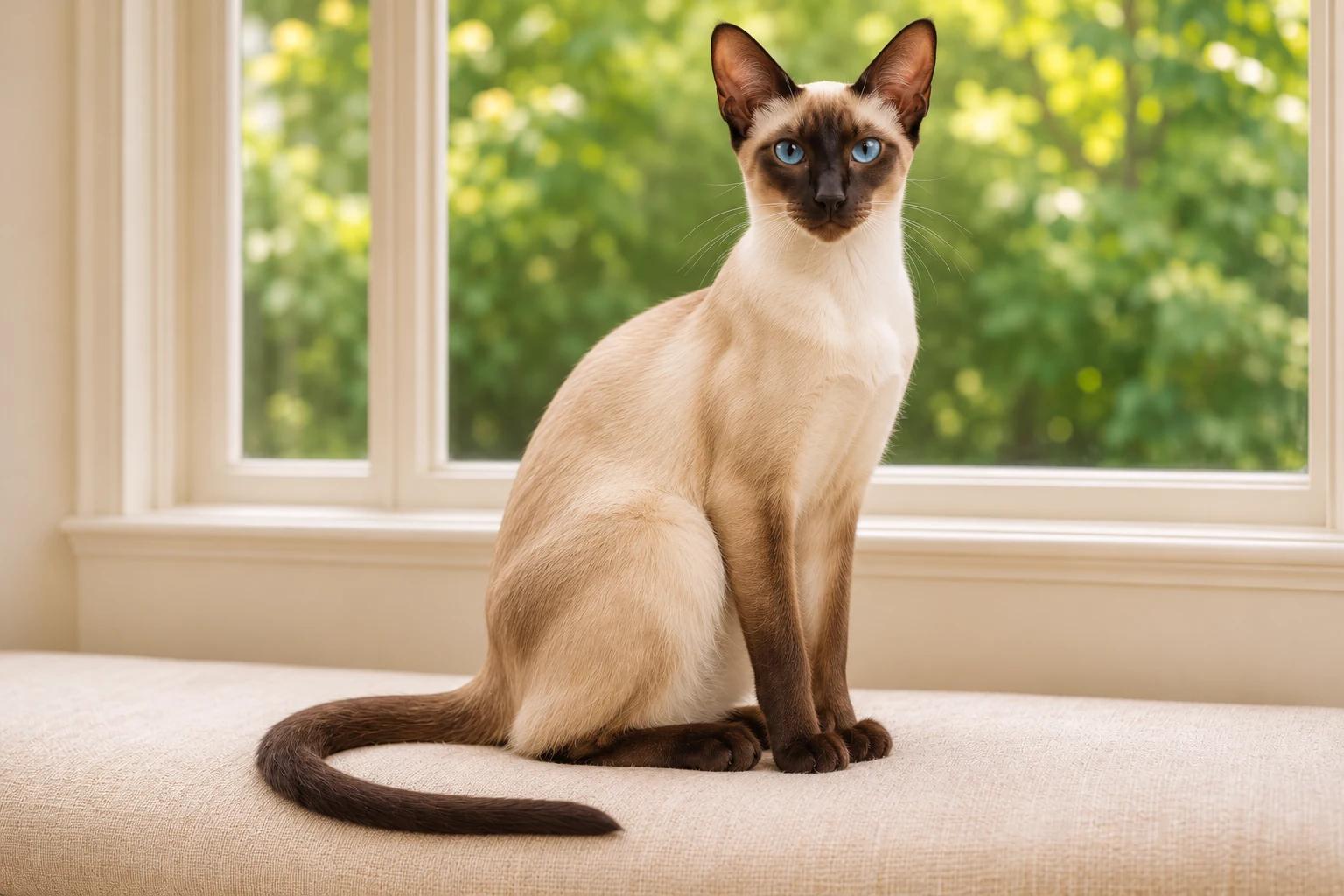
Siamese vs tonkinese is a comparison between related breeds whose appearance and daily interaction both deserve attention. The Siamese has a long, angular outline and pointed coloring; CFA describes the Tonkinese as intermediate in body type, with a muscular frame and more than one pattern category. Related ancestry does not make their names interchangeable or allow a reliable ranking of individual affection or noise.
If you are considering a siamese or tonkinese, begin with the actual cats and the routines their caregivers can describe. A visual preference can guide your interest, but the daily commitment needs more information than coat and eye color.
Siamese vs Tonkinese: understand the documented distinction
CFA's Siamese account describes the familiar contrast between darker points and a paler body, together with blue eyes and a slender shape. Its Tonkinese account explains a breed developed through Siamese and Burmese ancestry, with a body described as neither as compact as the Burmese nor as slender as the Siamese.
Tonkinese eye descriptions also depend on pattern: CFA describes aqua for mink, green for solid and blue for pointed cats. That is useful appearance context, not a method for certifying identity from a picture. Ask what records support the individual's breed description.
Read the Siamese profile and Tonkinese profile. A difference between siamese and tonkinese can be documented without turning it into a promise about how every cat will respond to a household.
Compare interaction through ordinary examples
The site's profiles describe both breeds as involved and social, with vocal communication among their tendencies. Do not choose one on an unsupported promise that it will supply exactly the amount of attention you prefer or remain quiet whenever you need concentration.
Ask each caregiver what happens while someone works, prepares a room or rests in the evening. Does the cat choose nearby company, a game, petting or a separate place? Comparable questions make a tonkinese vs siamese decision more useful than contrasting two different promotional descriptions.
A short visit is one sample. Ask whether the behavior you see is typical of that setting and which circumstances are different at home. Allow an approach and departure without requesting a demonstration of how much lifting or restraint the animal tolerates.
Discuss sound honestly before adoption
Both breed accounts give reason to ask about ordinary calling. Describe your household's noise tolerance and schedules honestly, including other people's needs. A social first meeting cannot establish a future volume level, and a quiet one cannot promise silence.
Request concrete observations from familiar days rather than a label such as chatty or easy. Ask how the cat behaves when a person is busy and whether there are existing concerns or professional instructions. Do not rely on reassurance that another pet or a particular toy will automatically remove an unwanted pattern.
A new or concerning change deserves veterinary advice, not an explanation based only on ancestry. The existing Siamese night-calling guide addresses that separate issue. This comparison does not prescribe a response to night-time vocalizing or claim that exercise guarantees a silent night.
A short coat does not remove the wider work
The current Siamese profile describes light care with damp hands or a rubber brush, while the Tonkinese profile suggests a gentle weekly rubber-brush session. Ask about the actual animal's established routine and accepted tool rather than treating either short coat as a no-care promise.
Simple coat maintenance also does not establish a low-interaction companion. Play, company, routine veterinary care and dependable daily responsibilities remain separate commitments. Include them when comparing what you can sustain through an ordinary working week.
If a coat or handling response changes, seek appropriate advice. Do not increase pressure or add a new product to obtain the smooth appearance expected from a shorthaired breed. Appearance is only one part of care, not evidence that everything else is comfortable.
Play opportunities should fit the individual
Both profiles support interactive games and suitable enrichment. Ask which activities are familiar and how the animal chooses to finish. A puzzle result during a visit does not establish intelligence or predict the amount of daily care required.
FelineVMA's indoor-cat guidance connects play with retreat, resources and positive contact. Look at the routes through the home as well as the toy selection. Each cat needs usable choices even when another animal or person is nearby.
Follow installation and load instructions for climbing or resting equipment, and keep essentials accessible. A lean outline or active reputation does not certify a shelf or tell you which movement is comfortable. Review the actual animal rather than relying on a breed category alone.
Introductions and handling are separate assessments
A history of living with one pet cannot guarantee acceptance of a different resident animal. Ask how previous introductions were managed and seek guidance for the individuals involved. Arrange appropriate separation and resources rather than testing a claim of universal friendliness through immediate contact.
Adults should supervise children and explain that the cat can choose distance. A social animal is not required to accept every approach. Protect resting places and avoid asking the cat to provide a turn for each person who wants affection.
Likewise, the relationship with a familiar caregiver does not establish comfort with a visitor lifting the cat. Learn accepted contact and necessary care separately. Neither breed name should be treated as permission to override the animal's response.
Make the shortlist practical
Use the cat quiz to organize preferences about daily life, then write a brief account of each candidate using history and observation. Include one familiar game, one contact preference, one care task and one unresolved question.
Review veterinary records with the appropriate professional rather than ranking the breeds as universally healthier. Registration and isolated test results cannot establish general health. An honest account of ongoing needs is more useful than a perfect-sounding comparison.
The stronger decision concerns an individual whose routine you understand and can support. Related histories help explain the breeds; they do not remove the need to learn about the particular companion you may bring home.
Frequently asked questions
Are Siamese and Tonkinese interchangeable names?
No. Tonkinese development includes Siamese and Burmese ancestry, but the breed has its own documented body and pattern descriptions. Ask about records rather than identifying from appearance alone.
Do all Tonkinese have aqua eyes?
CFA ties eye descriptions to pattern: aqua for mink, green for solid and blue for pointed cats. A single eye color is not the whole breed description.
Is one guaranteed to be quieter?
No individual noise ranking is established here. Ask about familiar daily behavior and seek veterinary advice about a new or concerning change.
Does short hair mean little daily interaction is needed?
No. Coat care and social or activity commitments are different responsibilities. Assess the actual cat and the routine you can maintain.
Sources behind this article
Article source checked: November 20, 2026. Source checked 2026-11-20
Keep reading

Abyssinian vs Somali: Coat, Size and Everyday Company
Read article →