Siamese Cat Temperament: Conversation, Participation and Personal Choice
Explore Siamese cat temperament, vocal interaction and company while respecting individual boundaries and recognizing concerning behavior changes.
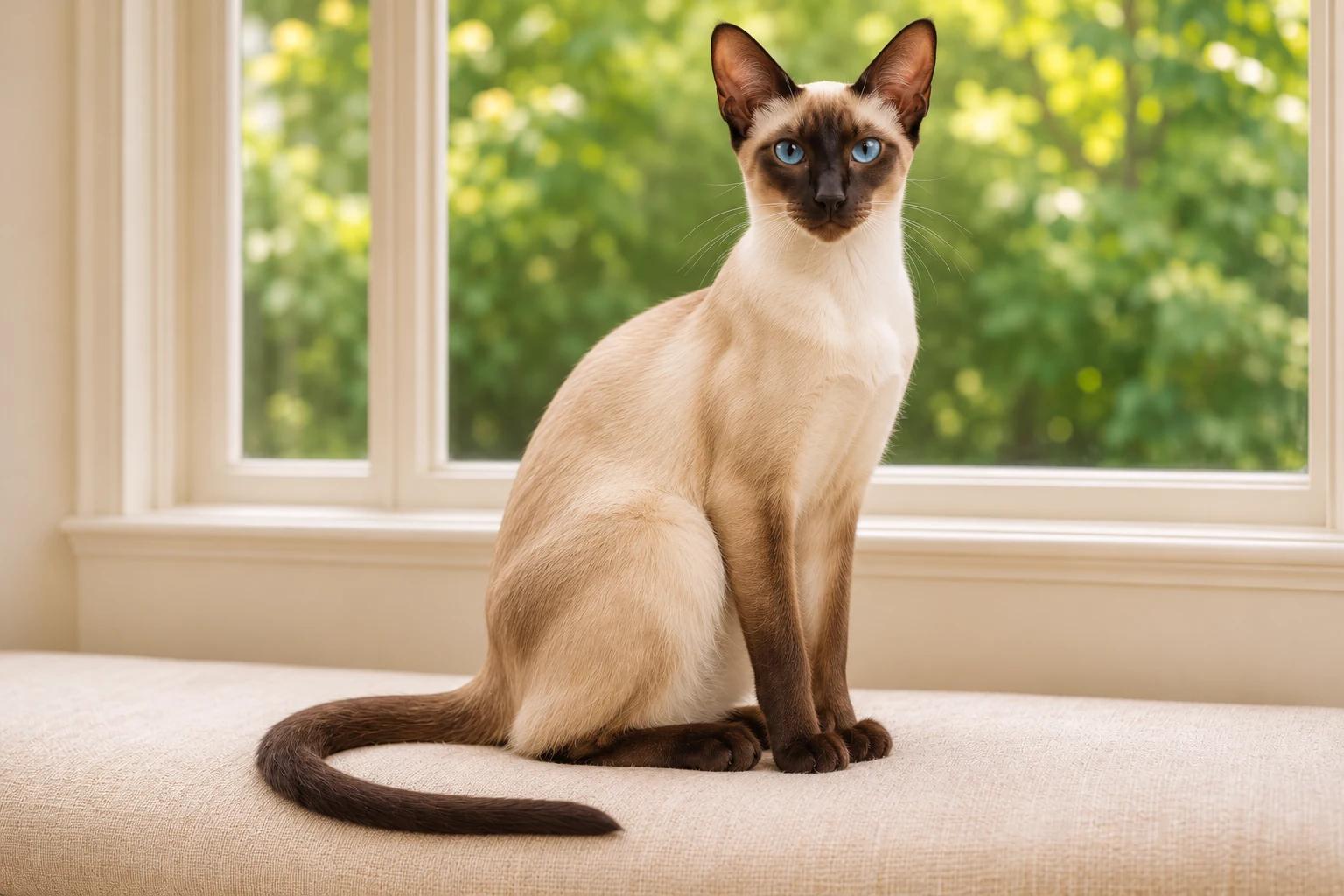
Siamese cat temperament is often associated with vocal conversation and close involvement with people. That may appeal to a household wanting an engaged companion, but the description needs to become a realistic daily plan. A cat that joins your activities is still an individual with preferences about contact, rest and unfamiliar situations. A breed reputation cannot promise an affectionate response whenever a person wants one.
This guide explores siamese cat personality through ordinary company and an ownership decision. It does not prescribe a response to night-time calling or treat every sound as proof of a particular motive.
Siamese cat temperament: ask what interaction means
TICA and CFA describe an active, people-focused breed. The current Siamese profile asks owners to welcome participation while learning the individual's established habits. Ask the caregiver for examples rather than relying on the strength of a word such as devoted.
Where does the cat choose to be while someone works? What happens when a person sits quietly, offers a game or leaves the room? Which interactions does it seek, and how does it choose to finish them? Those questions help you imagine the actual relationship.
One visit cannot answer every setting. Ask whether the room and behavior are familiar and whether the cat's response differs with known people. Allow observation without requiring an immediate greeting or a demonstration of tolerance.
Conversation is a preference question for the household
Siamese cat characteristics include conspicuous communication in the registry accounts. Before adoption, discuss the household's ordinary tolerance for sound and attention. Include work calls, sleep schedules and the preferences of everyone sharing care without promising that a breed can be adjusted to a fixed volume.
Ask what calling sounds like in familiar daily circumstances. A quiet encounter cannot guarantee future silence, and one vocal moment cannot define an entire routine. Keep the context attached rather than comparing isolated recordings of different animals.
If a pattern changes suddenly or causes concern, seek veterinary advice. An established tendency should not become a diagnosis. The animal's behavior deserves attention in its own right rather than being explained away because Siamese are described as talkative.
Company is not identical to carrying
A cat may follow movement, rest nearby or request brief touch. None of those choices automatically invites lifting or prolonged restraint. Let the individual approach, pause during contact and notice whether it chooses to continue.
Protect the option to leave. Repeatedly retrieving an animal from a retreat can make an apparently affectionate relationship depend on tolerating pressure. Explain to guests that seeing the cat nearby does not necessarily mean they should reach for it.
Adults should guide children and remain responsible for care. A child can enjoy a familiar game or quiet observation without being given responsibility for every signal. The cat should not have to provide affection in turns to satisfy household expectations.
Let curiosity have an appropriate setting
The profile describes active, insistent companionship and opportunities to investigate. Prepare the environment so that exploration does not repeatedly lead to conflict. Secure hazards and fragile items instead of expecting an unspoken rule or verbal correction to be the only boundary.
FelineVMA's indoor-cat guidance places play alongside retreat and appropriate resources. Look at routes and access as well as toy choice. A cat should be able to rest or reach essentials without another animal controlling every option.
Ask which activities are already familiar and maintain opportunities that suit the individual. A simple game can be worthwhile without proving intelligence, and a quieter period does not mean the household should immediately restart entertainment. Participation and rest both belong in the plan.
Introductions need facts, not promises
Ask about actual history with visitors and other pets, including the circumstances. A cat comfortable with one familiar animal may need careful preparation for another. Obtain suitable guidance and arrange separation, resources and retreat before contact.
Do not let a resident pet's enthusiasm decide the pace. A sociable breed description cannot establish compatibility or make the new animal responsible for keeping the encounter comfortable. End or adjust the arrangement when needed rather than prolonging it to obtain a friendly photograph.
The same care applies to guests. Give them practical instructions about waiting and distance. An encounter without touch can still be a useful meeting when the cat prefers to observe.
Include absence and ordinary care in the decision
Explain the household's real schedule to the caregiver. Ask what comparable periods apart the individual has experienced and what support your home can provide. There is no universal number of hours here that guarantees comfortable solitude.
Another animal is not an automatic solution. Compatibility and introduction needs remain separate, and adding a pet adds responsibilities. Likewise, a cupboard full of toys should not be treated as a replacement for every interaction the household cannot provide.
Ask about familiar grooming and necessary handling. A short coat may involve relatively light maintenance, but social and activity commitments remain. If a care task is difficult or newly avoided, obtain advice rather than deciding the cat has become demanding or uncooperative.
Keep changed behavior out of a stereotype
Siamese cat behavior is more useful to discuss through observations than labels. Describe what happened, when it began and what else changed. Avoid repeatedly provoking an unfamiliar response to decide whether it is real.
The existing Siamese night-calling guide addresses one specific concern. This temperament article does not repeat its response plan or promise that additional play will resolve a night pattern. It keeps the broader relationship distinct from an individual problem requiring its own review.
Use the cat quiz to organize your preferences, then return to the actual animal's history. Ask what a new household most needs to understand during the first week. A practical answer about company, care and boundaries is more valuable than certainty that every Siamese will provide exactly the relationship you imagine. The goal is an informed commitment with room for the cat's choices.
Frequently asked questions
Are all Siamese cats equally vocal?
No individual volume or calling schedule is guaranteed. Registry accounts describe a tendency; ask about the actual animal in familiar daily settings.
Does following a person mean the cat wants to be held?
Not necessarily. Nearby company, touch and lifting are different experiences. Let the individual determine whether contact continues and respect its departure.
Can another pet automatically meet companionship needs?
No. Compatibility and introductions require individual assessment, and another animal adds care responsibilities. Do not treat it as a guaranteed solution.
Should a new behavior be dismissed as typical Siamese behavior?
No. Describe the change and seek veterinary advice about concerns. A breed reputation cannot diagnose the cause or establish comfort.
Sources behind this article
Article source checked: November 20, 2026. Source checked 2026-11-20
Keep reading

American Bobtail cat temperament
Read article →