Cat breed · Modern breed history documented in France; earlier origin accounts uncertain
Birman
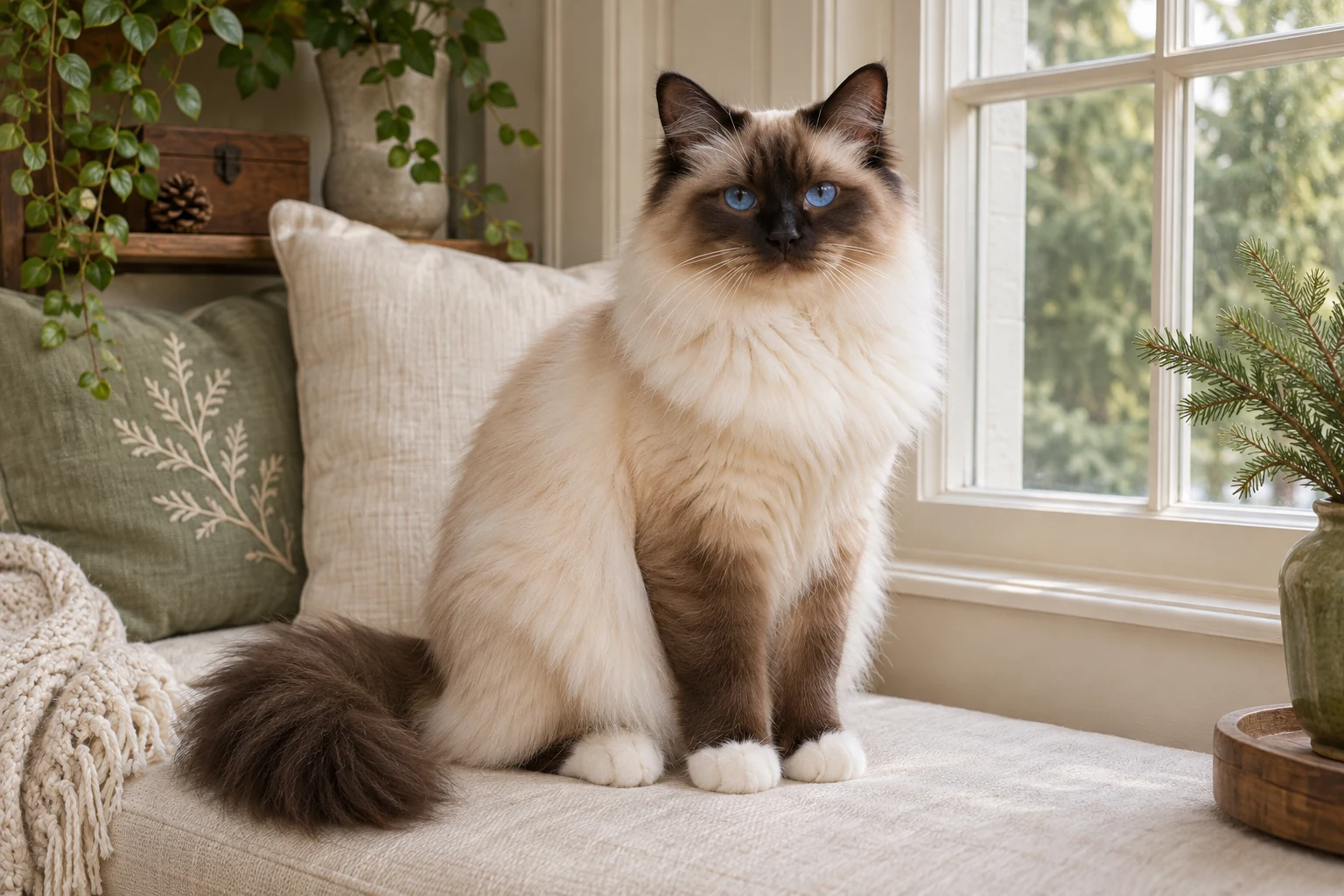
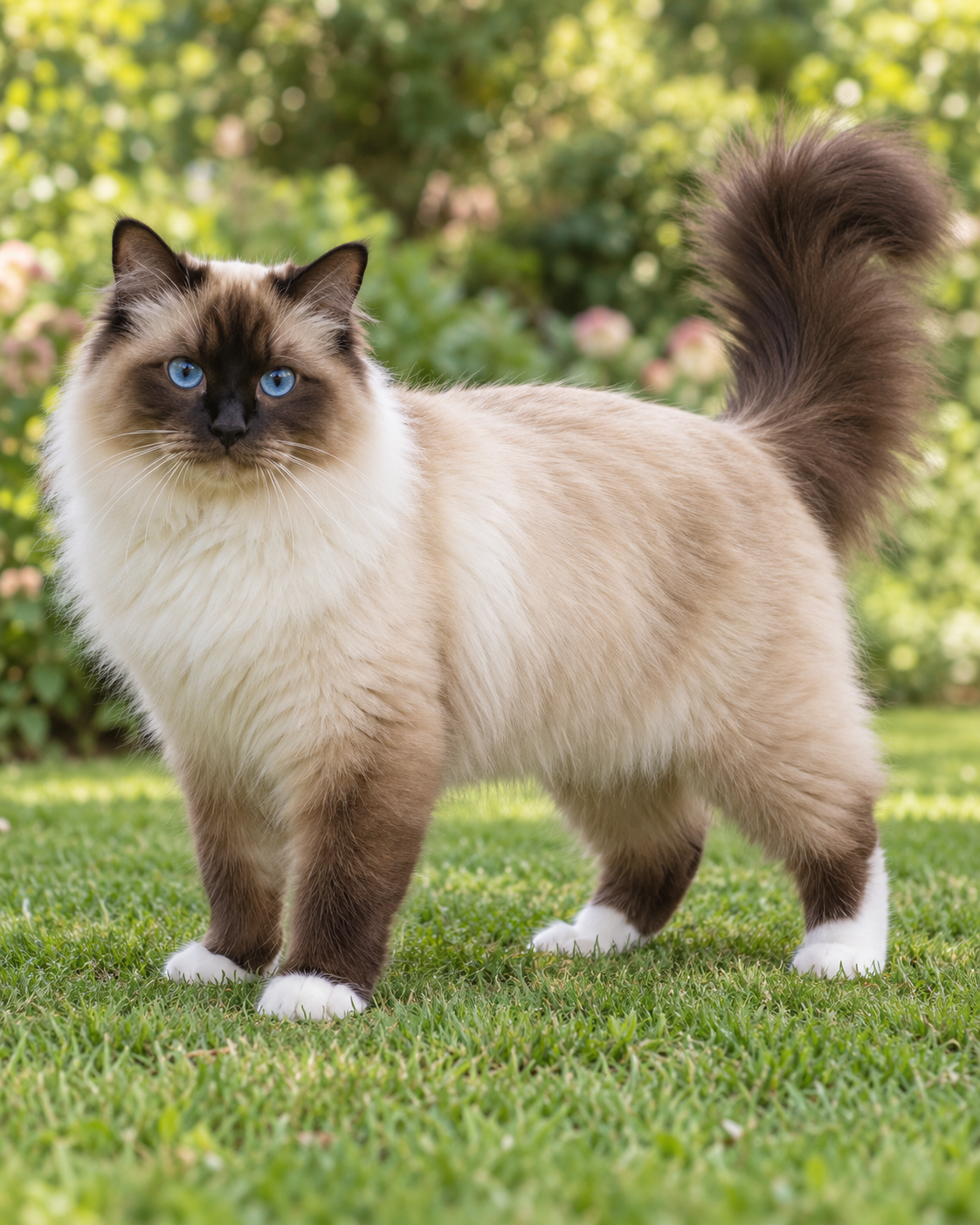
A medium-to-large, pointed cat with white feet, blue eyes and a semilong coat.
- Adult weight
- Female: 6–10 lb; Male: 10–15 lbAdult reference weights; individual animals vary.
- Build
- Medium to large
- Reference lifespan
- 9–15+ years
Life with a Birman
- Company
- Ask how this individual requests contact and how it signals a break.
- Play & enrichment
- Interest in interactive thinking toys and playful chasing.
- Coat care
- Weekly combing and says routine bathing is generally unnecessary.
Regular shedding is part of living with this coat.
Health to keep in mind
Health topics include “Describe the episode without repeating it”. Read the owner observations, questions for your veterinarian and advice on when to seek help. Read the full Health guide.
Rescues & sheltersPrint or citeBreed articles
Read the complete profile and family fact sheet
Life with a Birman
Ask how this individual requests contact and how it signals a break.
Explore home life →Interest in interactive thinking toys and playful chasing.
Explore daily care →Weekly combing and says routine bathing is generally unnecessary.
Explore daily care →Print or cite this breed
Birman family fact sheet
Breed-level references are a starting point. Ask about the individual animal’s routine and care needs.
- Build
- Medium to large
- Female
- 6–10 lb
- Male
- 10–15 lb
- Reference lifespan
- 9–15+ years
- Adult size
- Adult weight often falls around 6 to 15 pounds.
Company
Ask how this individual requests contact and how it signals a break. A people-oriented reputation does not justify holding a cat that wants to leave.
Play & enrichment
Interest in interactive thinking toys and playful chasing. Offer a familiar game, then adjust to the individual’s interest and mobility.
Coat care
Weekly combing and says routine bathing is generally unnecessary.
Everyday responsibilities
Plan food, supplies, routine care and veterinary visits. Agree who handles the everyday jobs and who covers absences.
Adult help
An adult should remain responsible for care, supervise children’s interactions and arrange help when needed.
My Breed Atlas. Birman breed profile. https://mybreedatlas.com/cats/breeds/birman
Read this profile’s sources →Adult ranges and source qualifications
- Build
- Medium to large
- Female
- 6–10 lb
- Male
- 10–15 lb
- Reference lifespan
- 9–15+ years
Reference ranges describe the breed, not a prediction for an individual.
Daily care
Play & enrichment
Interest in interactive thinking toys and playful chasing. Offer a familiar game, then adjust to the individual’s interest and mobility.
More about everyday care
Provide places to retreat, separated resources, chances to play and predictable interaction. These are feline needs, not breed compatibility scores.
Coat, grooming & daily care
Weekly combing and says routine bathing is generally unnecessary.
Training & communication
Reward a behavior the cat chooses with something it values. Build tasks in small steps, including approaching a carrier or a grooming tool. Stop when the cat is frightened, unwell or in pain; ask your veterinarian about cooperative care.
Food, routine & costs
The everyday ownership plan
Planning for this breed
Allow time for weekly combing and regular company. As the cat ages, note changes in movement, responsiveness or reactions to sound and discuss new signs with a veterinarian.
Meals and body condition
Discuss portions and body condition with your veterinarian instead of using the registry weight range as a feeding target. Smaller meals and appropriate food puzzles can support natural feeding behavior. Give each cat a separate feeding station.
Time and costs
Before committing, budget for food, litter, equipment and continuing veterinary care. Agree who handles play, cleaning, grooming and care during absences. Obtain local estimates for the individual’s care instead of relying on an invented breed cost.
Home life
Temperament & companionship
Ask how this individual requests contact and how it signals a break. A people-oriented reputation does not justify holding a cat that wants to leave.
Home life & introductions
Prepare a quiet transition room with food, water, litter, hiding places and scratching options. Introduce resident cats gradually and proceed when both are comfortable. Breed reputation cannot establish compatibility with children, dogs or another cat.
Offer a quiet retreat and let the cat control its distance. Supervise children and introduce resident animals gradually; individual history matters more than a breed reputation.
Personality & care details
Personality & care profile
Breed tendencies vary by individual. Higher means more of the named tendency, not better.
What everyday life tends to involve
These notes describe a tendency for the breed. Every animal is an individual.
- Play
- Several play sessions through the day fit this cat.
- Coat care
- Once a week or less is usually enough brushing.
- Loose hair
- Regular shedding is part of living with this coat.
- Company
- Many like to stay close.
- Adult size
- Adult weight often falls around 6 to 15 pounds.
YOUR EVERYDAY LIFE
How could this breed fit your life?
See household examples or compare this breed with answers you chose to save. The examples show combinations where this breed appeared among the first five results. Other combinations can work too.
Saved matching preferences stay in this browser, never on your account. They expire after 30 days and are removed the next time this feature reads them. Health answers, children’s ages and free-text notes are not saved. This section does not reproduce those personal care notes.
Birman health
Health observations and family records
A recruited study of cats with sound-triggered seizures included Birmans. Owners described brief jerking movements as well as larger seizures after everyday noises. This documents affected cases, not how often the problem occurs in Birmans or an established pattern of inheritance.
Describe the episode without repeating it
If a new jerk, fall or seizure follows a sound, contact the veterinary clinic and explain what happened immediately before it. Note the movement and approximate duration if you can do so safely. Do not recreate a sound to see whether it happens again. An active seizure or collapse needs emergency veterinary help. Contact a veterinarian right away about a first suspected seizure, even if it stops. If a seizure is happening now, another starts, your cat does not recover between episodes, or your cat collapses or has difficulty breathing, contact an emergency vet immediately. Do not delay to record the episode or check the time. If you can clear a nearby hazard safely without delaying the call, do so. Keep hands and objects out of the mouth, do not restrain the cat, and do not replay the sound. Tell the clinic what happened before, during and after, how long it lasted and how your cat recovered. Don't delay care to get footage. Ask what else can look like a seizure, whether a neurologic evaluation would help and what your written emergency plan should say. Keep a record of naturally occurring episodes and recovery, and make a safe floor-level resting space away from fall hazards. Avoid a sound your vet has helped identify as a likely trigger when practical, without testing other sounds. Follow prescribed treatment and ask what to do about a missed dose, a change in pattern or trouble giving medication.
Family history and screening
Tell the veterinarian about earlier episodes and any confirmed diagnoses in relatives. The sound-triggered case series does not establish a screening test for healthy Birmans; a family story alone cannot identify the cause of a current event.
Questions for your veterinarian
- Which details of the episode will help you assess my cat?
- Are there prior examination findings I should request from the previous caregiver?
Choosing a kitten? Ask to see both parents’ results, with the animal’s name and the date on each report. If you’re adopting an adult, ask which records come with that individual.
Health sources
- Primary recruited case series and questionnaire
- Cornell emergency reference
- Exact Birman cases in enrolled affected sample
- ACVIM seizure emergency consensus
- AAFP and ICatCare feline supportive care
Screening evidence and limits
A questionnaire study of 96 cats with sound-triggered seizures included 30 Birmans and described onset mainly in older cats. That selected case series cannot tell us what percentage of all Birmans will be affected, and it did not establish a genetic cause. Report unusual sound-associated jerks or seizures to a veterinarian; do not deliberately provoke an episode.
History & sources
Heritage & appearance
Meet the Birman
Adult ranges are reference examples, not targets or predictions for an individual cat.
Heritage & appearance
Its earliest history is uncertain. CFA recounts arrival of a pair from Burma in France around 1919; temple legends must be labelled as legends rather than documented origin.
More about this breed’s history
Two Birmans in a 1926 French publication
Photographs reproduced from the October 1, 1926 issue of La Vie à la campagne identify Poupée and Manou. French registry LOOF dates the first blue-point Birmans it describes to 1957. (CFA Foundation and the Harrison Weir Collection: Poupée de Madalpour: historical photographs; Livre Officiel des Origines Félines: Le Sacré de Birmanie)
Full breed details
A medium-to-large, pointed cat with white feet, blue eyes and a semilong coat. Moderate activity and a people-oriented disposition.
- Adult build
- Medium to large; substantial bone and semi-long pointed coat
References & editorial notes
Adult-weight sources
Female: 6–10 lb; Male: 10–15 lb
direct: GCCF explicitly gives female 6-10 lb and male 10-15 lb; TICA summary only gives a single 12 lb point for each sex, so it cannot supply complete ranges. French-language search completed; cited weight text is English.
- Using Positive Reinforcement to Train and Support Your Cat
- Making the Commitment to Adopt a Cat
- How to Feed a Cat
- Introducing a New Cat Into Your Home
- Meeting the Physical and Emotional Needs of Indoor Cats
- Birman
- CFA 2026–2027 Breed Standards
- Recognised breeds
- Standing Rules Version C, 3 June 2026, section 701.4.1
- How Do I Know If My Cat Is In Pain?
- Audiogenic reflex seizures in cats (Lowrie et al., online 2015; volume 2016)
- Birman
- Using Positive Reinforcement to Train and Support Your Cat Checked 2026-10-20.
- Making the Commitment to Adopt a Cat Checked 2026-10-20.
- How to Feed a Cat Checked 2026-10-20.
- Introducing a New Cat Into Your Home Checked 2026-10-20.
- Meeting the Physical and Emotional Needs of Indoor Cats Checked 2026-10-20.
- Birman Checked 2026-10-20.
- CFA 2026–2027 Breed Standards Checked 2026-10-20.
- Recognised breeds Checked 2026-10-20.
- Standing Rules Version C, 3 June 2026, section 701.4.1 Checked 2026-10-20.
- How Do I Know If My Cat Is In Pain? Checked 2026-10-20.
- Audiogenic reflex seizures in cats (Lowrie et al., online 2015; volume 2016) Checked 2026-10-20.
- Birman Checked 2026-10-20.
Breeders & rescues
Questions to bring
- Has this cat ever had unexplained jerks or seizures associated with sounds?
- Can the current caregiver demonstrate this individual’s usual grooming and play routine?
- How does this cat signal that it wants to end contact or rest alone?