Birman cat grooming
Plan Birman cat grooming around weekly combing, seasonal loose hair and comfortable handling, with tools suited to the individual coat.
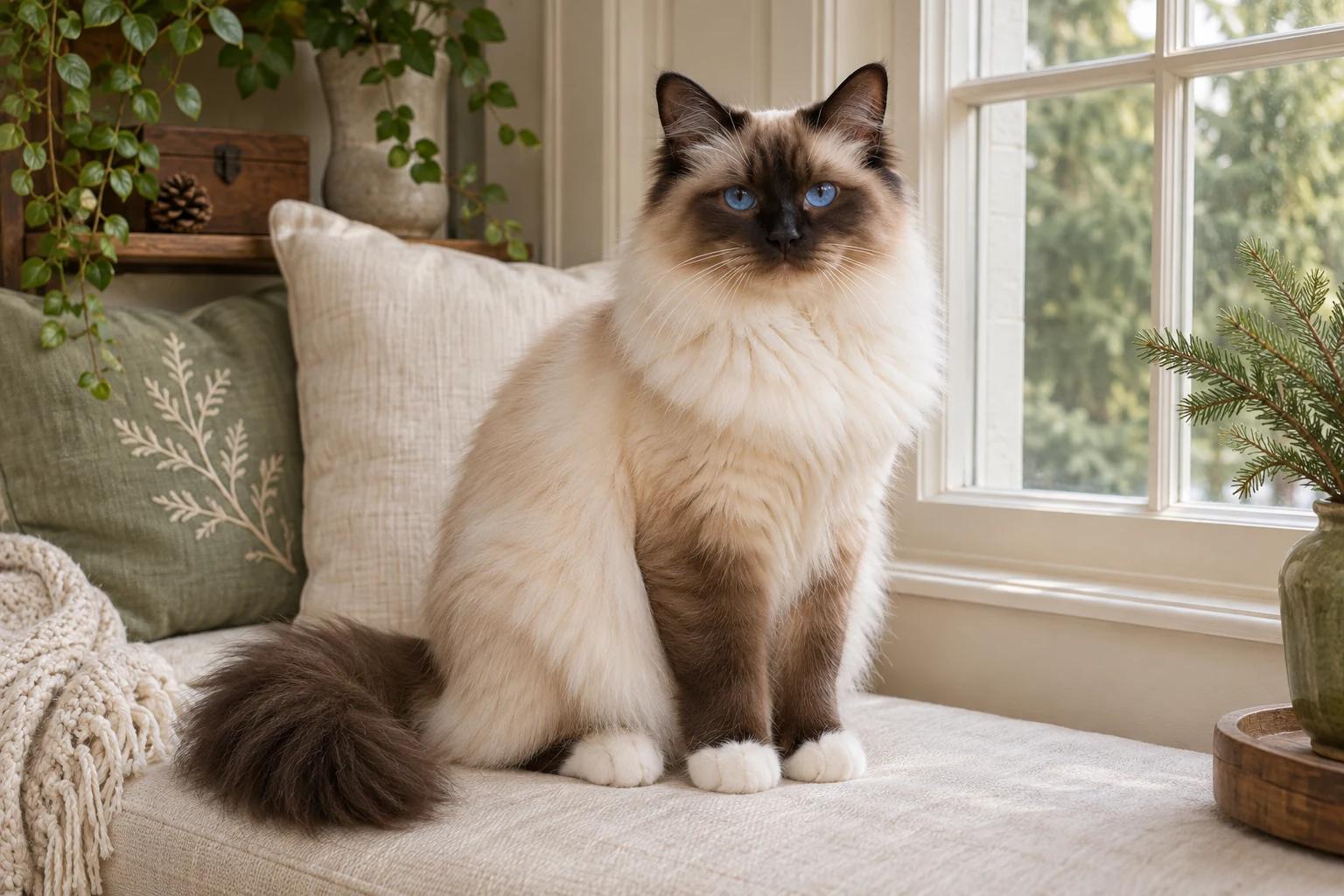
Birman cat grooming usually centers on a comb rather than routine baths. The current Birman profile uses weekly combing as its everyday starting point. That is a practical commitment to the individual cat, not a promise that every coat will remain effortless without attention.
Birman cat grooming: start with the coat you actually have
CFA's Birman description identifies a silky coat without an undercoat and recommends weekly combing. Its standard also describes a fuller neck ruff and slightly curly stomach hair. These are useful distinctions when examining the coat: it is not necessarily identical in length and texture from face to underside.
Most Birmans do not need routine bathing. Avoid turning an attractive coat into a reason to add unnecessary baths to the calendar. If bathing is needed, ask for advice about products appropriate for the individual rather than copying a show preparation routine.
Birman cat coat care should preserve the natural coat rather than recreate the precise outline of a show portrait.
Seasonal loose hair calls for an adjustable routine
GCCF's Birman care account explains that coat thickness varies with seasonal conditions and that the winter coat is shed in spring. More frequent combing may be useful during that change. Weekly is therefore a starting rhythm, not a prohibition on helping more often when loose hair accumulates.
Birman cat shedding does not mean the breed has become a different coat type. The useful question is what the comb is collecting from this cat at this time. Do not judge the entire year's work from one unusually light or unusually productive session.
Think of the extra session as an adjustment to the coat in front of you, rather than a requirement to make each session longer. A changing amount of loose hair also makes comparisons between two owners unreliable unless they are describing similar circumstances. One person may be talking about a seasonal change and another about an ordinary week. Their reports need not be incompatible.
Choose a tool for the job, not for its impressive appearance
VCA's coat-care guidance identifies longer-toothed metal combs as useful for medium and long coats. It emphasizes gentle use without pulling excessively on tangles, and recommends asking the veterinary team which tools suit the particular cat.
For a Birman, that means a comb should let you work through the relevant hair rather than only skim its surface. More teeth, a heavier handle or an aggressive-looking attachment does not automatically make a tool more appropriate. Ask for a demonstration if you cannot tell whether you are reaching through the hair comfortably.
Do not use scissors to cut out a mat. Leave extensive tangling to a professional groomer or veterinarian. A difficult patch is not a challenge to solve through stronger pulling or a closer cut at home. Knowing when to stop is part of knowing how to groom a Birman cat; completing every area in one attempt is not the measure of a successful session.
Make each session comfortable enough to repeat
FelineVMA's grooming tips favor frequent short sessions over occasional long ones. They note that many cats prefer attention around the head and neck to work around the belly, back legs or beneath the tail. The cat's response to one area does not establish permission to work everywhere for the same length of time.
Choose a position that works for both of you. A floor-level arrangement can avoid the need to balance the cat on your lap while trying to reach a different side. The veterinary guidance also suggests rewarding cooperation with something the individual values, which can include attention rather than only food.
For an owner, the important distinction is between a manageable session and a marathon intended to finish the entire job. A predictable, calm experience gives you something you can repeat. If a particular area or position is difficult, seek individualized guidance rather than converting grooming into a test of who can persist longest.
Allow for the actual cat's physical scale
Current adult reference weights are 6–10 pounds for females and 10–15 pounds for males. These describe the breed's range, not the size of a grooming surface. A ten-pound female and ten-pound male can fall within their respective reference bands, yet weight alone still does not tell you how much room either occupies.
If you use a purpose-made platform, check its load limit and usable dimensions separately. A surface can be strong enough but too narrow. Check the space available after any raised sides or accessories are accounted for, rather than relying on the product's external width. The cat's actual body measurements are more useful than the word “large” on a label.
Your own access matters too: consider whether you can reach the intended side without leaning over an obstruction. This is a physical fit question, not a reason to select a smaller Birman or to assume that every female will suit the same arrangement. Use the individual animal as the reference.
Arrival preparation is a separate task covered by the Birman first-night room guide. The cat quiz can help you consider the wider ownership commitment.
FAQ
Does a Birman need a routine bath every week?
A Birman’s weekly combing does not imply weekly bathing; routine baths are generally unnecessary.
Is the weekly combing schedule fixed throughout the year?
A Birman’s seasonal loose hair can make extra combing useful, especially during the spring coat change.
Can the adult weight range tell me a platform's required width?
A Birman’s weight concerns platform load; usable width must fit the actual cat’s dimensions.
Sources behind this article
Article source checked: November 16, 2026. Source checked 2026-11-16
Keep reading

Abyssinian Cat Grooming: Care for the Short Ticked Coat
Read article →