Designer cross
Goldador: Daily care
Daily care
Activity & learning
A brisk outing fits better than a short stroll.
More about everyday care
Active outings with retrieval and learning; allow substantial exercise time.
Coat care
Prioritize daily exercise, training, healthy weight, and review of both parent dogs' joint and eye health records.
More about everyday care
Brush every few days, more during seasonal shedding.
Coat colors & markings
Coat color data is not available in this reference.
Color alone does not establish breed identity, health, or quality. Ask about the dog’s background and care needs.
Training & communication
Usually responsive; practise recall and calm greetings.
Food, routine & costs
The everyday ownership plan
Food & routine
Ask your veterinarian about food appropriate to the dog’s life stage, body condition, and health history. Ask the breeder what the dog currently eats and how to approach any transition. Keep feeding and care records rather than relying on a generic breed portion chart.
Time & budget
Allow for regular care, training, equipment, grooming, veterinary visits, and unexpected costs. Make a plan for workdays, travel, and changes in your schedule. The adult size and coat-care profile above can help you identify practical demands.
Bringing a dog home
Prepare a safe sleeping area and a predictable routine. Arrange veterinary care, agree on household rules, and introduce new situations gradually. Get written information about the dog’s routine, registration where applicable, and ongoing breeder support.
More practical reading
Rescues & sheltersPrint or citeBreed articles
Other profile sections and family fact sheet
Life with a Goldador
Many like to stay close.
Explore home life →A brisk outing fits better than a short stroll.
Explore daily care →Prioritize daily exercise, training, healthy weight, and review of both parent dogs' joint and eye health records.
Explore daily care →Print or cite this breed
Goldador family fact sheet
Breed-level references are a starting point. Ask about the individual animal’s routine and care needs.
- Female
- 60–71 lb
- Male
- 66–84 lb
- Adult height
- 22–24 in (reported typical cross) (Reported)
- Reference lifespan
- 10–12 years (source estimate) (Qualified estimate)
- Coat
- Double, Wavy (Reported)
- Height reference
- Reported
- Original crossbreed weight reference
- Reported
- Lifespan reference
- Qualified estimate
- Coat reference
- Reported
- Adult size
- Female: 60–71 lb; Male: 66–84 lb Adult reference weights; individual animals vary.
Company
Many like to stay close.
Activity & learning
A brisk outing fits better than a short stroll.
Coat care
Prioritize daily exercise, training, healthy weight, and review of both parent dogs' joint and eye health records.
Everyday responsibilities
Plan food, supplies, routine care and veterinary visits. Agree who handles the everyday jobs and who covers absences.
Adult help
An adult should remain responsible for care, supervise children’s interactions and arrange help when needed.
My Breed Atlas. Goldador breed profile. https://mybreedatlas.com/breeds/goldador
Read this profile’s sources →Adult ranges and source qualifications
- Female
- 60–71 lb
- Male
- 66–84 lb
- Adult height
- 22–24 in (reported typical cross) (Reported)
- Reference lifespan
- 10–12 years (source estimate) (Qualified estimate)
- Coat
- Double, Wavy (Reported)
Reference ranges describe the breed, not a prediction for an individual.
Home life
Company
Many like to stay close.
More about everyday care
Affectionate · Social · Responsive
Family life, other dogs & housing
Enjoys family involvement and social introductions; enthusiasm needs supervision.
Always supervise interactions with children and provide a quiet retreat. Apartment suitability involves noise, outdoor access, stairs, time alone, and building rules as well as size. No rating measures the compatibility of a particular pair of dogs or a dog and another species.
Time alone and workdays
Personality & care details
Personality & care profile
These editorial 1–5 summaries include cross-specific descriptions and parent-informed context. They are not validated breed ratings; individual dogs vary. Higher means more of the named tendency.
What everyday life tends to involve
These notes describe a tendency for the breed. Every animal is an individual.
- Activity
- A brisk outing fits better than a short stroll.
- Training
- Daily training games fit the way this breed likes to learn.
- Coat care
- Grooming varies with Labrador-like short coats versus longer Golden-influenced coats.
- Loose hair
- Loose hair is heavy, and heavier when the coat blows.
- Voice
- Barking tends to stay occasional.
- Company
- Many like to stay close.
- Adult size
- Female: 60–71 lb; Male: 66–84 lb
Adult reference weights; individual animals vary.
YOUR EVERYDAY LIFE
How could this breed fit your life?
See household examples or compare this breed with answers you chose to save. The examples show combinations where this breed appeared among the first five results. Other combinations can work too.
Saved matching preferences stay in this browser, never on your account. They expire after 30 days and are removed the next time this feature reads them. Health answers, children’s ages and free-text notes are not saved. This section does not reproduce those personal care notes.
Goldador health
Health observations and family records
Hip dysplasia was documented in a selected Labrador–Golden guide-dog programme. Those programme records do not establish the rate in pet Goldadors or predict what will happen to this individual dog.
Rising or the back-leg stride changes
Arrange an examination for repeated difficulty getting up or a persistent hind-leg limp. Bring the actual previous findings; a breeding-programme result cannot diagnose the present change. If your dog is diagnosed with hip dysplasia, ask what body weight and activity are appropriate now and what signs would prompt a rehab or surgery discussion. Make the usual path to a bed or door less slippery and agree on a comfortable walking routine with the vet. Track one ordinary task, such as getting up after a nap, to see whether it is becoming easier. The guide-dog study concerns selected Labrador–Golden crosses, not the likelihood for an individual pet.
Family history and screening
Ask for separate parental hip and elbow reports, with the animal identity, scheme and written findings. A combined elbow-dysplasia-or-osteoarthritis endpoint cannot be relabelled elbow dysplasia alone.
Questions for your veterinarian
- Which individual findings would help assess this movement change?
- Do these documents report hips and elbows separately?
Choosing a puppy? Ask to see both parents’ results, with the animal’s name and the date on each report. If you’re adopting an adult, ask which records come with that individual.
Other records to discuss. Hip/elbow dysplasia; retinal disease; heart disease; cancers.
Ask for both parents’ hip/elbow scores; discuss eye and cardiac screening.
Breeders supply these documents. My Breed Atlas does not independently verify them. Check the animal’s identity, the date and the actual result.
History & sources
Heritage & appearance
Meet the Goldador
Goldador combines Golden Retriever and Labrador Retriever ancestry. This is a designer cross, not an AKC purebred popularity rank. Purina: Goldador reference. Use the adult-size ranges and behavior tendencies below to understand the practical commitment, then get to know the individual dog and its family history.
Ranges describe the reference population, not a prediction for a puppy. Some sources distinguish male and female sizes. Lifespan ranges are estimates, not guarantees.
- Classification
- Designer cross
- Coat length
- Short, Medium, LongQualified estimate
Heritage & classification
Parent breeds: Golden Retriever × Labrador Retriever. First crosses, backcrosses, and later generations can have different ancestry proportions. Ask for the actual lineage rather than inferring it from appearance or a generation label.
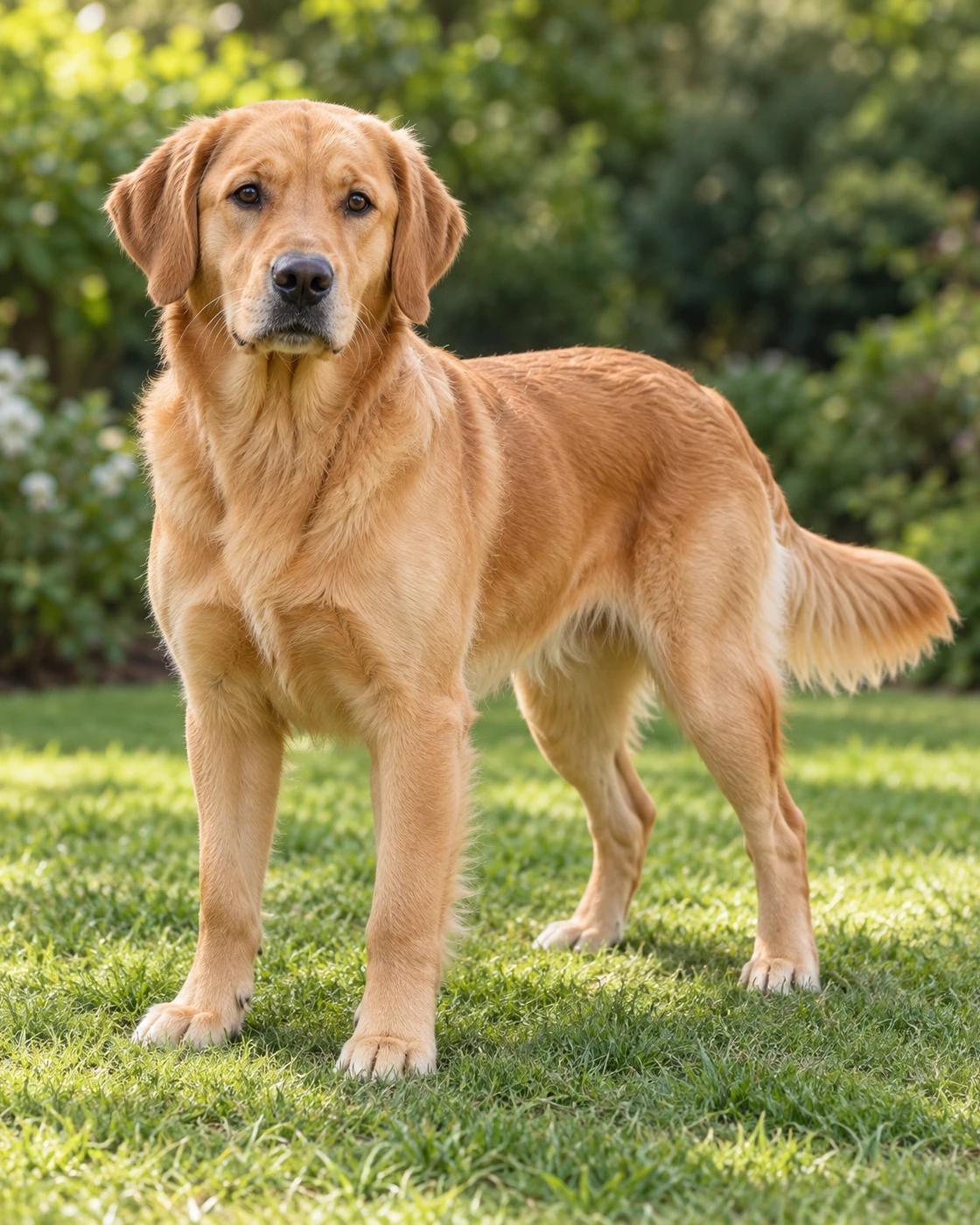
More about this breed’s history
Two retriever crosses in documented guide-dog partnerships
British working records trace these crosses through actual guide-dog partnerships. A study examined records of qualified dogs that retired because of age or stopped working because of behavior between 1994 and 2013. They included Labrador–Golden Retriever crosses. To enter the study, a dog had already finished training and been matched with a person. The charity later documented a particular partnership when Alice qualified with Dora, a yellow Golden Retriever–Labrador cross, in November 2021. (Guide Dogs UK researchers, Scientific Reports: Guide-dog working records, original study PDF; Guide Dogs UK: Alice and guide dog Dora)
Full breed details
- Height reference
- Reported
- Original crossbreed weight reference
- Reported
- Lifespan reference
- Qualified estimate
- Coat reference
- Reported
References & editorial notes
Adult-weight sources
Female: 60–71 lb; Male: 66–84 lb
direct: veterinarian Stuart Fitzgerald MVB describes ideal weights as female 27-32 kg and male 30-38 kg; kg converted and rounded.
Breeders & rescues
Questions for a breeder
- What are the parents like in everyday life?
- How are puppies raised and introduced to new experiences?
- Which screening records can I review?
- What does the contract cover, including return arrangements?
- What support is available after the dog comes home?
Before you meet a dog
- What does the coat-care routine involve?
- How does this dog handle time apart?