Goldador training: greetings, carrying, and attention
Build useful Goldador skills for greetings, object games, equipment, attention, and social learning without relying on ancestry alone.
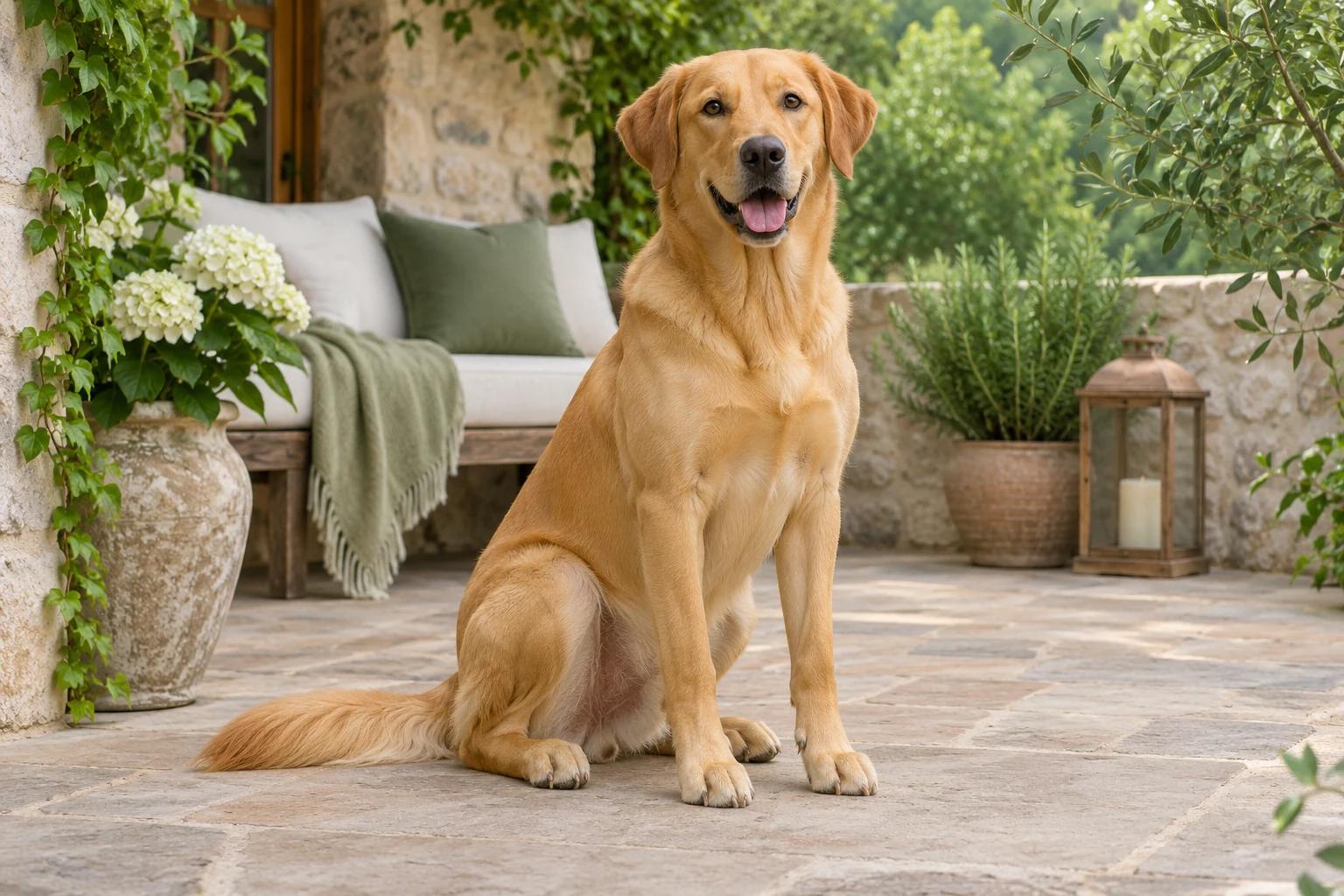
Goldador training is not a matter of waiting for retriever ancestry to produce perfect manners. A dog can be keen to participate and still jump at visitors, carry off a shoe, or pull toward an interesting person. Teach the specific version of participation you want: four feet on the floor, an appropriate object in the mouth, or a return to your side.
The AKC Golden Retriever overview describes a parent breed with working and obedience interests. The UKC Labrador standard describes another willing working retriever. Those are useful parent contexts, not a training guarantee for a Goldador.
Goldador training: turn enthusiasm into clear tasks
Choose one routine where the dog is eager to join in. For example, a household might begin with getting ready for a walk. The useful result is not merely “be calm,” but standing in a chosen area while equipment is fitted and moving through the door without crowding the handler.
Break the routine into steps the dog can recognize. Practice standing in the area before introducing the equipment. Add a brief pause, then a small part of fitting, then the next step. If everything becomes difficult at once, return to an easier piece rather than raising your voice over the excitement.
Use the Goldador profile for context about the cross. Your actual training plan should reflect the individual dog's starting skills, background, and interests. A newly adopted adult may already understand some routines and need help with entirely different ones.
Make greetings a shared human project
If visitors encourage jumping while the household is trying to teach floor-level greetings, the lesson is inconsistent before the dog does anything. Explain the plan to people before they enter. Decide where they will stand, whether interaction is planned, and how you will create distance if the dog becomes too excited.
Begin with a familiar helper who can follow directions. Reward the behavior you want before inviting closer interaction. A separate waiting area can let you answer the door without asking the dog to cope with bags, voices, an opening door, and a greeting simultaneously.
Do not require every visitor to become a training assistant. Some people will not want contact, and some arrivals are too hurried for practice. Management is an acceptable choice for those occasions. Save deliberate lessons for situations you can organize well.
With children present, adults should control the setup and supervise. A social reputation does not establish safety or make excited physical contact harmless.
Give carrying a beginning and an end
For a dog interested in objects, create a game with an appropriate toy rather than allowing household possessions to become the equipment. Decide where the game happens and how it ends. Start with a short, manageable distance and reward returning toward you or releasing the object, depending on the skill you are teaching.
Separate the pieces. Picking up, carrying, returning, and releasing are different actions. If the dog happily carries but avoids coming close, work on the return rather than repeatedly throwing farther. If releasing is difficult, ask a trainer to help establish an exchange without force.
Keep tempting personal items out of reach while the useful habits develop. Chasing a dog through the house for a sock can become a repeated household pattern even when nobody intended to teach it. Prevention gives you room to practice the alternative calmly.
Stop and seek qualified help if possession leads to stiffening, growling, or conflict. Suspected swallowing of an unsafe object is a veterinary matter, not a cue-training problem.
Teach attention without demanding constant attention
Goldador obedience should include the ability to reconnect with a handler, not an expectation that the dog stare at a person throughout every walk. Practice a brief response to the name in an easy place, reward it, and allow the dog to return to an appropriate activity.
During an outing, select moments when success is plausible. If the dog is already rushing toward a distraction, increase space and simplify the situation. It is easier to teach a small response at a manageable distance than to compete with the most exciting event available.
Keep leash walking distinct from formal heelwork. Your household may need a comfortable shared pace with room to investigate, not competition precision. Decide what leash length, stopping behavior, and passing routine you are teaching so different caregivers use the same expectations.
Socialization includes doing nothing nearby
Goldador socialization is not complete because a dog likes meeting people. Familiarity with traffic, different surfaces, waiting, grooming equipment, and quiet observation also matters. Choose experiences that suit the dog's age and history, with veterinary guidance on puppy health precautions.
A useful exercise might be watching a mildly busy area from enough distance to remain comfortable, then leaving before the outing becomes overwhelming. Another might be spending a brief quiet period while a familiar person handles an ordinary household task.
Do not keep moving closer just because a greeting is possible. Comfortable neutrality is a useful outcome. If the dog avoids a situation, investigate how to make the experience easier instead of treating its crossbreed label as proof it should enjoy everything.
Review the lesson, not the label
VCA's designer-dog discussion cautions that crossbreeding does not fix the outcome of every trait. When a lesson goes poorly, examine the reward, surroundings, timing, and difficulty before deciding the dog is behaving unlike a “typical” Goldador.
Keep one brief note after practice: what worked and what you will simplify next time. Our Goldador coat story addresses appearance, not a personality test. For people still deciding on a dog, the breed quiz can help clarify whether the daily training commitment fits their routine.
FAQ
How to train a Goldador to greet politely?
Use a cooperative helper, a planned greeting area, and rewards for the behavior you want before closer interaction. Keep unexpected arrivals manageable with distance or a separate space. Do not rely on visitors to improvise consistent rules.
Does retriever ancestry make training automatic?
No. Parent-breed descriptions provide background, but the individual dog still needs clear teaching and practice. Work on observable tasks rather than expecting an inherited understanding of household manners.
Should every Goldador play fetch?
No. Choose activities the individual enjoys and can perform appropriately. If you use retrieving games, teach returning and releasing as separate skills and avoid assuming that interest in carrying means the whole sequence is already learned.
What if my Goldador is nervous around strangers?
Give the dog space and avoid forced greetings. Arrange easier experiences with help from a qualified reward-based professional, and involve your veterinarian when fear is persistent, severe, or accompanied by a sudden behavior change.
Sources behind this article
Article source checked: November 15, 2026. Source checked 2026-11-15
Keep reading

Affenpinscher Training: Build Useful Everyday Habits
Read article →