Goldador size: adult estimates and practical planning
Understand reported Goldador size, parent information, actual measurements, and equipment planning without treating estimates as promises.
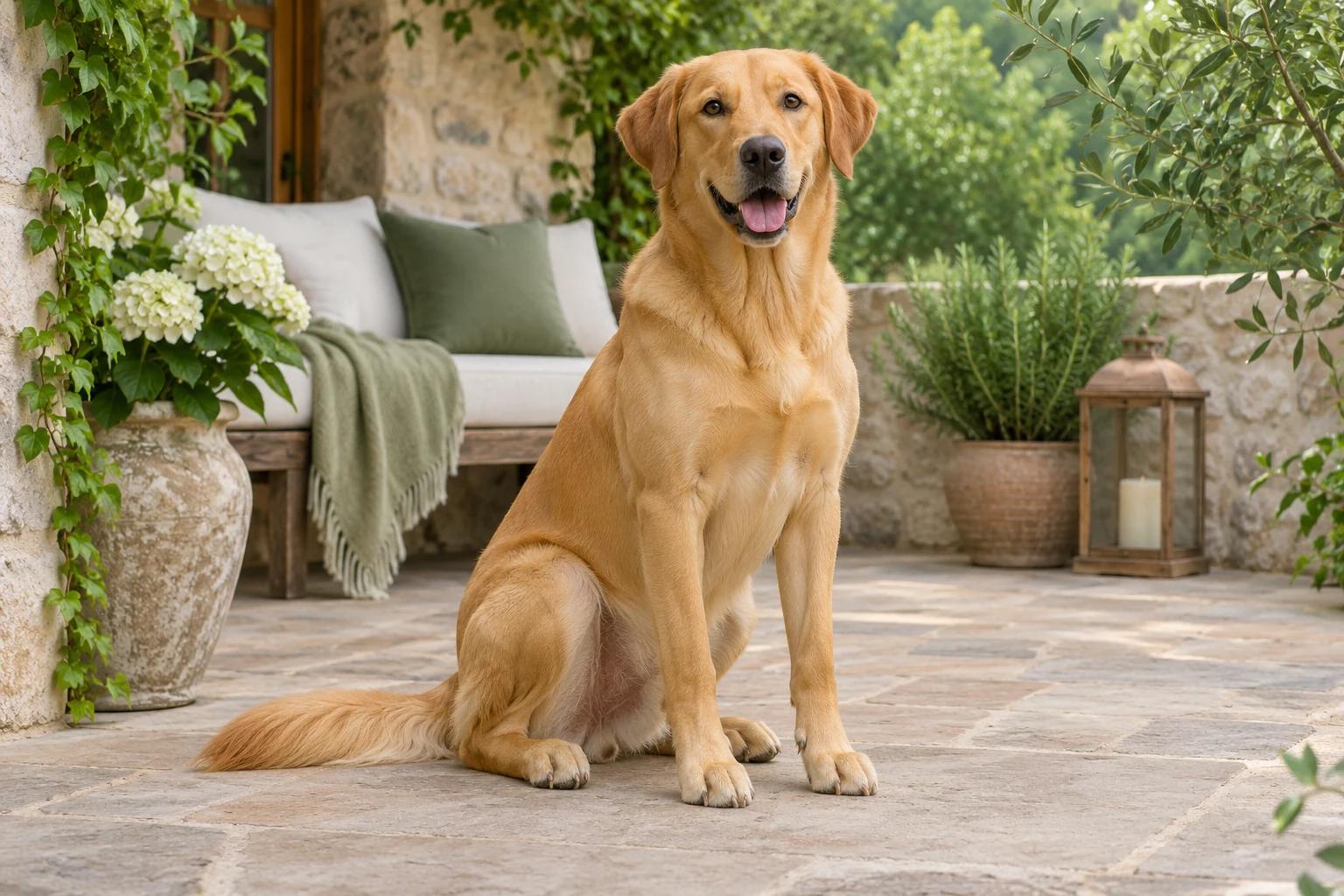
Goldador size is an estimate to plan around, not a fixed specification. The name describes Golden Retriever and Labrador Retriever ancestry. Our Goldador profile reports a typical adult range of 22–24 inches and 60–84 pounds, explicitly as a reported crossbreed range rather than a standard or a promised outcome for a puppy.
For a household decision, the more useful question is often what size uncertainty means for your car, sleeping area, equipment, and everyday handling. An adult dog's actual measurements answer those questions more directly than a label does.
Goldador size: separate the estimate from the evidence
VCA's designer-dog overview identifies the Goldador parent combination and explains that crossing breeds does not produce uniform results. Treat an advertised size estimate as a claim to investigate, not as a measurement that has already happened.
Ask what the estimate is based on. Are both parents known? Were their adult weights measured or guessed? Are there records from older relatives? Is the dog a puppy still growing or an adult whose dimensions can be checked now? Put those answers beside the estimate rather than blending everything into one confident number.
A useful record distinguishes “measured,” “reported by the caregiver,” and “estimated.” That distinction becomes important when equipment must fit or housing rules contain a size limit. An attractive photograph and a precise-looking chart cannot replace the missing evidence.
Parent information is context, not a formula
The UKC Labrador Retriever standard describes the Labrador as a powerfully built working dog. It describes a parent breed, not a Goldador population. Neither averaging two breed descriptions nor choosing the smaller parent gives you a reliable adult-size calculation for a particular cross.
When asking about the parents, request ordinary details that help you understand the animals: their actual adult measurements, age when weighed, and whether the information refers to the identified parents. A generic photograph of a Labrador does not answer those questions.
Avoid treating sex, paw size, or a puppy's position within the litter as an exact forecast. Those observations may be part of a broader discussion with the breeder and veterinarian, but they do not justify a guaranteed final number. If a narrow adult-size band is essential to your circumstances, consider whether an already mature dog would give you clearer information.
Use height, length, and weight for different jobs
Goldador height is commonly discussed at the shoulder, not at the top of the head. For practical equipment choices, however, one height measurement will rarely answer everything. A dog must fit through an opening, rest comfortably, turn where appropriate, and use the product as intended.
Follow the manufacturer's measuring instructions for the specific item. A harness chart may ask for chest and neck measurements; a travel product may use another combination. Do not substitute the size name “large” from one brand for the measurements requested by another.
Goldador weight has different uses. It matters when checking a product's stated load limit, planning how the dog will be handled, and keeping records for veterinary care. Weight alone does not tell you body length or chest shape, and it is not a reason to force a dog into equipment that visibly fits poorly.
Keep measurements dated. For a growing dog, an old harness entry can remain neatly written in your notes long after it has stopped being useful.
Walk through the home with a tape measure
Start with the sleeping space. Measure the actual available floor area after doors, drawers, and furniture are used normally. A bed that technically fits in a corner may block a cupboard or sit in the busiest route through the room.
Then consider the route outdoors. Can people and dog pass comfortably through the entrance together? Where will you fit equipment without blocking other residents? Is there a place to dry a wet dog that does not require squeezing between furniture?
Check the car separately. Measure the intended travel area and opening, then consult the requirements of the restraint or travel setup you intend to use. Do not assume an empty cargo-space volume tells you whether the dog and equipment will fit comfortably through the door.
These are planning exercises rather than breed requirements. They help translate a broad adult-size expectation into decisions you can actually make before buying equipment or rearranging rooms.
Budget for adjustment while the dog grows
Avoid buying every long-term item around an exact puppy forecast. Where appropriate, choose equipment that can be adjusted according to its instructions, and schedule fit checks rather than waiting for obvious difficulty. Keep receipts and return information for purchases whose fit remains uncertain.
A simple equipment log can list the item, present measurements, date checked, and next reason to reassess. For example, difficulty fastening a harness or a change in the dog's proportions should prompt a new fitting check, not an attempt to preserve the original purchase at all costs.
Ask your veterinarian about growth and body condition. Do not aim to make a puppy reach an online target weight or alter feeding to match an advertised adult range. Size planning is about accommodating the dog, not making the dog fit a forecast.
Look beyond the silhouette
A long coat can change the impression a photograph gives without changing the dog's measured frame. Our Goldador coat article explores a documented example of appearance variation. Keep that separate from your size record.
If you are choosing between possible dogs, use the breed quiz to organize lifestyle priorities, then compare actual handling and space needs. The right question is not simply whether a Goldador is called large. It is whether you can accommodate this individual through the ordinary routines and foreseeable changes of your life.
FAQ
How big do goldadors get?
The My Breed Atlas profile reports a typical adult range of 22–24 inches and 60–84 pounds, not a guaranteed limit. Ask for the individual dog's measurements or the evidence behind a puppy estimate, and plan for uncertainty.
Can I average the parents' weights to predict a Goldador?
An average is not a dependable individual forecast. Parent measurements provide useful background, but a crossbreed puppy does not come with a formula fixing its adult weight. Discuss growth expectations with the breeder and veterinarian.
What measurements matter for a Goldador harness?
Use the specific manufacturer's instructions, which may request chest and neck measurements. Check the fit on the actual dog and reassess during growth. A weight range or the word “large” alone is not enough.
Is an adult Goldador easier to size for equipment?
An adult gives you current measurements rather than a puppy's future estimate. You still need to fit each item correctly, check its instructions, and reassess if the dog's condition or the equipment changes.
Sources behind this article
Article source checked: November 15, 2026. Source checked 2026-11-15
Keep reading
Goldador temperament: getting to know the individual
Read article →