Designer cross
Cockapoo: Health
Cockapoo health
Health observations and family records
A UK survey collected Cockapoo owners’ health reports, which are different from clinically confirmed diagnoses. For this review, parental hip records and the individual dog’s changing movement are the useful focus, without claiming an increased Cockapoo hip-disease rate.
An available test is different from a recommendation to use it. Ask which records are relevant to this individual; neither a test listing nor a screening recommendation tells you how often illness occurs.
Compare a new limp with ordinary movement
Arrange an examination if a limp or stiffness keeps returning. Explain when it started and whether rising after rest has changed. Do not use a parental screening result as the explanation for today’s discomfort.
Ear-canal inflammation that comes back
Otitis externa is inflammation in the outer ear canal. Infection can complicate it, but an itchy or sore ear can have several causes. UK primary-care records documented it more often in dogs recorded as Cockapoos than in general crossbreeds. That's direct evidence about the Cockapoo label in that setting, not proof that a particular parent or coat causes it. New head shaking, ear scratching, odor or discharge are worth a call. If the ear is painful to touch or your dog is scratching it raw, call promptly. Don't force a painful ear open or try a product you used for a previous episode. Tell the vet which ear is affected, when it started and whether you've seen the same pattern before. Ask: “Can you look inside and check a sample? If this keeps coming back, should we investigate a trigger such as skin allergies? How will we know it has cleared?” Follow the clinic's plan and return for any recommended recheck, even if the ear stops smelling. Ask the team to show you how and when to use any cleaner they choose for this dog. Keep track of recurrence and tell the clinic if shaking, odor or discomfort returns. Don't put cotton swabs deep into the canal or restart old drops on your own.
Family history and screening
Ask to see any existing parental hip reports, including the scheme, date and dog’s identity. If a relative reportedly had hip dysplasia, distinguish a confirmed diagnosis from an owner’s description of stiffness.
Questions for your veterinarian
- Which written findings would help us assess the current change?
- What does the parental report leave unassessed in this individual?
Choosing a puppy? Ask to see both parents’ results, with the animal’s name and the date on each report. If you’re adopting an adult, ask which records come with that individual.
Other records to discuss. Cataracts; glaucoma; retinal disease; hip dysplasia; obesity.
Review parent eye and joint records with your veterinarian.
Breeders supply these documents. My Breed Atlas does not independently verify them. Check the animal’s identity, the date and the actual result.
More from My Breed Atlas
Rescues & sheltersPrint or citeBreed articles
Other profile sections and family fact sheet
Life with a Cockapoo
Many like to stay close.
Explore home life →About an hour of active time fits the described day.
Explore daily care →Regular walks and play can support an everyday routine.
Explore daily care →Print or cite this breed
Cockapoo family fact sheet
Breed-level references are a starting point. Ask about the individual animal’s routine and care needs.
- Female
- 15–22 lb
- Male
- 15–22 lb
- Adult height
- 10–18 in (typical; parent varieties vary) (Reported)
- Reference lifespan
- 12–15 years (Qualified estimate)
- Coat
- Wavy, Curly (Reported)
- Height reference
- Reported
- Original crossbreed weight reference
- Reported
- Lifespan reference
- Qualified estimate
- Coat reference
- Reported
- Adult size
- Female: 15–22 lb; Male: 15–22 lb Some published weights are estimates. Check the source notes; individual animals vary.
Company
Many like to stay close.
Activity & learning
About an hour of active time fits the described day.
Coat care
Regular walks and play can support an everyday routine. Grooming is a meaningful commitment even when exercise needs are moderate.
Everyday responsibilities
Plan food, supplies, routine care and veterinary visits. Agree who handles the everyday jobs and who covers absences.
Adult help
An adult should remain responsible for care, supervise children’s interactions and arrange help when needed.
My Breed Atlas. Cockapoo breed profile. https://mybreedatlas.com/breeds/cockapoo
Read this profile’s sources →Adult ranges and source qualifications
- Female
- 15–22 lb
- Male
- 15–22 lb
- Adult height
- 10–18 in (typical; parent varieties vary) (Reported)
- Reference lifespan
- 12–15 years (Qualified estimate)
- Coat
- Wavy, Curly (Reported)
Reference ranges describe the breed, not a prediction for an individual.
Daily care
Activity & learning
About an hour of active time fits the described day.
More about everyday care
Walks, play and mental activities; individuals can be quite active.
Coat care
Regular walks and play can support an everyday routine. Grooming is a meaningful commitment even when exercise needs are moderate.
More about everyday care
Brush between professional grooming appointments, typically every 4–6 weeks.
Coat colors & markings
Coat color data is not available in this reference.
Color alone does not establish breed identity, health, or quality. Ask about the dog’s background and care needs.
Training & communication
Often eager to learn with rewards and short sessions.
Food, routine & costs
The everyday ownership plan
Food & routine
Ask your veterinarian about food appropriate to the dog’s life stage, body condition, and health history. Ask the breeder what the dog currently eats and how to approach any transition. Keep feeding and care records rather than relying on a generic breed portion chart.
Time & budget
Allow for regular care, training, equipment, grooming, veterinary visits, and unexpected costs. Make a plan for workdays, travel, and changes in your schedule. The adult size and coat-care profile above can help you identify practical demands.
Bringing a dog home
Prepare a safe sleeping area and a predictable routine. Arrange veterinary care, agree on household rules, and introduce new situations gradually. Get written information about the dog’s routine, registration where applicable, and ongoing breeder support.
Home life
Company
Many like to stay close.
More about everyday care
Friendly · Curious · Playful
Family life, other dogs & housing
People-oriented; prolonged isolation can be difficult.
Always supervise interactions with children and provide a quiet retreat. Apartment suitability involves noise, outdoor access, stairs, time alone, and building rules as well as size. No rating measures the compatibility of a particular pair of dogs or a dog and another species.
Time alone and workdays
Personality & care details
Personality & care profile
These editorial 1–5 summaries include cross-specific descriptions and parent-informed context. They are not validated breed ratings; individual dogs vary. Higher means more of the named tendency.
What everyday life tends to involve
These notes describe a tendency for the breed. Every animal is an individual.
- Activity
- About an hour of active time fits the described day.
- Training
- Training games, puzzles, or a sport give this breed the mental work it wants.
- Coat care
- A brush once or twice a week is the usual coat plan. Regular haircuts are part of that plan.
- Loose hair
- Loose hair tends to stay very light.
- Voice
- Some barking through the day is typical.
- Company
- Many like to stay close.
- Adult size
- Female: 15–22 lb; Male: 15–22 lb
Some published weights are estimates. Check the source notes; individual animals vary.
- Time alone
- Long stretches alone are a poor fit. They want company nearby. Being apart can be hard, because they want their people.
- Health note
- Ear checks can be part of regular care. How often depends on the individual.
YOUR EVERYDAY LIFE
How could this breed fit your life?
See household examples or compare this breed with answers you chose to save. The examples show combinations where this breed appeared among the first five results. Other combinations can work too.
Saved matching preferences stay in this browser, never on your account. They expire after 30 days and are removed the next time this feature reads them. Health answers, children’s ages and free-text notes are not saved. This section does not reproduce those personal care notes.
History & sources
Heritage & appearance
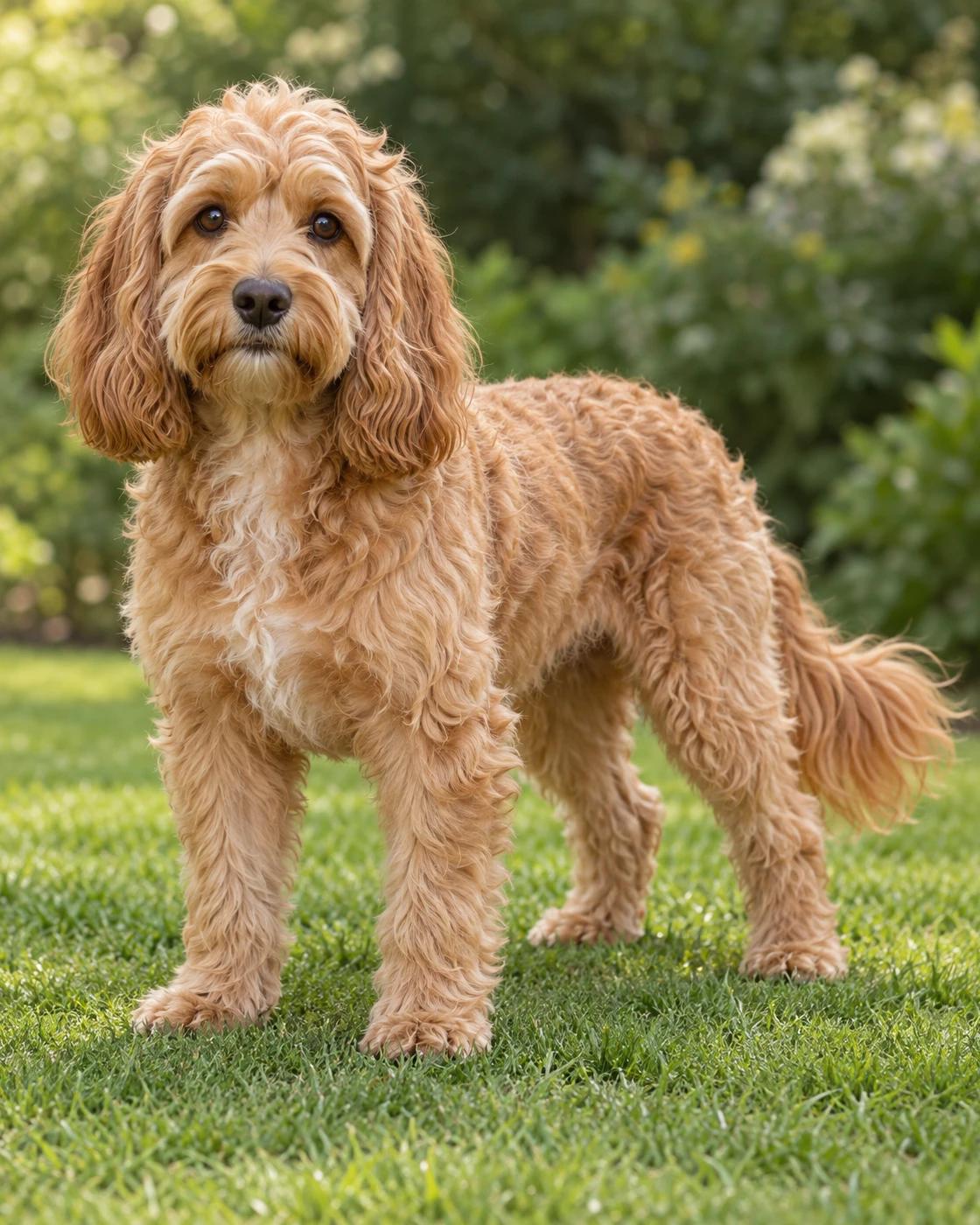
Meet the Cockapoo
Cockapoo combines Cocker Spaniel and Poodle ancestry. This is a designer cross, not an AKC purebred popularity rank. PetMD: Cockapoo reference. Use the adult-size ranges and behavior tendencies below to understand the practical commitment, then get to know the individual dog and its family history.
Ranges describe the reference population, not a prediction for a puppy. Some sources distinguish male and female sizes. Lifespan ranges are estimates, not guarantees.
- Classification
- Designer cross
- Coat length
- VariableQualified estimate
Heritage & classification
Parent breeds: Cocker Spaniel × Poodle. First crosses, backcrosses, and later generations can have different ancestry proportions. Ask for the actual lineage rather than inferring it from appearance or a generation label.
More about this breed’s history
UK veterinary records and different Cocker family lines
The Cockapoo was already a familiar name in UK veterinary records by 2019. Participating UK veterinary practices had 229,624 dogs under a year old in their care that year. They recorded 14,321 as Cockapoos, about six in every hundred. Even within that one name, families had different histories. The British club describes crosses involving American Cocker Spaniels as well as English Cockers from show or working lines. The English lines share a studbook. (O’Neill et al., PLOS ONE: 2019 VetCompass canine demography, printable original; Cockapoo Club of GB: What is a Cockapoo?)
Full breed details
- Height reference
- Reported
- Original crossbreed weight reference
- Reported
- Lifespan reference
- Qualified estimate
- Coat reference
- Reported
References & editorial notes
Adult-weight sources
Female: 15–22 lb; Male: 15–22 lb
educated: field-matched search found veterinary typical combined 15-22 lb versus Embark 12-24 lb; use the middle 15-22 lb interval for each sex; parent size can produce smaller/larger dogs.
Breeders & rescues
Questions for a breeder
- What are the parents like in everyday life?
- How are puppies raised and introduced to new experiences?
- Which screening records can I review?
- What does the contract cover, including return arrangements?
- What support is available after the dog comes home?
Before you meet a dog
- What does the coat-care routine involve?
- How does this dog handle time apart?