Cockapoo Size: Parent Context, Measurements, and Fit
Understand Cockapoo size labels, parent varieties, measurement records, and practical equipment choices without puppy-size promises.
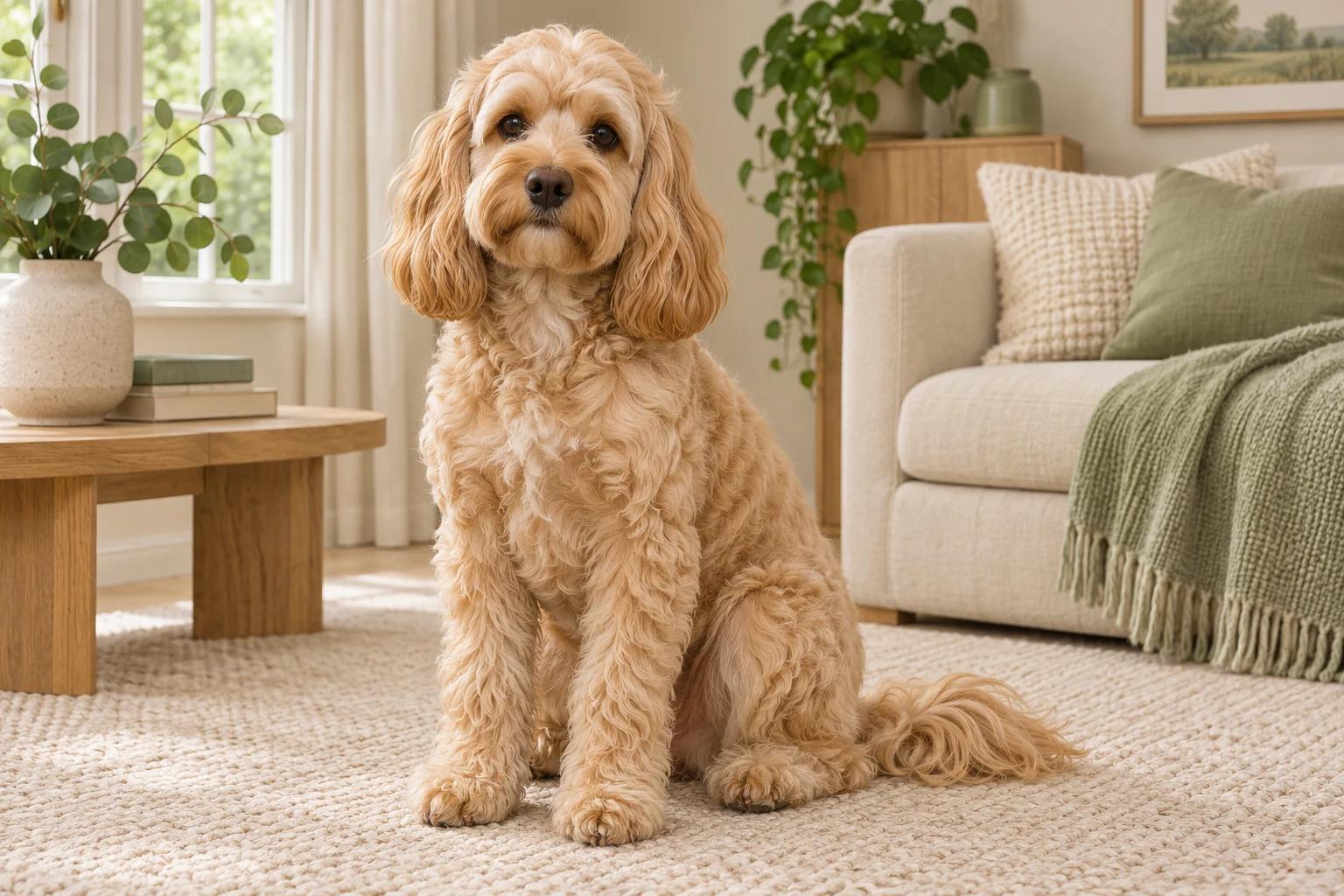
Cockapoo size is better approached as a question about ancestry and the individual dog than as a single fixed category. The name covers Cocker Spaniel and Poodle crosses with different parent backgrounds. Before ordering a carrier or accepting a promise about an adult puppy's dimensions, find out what the description is based on and which measurements you actually need.
Cockapoo size: what a published range means
VCA's Cockapoo page gives a height range of 10–18 inches. That is a published reference description, not a boundary every dog must satisfy. The My Breed Atlas profile similarly labels its height information as reported and notes that parent varieties vary. Treat the range as an initial sense of scale, then investigate the particular dog.
The AKC Poodle introduction identifies Standard, Miniature, and Toy varieties. That matters as parent context, not as three automatically transferable Cockapoo categories. Ask which Poodle variety is involved and what is known about the actual parents. A label on a puppy advertisement does not replace that information.
So, how big do Cockapoos get? There is no single size promised by the cross name. An adult's present measurements are the clearest practical answer for that dog. For a puppy, use documented family information and current growth records as context while allowing for uncertainty in your purchasing and housing plans.
Ask what a size label refers to
If a listing says mini, toy, or standard, ask the writer to define the term. Is it describing the Poodle parent, a breeder's expected adult height, or a category used by a particular organization? Those answers are not interchangeable. Get the explanation before treating the label as a specification.
Ask for the parents' measured heights and weights, with dates where available. Find out whether the Cocker ancestry is American or English, and whether the pairing is a first cross or involves Cockapoo ancestry in later generations. These details improve the description of the family; they do not create an exact arithmetic forecast.
Do not average two parental weights and present the result as the puppy's adult destination. Similarly, an older sibling can show one outcome without proving every later puppy will match it. If fitting a strict external limit is essential, uncertainty itself needs to be part of your decision.
Height, weight, and circumference answer different questions
Cockapoo height is measured at the shoulder. It does not include the head or the visual volume of a fluffy hairstyle. For an approximate home record, have the dog stand naturally on a level surface beside a measuring reference. Avoid stretching or repositioning the dog to reach an expected number.
Cockapoo weight needs an actual scale measurement. Record the date and discuss its meaning with a veterinarian when you have questions about growth or body condition. Looking larger after a grooming change or smaller after a trim is not the same as gaining or losing body weight.
Neither measurement tells you the complete harness fit. Follow the product's instructions for neck and chest measurements, and record where the tape was placed. A broad coat outline can obscure the body underneath, so ask a fitter for help if you cannot confidently assess the adjustment on the dog.
Buy the first essentials, not a lifetime wardrobe
For a growing puppy, choose equipment you can fit correctly now and recheck regularly. Adjustable items may give useful flexibility, but do not use oversized equipment on the assumption that the puppy will grow into it. Fit must work during today's outing, not just in a hoped-for future month.
Keep a dated measurement note on your phone or in the dog's records. Include the equipment model and the setting you checked. When someone else buys a replacement, they will have more useful information than “small Cockapoo,” a phrase that may mean something different to each retailer.
Resist ordering several coats, harnesses, and carriers around a predicted adult size. Start with necessary items, learn the dog's proportions, and expand only when you know what works. This is a budget decision as much as a fitting decision: uncertainty is easier to manage when you have not committed every purchase to one guess.
Match beds and transport to usable space
Observe how an adult dog rests before choosing a bed. A dog that stretches sideways needs a different usable shape from one that usually curls tightly. Measure the inside sleeping area rather than the outside dimensions of decorative bolsters. Check whether the cover can be removed without dismantling your entire corner of the room.
A transport enclosure must fit the actual dog and the intended transport arrangement. Compare interior dimensions and manufacturer guidance, and allow the dog to stand, turn, and lie comfortably. A product's weight rating alone does not establish enough headroom or room to turn.
If a travel provider sets limits, check its current requirements directly before booking. Some restrictions concern the carrier as well as the dog. A claim that a puppy is a toy Cockapoo cannot establish future eligibility, and a compact coat trim cannot solve an enclosure that is too small for the body.
Plan the household around more than dimensions
Size influences where equipment fits, but it does not tell you how much companionship, teaching, or coat care your Cockapoo will need. Leave space for a grooming area and a resting place away from the busiest route through the home. Think about how the dog will enter after an outing and where wet equipment will go.
If you are comparing two adult dogs, compare their measured dimensions alongside their actual routines. A slightly smaller dog is not necessarily the one with a simpler care plan. Ask the carer to demonstrate walking equipment and describe ordinary handling, rather than deciding from a height chart alone.
The breed match quiz can help place size beside those other commitments. Our article on evaluating Cockapoo health claims addresses a different question about evidence. Keep the topics separate: body dimensions are useful for fitting and logistics, not a health rating.
FAQ
Is there one standard adult Cockapoo size?
No single size is promised by the cross name. Published descriptions can provide context, but parent varieties and individual outcomes differ. Measure an adult directly and treat a puppy's expected size as uncertain.
Does a miniature Poodle parent guarantee a miniature adult Cockapoo?
The parent variety is useful background, not an exact adult-size guarantee. Ask for the actual parents' measurements and the meaning of any size label used in the listing. Do not substitute a label for documented information.
Can I estimate adult size by doubling a puppy's weight?
A generic multiplication rule should not drive equipment or housing decisions. Keep dated growth records and discuss growth questions with a veterinarian. Plan for replacement equipment instead of relying on one calculated adult prediction.
Sources behind this article
Article source checked: November 15, 2026. Source checked 2026-11-15
Keep reading

Airedale Terrier Temperament: What Everyday Life Can Feel Like
Read article →