Whippet training
Build Whippet training around clear rewards, comfortable lead walking, simple tricks and realistic expectations for everyday learning.
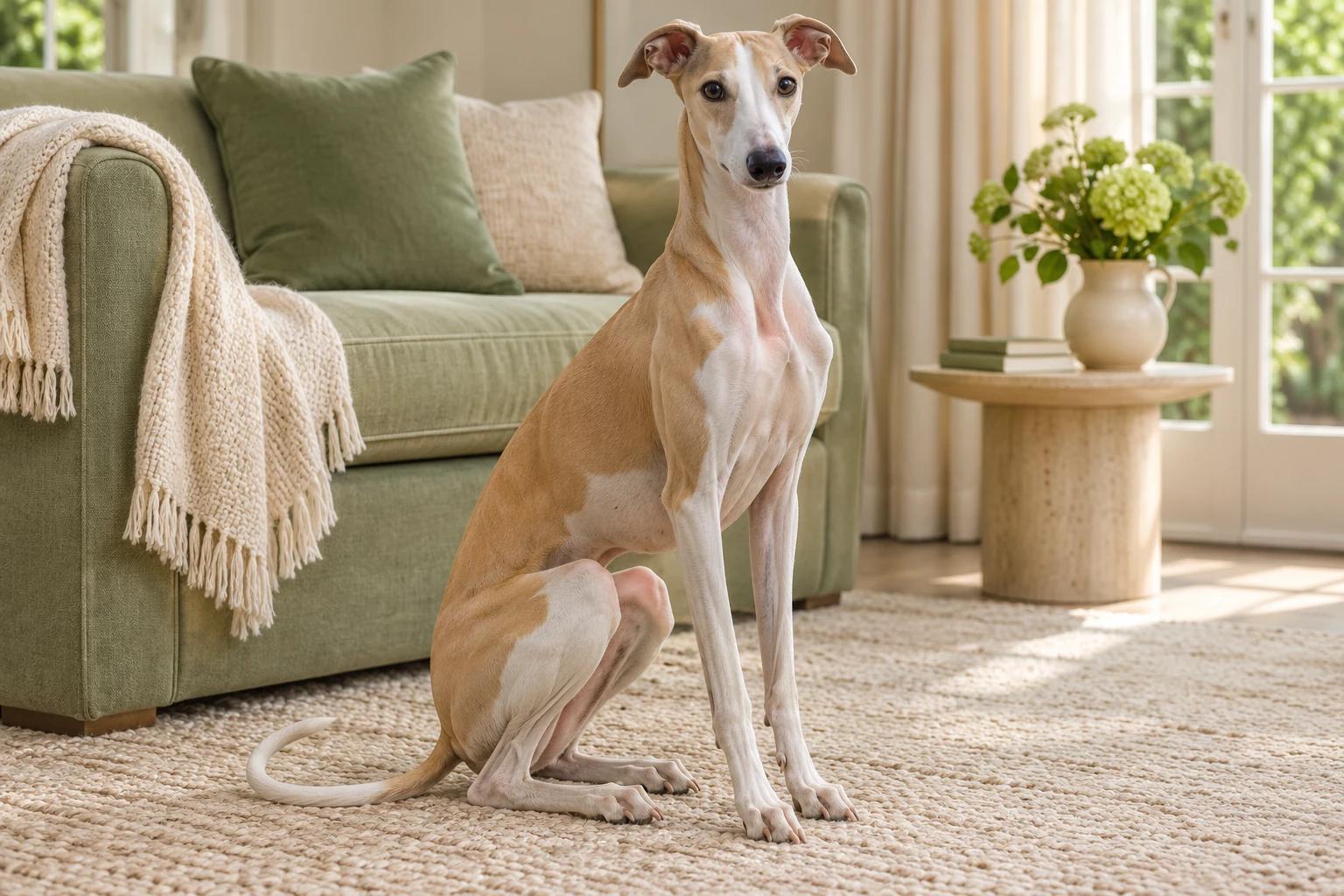
Whippet training is an everyday part of companionship, not something reserved for the show ring. The current Whippet profile places learning alongside activity and shared time. Begin with a skill you can describe clearly, then distinguish what the dog already understands from what you are introducing for the first time.
Whippet training can include obedience and rally
The American Whippet Club's obedience and rally guide emphasizes positive reinforcement and finding an instructor familiar with breeds that are less commonly seen in obedience. It identifies enjoyment of praise and food rewards, confidence and willingness to work as relevant qualities, rather than assuming one particular breeding background is essential.
Rally gives the handler and dog a numbered sequence of exercises, with verbal encouragement permitted. For an owner, the appeal can be the communication involved in moving through different tasks together, not simply collecting a title. Watch a suitable introductory class and ask how the instructor teaches a new exercise before expecting a sequence.
Whippet obedience need not imitate a stereotype of another breed. A useful instructor can explain the task, identify an achievable first step and help you reward progress. Choose teaching that makes participation worthwhile and understandable. The dog's existing experience matters more than a promise that every Whippet will enjoy the same sport or reach the same competitive level.
Make the successful moment clear
The AKC's mark-and-reward guide explains that a clicker or distinct marker word identifies the action that earned a reward. First pair the marker with a reward so it has meaning. Once established, mark the actual moment you want to reinforce, then deliver the reward.
For example, when teaching a sit, the useful moment is when the dog's bottom reaches the floor, not after it has stood again to investigate your hand. A marker can bridge the brief gap between the action and delivery of food or play. Every click should still be followed by a reward; the sound is not a replacement for it.
This gives a Whippet lesson a clear structure without requiring a long stream of instructions. Select a marker you can use consistently and a reward the individual values. The point is precision, not volume. Clicking repeatedly to get attention or after several different actions leaves the dog with a less clear explanation of what you liked.
Build walking skills before adding a busy route
Battersea's lead-walking guide begins in a quiet place with a chosen side. Reward the dog for being beside you and checking in, then take one or two steps before rewarding movement together. Keep the lead loose rather than using it to pull the dog into position.
If the dog moves away, pause and guide it back with a lure. Increase the number of steps gradually. When moving outdoors, make the exercise easier again: shorter repetitions and fewer distractions are more useful than expecting indoor performance to transfer instantly to a busy pavement.
For a Whippet daily outing, distinguish structured practice from time allowed for exploration. A clear release cue can tell the dog when the close walking exercise has finished. Reward beside your leg rather than across the front of your body, where food placement can draw the dog into your path. If coordination is difficult, ask an instructor to watch your handling. The goal is comfortable movement together, not keeping constant tension on the lead.
Use a bow as a short learning project
Battersea's bow lesson starts with a dog that can already stand comfortably. From that position, move a food lure from the nose toward the floor and reward small movements that bring the elbows lower. Build toward front elbows down while the rear remains up.
Reward while the dog is in the intended position. If it lies down completely, return to the stand, take a break and try rewarding earlier next time. The distinction is timing, not physically holding the dog's rear in the air.
Once the movement is familiar, use the same hand movement without food in that hand and reward from the other. Add a spoken cue only after the dog understands the movement. Keep the project optional and comfortable; ask your veterinarian about any physical concern rather than pushing through it. A trick is an opportunity to practise clear teaching, not a flexibility test or a requirement that every Whippet must perform for visitors.
How to train a Whippet within ordinary life
The current profile describes a strong interest in family interaction and the value of daily learning games. That does not mean every shared moment needs an instruction. A dog can be a companion during an ordinary evening without being asked to demonstrate its repertoire each time someone enters the room.
Keep Whippet socialization separate from the number of obedience cues learned. Being able to perform an exercise is not a certificate of compatibility with another animal or a guarantee about every social situation. Consider the individual interaction rather than treating a polished demonstration as a complete temperament assessment.
For an adult joining your household, our guide to meeting a Whippet covers the separate conversation about its history and familiar environment. The dog quiz can help you weigh the broader ownership commitment. Training adds skills to that relationship; it does not replace the need to understand the dog as an individual.
FAQ
Is Whippet training only for people who want to compete?
No. Ordinary companionship includes learning how to share daily activities. Competition is an optional interest, not a condition of teaching useful skills or enjoying time with your dog.
Does a Whippet's adult size tell me how much it has learned?
No. The current weight references are 20–35 pounds for females and 25–40 pounds for males. Physical size does not describe training experience or establish which cues an individual understands.
Does successful obedience prove compatibility with another pet?
No. A learned exercise and a relationship with another animal are different matters. Consider the particular animals and seek appropriate guidance rather than inferring compatibility from a good training performance.
Sources behind this article
- American Whippet Club obedience and rally ↗
- AKC mark and reward training ↗
- Battersea lead walking ↗
- Battersea bow lesson ↗
Article source checked: November 16, 2026. Source checked 2026-11-16
Keep reading

Affenpinscher Training: Build Useful Everyday Habits
Read article →