Meeting a Whippet beyond the sprinter’s silhouette
Use the first conversation to understand a Whippet’s own history, home experience, and introductions instead of choosing from a stereotype.
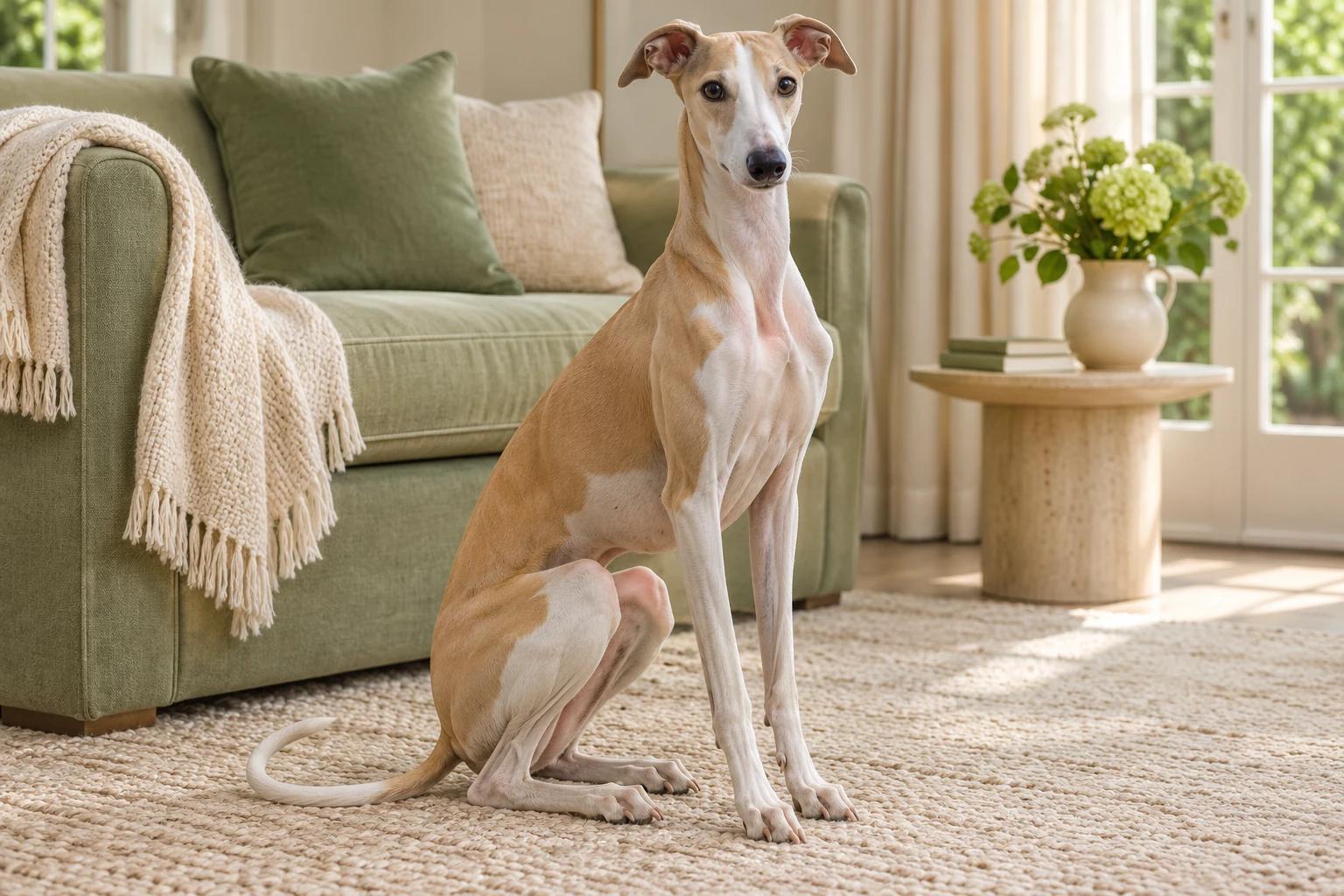
Speed does not tell the whole story
A Whippet’s sprinting ability is central to its public image. The American Kennel Club also describes a gentle disposition alongside an interest in chasing. Both are breed-level descriptions, not a complete account of the dog you may bring home. Neither an athletic outline nor a photograph of a sleeping dog can tell you what daily life together will require.
Begin with biography. Ask where the dog has lived, what routines are familiar, and how much is actually known about its past. Ask about experience around moving animals and the settings in which that experience was observed. When information is missing, it is more useful to name the uncertainty than to fill the gap with a reassuring story.
Walk through your home in conversation
Describe your entrance, stairs, outdoor access, and usual walking environment to the current caregiver. Ask whether the dog has encountered similar settings. The point is not to reject a dog for needing to learn something; it is to identify what you would need to introduce gradually and what practical help might be necessary.
If you have other animals, make that a separate conversation. Ask about observed interactions, how they were managed, and what the organization recommends for assessment and introductions. A calm meeting in one setting is useful information, but it is not a lifetime guarantee of compatibility. Do not infer safety with another species from a generally gentle breed description.
Build a first-week plan around what is known
Before making a commitment, ask the caregiver to explain the dog’s present routine in detail: outings, rest, meals, familiar cues, and any situations needing extra support. Write down the parts you can reproduce initially and the parts that must change in your home. Arrange appropriate secure equipment and follow the organization’s advice about handling and outdoor access.
Leave room to adjust after arrival. Rather than deciding in advance that your dog will be an athlete or a couch companion, observe what helps this individual feel comfortable and seek qualified advice when needed. The full breed profile can support your research; the dog’s history, your environment, and a realistic transition plan should determine the next steps. A good first conversation gives you better questions, not certainty.
Sources behind this article
Keep reading
Whippet training
Read article →