Thai Ridgeback Training: Cooperation and Useful Skills
Build Thai Ridgeback cooperation through realistic social expectations, voluntary handling, introduced rest spaces and clear reward-based lessons.
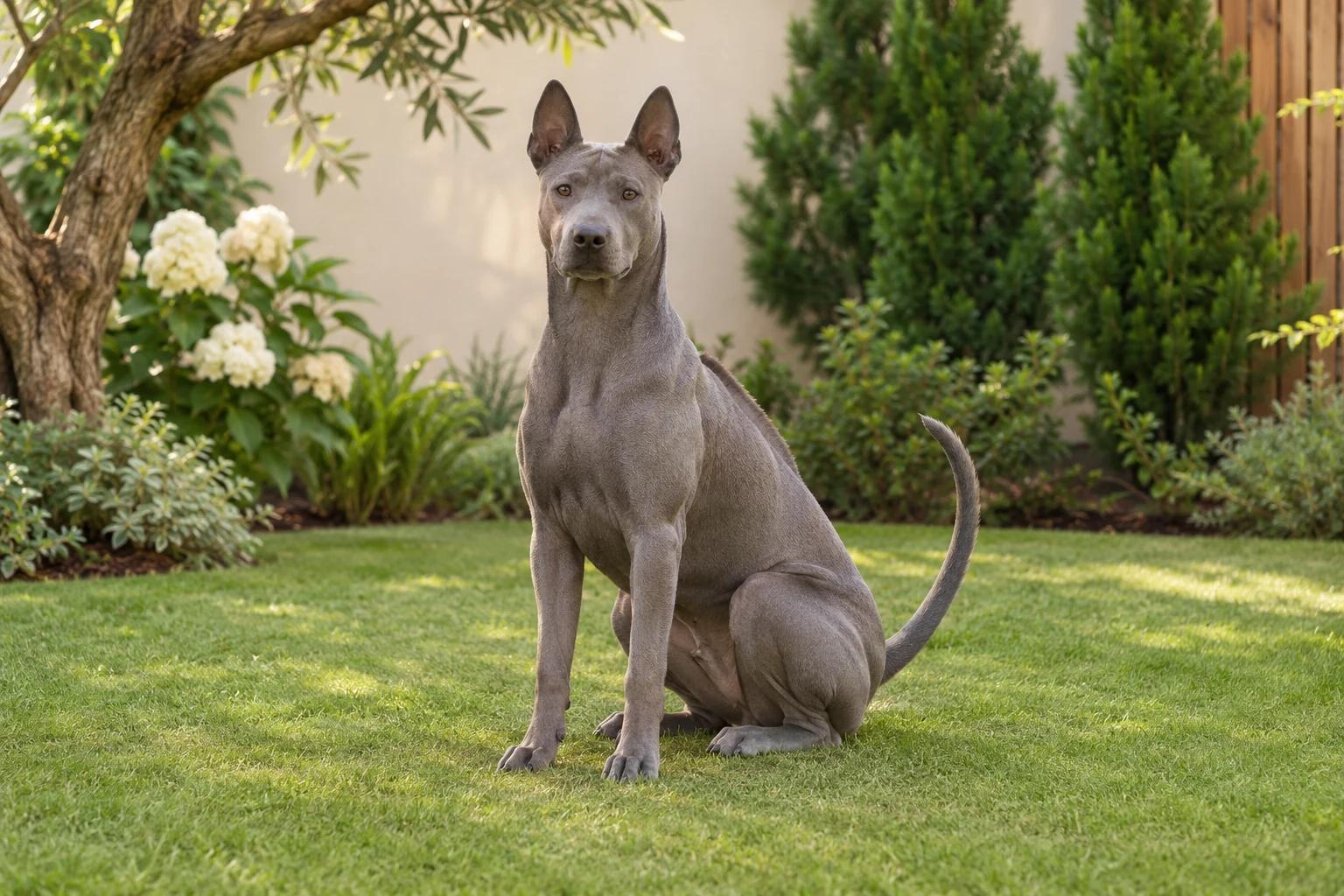
Thai Ridgeback training should prepare a dog for ordinary life, not merely produce a dramatic display. The current Thai Ridgeback profile describes a watchful companion with substantial mental engagement needs and reserve around strangers. A useful education includes participation in care, comfortable use of a resting space and an enjoyable task shared with a familiar person. These are different skills, each worth considering on its own terms.
Thai Ridgeback training starts with realistic social expectations
The Swedish Kennel Club emphasizes early experience of unfamiliar people and environments, continuing through puppyhood and adolescence. It also describes a dog that can look thoroughly relaxed indoors yet react and move quickly outside. Swedish Kennel Club: Thai Ridgeback Dog.
That contrast is important for Thai Ridgeback socialization. Watching a youngster lounge at home does not tell you how it will respond to an unfamiliar street. Nor should a calm indoor impression lead you to overlook the breed's hunting interest and vigilance.
The club stresses patience, flexibility and suitable motivation in teaching. Learning ability is not the same as automatic cooperation in every setting. Think of social education as helping the individual manage encounters, rather than making it perform enthusiasm for strangers. For a prospective owner, ask what unfamiliar people and environments the puppy has actually experienced. A description of parental character cannot answer that question on the puppy's behalf.
Teach voluntary participation with a chin rest
A chin rest asks the dog to place its chin on an open palm, rather than having its head held still. The AKC describes both shaping and food-lure approaches. Before using food near the face, the dog must already be comfortable approaching the hand and taking food from it. AKC: teaching a chin rest.
With one palm facing upward, use the other hand to guide the chin over it. Reward that position first, then gradually encourage actual contact with the palm. Remove the visible food lure as the movement becomes familiar, paying from elsewhere after the response.
Add a word only after the hand signal works reliably. Begin duration with a moment or two, include a release cue, and keep easier repetitions among harder ones. A Thai Ridgeback lifting its head has not agreed to restraint: do not turn a voluntary exercise into holding the muzzle down.
When introducing a small distraction, reduce the duration again. The aim is comfortable participation, not testing how much the dog will tolerate. This is preparation for handling, not permission to attempt a procedure that needs veterinary help.
Make a crate an introduced space, not a surprise
Dogs Trust recommends fixing the door open during early introductions and allowing the dog to investigate freely. A suitable crate lets the dog stand, turn, sit, lie down and stretch out; it is not chosen solely from a breed label. Dogs Trust: playpen and crate training.
For a Thai Ridgeback, begin with the appearance and smell of the space before expecting time inside. Reward voluntary entry. If the dog hesitates, make the first reward easier to reach near the entrance rather than pushing the dog through it.
Door movement is a later lesson. Once the dog is comfortable inside, move the door a little, then eventually close it briefly and reopen it. Whining or scrabbling means the exercise has progressed beyond comfort; return to an easier stage instead of waiting for the dog to give up.
Remain nearby before introducing your movement away. A crate is not punishment, and enjoying it does not establish how long the dog can be left alone. Rest, toilet opportunities and movement remain needs, not privileges earned by quiet behavior.
Use an optional turning trick to clarify signals
Battersea's spin lesson provides a clear example of moving from a lure to a hand signal and then a spoken cue. First ensure the movement is suitable for the dog's physical condition; skip it if a medical or joint concern could make turning uncomfortable. Battersea: teaching a spin.
Choose one direction. With the dog standing, guide its nose slowly around with a treat so the body follows a circle. Reward completion. Once the movement is confident, repeat with an empty guiding hand and deliver the reward from the other hand.
Gradually make the hand movement smaller. Add “spin” before the familiar signal only when that signal is understood, then allow a pause for the spoken cue to acquire meaning. If the dog becomes uncertain, return to the previous stage. Teach the other direction separately.
For Thai Ridgeback obedience, the useful point is the communication sequence, not the number of turns achieved. One comfortable, understood response is preferable to rapid repetitions. This optional trick is a learning activity, not a test of breed athleticism or a substitute for outdoor exercise.
Separate alertness, learning and interest in play
The current profile lists strong watchfulness alongside a middle-range training rating. Those describe different aspects of the dog. A Thai Ridgeback noticing a sound is not necessarily offering a trained response, and being attentive to the surroundings is not the same as attending to a person. Owners who treat every glance outward as disobedience risk misunderstanding what they are seeing.
The profile also places playfulness in the middle range while describing a greater need for mental engagement. That distinction helps answer how to train a Thai Ridgeback without assuming that endless toy play will satisfy every individual. A dog can be interested in solving something with you without wanting an exuberant game at that moment. Conversely, enjoying a toy says little about whether a separate household skill has been learned.
For an adult being considered for adoption, ask about familiar cues, care routines and the settings in which those behaviors occur. “Knows several tricks” and “comfortable with everyday handling” are not interchangeable descriptions. The examples above address different parts of that practical education.
Use the dog quiz to consider the broader commitment. The ridge-shapes article covers appearance, which should not be used to predict learning ability.
Frequently asked questions
Does a watchful Thai Ridgeback need less teaching?
No. The current profile's strong watchfulness describes attention to the surroundings, not a set of learned household skills. It does not establish that the dog understands what a person is asking.
Does moderate playfulness mean little mental engagement is needed?
No. The current profile separates a middle-range playfulness rating from greater mental engagement needs. Interest in boisterous play and interest in using the brain are not the same characteristic.
Can appearance tell me how easily a puppy will learn?
No. The breed's distinctive appearance does not provide a training assessment. Ask about the individual puppy's experiences and responses rather than using a photograph as evidence of its abilities.
Sources behind this article
- Swedish Kennel Club: Thai Ridgeback Dog ↗
- AKC: teaching a chin rest ↗
- Dogs Trust: playpen and crate training ↗
- Battersea: teaching a spin ↗
Article source checked: November 16, 2026. Source checked 2026-11-16
Keep reading

Affenpinscher Training: Build Useful Everyday Habits
Read article →