Skye Terrier Training: Cooperation for Everyday Care
Build Skye Terrier training around voluntary standing, short stays, comfortable harness use and reward-based everyday learning.
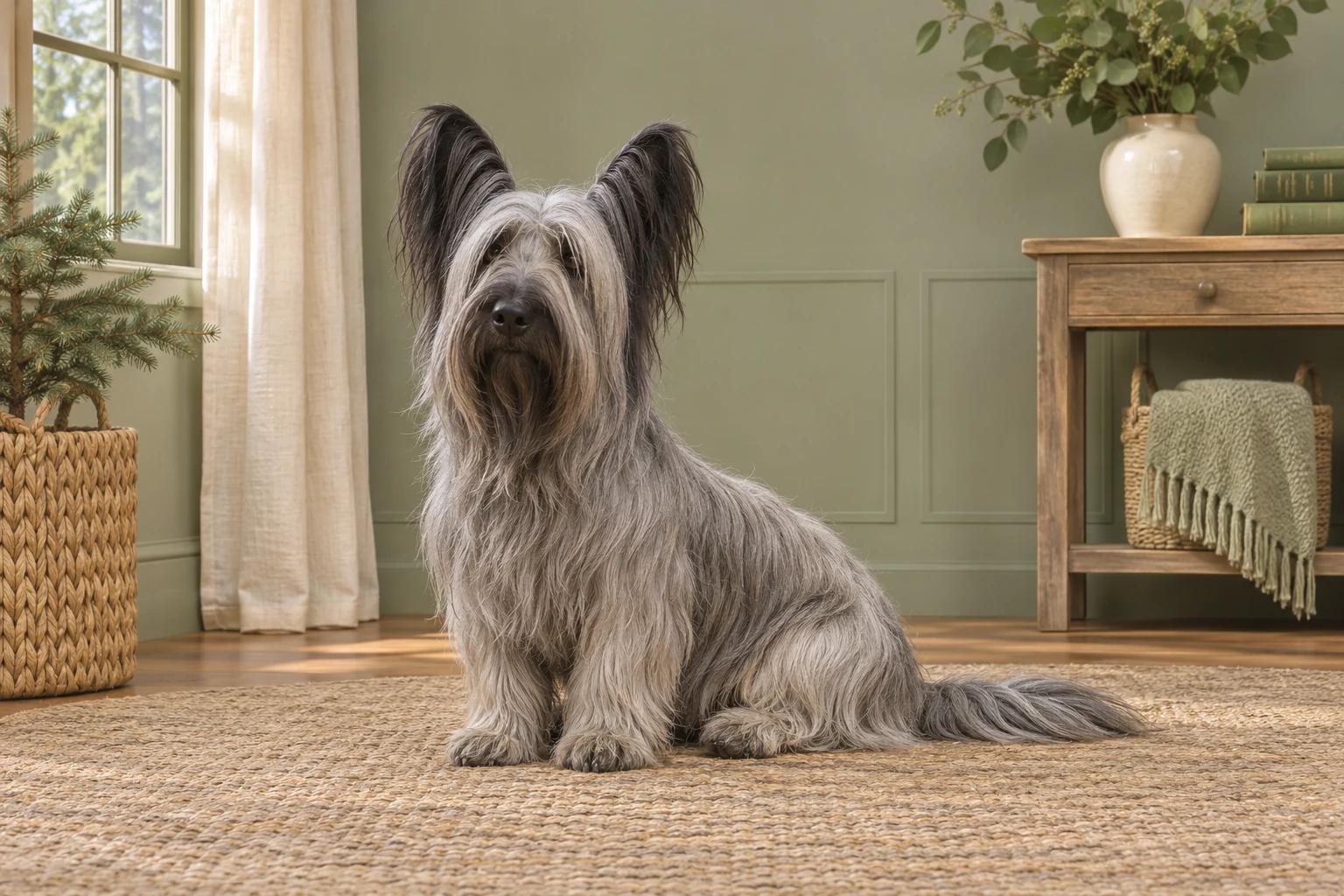
Skye Terrier training is an everyday part of living with the dog, not a judgment of whether it is sufficiently obedient for its breed. The Skye Terrier profile places training responsiveness and mental engagement around the middle of the reference scale, alongside strong family affection. That combination leaves room for both participation and individual preferences.
Skye Terrier training is possible without coercion
The Skye Terrier International Association’s education guide rejects the idea that terriers cannot be trained. It recognizes independence while recommending non-coercive, reward-based teaching. Independent interests are not a reason to abandon instruction or create a confrontation.
The association distinguishes everyday pet training from ringcraft. Showing a dog how to present itself for a judge is not the same as helping it manage routine encounters outside the ring. A pet owner can pursue useful manners without intending to exhibit the dog at all.
For Skye Terrier socialization, the association also highlights caution around unfamiliar situations and people. Appropriate classes can support both learning and experience, provided their approach is kind and rewarding. Ask how an instructor helps a hesitant dog rather than only looking at the finished exercises. The aim is a dog able to participate comfortably in ordinary life, not one compelled to endure an encounter merely because everyone else in the class is doing it.
A voluntary stand is useful for a coated dog
AKC’s stand-training guide explains how to teach the dog to rise from a sit using a lure moving horizontally away from its nose. Reward while the dog is standing, before it sits again or walks away. The reward’s timing helps identify the position you wanted.
For your Skye, keep the movement small enough to produce a stand rather than an extended walk. Once the action is familiar, repeat the gesture with an empty hand and reward from the other hand. Add the word before the gesture only after the gesture is understood.
You can also recognize the dog standing up spontaneously and reward that action, building toward a cue. Standing is useful during grooming and other care, but learning the position does not automatically mean the dog accepts every tool or touch. Begin with the position itself. A dog that chooses to stand gives you a clearer starting point than repeatedly lifting or pushing it into place.
Teach the end of a stay as well as the beginning
AKC’s stay lesson emphasizes a release cue that tells the dog when it may move. Start with a familiar position and a very short pause. Reward while the dog remains there, then release it. Do not make leaving the position the only part that earns attention.
Build duration while staying nearby before adding distance or distractions. When introducing a new difficulty, make the other parts easier again. A Skye that can remain still beside you has not automatically learned to do the same while you walk across a busy room.
If the dog moves early, reconsider the difficulty rather than punishing it. Your own movement may have invited it to follow. Return to a simpler version and make the desired response clearer. For everyday Skye Terrier obedience, a comfortable brief stay is a useful achievement. It is not a reason to test how long the dog will remain without support or to substitute a cue for physical safety measures.
Make the harness an invitation, not a pursuit
Dogs Trust’s harness guide starts with investigation and positive associations. Let the dog explore the harness with rewards nearby before attempting to put it on. An over-the-head style introduces a separate task: approaching an opening willingly.
Initially, offer food through the opening without requiring the head to pass through. Progress only while the dog is comfortable. If your Skye retreats, remove the harness and return to an easier stage rather than following it around the room with the equipment.
Introduce clip sounds separately, then practice fastening and moving in the harness. Fit matters as well as familiarity: the design should allow natural movement and remain secure. For a dog uncomfortable with an opening over its head, a different fastening arrangement may be worth considering. Stop when handling causes worry and obtain veterinary or qualified behavioral help when needed. Getting the harness fastened is not success if the experience has become frightening.
How to train a Skye Terrier for your real day
The Atlas profile describes moderate activity and playfulness rather than a dog that requires a nonstop program. Consider the teaching opportunities you already encounter: getting ready for an outing, completing coat care or pausing during a shared activity. Those moments explain why a particular skill is useful without turning the whole day into a lesson.
The profile’s strong family orientation also deserves its own space. Not every interaction needs to be an exercise with a goal. Company and learning can both belong in the relationship. A dog taking part in a familiar task and a dog resting beside you are offering different forms of interaction, neither of which needs to replace the other.
Likewise, the middle vocal rating does not mean that training must be organized around eliminating every bark. Work on the behavior that actually needs support in your household. Use the dog quiz to compare your appetite for everyday teaching. The Skye Terrier ear article covers appearance rather than training expectations.
Frequently asked questions
Is ringcraft the same as everyday pet training?
No. Ringcraft prepares a dog for showing. Everyday training addresses practical manners and experiences that matter whether or not the dog ever enters a show.
Should a stand reward arrive after the dog sits again?
No. Reward while the dog is still standing so that the intended position is clear. Timing helps distinguish standing from the next movement.
What if my Skye backs away from the harness?
Remove it and return to an easier introduction. Do not chase the dog with the equipment or force its head through the opening.
Sources behind this article
- Skye Terrier International Association: Education ↗
- AKC: Stand on cue ↗
- AKC: Stay training ↗
- Dogs Trust: Harness introduction ↗
Article source checked: November 16, 2026. Source checked 2026-11-16
Keep reading

Affenpinscher Training: Build Useful Everyday Habits
Read article →