Sheepadoodle Training: Useful Skills Beyond Sit
Teach Sheepadoodle training skills for movement, walking, settling and social experiences with clear steps and practical everyday applications.
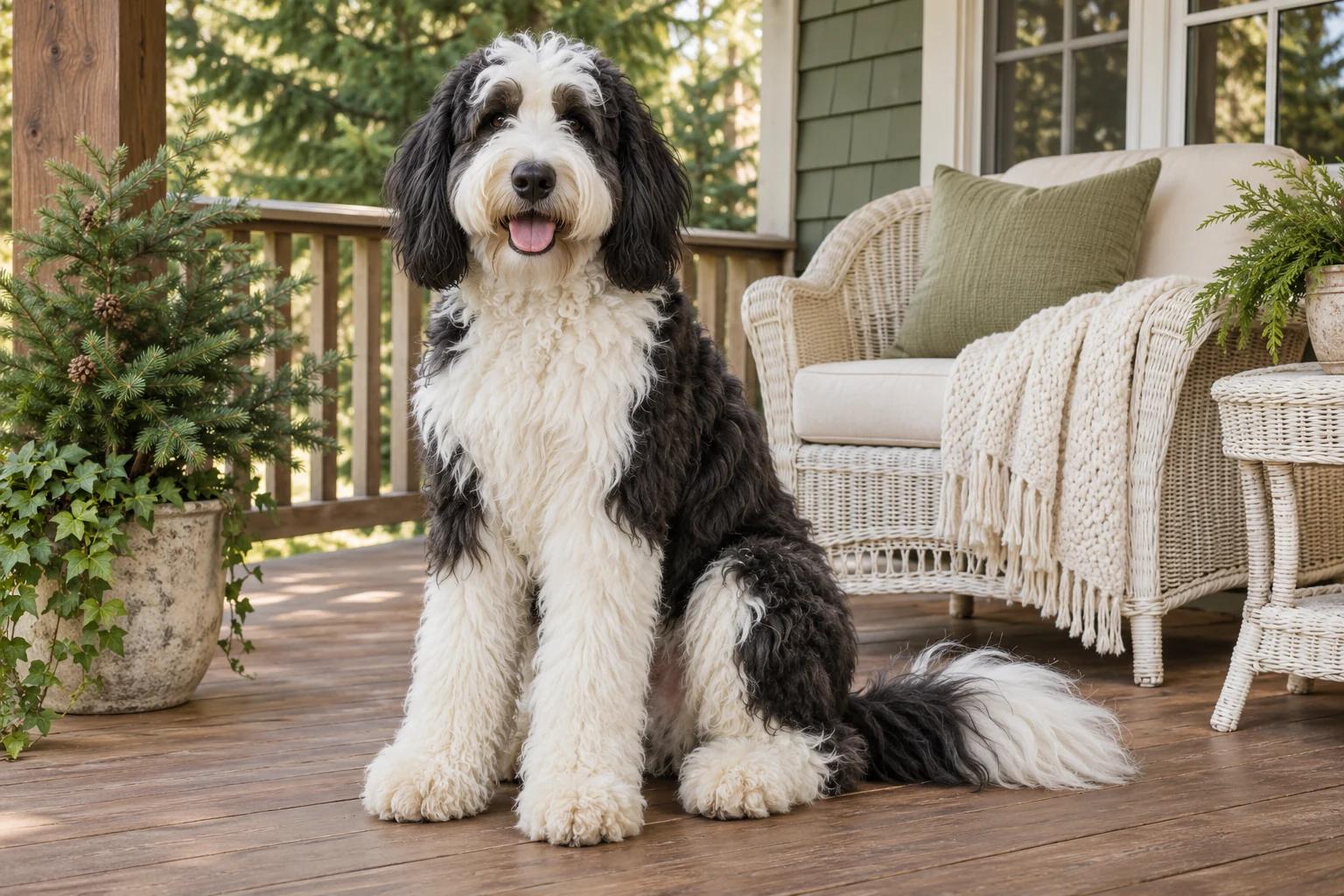
Sheepadoodle training should prepare your dog for the things you do together: moving through a doorway, walking beside you, resting nearby and meeting ordinary experiences without being overwhelmed. A dog that knows a trick but cannot participate comfortably in daily care still has useful things to learn. Start with actions you can describe clearly and practise safely.
The Sheepadoodle profile provides broader context. The parent-breed naming article handles the separate spelling question. This guide focuses on teaching the dog in front of you, not on predicting a complete personality from a name.
Sheepadoodle training: move with a hand target
Dogs Trust's target-training guide explains how to reward a dog for touching a hand with its nose, then attach a cue once the action is familiar. Targeting can guide movement without pushing or lifting the dog. Begin in a quiet place, and simplify or pause if the dog becomes confused or frustrated.
For a Sheepadoodle, this can make small position changes more cooperative. Present the target where the dog can reach it comfortably with its feet on the floor. Reward the contact rather than moving your hand away just as the nose arrives. Once understood, the skill can help the dog take a step to one side before you open a cupboard.
Keep the first aim modest: a clear nose touch, not an extended performance. Do not use the target to lure the dog into something it is worried about. The value lies in understandable participation, not tricking the dog into being restrained.
Build walking skills one step at a time
Battersea's lead-walking lesson starts with a consistent side and rewards for moving together on a loose lead. It recommends short repetitions, sensible reward placement and returning to easier practice as distractions increase. Feeding across your body can accidentally draw the dog across your path.
With a Sheepadoodle, check where your hand actually delivers the reward. If it reaches over the dog's head or towards your opposite knee, the resulting turn may be your invitation rather than disobedience. Practise a few ordinary steps with enough space to see what both bodies are doing.
Separate close walking from opportunities to explore. You need a practical way through a narrow gateway, not an entire outing of rigid heelwork. If you cannot handle the dog safely, seek qualified help rather than relying on strength or escalating pressure. A clear lesson is more useful than a prolonged pulling contest.
Teach quiet participation, not just more activity
Dogs Trust's settling guidance recommends beginning somewhere quiet and rewarding relaxed behaviour. Progress can start with simply standing calmly or disengaging, then include signs such as shifting weight, resting the head and lying comfortably. Different dogs reach those stages at different speeds.
For your Sheepadoodle, choose a resting space beside the activity rather than in its centre. A blanket between the chair and the kitchen doorway may be constantly disturbed; a position beside the chair can be more workable. Sit quietly enough that the exercise does not become another exciting conversation.
Look for genuine comfort rather than insisting on one formal pose. A dog staring intensely at your hands while holding a down is doing something different from resting. Reward the small steps towards ease, and resist the temptation to make every quiet moment the beginning of another game.
Sheepadoodle socialization means manageable experiences
UC Davis's puppy-socialization advice emphasises positive, controlled encounters with varied people, environments, surfaces and sounds. It advises watching for stress and avoiding overwhelming the puppy. Ask your veterinary team how to arrange appropriate experiences alongside the puppy's health and vaccination needs.
For a Sheepadoodle puppy, include the practical world of care: seeing a brush, standing on a suitable surface and becoming comfortable with gentle handling. Do not save every unfamiliar experience for the first full grooming appointment. An introduction can be small and pleasant without completing an entire procedure.
Likewise, meeting people does not require accepting everyone's hands at once. Give the puppy room to observe and move away. A busy crowd is not automatically better socialization than one comfortable encounter. If the puppy struggles, change the situation rather than trying to reach an arbitrary total of meetings.
How to train a Sheepadoodle around your own movements
Think about a task that involves both of you, such as putting on your shoes before a walk. Where do your knees, hands and feet move? Where is the dog expected to stand? A broad furry body directly in front of the chair can make an ordinary action awkward even before the lead appears.
Arrange the space so the desired action has a clear location. Put shoes within reach and keep dangling straps out of the dog's path. Decide which person is taking the dog out before several people begin reaching for equipment. This removes accidental invitations to follow different hands in different directions.
The same approach helps during handovers. Have the receiving person ready, make sure control is secure and avoid changing equipment while everyone is moving towards an open door. These are human handling skills as much as dog-training skills. Rehearsing them calmly makes the dog's part easier to understand.
Make Sheepadoodle obedience fit the actual task
A cue is useful when you know what successful completion looks like. If you ask for “wait,” do you mean remain on one side of a doorway, stay in a particular position or pause until you are ready to move? Those are related but different tasks. Choose the one you need rather than switching expectations halfway through.
Consider a towel after a wet outing. Your immediate aim might be having the dog stand on a clear, nonslip area while you prepare the towel. That is different from expecting a complete body wipe, four lifted feet and a long stationary wait in one go. Identify the practical pieces before deciding which needs teaching.
When asking a trainer for help, bring a specific example. “He gets tangled while I put on the lead” is more actionable than “he is stubborn.” Show the setting if it can be done safely, and explain what you would like the dog to do instead. The dog match quiz can help prospective owners think about the teaching they enjoy.
Frequently asked questions
Should tricks come before everyday skills?
Choose according to the next task you need to manage. A useful position for departures or a comfortable care setup may matter more than an entertaining trick. You can enjoy both, but the skills that make daily life workable deserve attention first.
What should I tell a new caregiver?
Demonstrate the actual sequence the dog knows, including where people stand and how equipment is managed. Do not rely on a list of cue words alone. The caregiver needs to understand the practical arrangement as well as the vocabulary.
How can I describe a problem clearly?
Name the situation, what you did and what the dog did next. Avoid broad character labels. A concrete account helps a qualified trainer distinguish an unclear task, an awkward setup and a behaviour that needs a different approach.
Sources behind this article
- Dogs Trust: Target training ↗
- Battersea: Walking on a lead ↗
- Dogs Trust: Settling ↗
- UC Davis: Puppy socialization ↗
Article source checked: November 16, 2026. Source checked 2026-11-16
Keep reading

Affenpinscher Training: Build Useful Everyday Habits
Read article →