Serengeti Toys: Choose for Movement, Interest and a Clear Ending
Choose Serengeti toys by purpose, familiar interests and suitable use. Plan inspection, storage and an ending the individual cat can choose.
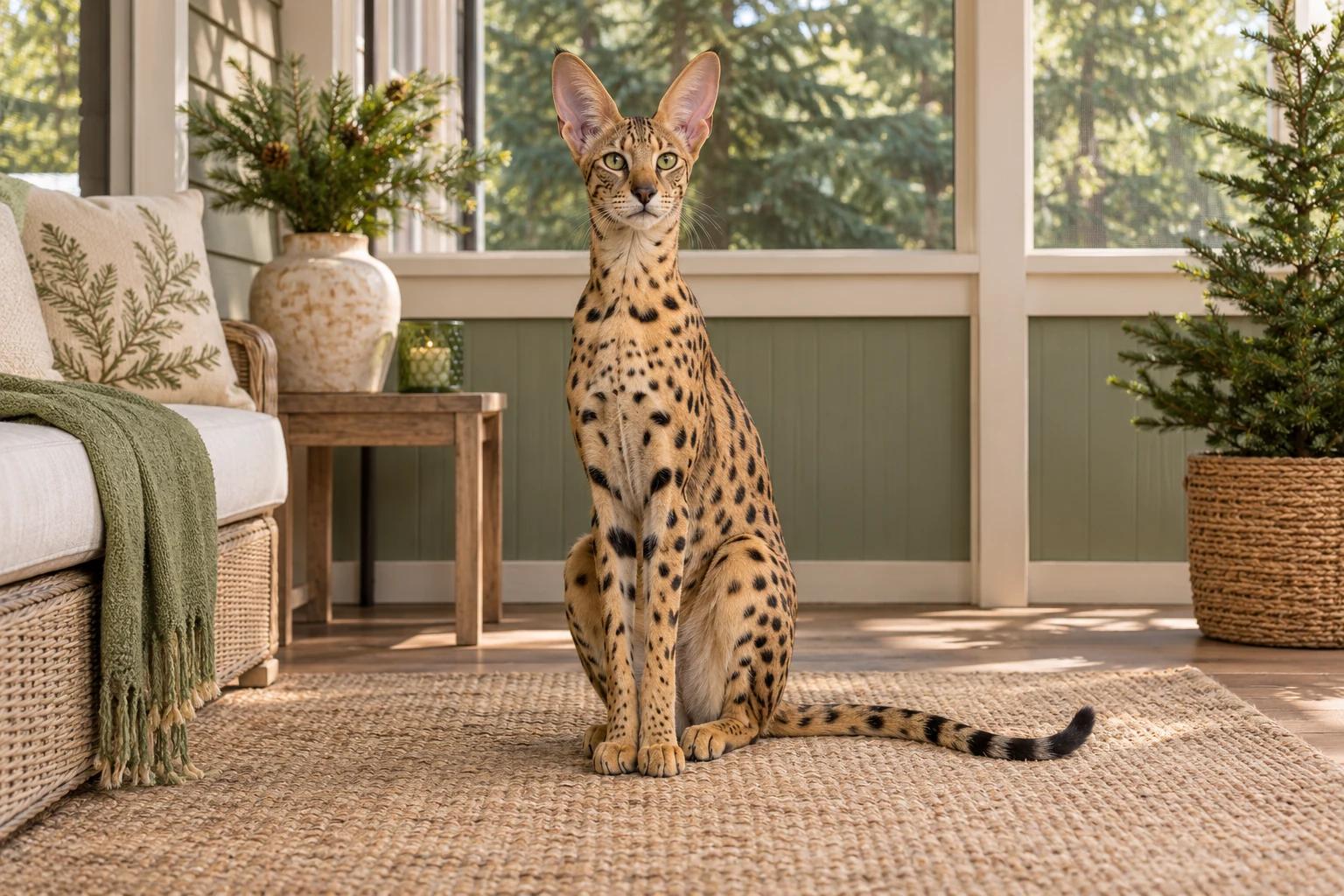
Serengeti toys should offer an active cat useful choices rather than fill a cupboard with purchases. TICA's breed introduction describes agile animals interested in high places and activity. That gives you a reason to plan meaningful play, but it does not tell you which object your individual will prefer or certify a product marketed for energetic breeds.
This guide helps organize toy selection, use and review. It keeps feeding puzzles separate from the existing article on that subject and does not prescribe a numerical serengeti activity level or a program for weight loss.
Serengeti toys: start with the action, not the brand
Ask the current caregiver what the animal actually enjoys doing with an object. Does it follow movement, carry something suitable, investigate an opening or return to a familiar item? A description of the action is more useful than buying a second version of something that was never used.
The Serengeti profile retains the introduction's active, climbing-oriented context. Still, the cat may prefer one simple invitation over an unfamiliar device. You are learning about the individual, not proving that it meets an athletic breed description.
Before choosing an item, identify where it will be used and who will supervise. An appropriate object in a suitable room serves a clearer purpose than one bought solely because its packaging promises to prevent boredom.
Three useful options to consider
For a cat that follows floor movement, an intact prey-style cat toy can support a supervised stalking game. Choose an item intended for cats that you can move appropriately without string, yarn or loose attachments. Check its condition before the invitation and put it away if parts loosen or the animal begins damaging it. Your hands and feet should remain outside the role of prey.
For an individual that likes investigating covered routes, consider a sturdy, correctly sized, open-ended cat tunnel. Inspect its openings, edges and attachments and follow its instructions. It should offer a manageable route through, not an uncertain space you push the cat into. Leave room to decline, turn away and finish investigating.
A stable, appropriately installed perch offers a viewpoint and resting context rather than being a toy itself. Check its support and route down separately. Putting an attractive object on an unsuitable structure cannot make that structure appropriate. None of these options requires a purchase; assess familiar suitable equipment before adding anything new.
Match movement to the available space
FelineVMA's play guidance discusses toys that support stalking and other natural play behavior. Keep the route clear and avoid presenting an invitation that leads toward hazards or a congested area. Do not use your hands or feet as toys.
Watch how the cat approaches and follows the activity. It should have room to turn and leave. Moving an object directly into the animal's face is not necessary to find out whether it is interested, and repeatedly extending the chase is not a measure of successful exercise.
For someone asking how to exercise a serengeti, the first useful answer is a comfortable opportunity you can observe. There is no universal distance, duration or jump height in this article. Seek veterinary guidance about a new limitation or concern rather than increasing intensity to obtain a response.
Give exploration and climbing their own assessment
A toy placed high up does not make the supporting furniture suitable. Check stability, installation and manufacturer instructions before using a raised area as part of an activity. Consider access and an alternative route, not just the apparent excitement of reaching the object.
Do not require an ambitious jump to reach an essential resource or the only resting place. The breed's agility description is not a test the individual must pass. If familiar movement changes, seek appropriate advice rather than staging another attempt.
An exploration item on the floor also needs inspection. Openings, edges and attachments should suit the animal and intended use. Ask the manufacturer or a care professional when instructions are unclear instead of using the cat to test an uncertain design.
Keep a small selection you understand
You can sort possible toys by their purpose: interactive movement with a person, suitable independent investigation or a familiar object the cat already chooses. These categories help you see whether several purchases actually offer different opportunities.
FelineVMA suggests varying toys while recognizing individual preferences. You do not need to replace every familiar item at once or remove a favorite because a rotation calendar says it is old. Observe use and introduce changes deliberately enough to understand the response.
A short toy note can record what the cat did, where it played and whether the item remained intact. That is more informative than a score for how exciting the product looked to a person. It also helps another caregiver offer a known activity without guessing.
Inspection and storage are part of the purchase
FelineVMA warns about string-type materials and loose parts that can be swallowed. Avoid string, yarn and similar items as play materials, and inspect products for loose pieces or damage. Follow appropriate instructions and put unsuitable or uncertain items aside.
Do not turn a damaged toy into a do-it-yourself repair experiment around the cat. A replacement attachment is not automatically appropriate because it looks similar. Ask for guidance and keep the equipment out of access until the question is resolved.
Store interactive equipment appropriately after use. If children or other pets share the room, the adult responsible should know which items are available and which are not for unsupervised access. A tidy storage arrangement supports care; it is not a guarantee that every product is safe.
Let the animal finish the interaction
FelineVMA's play guidance emphasizes choice when a cat leaves. Respect that ending instead of carrying the animal back or asking another person to restart immediately. An active cat still needs rest without being continually invited to perform.
Adults should guide children's participation and help them notice when the opportunity ends. Preparing or putting away supplies can be useful involvement without making the child responsible for keeping the cat moving.
If the cat suddenly stops using a familiar object or appears uncomfortable, contact your veterinarian about concerns. Do not assume the solution is a more expensive toy or a stronger invitation. Changed behavior requires attention beyond a product comparison.
Keep food activities within the care plan
The existing Serengeti first-puzzle guide explains a separate introduction to food-based activity. This toy guide does not replace that process or recommend withholding an ordinary meal until an object is solved.
If food is involved, ask how it fits the individual diet and instructions. An empty device is not necessarily proof that the intended cat obtained the food in a multi-animal home. Keep reliable feeding and suitable resources independent of a new game.
Use the cat quiz to organize your wider preferences about daily interaction, then discuss the actual cat's serengeti indoor play routine. The useful selection is one you can explain, inspect and maintain, with room for the individual to choose what is enjoyable. It need not be large, costly or constantly replaced to be thoughtful.
Frequently asked questions
Does an active Serengeti need every toy marketed for energetic cats?
No. Start with the individual's familiar actions and available space. A marketing category cannot establish that a particular object is useful or suitable.
Should climbing toys encourage higher jumps?
Not as a goal in themselves. Check the environment and equipment and respect individual movement. A breed's agility reputation is not an endurance or height test.
Can strings be left out as cheap toys?
FelineVMA warns about swallowing string-type materials. Avoid string, yarn and similar play materials and inspect other items for loose or damaged parts.
What if the cat walks away?
Allow the interaction to end. Seek veterinary advice about a new loss of interest or discomfort rather than forcing participation or automatically buying a different object.
Sources behind this article
- TICA: Serengeti breed introduction ↗
- FelineVMA: Playing with your cat ↗
- FelineVMA: Indoor cats position statement ↗
Article source checked: November 20, 2026. Source checked 2026-11-20
Keep reading

American Curl exercise
Read article →