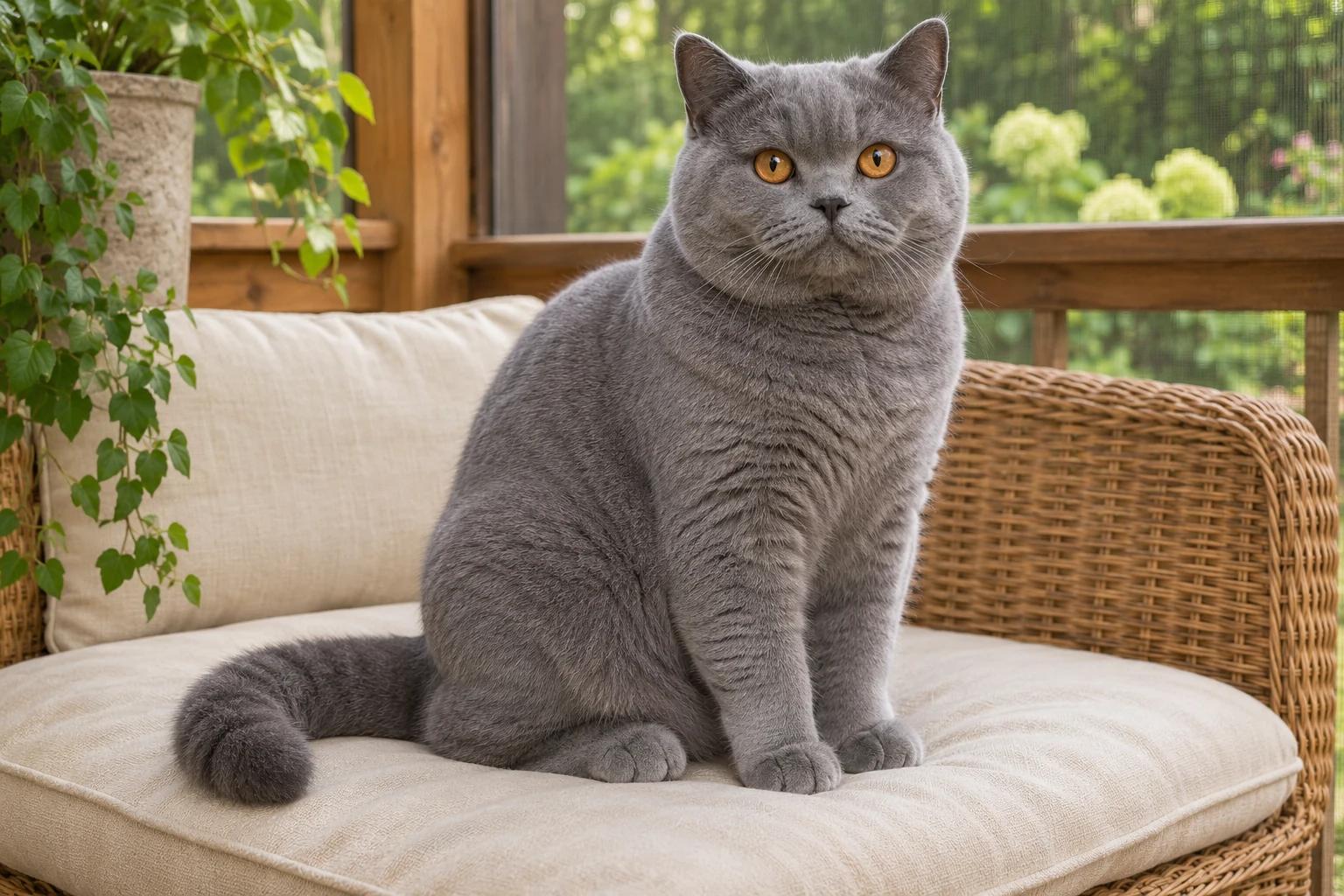
American Curl exercise
Plan American Curl exercise with varied indoor games, useful elevated spaces and short learning activities suited to the individual cat.

American Curl exercise should include more than a toy left on the floor. The current American Curl profile describes an energetic companion with an interest in climbing and learning. A useful indoor arrangement gives that particular cat several ways to move, investigate and participate without turning the day into a compulsory athletic programme.
American Curl exercise: keep adult play in the picture
TICA's American Curl account describes playfulness that can continue into later life. It recommends daily opportunities for activity and mentions climbing furniture, perches and retrieving games. The useful point is that play is not exclusively a kitten requirement, nor must every adult enjoy precisely the same activity.
Pursuing an object is not the same as bringing it back. Let the individual's participation define the game instead of requiring a complete retrieve. An adult can enjoy a playful exchange without reproducing a kitten's routine. Offer an activity, rather than demanding a particular performance from the breed description.
Make the game short enough to stay interesting
Cats Protection's play guide describes stalking, chasing, pouncing and batting as parts of play. Short sessions can be worthwhile; a cat does not need to keep pursuing a toy for a long, uninterrupted period. Rotating available toys can also make familiar objects more interesting when they return.
For American Curl indoor play, offer a moving toy that the cat can actually catch. A floor-level pursuit and a toy suitable for grasping or kicking provide different experiences. Keep fingers and feet out of the role of prey. That distinction matters even when a small kitten's game initially seems gentle.
Inspect toys for wear, and put away string or wand toys after supervised use so the cat cannot become entangled or swallow loose parts. Do not equate a large collection with a good play routine. Several well-chosen options, presented in ways the individual enjoys, are more useful than continually adding objects that never engage it. The response to the game matters more than the number of toys in the basket.
Give elevated spaces a purpose
Ohio State's Indoor Pet Initiative explains that perches give cats elevated places to sit, lie and observe. A resting surface near a window or another useful viewpoint can offer more than an empty platform in an arbitrary corner. Different locations provide different views of the surroundings.
Start by noticing where your Curl already chooses to look out or rest. A suitable elevated surface in that area may be more appealing than a much larger structure placed where little happens. Think about what the cat can see from the top, not just how tall the product is.
Invite investigation with a toy or treat rather than placing the cat on the perch and expecting it to stay. Voluntary use tells you more about the arrangement's appeal. Several viewpoints can create a choice between watching the room and looking outward. The purpose is not to turn every shelf into an obstacle: comfortable observation and resting are worthwhile uses of an elevated space in their own right.
Learning can be an active exchange
Battersea's cat-training guidance recommends breaking a task into small steps and promptly rewarding the behavior you want. A consistent marker word can help identify the successful moment. The reward should be something the individual cat values, which may be food or play.
For a Curl, begin with a small, clear movement rather than a complicated trick. You might reward approaching a chosen spot on the floor, then gradually make that destination more precise. This is a learning exercise, not a test of how quickly a breed is supposed to understand. A cat that has not understood the task needs a clearer step, not punishment.
Keep the first goal distinct from later goals. Walking toward a place, standing there and remaining there are different achievements. Reward the current step before adding another requirement. This gives the activity a comprehensible structure and lets you see what the cat has actually learned. A short successful exchange can be more useful than repeating an unclear request until neither participant is enjoying it.
Match equipment to the Curl you have
The current profile places adult females at 5–8 pounds and males at 7–10 pounds. Those figures describe adult scale, not a required exercise dose. A seven-pound cat does not automatically need a particular number of minutes because another seven-pound cat enjoys that routine.
For physical equipment, inspect the dimensions as well as the advertised load rating. A platform needs enough usable area for the individual to turn and lie down. A passage needs to accommodate the cat's body, not just its head. Product photographs can make openings and platforms difficult to judge, so check the measurements against the actual adult rather than against a breed label alone.
The current profile also emphasizes secure windows and balconies. Indoor activity should not depend on an unsecured opening being available. Arrange equipment so using it does not create access to something you intended to keep out of reach. A conveniently placed chair can change the route to a worktop or window just as much as a purpose-built climbing structure.
If you are deciding how to exercise an American Curl, separate physical opportunity from a fixed daily performance target. The profile supplies a useful starting picture, but the individual cat's age, experience and veterinary advice should guide any specific restrictions. Avoid copying a demanding routine simply because another Curl performs it online.
The cat quiz can help you consider the time and interaction you want to provide. For appointment preparation rather than activity planning, use the American Curl first-vet-visit records guide.
FAQ
Does American Curl activity level establish a precise exercise duration?
No. The current profile's energetic description does not specify a universal daily duration. The individual cat and any veterinary restrictions matter more than a timer based only on breed.
Can I select a climbing structure from its weight rating alone?
No. Check usable platform space, openings and the actual cat's dimensions as well. An adequate load rating does not establish that the layout is a comfortable physical fit.
Should a kitten use the same arrangement as an adult Curl?
Not automatically. Review the arrangement for the kitten's current size and experience rather than treating an adult breed range as a description of the youngster in front of you.
Sources behind this article
- TICA American Curl ↗
- Cats Protection cats and play ↗
- Ohio State Indoor Pet Initiative perches ↗
- Battersea cat training ↗
Article source checked: November 16, 2026. Source checked 2026-11-16
Keep reading
Balinese cat activity level
Read article →